Book Review: The Home and Garden Emporium

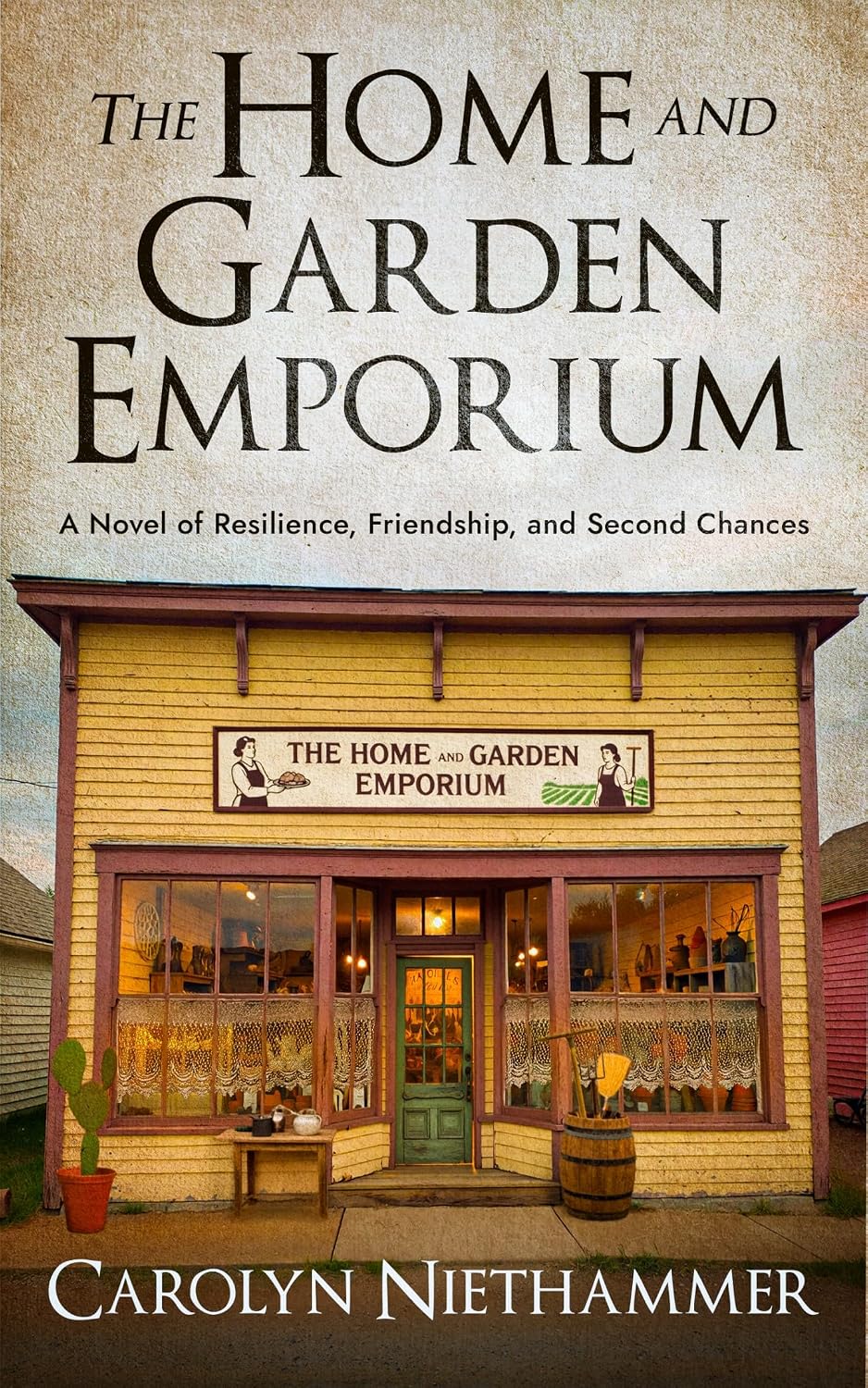
The Home and Garden Emporium: A Novel of Resilience, Friendship and Second Chances by Carolyn Niethammer captures the essence of life just before and during World War 1. The story is written in first-person and begins in 1917.

As an Irish immigrant, Ellie has fought prejudice throughout her life. Her bitter, widowed mother works at her brother’s laundry shop in New York, and after graduating from high school Ellie works there, too. Later, she finds satisfying work in a haberdashery and learns that she is adept at selling goods to satisfied customers. At the age of twenty-six she meets and soon marries a handsome bachelor, Edward Smithfield, who works at a bank. They live in Edward’s lovely New York townhouse.

Shortly after they married, Edward receives word that a favorite uncle in Tucson, Arizona is ill and his aunt needs Edward to come. By the time Ellie and Edward arrive in Tucson the uncle has died and his wife, Aunt Clara, needs assistance. In the meantime, the world is becoming aware that Europe is threatened with imminent war, that German soldiers are marching through Belgium. Edward is especially alarmed because he has close childhood friends in Belgium. He feels he must go to Europe to help them, and enlists in the Allied Forces, leaving Ellie in Tucson to deal with his newly widowed aunt and his uncle’s hardware store.

When Ellie goes to the hardware store, she finds a dirty, neglected closed-up store with a calendar dated 1914. Edward is off to war and Aunt Clara, a demanding and standoffish woman, is no help at all. Ellie feels compelled to do what she can but hardly knows where to begin. She isn’t familiar with hardware, the building is filthy, and funds are short.

Good things start happening in Ellie’s life when she meets and befriends multi-ethnic people. She also benefits from meeting some of Aunt Clara’s neighbors. From one she learns the art of gardening, the tools needed and the value of sharing this knowledge. From another, she receives encouragement and friendship with the woman and her handsome son, Anton Lincoln.

The Home and Garden Emporium is a lovely story of new beginnings and the courage it takes to make a giant leap from the familiar to the completely unknown. I enjoyed reading about pre-war and World War I attitudes and living conditions. Many of the customs, attitudes and moral values we now take for granted weren’t common to people in the early Twentieth Century. But the qualities that mattered then, such as friendships, loyalty and innovative hard work, are still worthy traits in our lives. This novel emphasis the worth of those values.

Book Review: Hang the Moon

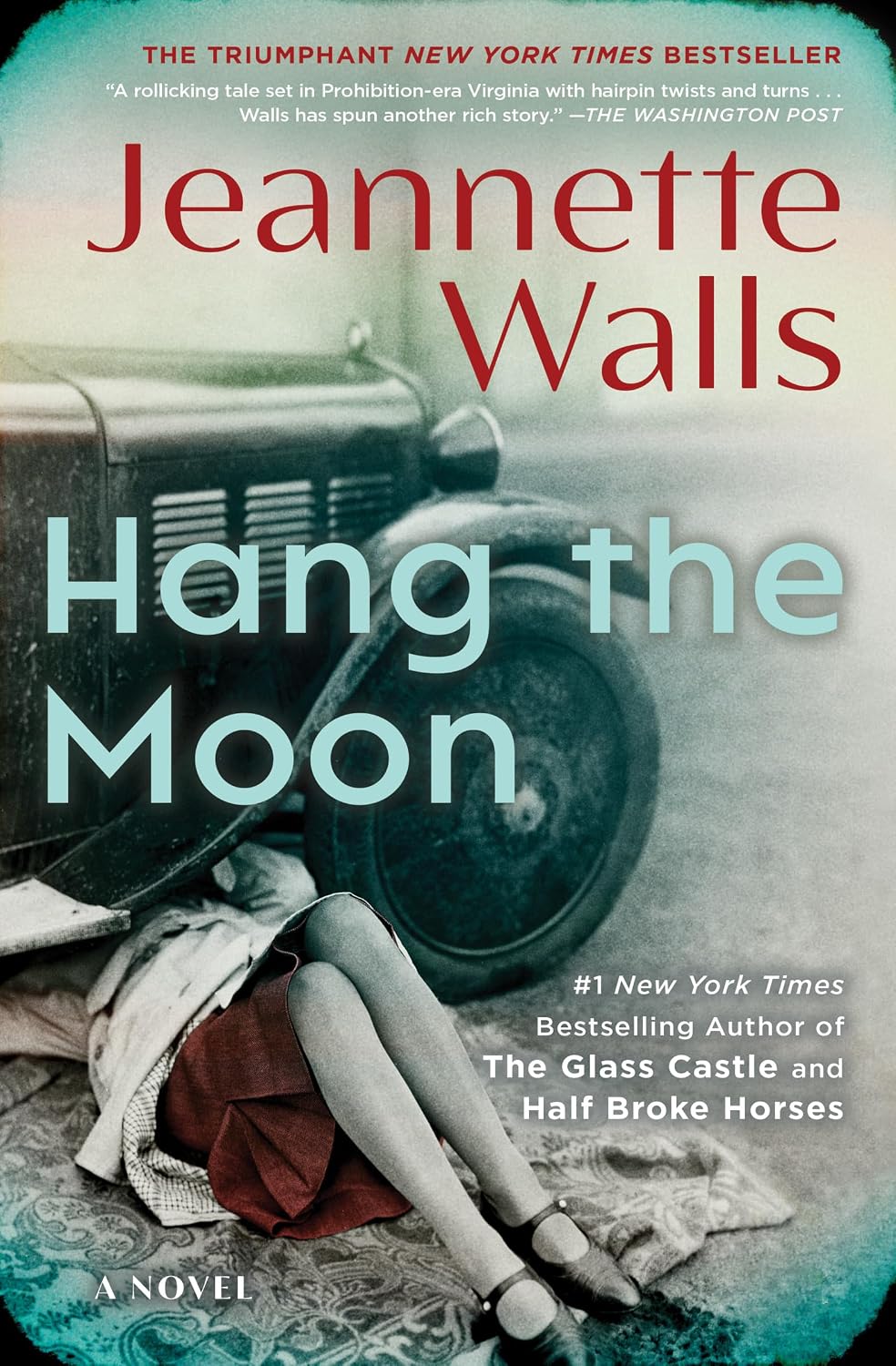
Hang the Moon, a novel by Jeannette Walls is an exciting, heart-rending story that takes place in Claiborne County, Virginia during Prohibition-era (1920 – 1933).

Sallie Kincaid, is the daughter of the well-known, wealthy Duke Kincaid. She idolizes her father, but remembers little about her mother who died in a violent argument with the Duke. When Sallie is eight years old, Duke marries his third wife and has a son, Eddie. While Sallie has many of her father’s traits, Eddie is more like his mother, timid and intellectual. Duke encourages Sallie to help Eddie be more masculine, and while doing what she thought would help her little brother become bolder, an accident occurs that sends Sallie away to her mother’s sister, Aunt Faye.

Although Sallie loves her Aunt Faye, they live in hardship conditions, the opposite of how Sallie has been raised. She helps her Aunt Faye hand-wash sheets for a living; they scrimp to meet their bare needs. After Eddie’s mother dies, and after nine years away, Sallie is brought back home. She is almost eighteen. Her father wants her to help Eddie, now 13, become a man. The boy is frail, has no friends or pets, doesn’t play sports, but he is very bright and shows talent playing the piano. The two become close, but Sallie soon understands that she’s not going to change Eddie.

Duke Kincaid is involved in many enterprises including a store, warehouse, lumber mill, hauling company, and rental properties. The store, Emporium, is the “go to” place in town. It carries a huge variety of goods, including a large inventory of contraband whiskey. Sallie convinces her father that she should work for him, and he reluctantly agrees. When Prohibition comes to Claiborne County, people’s livelihood drastically change. As the local citizens reason, Claiborne County citizens don’t break laws, but just follow a different set of laws. It’s true moonshine whiskey can ruin people, destroy families, even get people killed, but it’s been going on for years. Now, with Prohibition, it’s obey the law and starve, or break the law and eat. It’s the only work many of these people know. Sallie finds herself in the middle of the conflict and becomes involved trying to save the family business, and that of her fellow citizens.

Hang the Moon is a well told, exciting read, and an eye opener for me regarding the challenges of Prohibition. I could have used a cast of characters—many people are involved in this exciting story. I loved the author’s memoir, The Glass Castle, and consider Hang the Moon another winner.

Book Review: Among Canyon Shadows

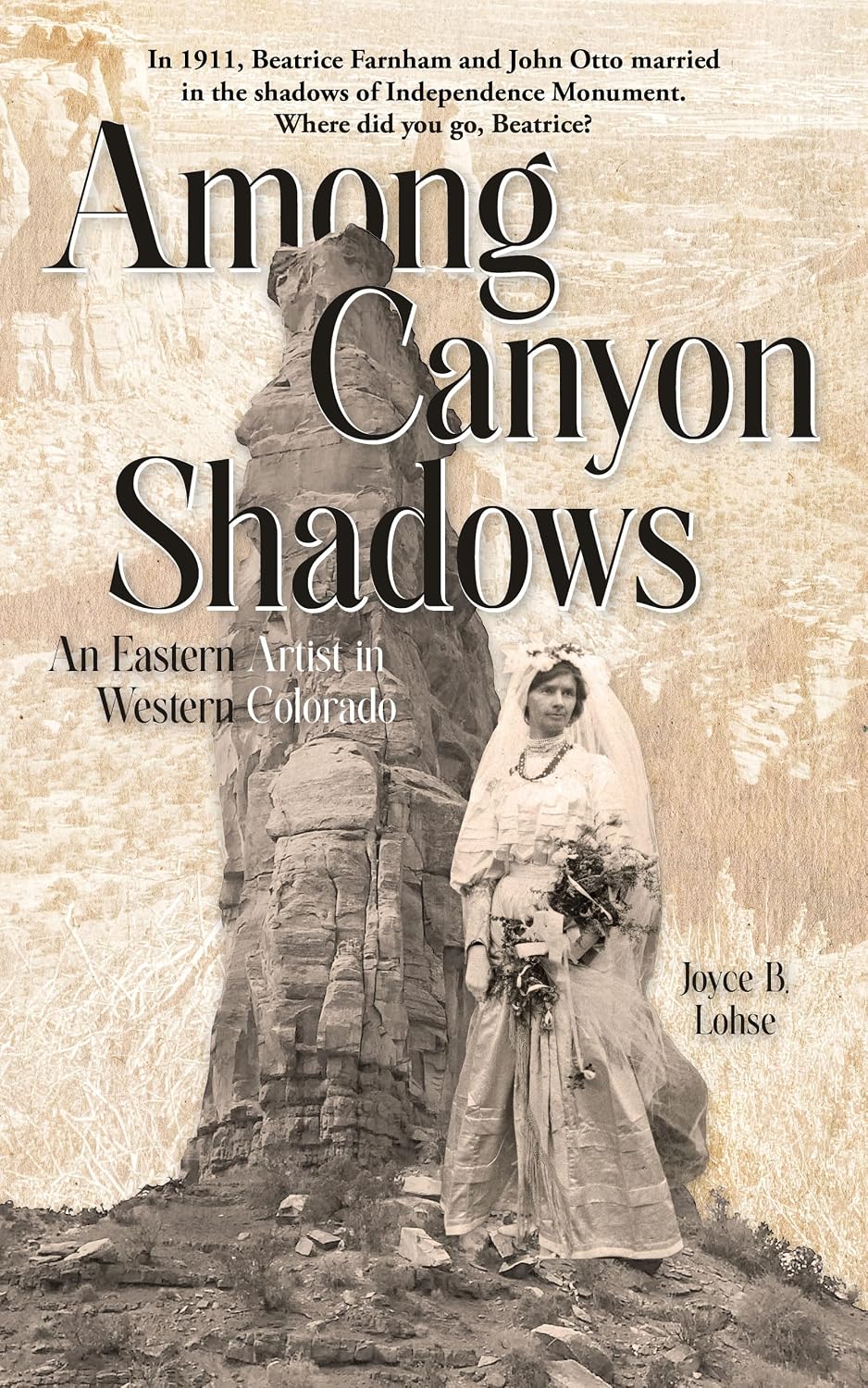
Among Canyon Shadows: An Eastern Artist in Western Colorado by Joyce Lohse is an interesting biography featuring two colorful characters: Flora Beatrice Farnham and John Otto.

Beatrice Farnham, born in 1876, an independent Boston artist, visited western Colorado in 1910 to paint landscapes of the southwest. Impressed with indigenous artwork, she based many pieces of artwork of that culture. She was a self-confident woman who didn’t care if others thought her eccentric. Riding astride a horse, Beatrice wore a split skirt of her own design, not worrying about what people might think. While in Colorado, Beatrice met John Otto and they struck up a friendship.

John Otto, born in 1871, was thirty-nine when he met Beatrice Farnham. On his own time and with no pay, John built trails to enable residents of the area to view the majestic scenes of what is now Mesa Verde National Park. John Otto was the first park custodian at Colorado National Monument, and its most fervent promoter. It is largely through John Otto’s efforts that the public is able to enjoy the unspoiled natural grandeur of the Colorado National Monument.

During Beatrice Farnham’s visit, John was her trail guide showing her amazing views, canyons and rock formations. Beatrice loved the rugged area, respected John’s trail-blazing work, and decided to stay. In 1911 Beatrice and John married at the base of Independence Monument (later renamed Wedding Canyon).

But not all was well. John loved the rugged life, didn’t need the comfort of a solid roof and walls, was perfectly content to live in a tent, or with no shelter at all. That wasn’t a life Beatrice wanted, or needed. Could these two strong-willed people find a compromise?

In Among Canyon Shadows Joyce Lohse captures the essence of a part of Colorado’s colorful history and its majestic scenery, as well as stories of two notable people, one from the east, and one from the west. I have read other works from this fine author and have been impressed with her thorough research and captivating presentation. The book also features a Timeline, and an extensive Bibliography which emphasizes the author’s thorough research. I enjoyed Among Canyon Shadows and highly recommend it.

The Mountains We Call Home

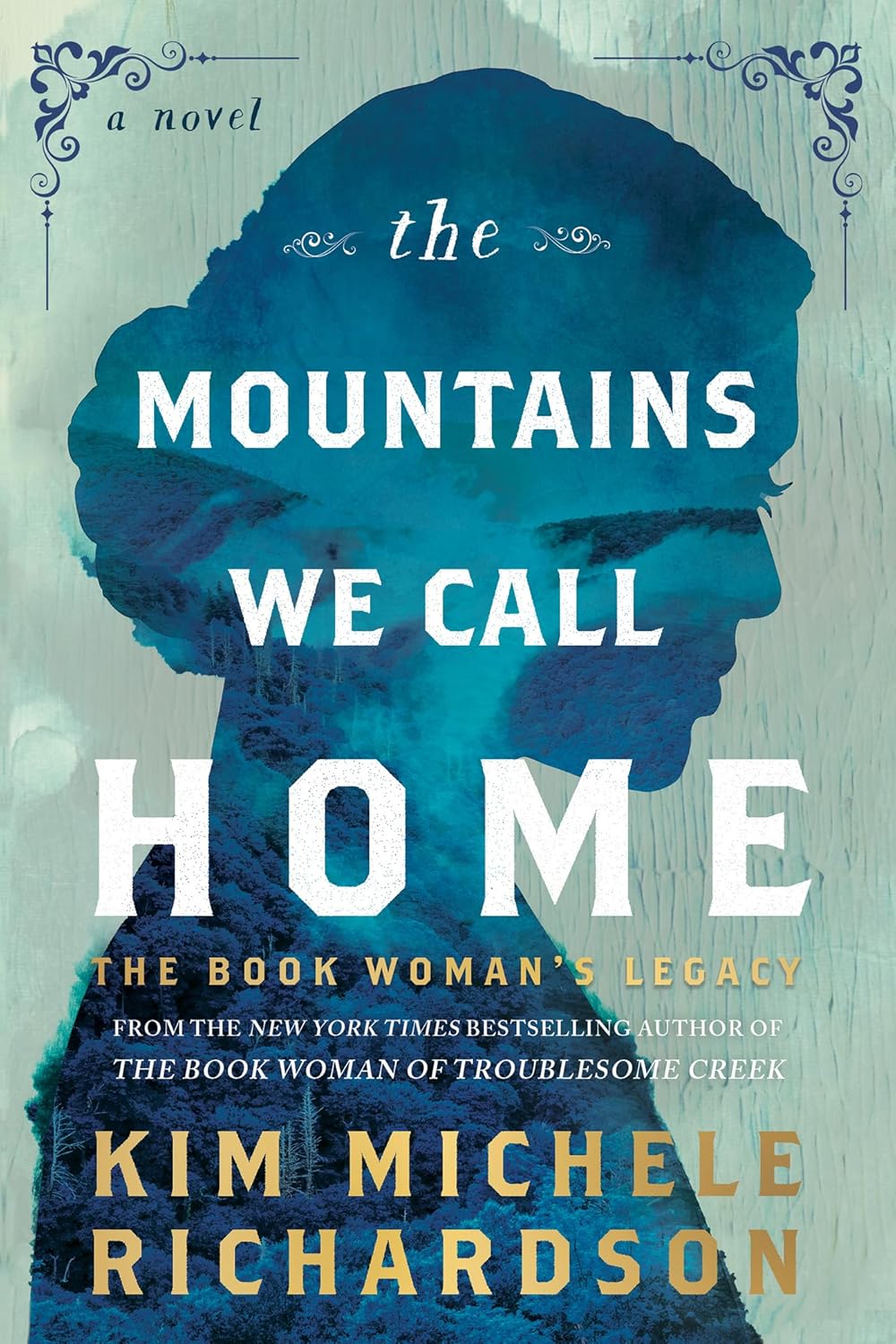
The Mountains We Call Home: The Book Woman’s Legacy, a novel by Kim Michele Richardson, is her third novel about the Packhorse Librarians of the hills of Kentucky. In this novel, Cussy Lovett is unjustly incarcerated because she married a white man. The accusation is false—Cussy has a skin condition, a genetic trait, a blood disorder called methemoglobinemia which causes the skin to appear blue. In those days, as recently as the 1950s, particularly in the hills of Kentucky, people with this affliction were considered “colored” and suffered the same stigma given to Blacks. It is forbidden for a white person to marry a colored person, and years before, her husband, Jackson, was arrested and sent to prison for this “crime.” After his release, the family managed to stay hidden for the past few years.

It’s 1953 and as this story opens, both Cussy and Jackson are arrested and sent to prison for the crime of interracial marriage. Prison is a frightening place. Not only are the guards spiteful, even cruel, many of the inmates are angry and display their anger and resentment toward each other. Cussy’s called names: blueberry, ink blot, ink stain, grape juice. Cussy is given a job working in the kitchen, and the person in charge (another prisoner) is decent to her. As a former Packhorse Librarian, Cussy can see a need for her fellow inmates to have access to books, and she convinces the warden to give her the job of librarian. In her new position, she is able to reach many women, reading to some who cannot read, and suggesting books to those who can.

Throughout her stay, she has not received word about her husband who is in a mens’ prison, and she worries about him constantly. When Cussy realizes she is pregnant, her worries double. Pregnant women are often given forced abortions, and she desperately wants this baby.

When an opportunity opens for her to assist on loan for a week at a library in an underserved neighborhood in downtown Louisville, Cussy is thrilled. She stays with a Black minister and his wife, and makes good suggestions toward their literacy program. The current law is that “coloreds” cannot vote if they can’t read and write. Cussy finds deep gratification as she helps people become eligible to vote.

Her week away from the prison is ending and she dreads going back, mostly because she’s afraid her pregnancy will become obvious and prison officials might force her to have an abortion. She’s had a week of relative freedom with people who respect and appreciate her, people who have overlooked her handicap of being “blue.”

I enjoyed this third book of the “Packhorse Librarians.” In many instances it was an eye-opener for me, particularly the plight of Blacks in Kentucky during that time period. I loved catching up with Cussy Lovett again and admire her perseverance.

Book Review: Hedy After

Version 1.0.0

“….independence is not simply the ability to go places, but the courage to keep stepping into a wider life.”
From Hedy After: The first four years with a Guide Dog

Hedy After: The first four years with a Guide Dog, a memoir by Carolyn Wing Greenlee, continues from the story begun in Steady Hedy, and moves beyond the life-changing experience of receiving her first guide dog, Hedy, a little black Labrador Retriever. I have had the pleasure of knowing the author for several years, so I freely call her Carolyn. In fact, I also know Hedy as we’ve encountered one another at Women Writing the West Conferences on several occasions.

Carolyn discusses the transformative experience of learning to live with and handle a guide dog. It wasn’t always easy. When she was accepted into the program at Guide Dogs for the Blind, Carolyn was still working through her devastating loss of vision. Acquiring a guide dog isn’t like just getting a new pet in the house. It involves almost every aspect of day-to-day living. It means working as a team, and meeting each other’s needs. Their team of two experienced many challenges as they moved through a busy life of household routine, church, family, meeting with friends, travel, public speaking and author/book-related events, often involving confrontations with strangers. Guide Dogs for the Blind gave their little team valuable training, but Carolyn and Hedy had to fine-tune those skills into what would be workable for them.

Hedy is a small dog who can be strong-willed, or hard-headed as Carolyn sometimes refers to her. Both handler and guide dog have had to learn to trust one another to gain the courage it takes to step into the unfamiliar.

The author gives much credit to puppy handlers, those generous-hearted people who raise puppies for fourteen to sixteen months, training them basic skills before they are turned over to Guide Dogs for the Blind.

Among many topics, Carolyn discusses the law that allows guide dogs into restaurants and other places that otherwise would not allow dogs. This can be challenging and not always well-received.

Carolyn writes candidly about bonding with a strong-willed black Lab, learning to trust her, defending her, listening to her, and discovering a rich life with a trusted companion.

Hedy After offers insights into the world of the visually impaired, and the opportunities having a guide dog offers. It takes trust and patience for both human and dog. In addition to her experiences with Hedy, the author graces her story with poetry that enhances her and Hedy’s relationship and emphasizes Carolyn’s strong Christian faith.

Book Review: A Marriage at Sea

A Marriage at Sea: A True Story of Love, Obsession, and Shipwreck, by Sophie Elmhirst is a gripping account of a British couple, Maurice and Maralyn Bailey, who sailed the open waters of first the Atlantic Ocean, then the Pacific. What starts out as a dream of a lifetime, becomes an unimaginable nightmare.

The story briefly goes into the sailors’ backgrounds. Maurice had a sickly childhood. He grew to be a loner, socially awkward, and compulsive. Maralyn is dependable, systematic, and ambitious. They both shared a horror of wasting their lives, of living a humdrum existence. The Baileys married in December 1963 when Maurice was nearly 30, Maralyn 21.

They had a sailboat built to their specifications, a 31-foot Bermuda sloop they named Auralyn, a combination of both their names. It had a wind vane for steering, but no radio transmitter or other electronics of any kind. They sold their house, quit their jobs and, in July 1972 set sail for a journey of a lifetime.

The Baileys headed west from Hampshire, England, with a final destination of New Zealand. Marilyn, extremely organized, had made endless lists of their possessions and exactly where on the boat they were located. Maurice had taught Maralyn how to sail, but in all respects he was the captain of their vessel.

They sailed the Atlantic Ocean making landfall at many of the usual touristy places, meeting other sailors, but always returning to their solitary sailing journey. In February 1973, eight months after leaving England, they passed through the Panama Canal and began the first stage of their Pacific crossing, with their next destination the Galápagos Islands. By this time they had been sailing about six months.

Smooth sailing came to a crashing end when a sperm whale breached and severely damaged their boat. They tried briefly to stuff materials into the cracks, but it was no use, the boat could not be saved. They quickly gathered food, water, clothes, navigational tools, and their logbook. They launched the dinghy, inflated the life raft, and abandoned the Auralyn. Forty minutes from the strike of the whale, their boat sank into the unforgiving sea.

They tied the life raft to the dinghy and took turns sleeping in the more comfortable life raft. Unfortunately, their water jugs became contaminated by sea water, leaving them dependent on rain to replenish. At this point they were 300 miles east of the Galápagos Islands.

Would they have enough provisions to sustain them until they either reached land or were picked up by a passing ship? Would a ship even see them?

A Marriage at Sea held special fascination for me. My husband and I experienced a similar adventure—sold our house, bought a boat (Impunity, a Bristol 40-foot yawl), quit our jobs and, leaving Seattle, Washington, set sail for the South Pacific. Although we saw whales, they didn’t approach our boat. We did have a few rough times: storms at sea, a hurricane while in American Samoa. The Pacific Ocean is huge. In the thirty-five days it took to sail from San Diego to our first landfall in the French Marquesas, we never saw another boat or ship. I could well imagine the desperation the Baileys experienced in their 117 days adrift, exposed to the elements, utterly lacking in sufficient food and water. I’m glad I didn’t read A Marriage at Sea before we left on our sailing journey.

Side note: I wrote about our sailing experience in my memoir, Sailing with Impunity: Adventure in the South Pacific.

Book Review: Riding Lessons

Riding Lessons: Things I Learned While Horsing Around by Michelle Eames is a fun and informative memoir about the author’s journey with horses.

Michelle Ames has always loved horses and acquired her first one when she was 12. From then on it has been a succession of horses. As an adult she acquired an Appoloosa she named Koda, later Kissi, a part-Arabian, then later a variety of horses including two Norwegian Fjords, one of the world’s oldest breeds.

Told with humor, the author describes her journey with horses, how she learned from them as they learned about dealing with humans. She writes of the adventures she’s experienced—both delightful and not-so-great. Michelle rides dressage, a style that emphasizes precision and harmony between the horse and rider. She’s taken lessons and writes about the different movements, hopefully executed in a controlled manner. Well, anyway, that’s the goal.

The expense of owning horses is notable. Not counting the cost of buying the animal itself, there’s a saddle and other tack, riding boots, a barn or building to shelter the horse, hay, acreage for exercise and grazing, which necessitates fencing, a truck and trailer, and regular vet and farrier (person who trims hooves) bills. Owning horses is a financial commitment. Still, for Michelle, the love of horses outweighs the costs.

The author lives in Eastern Washington so experiences some cold weather, even snow. She discusses the long winters, and later the subsequent mud. In good riding weather, she talks about long rides, even over-nighters with friends. She talks about training and the importance of going about it in slow steps, at the horse’s speed. She goes into some detail about the importance of a good-fitting saddle, both for the horse and for the human.

Horse lovers, especially those contemplating acquiring a horse, will learn a lot from the author’s experiences. As she discovers each horse’s quirks, she learns to adapt. She shares the good and bad, with humor, and always with love. She discusses teaching a horse the art of getting in and out of a trailer, about breeding, and most of all about the strong bond between a horse and its human.

Riding Lessons was a fun read. Those who have horses would enjoy it, too. It’s a book written with love, love of horses and love of the satisfaction and contentment that horses bring to their human.

Book Review: When People Were Things

Version 1.0.0

When People Were Things: Harriet Beecher Stowe, Abraham Lincoln, and the Emancipation Proclamation by Lisa Waller Rogers is an extraordinary book that brings history to life.

The story begins when Abraham Lincoln was twenty-two. It tells of his early years and struggles. He had a curious mind, but his formal education was limited to a month here, a month there, amounting to about a year of institutional education. Piece by piece Lincoln taught himself about law. He earned a law degree and was admitted to the Illinois bar in 1836. He practiced law for about twenty-five years before becoming President of the United States in 1861.

When People Were Things discusses other important people who helped shape America’s attitudes toward slavery. Of particular interest to me was the story of Harriet Beecher Stowe, author of Uncle Tom’s Cabin, an anti-slavery novel that had a profound effect on attitudes toward African Americans and slavery. The book was first published in forty-one serial newspaper segments, then later published as a wildly popular book.

When People Were Things humanizes historical figures and their struggles with moral complexities. President Lincoln had a clear vision of the country’s moral obligations, but he constantly had to defend his positions with his cabinet. His presidency was often one of criticism, strife and doubt. He was battered from all sides: too radical for Democrats and not radical enough for Republicans.

Many people were involved in the abolitionist movement to end slavery and liberate enslaved individuals. Harriet Tubman, an African-American abolitionist and social activist born around March 1822, was best known for her role as a “conductor” on the Underground Railroad, where she led approximately 70 enslaved people to freedom.

In the meantime, Lincoln had his hands full with his wife, Mary. The two had nothing in common. Lincoln loved to read, contemplate. Mary loved to socialize, needed constant attention and excitement. She purchased extravagant clothes and furnishings for the White House, far exceeding their budget. They had four sons, but after their son, Willie, died Lincoln feared for his wife’s sanity.

When People Were Things is a lengthy volume at 680 pages, packed with fascinating stories and insights of the Civil War era. Author Lisa Waller Rogers highlights the moral complexities of the times, particularly about abolitionists who played significant roles in advocating for the emancipation of enslaved people. This book would be ideal reading for history students and anyone interested in this period of our nation’s history.

Book Review: The Home for War Orphans

Version 1.0.0

The Home for War Orphans by Jenna Ness, book one of three in the historical fiction “Orphans of St. Agnes” series, is a gripping novel about a group of Jewish orphans and their leader fleeing occupied France in 1940.

Sister Helen Taylor, 50, isn’t a Catholic nun as the name might imply, but is the head mistress and founder of St. Agnes Orphanage in Paris, France. The old, crumbling building is the only home some of the children can remember. Helen has faced many dangers—she was a battlefield nurse for the Red Cross, has lost a husband and child, and has many regrets. Her only focus now is to save the children in her charge from Nazis who are fast approaching the gates of Paris. Helen has been able to place some of the children in homes, but now she must get her remaining six charges to safety. It’s risky: their old German-made truck is likely to break down, funds are short, and their future uncertain.

Margot Vashon, almost 18, is the oldest child at St. Agnes’ Orphanage, but she has the comfort of having her little sister Lucie with her. Sister Helen has counted on Margot’s help for years and now Margot must take on the crucial role of helping keep these children safe while making their escape.

The group’s goal is to travel to Marseille, on the French southern boarder, board a ship to Portugal, then eventually sail to the United States. As they make their escape, we learn Helen Taylor’s story of successes and bitter failures, and of Margot’s struggle to help the younger children cope with the hardships of travel. A young French AWOL soldier joins the group, but is this going to be a hindrance or help? When Margot’s little sister gets separated from the group, they are torn between taking the time to find her and endangering the whole group from the advancing Nazis, or going on without her.

The Home for War Orphans is an inspiring novel of courage and perseverance. Much of the book concentrates on internal conflict and relationships while in the midst of traveling under the dangerous conditions of congested roads, limited supplies, and frantic efforts to escape Nazi invasion. It’s a well-written novel with surprising turns.

Book Review: The Good Daughters

Version 1.0.0

The Good Daughters, a novel by Joyce Maynard, is a gripping story of two families, their secrets, and the events that shaped their lives. The novel begins in New Hampshire, 1949.

The story alternates between two daughters of two different families. Ruth is the fifth daughter of Edwin and Connie Plank. Unfortunately, Ruth isn’t really close to her older sisters, has never felt like “one of them.” Although her siblings look like sisters, Ruth is slimmer and grows taller—her father calls her “his beanpole.” She loves trailing after her father on their fifth-generation family farm; is happiest in his company. She loves the animals and the growing of vegetables. Ruth is consumed with art during her childhood, and into adulthood art becomes her vocation.

Dana Dickerson was born at the same hospital, the same day, as Ruth Plank. Connie Plank, Ruth’s mother, calls them birth-sisters and every year, no matter where the Dickersons are living, the two families get together. Mrs. Dickerson clearly is not particularly interested in these reunions, but Mrs. Plank is insistent about their get-togethers. Dana’s parents are the opposite of Ruth’s. Dana’s father is a dreamer, following one scheme after another—creating inventions that never seem to pan out, writing songs that don’t go anywhere. Dana’s mother is an artist, though not recognized for her talent. Home life for the Dickerson family is a succession of rented houses that aren’t really considered “homes.” Dana and Ruth Plank, although “birth sisters” are not necessarily close, but Ruth has always had a crush on Ray, Dana’s older brother. As they mature, Ruth’s attraction to Ray grows. Dana’s dream is to attend college, and begins saving for college when she is fourteen.

Occasionally the Dickersons visit the Plank family farm in the summer when Planks’ vegetable and flower stand is in operation. Dana Dickerson and Ruth’s father talk “farming” endlessly. Dana loves everything about the farm, especially the animals, but also asks details about the propagation of fruits and vegetables.

As the story progresses we follow each family’s progress, or decline, from Ruth and Dana’s viewpoints. Raised in vastly different environments, the one thing they both desire is to succeed in their chosen vocations. Ruth appreciates and excels in art, especially human art form. Dana holds three different jobs in order to graduate from college, and eventually gets a bachelor’s degree in the College of Agriculture.

The story follows these two vastly different women as their lives take surprising turns.

I loved The Good Daughters. The relationship between the two families is fascinating, and as Ruth and Dana grow and become adults their backgrounds profoundly affect their futures in dramatic and surprising ways.