
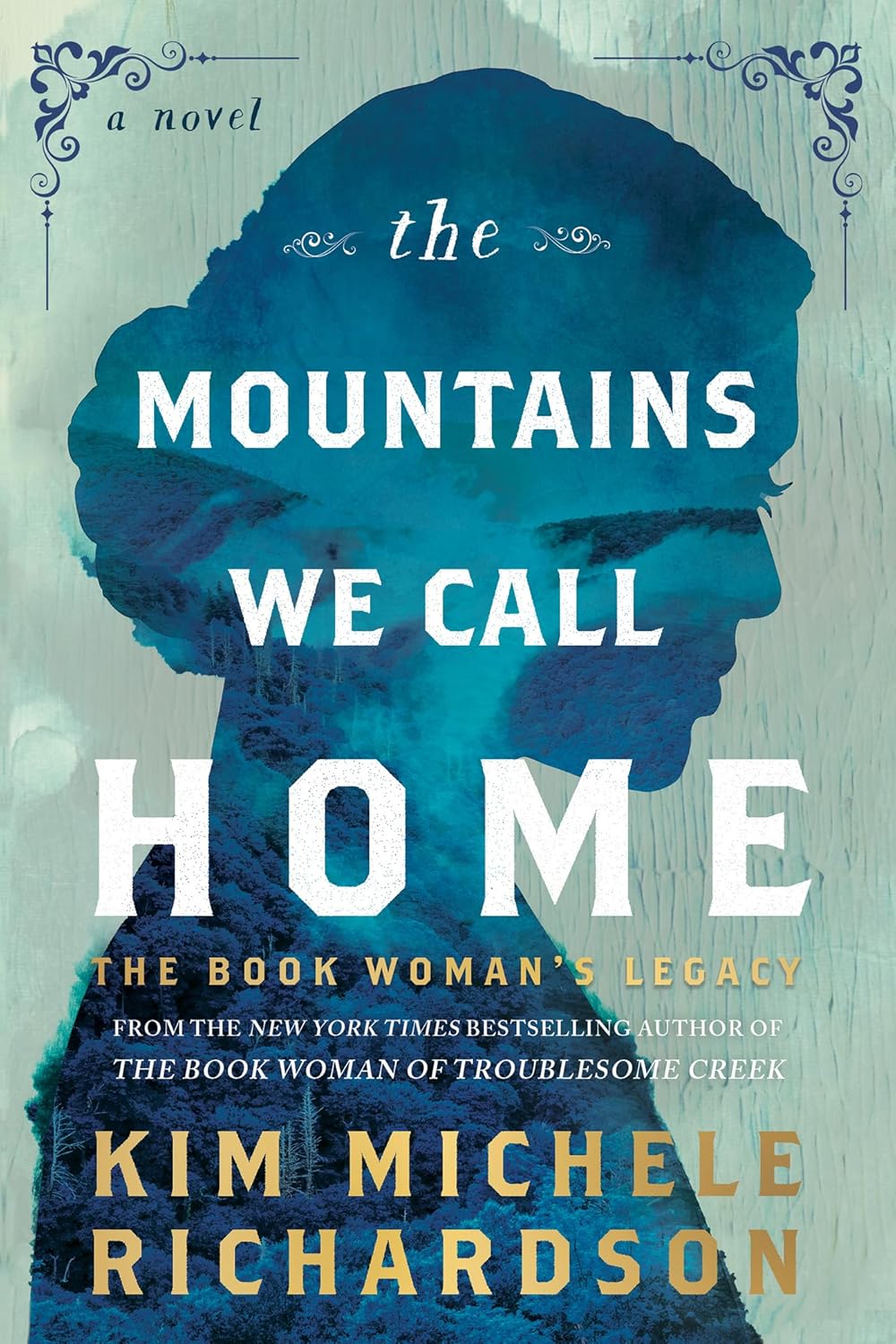
The Mountains We Call Home: The Book Woman’s Legacy, a novel by Kim Michele Richardson, is her third novel about the Packhorse Librarians of the hills of Kentucky. In this novel, Cussy Lovett is unjustly incarcerated because she married a white man. The accusation is false—Cussy has a skin condition, a genetic trait, a blood disorder called methemoglobinemia which causes the skin to appear blue. In those days, as recently as the 1950s, particularly in the hills of Kentucky, people with this affliction were considered “colored” and suffered the same stigma given to Blacks. It is forbidden for a white person to marry a colored person, and years before, her husband, Jackson, was arrested and sent to prison for this “crime.” After his release, the family managed to stay hidden for the past few years.
It’s 1953 and as this story opens, both Cussy and Jackson are arrested and sent to prison for the crime of interracial marriage. Prison is a frightening place. Not only are the guards spiteful, even cruel, many of the inmates are angry and display their anger and resentment toward each other. Cussy’s called names: blueberry, ink blot, ink stain, grape juice. Cussy is given a job working in the kitchen, and the person in charge (another prisoner) is decent to her. As a former Packhorse Librarian, Cussy can see a need for her fellow inmates to have access to books, and she convinces the warden to give her the job of librarian. In her new position, she is able to reach many women, reading to some who cannot read, and suggesting books to those who can.
Throughout her stay, she has not received word about her husband who is in a mens’ prison, and she worries about him constantly. When Cussy realizes she is pregnant, her worries double. Pregnant women are often given forced abortions, and she desperately wants this baby.
When an opportunity opens for her to assist on loan for a week at a library in an underserved neighborhood in downtown Louisville, Cussy is thrilled. She stays with a Black minister and his wife, and makes good suggestions toward their literacy program. The current law is that “coloreds” cannot vote if they can’t read and write. Cussy finds deep gratification as she helps people become eligible to vote.
Her week away from the prison is ending and she dreads going back, mostly because she’s afraid her pregnancy will become obvious and prison officials might force her to have an abortion. She’s had a week of relative freedom with people who respect and appreciate her, people who have overlooked her handicap of being “blue.”
I enjoyed this third book of the “Packhorse Librarians.” In many instances it was an eye-opener for me, particularly the plight of Blacks in Kentucky during that time period. I loved catching up with Cussy Lovett again and admire her perseverance.