
“….independence is not simply the ability to go places, but the courage to keep stepping into a wider life.”
From Hedy After: The first four years with a Guide Dog
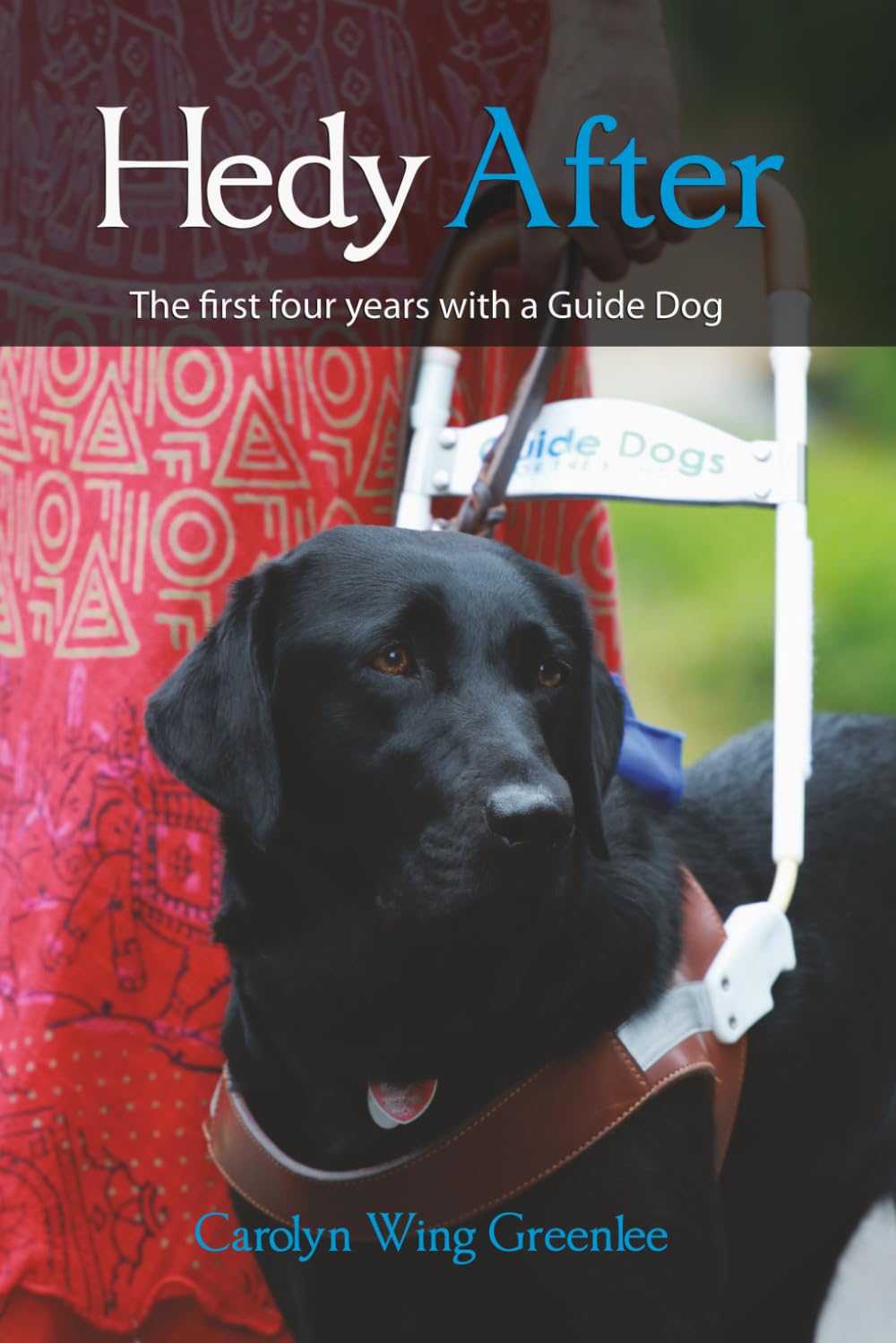
Hedy After: The first four years with a Guide Dog, a memoir by Carolyn Wing Greenlee, continues from the story begun in Steady Hedy, and moves beyond the life-changing experience of receiving her first guide dog, Hedy, a little black Labrador Retriever. I have had the pleasure of knowing the author for several years, so I freely call her Carolyn. In fact, I also know Hedy as we’ve encountered one another at Women Writing the West Conferences on several occasions.
Carolyn discusses the transformative experience of learning to live with and handle a guide dog. It wasn’t always easy. When she was accepted into the program at Guide Dogs for the Blind, Carolyn was still working through her devastating loss of vision. Acquiring a guide dog isn’t like just getting a new pet in the house. It involves almost every aspect of day-to-day living. It means working as a team, and meeting each other’s needs. Their team of two experienced many challenges as they moved through a busy life of household routine, church, family, meeting with friends, travel, public speaking and author/book-related events, often involving confrontations with strangers. Guide Dogs for the Blind gave their little team valuable training, but Carolyn and Hedy had to fine-tune those skills into what would be workable for them.
Hedy is a small dog who can be strong-willed, or hard-headed as Carolyn sometimes refers to her. Both handler and guide dog have had to learn to trust one another to gain the courage it takes to step into the unfamiliar.
The author gives much credit to puppy handlers, those generous-hearted people who raise puppies for fourteen to sixteen months, training them basic skills before they are turned over to Guide Dogs for the Blind.
Among many topics, Carolyn discusses the law that allows guide dogs into restaurants and other places that otherwise would not allow dogs. This can be challenging and not always well-received.
Carolyn writes candidly about bonding with a strong-willed black Lab, learning to trust her, defending her, listening to her, and discovering a rich life with a trusted companion.
Hedy After offers insights into the world of the visually impaired, and the opportunities having a guide dog offers. It takes trust and patience for both human and dog. In addition to her experiences with Hedy, the author graces her story with poetry that enhances her and Hedy’s relationship and emphasizes Carolyn’s strong Christian faith.