
Book Review: The Uncharted Flight of Olivia West

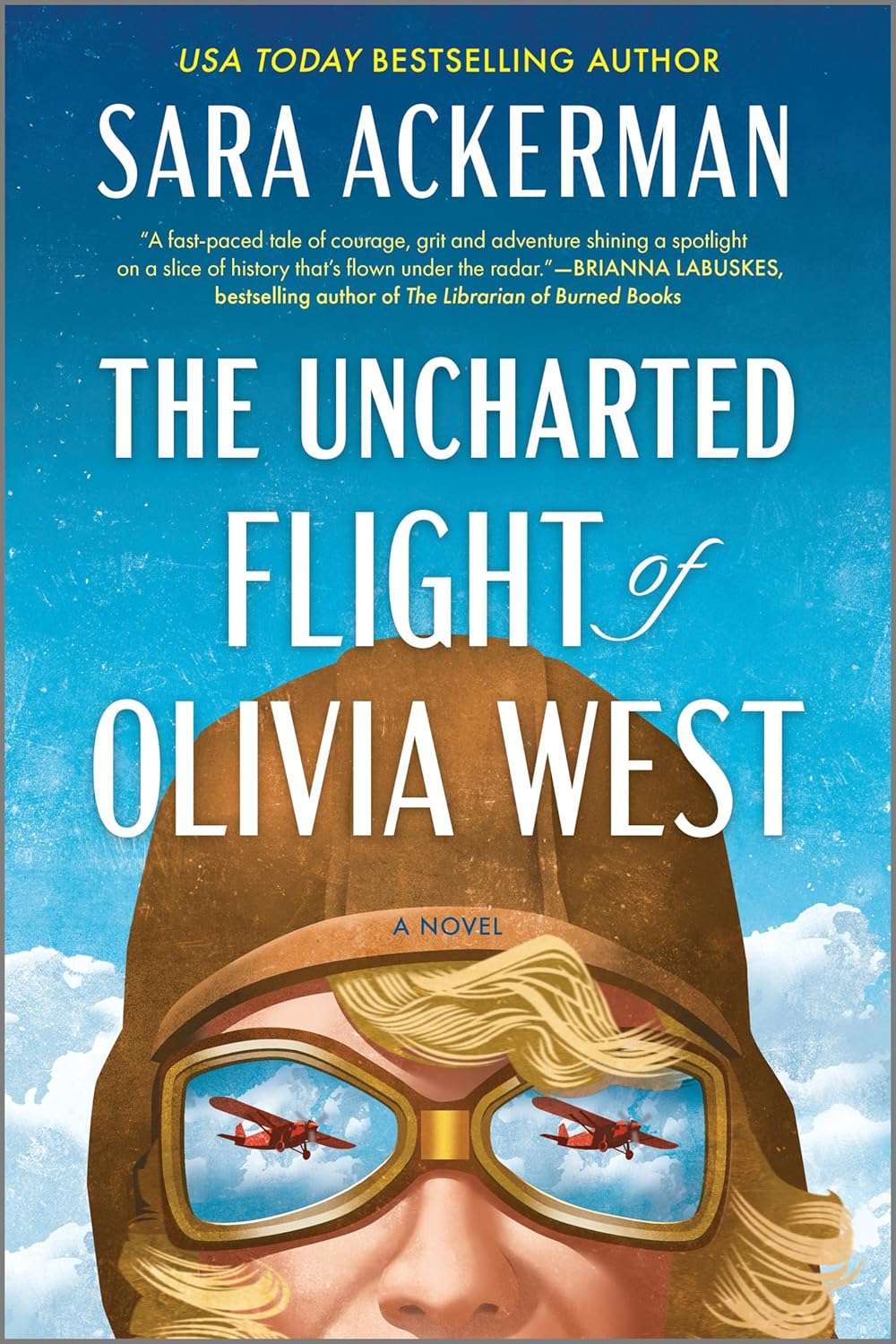
The Uncharted Flight of Olivia West by Sara Ackerman, a gripping novel inspired by real events, is about a woman aviator who competes in a race across the Pacific, from San Francisco to the Island of Oahu, Hawaii. The story toggles to another young woman who inherits land on Hawaii’s big island, Hawaii. The novel takes place alternately between 1927 and 1987.

It’s 1927 and Olivia West has learned about the Dole Air Race, a high-stakes contest to be the first to make the 2,400 mile Pacific crossing. Olivia has a pilot’s license and is also an expert on navigation. Her father, a commercial fisherman, taught her navigation, including extensive knowledge of atmospheric conditions. It soon becomes clear that only men will be accepted as pilots, but Olivia is able to participate in the race as navigator. The airplane she’ll navigate, the Malolo is 27 feet long, a little more than 9 feet high, has a 41-foot wingspan, and is covered in canvas. Only two people, a pilot and a navigator, will be in each plane. Leaving San Francisco, only five out of the seven qualifying planes will even make it up in the air. As expected, not all will survive this dangerous journey.

It’s 1987 and Wren Summers is almost flat broke when she learns she has inherited a remote piece of land on the Big Island of Hawaii. When she investigates her inheritance she finds a large old dilapidated barn and an overgrown macadamia nut grove. Her first idea is to sell the land and use the money to live on. Upon further investigation she finds clues to aviation history in the barn that could be priceless. In the meantime, Wren needs money to live on until she can sort out the mysteries she’s encountered. She finds work at a nearby senior care center. What she discovers in talking with the residents at the center are pieces of Olivia West’s story, and of her own family’s history.

I found The Uncharted Flight of Olivia West a fascinating story of bravery and of courage it took for early aviators to undertake this harrowing journey. The Dole Air Race, also known as Dole Derby, actually took place in August, 1927. Toggling from 1927 to 1987 was well done as it captured aviation history and also Hawaii’s modern-day charm.

Book Review: The Geography of Desire

Version 1.0.0

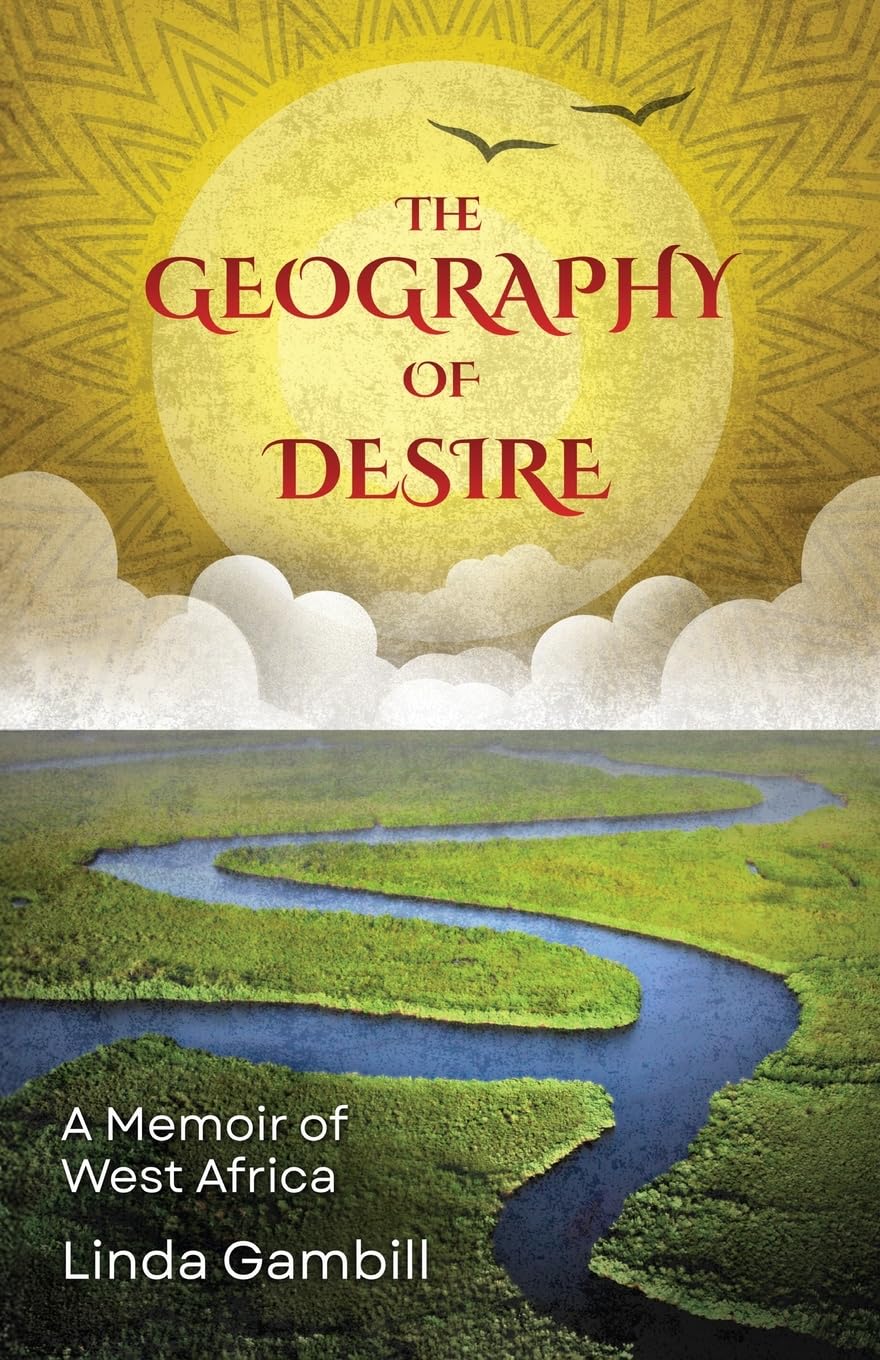
The Geography of Desire: A Memoir of West Africa by Linda Gambill, is a richly described chronicle of one woman’s experience as a Peace Corps volunteer in The Gambia, West Africa, beginning 1979.

Linda Gambill, 24, is desperate to leave her current life in Tennessee and follow her dream of joining the Peace Corps. She leaves her menial job and a troubled relationship, and follows her dream of going to Africa. After in-country training she’s assigned a position as health worker in Medina, a devout Muslim village in The Gambia. Typical of Peace Corp tradition, Linda is given a Gambian name, Satou Sillah, but in this review I’ll use her given American name. She begins her two-year term of service with high hopes of making a difference, of helping people live healthy lives.

Almost immediately Linda runs into difficulty. Although she’s been trained in Wolof, a local dialect, most villagers in Medina speak Fula. A few of the villagers do speak Wolof, but Linda knows the importance of communicating in the local dialect, so she tries to adapt to the common language. As a health worker, Linda planned to teach health education in the village school, but soon after she arrives the rainy season begins, and the school closes.

Linda’s Gambian counter-part, called a dresser-dispenser, in charge of a health clinic, is a difficult man, set in his ways. When Linda observes that he doesn’t run a sanitary clinic—hypodermic needles are not sanitized, surfaces are not cleaned regularly—he becomes defensive and belligerent. She is appalled when she learns that half of Gambian children die before they reach the age of five. Linda attempts to teach the local women good health practices, introduce the concept of germs and the importance of washing hands with soap and water, etc., but most of them only speak Fula and don’t understand. She draws pictures as a teaching aid, but is met with laughter—the concept of learning from drawings is strange to them. Linda tries to get permission from village leadership to use a plot of land to start a community garden as a way of supplementing local diets with fresh vegetables, but is given excuses and delays.

The Geography of Desire is an interesting account of a Peace Corp volunteer’s attempt to make a difference in a community with limited resources. I was particularly interested in this book because my husband and I served in The Gambia 1979 -1981, an experience I wrote about in my memoir Tubob: Two Years in West Africa with the Peace Corps. Peace Corps brings in a new group every six months (one group is leaving as another arrives). One of the important differences in our experiences is that as a married woman I had a constant companion, a husband I could confide in and enjoy joint experiences. Although enduring loneliness and frustration, the author made impressive accomplishments and lasting friendships.

Book Review: With the Enduring Tides

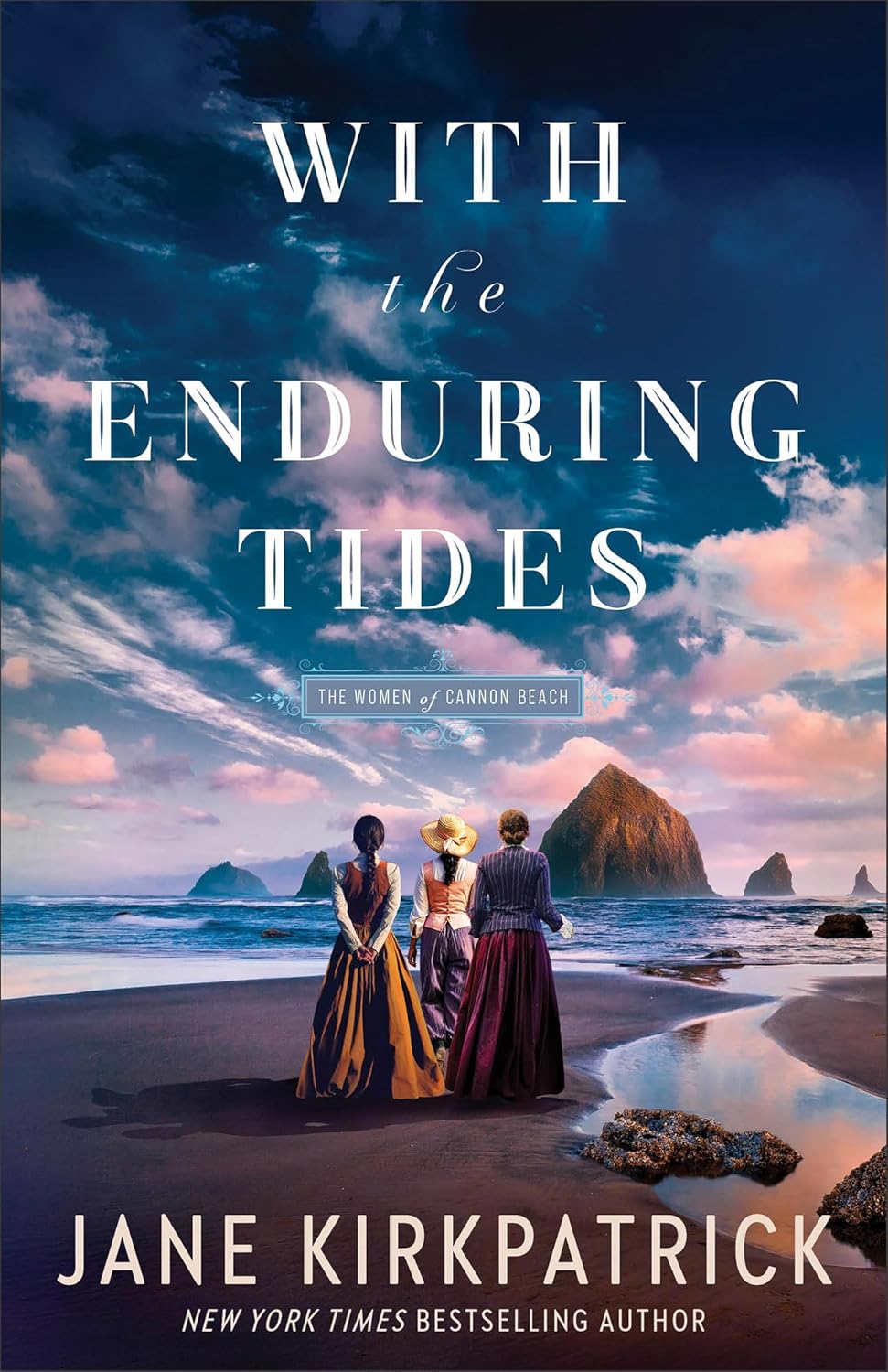
With the Enduring Tides, a new novel by Jane Kirkpatrick, Book Two of the “Women of Cannon Beach” series, is a story of resilience, redemption, and enduring friendships. The story takes place on Oregon’s North Coast, specifically Cannon Beach, in the early 1900s.

Mary Gerritse isn’t typical of many women of her time. Although happily married to John and the mother of four children, she thrives on her job as a mail carrier. Her day starts according to the ebb and flow of the ocean tides. She saddles her horse, readies her two pack horses and rides from their farm in Manzanita to Tillamook, Oregon. Along the way, she occasionally meets friends and new-comers to the area, and in addition to mail, often carries medicine or other goods to those along her route.

John Gerritse would prefer his wife to be a stay-at-home wife and mother, but he knows how much the independence of being a postmistress means to her. Still, he chafes that Mary is the principal wage-earner, leaving him with the responsibility of the children and farm during the long days of her absence.

John and Mary’s oldest daughter, Belle, 11, wants to live with Mary’s parents, but John and Mary feel she is too young to be away from them. Mary’s mother’s health is declining and her father has hired a caretaker/housekeeper, a woman with a young daughter. Belle is convinced she could help her grandparents’ situation, and John and Mary reluctantly grant their permission. On a family trip to her parents’ farm, Mary is impressed with the caretaker and feels the relationship between the young woman and Belle will be beneficial to both.

As the story develops, we learn of Mary’s friends, some of whom we’ve met in the first book of the series, Across the Crying Sands. In this small community faithful friends are treasures, and we learn, especially in hard times, how valuable loyal friendships can be. Mary’s friends draw strength from each other, help one another in tough times, rejoice together in good times. When Mary discovers troubling secrets of her family’s past, she draws strength from family and friends.

With the Enduring Tides, inspired by true events, is a heart-warming story of the strength of family and the value of loyal friends. I have read and reviewed more than a dozen of Jane Kirkpatrick’s novels and have discovered each to have gems of wisdom and valuable lessons to live by. This second book of her “Women of Cannon Beach” series is yet another inspiring novel that leaves a lasting impression of loyalty and strength found in family and friends.

Book Review: Clock Without Hands

Clock Without Hands, a novel by Carson McCullers (1917–1967) brings to life southern attitudes toward racial segregation during the civil-rights-era. The story takes place in a small Georgia town, 1953. Throughout the novel Black people are referred to as Negro, Negra or even the “n” word. Although jarring, it’s a sign of the times, and in context I found it acceptable.

Pharmacist J. T. Malone, 40, diagnosed with leukemia, is given a year to live. He’s a fair man, well-liked by the community. Now that he knows his life is measured, he has regrets over opportunities wasted. One of Malone’s best friends is Judge Clane.

Judge Clane, a well-respected citizen of their small Georgia town, still agonizes over the suicide of his son, also a lawyer, seventeen years earlier. When the judge thinks of his son, he feels mad, sad, cheated. They were often at odds, especially in terms of racial justice. The Judge has strong opinions, even fear, about the growing trend toward equality of the Negro. The idea of having Negro children and white children attend the same school is unconscionable; sharing a lunch counter or even a drinking fountain, ridiculous.

The judge’s grandson, Jester, on the brink of adulthood, lives with him and constantly questions his own life’s worth. He deeply resents that his father took his own life. Although Jester has every advantage, he is not happy and openly disagrees with his grandfather’s attitude toward white supremacy.

Sherman Pew, a young black man with blue eyes, lives on Judge Clane’s property and is given almost free reign. Years before, Pew saved the Judge’s life and now the young man comes and goes as he pleases. As a baby, Pew was found in a church and is obsessed about knowing who his parents were. With his blue eyes, but dark skin, it seems obvious that one of his parents was white. Sherman wavers between wanting to be noticed, yet is afraid to be noticed. Finally, he moves from his apartment on the Judge’s property to a run-down white neighborhood, upsetting the fragile balance of the town.

I found Clock Without Hands thought provoking. As a northerner, my viewpoint in 1953 on racial justice was more as a casual observer, though even in Seattle I knew there were equal housing issues. Although a teenager at the time, it simply didn’t occur to me that housing restrictions resulted in segregated schools. Now I find it unsettling to read of hatred, inequality and the obvious unfairness of Southern prejudices. This novel is a well-written story of far-reaching discrimination, and the profound effect those attitudes have on societies.

Book Review: The Heart of Everything That Is

“The white man made me a lot of promises, and they only kept one. They promised to take my land, and they took it.”
—Red Cloud

The Heart of Everything That Is: The Untold Story of Red Cloud, An American Legend by Bob Drury and Tom Clavin is an in-depth, scholarly account of Red Cloud, an American Indian who defeated the United States Army in war.

In 1821, while giving birth to her first son on the banks of the Blue Water Creek, North Platte River in present-day Nebraska, an Oglala woman noticed a glowing red meteor streak across the night sky. The child came to be known as Makhpiya-luta, or Red Cloud.

Red Cloud became skilled in the way of native tradition. Warfare was considered a way of life; stealing horses from other tribes a means of exhibiting skills. They hunted the sacred buffalo, from whom they gained not only food, but clothing, material to construct tepees, and weapons. The animal itself represented Indian culture.

Red Cloud became chief among his own Oglala people, and eventually maintained authority over the Southern branches of the Cheyenne, Arapaho, and Lakota, collectively known as the Sioux.

The Indian way of life was diminishing. White settlers wanted more and more land. Gold lured people to Indian hunting grounds. To the Lakota, the Black Hills are Paha Sapa, “the heart of everything that is,” but this sacred land became the casualty of one of the most blatant land grabs in U.S. history. Treaty after treaty was broken, the Indians pushed aside as thirst for gold and more land grew. Indians were shoved onto barren land that couldn’t adequately support them. Promised rations often arrived spoiled or not delivered at all.

U. S. Army forts were erected to protect the Americans, and soldiers sent on missions to annihilate the Sioux. Seeing his way of life threatened, Red Cloud, now a powerful warrior, was forced to fight for the very existence of the Indian way of life. In 1866 Red Cloud led a successful war, the Fetterman Massacre, against the United States. The U.S. Army would not experience such a defeat again until a decade later with the Battle of the Little Bighorn, sometimes called Custer’s Last Stand.

The Heart of Everything That Is is a comprehensive study of the Indian way of life, brutal though it may seem by today’s standards. The United States made promises to its native people that it didn’t keep. Many familiar names are mentioned, people who played roles in Red Cloud’s life: mountain men such as Jim Bridger, U.S. generals like William Tecumseh Sherman, who were charged with annihilating the Sioux, fearless explorers, such as John Bozeman, and memorable warriors like Crazy Horse, whom Red Cloud groomed.

The four pillars of the Sioux nation—acknowledged by the tribe to this day—are bravery, fortitude, generosity, and wisdom. Red Cloud stood for all these pillars, attributes toward this great leader that are finally recognized in United States history.

Book Review: Whatever Happened to Lori Lovely

Whatever Happened to Lori Lovely, a novel by Sarah McCoy, is based on the true story of a Hollywood movie star giving up her career to become a nun. It’s such a good novel I had to keep reminding myself to slow down and savor this wonderful story.

In 1990, Lu Tibbott is under pressure to finish her senior thesis in modern American history. Her graduation from college hangs in the balance. Rather than spend endless hours in a library, Lu decides to write about her Aunt Lori, now Mother Lori at Benedictine Abbey. Lu drives from North Carolina to Bethlehem, Connecticut, tape recorder in hand, to interview her aunt.

The story toggles to 1964 when Lucille Lorianne Hickey, 18, travels from her family’s home in North Carolina to New York to visit her sister and brother-in-law. While there, she works with them in their photography studio. Her brother-in-law takes her portrait and the picture is so flattering, they place it in the front window as advertisement. A scout from Paramount Studios sees the picture and encourages Lucille to try out for a production at a local theater. Lucille grew up dancing and singing, so she’s a natural and is accepted. One opportunity leads to another and she becomes a rising star under the name of Lori Lovely. She auditions for and is accepted as Juliet in a movie, Romeo & Juliet, The Musical, together with Lucas Wesley, a popular singer, who plays Romeo. They work in Rome with an award-winning director and the movie is a huge success. The two become romantically involved, though their careers don’t always allow them to be together.

When tragedy strikes, Lori retreats to a convent, which she has previously visited.

The story toggles from 1964 to 1990, from Lu Tibbott’s interview with Mother Lori, to Lucille Lorianne Hickey’s story and transformation to Lori Lovely.

This is a wonderful novel based on the true story of Dolores Hart, a rising film star in the 1960’s who left Hollywood to become a Catholic nun. I remember hearing about that incident and wondered at the time what caused this unlikely transformation. I don’t know how closely this book follows the actual facts, but I enjoyed Whatever Happened to Lori Lovely and learning the complexities and anxieties of being a famous movie star.

Book Review: The CEO

The CEO, a contemporary novel by Michael Whitworth, is a small book with a big message.

Adam Cole, 22, about to graduate from college, is weighing his options for future employment. He has two offers to consider. The offer from Fyre, Inc. seems two good to pass up. The impressive sparkling glass building, a tower, really, is in the heart of the city. The CEO promises a generous salary, great benefits including a trendy car, an eventual corner office, and a fast track to the top. Adam is impressed with the offer, and flattered that he is being seriously considered, even wooed by the president of the company.

The other offer is definitely not as glamorous. Light Co. is modest, especially in comparison with Fyre. The unpretentious building is a converted factory outside of town. It has a nice setting with gardens surrounding the building. The interview goes well, the people seem friendly. There isn’t nearly the intensity Adam experienced at Fyre— employees seem much more relaxed as they go about their duties. Light isn’t nearly as upscale as Fyre, nor are the benefits as good. Adam is taken aback when Joshua, the CEO, asks him: “What do you want your life to be about?” Further, Joshua tells him that even if he takes another job, the offer to work there would remain open. What kind of businessman would make that kind of offer?

Adam can’t resist the glamor of Fyre, Inc. He’s immediately swept away with the intensity of the employees, the pressures to meet expectations. Late hours, even working weekends, are the norm. His private life is almost non-existent. The pressure is intense, but he does manage to climb the corporate ladder, even working himself into a coveted corner office. But Adam’s private life is shredding away; he loses everything that really matters. He’s under intense stress. His life isn’t really his own. Two years have passed, two years of choosing the most lucrative path for Fyre, of making decisions for profit at the price of integrity.

What would happen if Adam took the leap to the job at Light? Was Joshua serious when he said the offer would remain open?

The CEO is a parable about grace and redemption. The author backs up the theory of salvation quoting from the New Testament when the Apostle Paul wrote a letter to the church in Ephesus. The CEO is a little book chock-full of inspiration and truth. It would be worthwhile reading for anyone, but especially for college students making plans for their future.

Book Review: Beach Music

Beach Music, a novel by Pat Conroy (1945 – 2016) is an expansive contemporary story of a richly described Southern family. The story takes place in Rome, Italy and South Carolina.

Widowed Jack McCall, an American, lives in Rome with his eight-year-old daughter, Leah. Although the darkness of the tragedy of his wife’s suicide is always with him, Jack and Leah live a good life. Jack’s occupation as a travel and cookbook writer keeps his life interesting and active.

When Jack is notified that his mother is dying, he and Leah return to South Carolina. For Jack, the trip home is rife with hard feelings and dread, though he wants to bring comfort to his mother and four brothers. He has nothing but disgust for his alcoholic father, though tolerates his mother’s new husband. What he would like to avoid is seeing his wife’s parents who, distraught after their daughter’s suicide, fought desperately for custody of their granddaughter, Leah.

Throughout the story, Jack’s mother is either in the hospital, or on respite at home. The banter between the five brothers is often humorous though rough, but they always show great love for their mother and each other, and disdain for their father.

Beach Music has several lengthy flashbacks to Jack’s childhood, particularly his teen years and his group of close friends (one of whom was his deceased wife). Another flashback is of his Jewish in-laws and the terrors of their experience in the Holocaust. His mother’s abusive childhood is also told in flashback. Another covers the turmoil of the Vietnam War which took place when Jack and his friends were in college. These recollections give credence to the attitudes, dark memories, and actions of the present-day story.

Beach Music draws on a wide range of emotions: love, envy, fear, hate, regret, and deep sadness. The characters are well developed and by the end of the book, I felt I personally knew the various people in Jack McCall’s life. It’s a long story (800 pages) that covers a wide range of a large family’s life. Pat Conroy was a superb writer with several successful books to his credit. Beach Music is right up there as one of my favorites.

Book Review: The Work of Wolves

The Work of Wolves, a richly woven contemporary novel by Kent Meyers, takes place in South Dakota’s ranch country.

Carson Fielding, 14, buys his first horse from a neighboring rancher, Magnus Yarborough. Carson grew up around horses, but this is the first one he’s purchased on his own. Eight years later he is known as a skilled and respected horse trainer. Magnus Yarborough hires Carson to train three horses, and in addition requests that Carson teach Yarborough’s young wife to ride.

While on Yarborough’s property Carson observes that the rancher is not only power-hungry, but is actually cruel to animals. The horse training goes well, and eventually the horses can be used to give riding lessons to Yarbarrow’s wife, Rebecca. As they become more acquainted, they form an attraction to one another. Carson learns she is disenchanted with her controlling husband and, in fact, is afraid of him.

Some time later, while at an outdoor gathering with some of the local fellows, Carson and a couple of friends discover the three horses Carson trained in a small fenced-in pen, without fresh water and apparently starving. Is this some kind of retribution toward Carson, possibly a preconceived notion of attraction betweenYarborough’s wife and the young man? Whatever the reason, Carson cannot tolerate cruelty toward these fine horses. The three young men take action setting off a chain of events that profoundly affects them all.

Included in this group of concerned young men are Earl Walks Alone, a Lakota Indian, an exceptionally bright young man who is studying to get into college, and Willi, originally from Germany who came to the area as an exchange student. Willi’s German family has a dark history that troubles the young man. Later, Earl Walks Alone’s Uncle Ted joins the group of concerned young men. Ted is a colorful, wise man who apparently has no concerns about material things but has a big heart toward animals.

I loved this novel. The characters are finely drawn, with each unique characteristic shown through action and crisp dialog. South Dakota’s vast land is well described, both in its beauty and its bleakness. The plot keeps up a tense pace. I recommend this novel to those who enjoy reading about ranch life, and who appreciate an engaging, vividly described story.

Book Review: The Whip

“There will come a time when you believe everything is finished. That will be the beginning.”
—Louis L’Amour

The Whip, a novel by Karen Kondazian was inspired by the true story of Charlotte “Charley” Parkhurst (1812-1879) who lived most of her extraordinary life as a man. The story takes place in Massachusetts, Rhode Island and finally California.

When just a baby, Charlotte Parkhurst was left on the doorstep of an orphanage in Boston, Massachusetts. Growing up in a harsh environment took its toll on Charlotte. She didn’t fit in with the other girls. She hated sewing and other work expected of girls. Lee, an older boy at the orphanage, became her protector and the two of them became friends. As Charlotte grew older she refused to perform the feminine duties expected of her, and as a punishment was sent to the stables to care for the horses. However, as it happened, she loved caring for the horses and blissfully worked with their Black stablehand. She learned how to drive a wagon and handle reins for multiple horses.

Later, Charlotte fell in love with a runaway slave and together they had a precious baby girl. For a while they lived in peace in Rhode Island, but one day her life was shattered when her family was murdered. She made her way to California in search of the killer.

In California, Clarlotte became “Charlie” when she realized what she knew best was horses. Dressed as a man, she hired on as a stagecoach driver, called a “whip,” for Wells Fargo, and became known as a man. She had friends among other men, chewed tobacco, smoked cigars, swore, and swaggered like a man, and became an expert whip handling a six-horse team. Charlie even killed a famous outlaw on one of her stagecoach runs. When an actress and her daughter fell on hard times, Charlie took them in. But life became complicated when the woman fell in love with Charlie.

Charley was the first known woman (as a man) to vote in America in 1868. Her grave lies in Watsonville, California.

I loved this story of Charley Parkhurst. The author transported me to a time when women had set expectations and duties; when men got to have dreams, but women didn’t. Charlotte’s life defied all those rules. It was a time when stage coaches played an important part in the West, transporting people, money, mail, and goods to destinations not yet served by trains. Charlie expertly filled a need and earned the respect from those who met and worked with her.