Book Review: Matterhorn

Matterhorn

Matterhorn: A Novel of the Vietnam War by Karl Marlantes is a gripping, gritty account of life as a Marine in Vietnam.

We were torn as a nation over Vietnam. As the war between U.S. backed South Vietnam and U.S.S.R. backed North Vietnam raged, so did the U.S. citizens at home. As far as U.S. Marines were concerned, they had a job to do, a job for which they had been rigorously trained.

Lieutenant Waino Mellas, a young Marine on his first mission, together with his comrades in Bravo Company are dropped into the mountainous jungle of Vietnam with orders to take Matterhorn, a mountain renamed by Americans after the Swiss Alps. The North Vietnamese Army (NVA) isn’t their only enemy. The Marines, most of whom are boys in their late teens and early twenties, fight their way through thick, nearly impenetrable jungle, monsoon rain and mud, blood-sucking leeches, jungle rot that seriously infects their skin, immersion foot which can result in amputation, malnutrition, dehydration, diarrhea, and even killed or maimed by tigers. When the company is nearly overwhelmed by the sheer numbers of a highly trained enemy regiment, the Marines are thrust into the raw terror of mortal combat.

Luckily, the author has furnished a flowchart of the Chain of Command and principal characters. I found myself referring to that many times to refresh my memory as to names and ranks. Another great aid is a glossary explaining slang, military jargon and technical terms. I’d recommend marking these two sections with sticky-note bookmarks for easy reference. The maps furnished also help to clarify troop locations.

Matterhorn was an eye opener to me. Although I was acutely aware of the Vietnam War, I was unaware of many of the issues and obstacles involved. Now, forty-some years after the war, it’s hard to remember that integration had just recently been introduced into the Marine Corps. Although African Americans kept to themselves during their off-time, in combat they worked in closely-knit units.

Matterhorn was written by a highly decorated Vietnam veteran who turned his own experience into this raw, emotional novel. His honesty is stark and disturbing. Marlantes removes all doubt that many decisions of war are made by ambitious men who use troops to further their own careers. Counts of enemy dead are magnified, of American troops, minimized.

Another disturbing fact is the reality of “friendly fire,” when a fellow warrior is in the way of fire, or mistaken for the enemy. It is a constant nightmare to a combatant who may have been responsible for a comrade’s death or serious injury.

Probably the most disturbing fact is the practice called “fragging,” murdering someone, usually an unpopular officer or sergeant, by throwing a fragmentation grenade into his living quarters or fighting hole. In his glossary, Marlantes states that the Marine Corps had forty-three fragging incidents during the Vietnam War, although not all ended in fatalities.

I was surprised to learn how much liquor was consumed, especially nights before battles. My practical spirit would dictate getting all the rest you can before a huge push, but the mind-set is different among those going into a battle from which they possibly won’t return.

War is hell, of this there is no doubt. It’s a hell that continues on long after the actual battle in the form of life-changing injuries or PTSD and the resultant chronic rages and fear attacks.

I recommend Matterhorn, though it isn’t for everyone. At first I didn’t think it was for me, but I slogged on and was soon “hooked.” The book is a raw, naked look at war and all its blood, filth and exhaustion. It’s also a book about bravery and the bonds of friendship forged in battle. It’s a large book, the paperback version is 608 pages, so plan on spending a block of time reliving the horrors of the Vietnam War. It isn’t all grim–there are humorous, fun parts, too. For sure, it’s a memorable chronicle of war.

To leave a comment: Click on “Leave a Reply”
 

Book Review: Where Lilacs Still Bloom

Where Lilacs


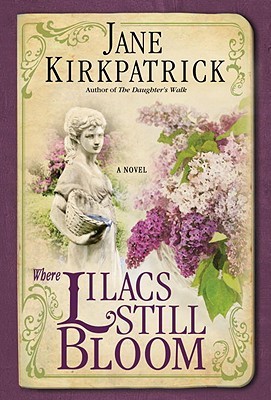
Award winning author Jane Kirkpatrick’s historical novel, Where Lilacs Still Bloom, filled my heart. It’s a compelling story of enduring love of family and God’s earthly bounties.

The story begins in 1889 in Woodland, Washington, when German immigrant and farm wife Hulda Klager seizes an idea to improve the pie apples growing in their small orchard. She’s weary of the scrawny fruit that’s hard to peel. Her experiments with apple hybridization result in a crisp, juicy apple that’s easy to peel. Her consuming interest is questioned by those who feel she’s overstepping boundaries of a simple housewife and mother. Some even assert that she’s tampering with God’s plan.

Hulda’s father encourages her to follow her God-given talents. Even though her husband Frank teases her about her “hobby,” he encourages her to pursue her growing interest, providing there’s “bread on the table and pies in the oven.” She begins to experiment with flowers, concentrating on lilacs, with a dream of growing a creamy white lilac with twelve petals. By 1905 Hulda had created 14 new varieties of lilac, using a turkey feather to cross-pollinate, always seeking to produce “bigger blooms, hardier stalks, richer color, and finer fragrance.”

Interest in Hulda’s garden grows and she begins to hold open houses, sometimes drawing hundreds of people, even from distant communities. She resists selling cuttings, preferring instead to share God’s bounty. Her four children help in the garden, and as they leave home to begin their own families, Hulda opens her home to two young girls who need a loving home and who can help in the garden. These girls’ lives, thread throughout the book, show how tender care for plants mirrors life.

Throughout Hulda’s long life she sees tragedy in the loss of loved ones, but she endures and finds comfort in her horticultural interests. Her gardens, along with their farm and their neighbors’ property, are threatened with seasonal floods and when the Columbia and Lewis Rivers overflow in 1948, the entire community is flooded. We learn the true character of this legendary woman as she deals with this calamity.

Where Lilacs Still Bloom is filled with the richness and grace found in Jane Kirkpatrick’s work. This novel is her twenty-second book and nineteenth novel. A master storyteller, Kirkpatrick researches her subjects, then brings their story to readers in a compelling, refreshingly creative way, yet always keeping true the subject’s spirit. I highly recommend this book. It would be of special interest to garden enthusiasts, but also to anyone drawn to an inspirational story of loyalty, faith, family values and God’s bounty. For more information about the author, visit www.jkbooks.com

Reviewers Note: I was especially fascinated with this book since I also live in Washington. Next spring I hope to drive to Woodland in the southwest part of the state to visit Hulda Klager Lilac Gardens. For more information, visit www.lilacgardens.com

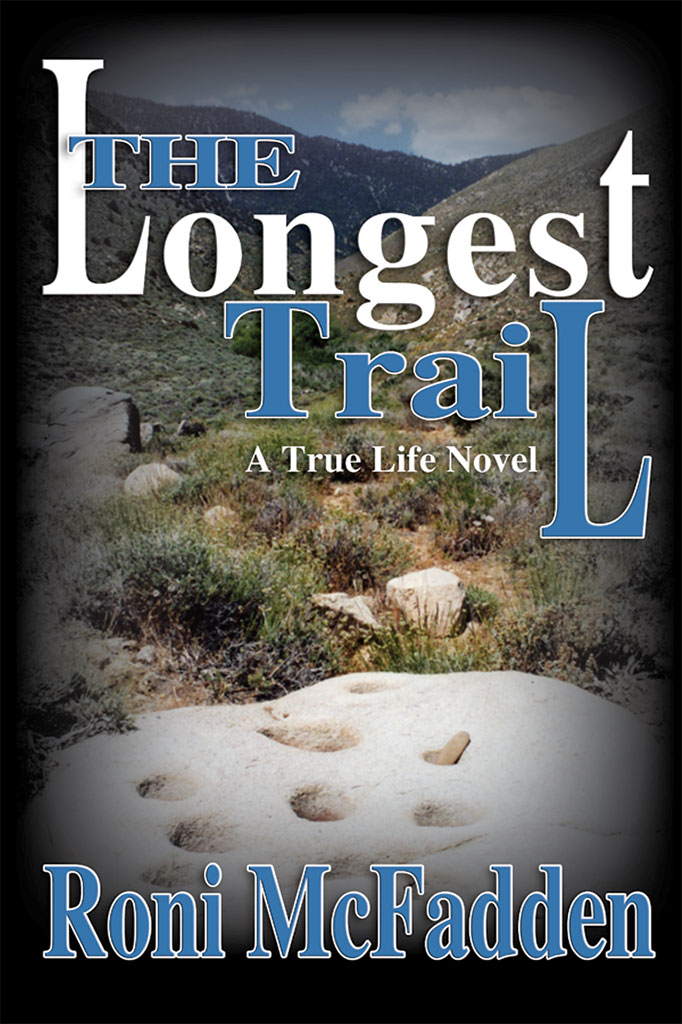
Book Review: The Longest Trail

The Longest Trail

Roni McFadden has written a memorable book,The Longest Trail, a true-life novel that begins in 1963 in northern California when Roni is twelve years old. After saving her baby-sitting money for two years, she buys her first horse, Sparol, for $125,

While on horseback, Roni can forget the sexual abuse from her step-father, forget that she isn’t accepted at school, and, later, that the crowd she’s running with could get her into serious trouble with sex, drugs and free love. When astride a horse, she feels whole and at peace with herself.

Through a friend, Roni meets John Slaughter, then in his forties and married with his own children, a throw-back cowboy with a kind nature and a magical way with horses. In addition to his regular job, John takes hunters on pack trips in the High Sierra Mountains. He offers her an opportunity to help with the horses, to exercise, feed and groom them, and clean corrals. While at school, she lives for the time when she’ll be with the horses, when she’ll be at peace.

Roni proves her value and is soon a part of John’s pack operation and joins him at a pack-station, a place where they stage high-country trips. Through the years, Roni is given more responsibility. With the responsibility comes dealing with city folks who bring the noise and rush of city life to their country outings. She learns patience, self-reliance and how to deal with hardship and discomfort. She learns to appreciate the high country’s beauty and simple pleasures. Roni finds a kinship with horses that few achieve.

An important part of this intriguing story is Roni’s involvement with the by-gone spirits of native peoples. As she learns more about herself, she absorbs ancient spiritual values, wisdom that enriches the rest of her life.

The Longest Trail is the story of an angry, confused girl becoming a woman of strength and character. It’s a fascinating journey, sometimes rough, sometimes awesomely beautiful, always entertaining. I highly recommend this coming-of-age book–it’s an unforgettable story. To learn more about the author, visit www.thebiscuitpress.com


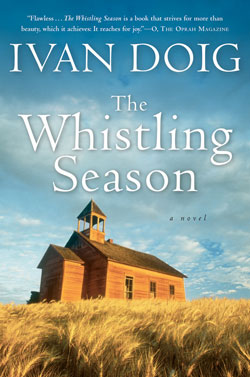
Book Review: The Whistling Season

whistling

Every once in awhile a book of pure excellence comes along and, for me, Ivan Doig’s The Whistling Season has reached that level.

In 1909 change was in store for the Milliron family. The story is told in the voice of a reminiscing Montana school supervisor when he was 13 years old, The oldest of three sons, Paul is a precocious child who takes his responsibilities seriously. His father counts on him, especially since the boys’ mother died the year before.

The family manages, but the house is usually in disarray. Besides keeping up his farm at Marias Coulee, Montana, the father works as a drayman for a diversion canal under construction, and is president of the local school board. Housework and cooking naturally aren’t at the top of chores that manage to get done. When the father sees a housekeeper’s work wanted ad in the newspaper, the family’s interest is piqued. It is puzzling though when they learn through the ad that the housekeeper, though well qualified, does not cook. Can’t all women cook?

When the new housekeeper Rose and her brother Morrie crash into the Millirons’ lives, immediate change transforms the household. Through a death, serious accident, a vengeful family and a puzzling mystery, every member of the family responds for the good of the whole. These are tough folks, people who must take life as it’s served to them. How they measure up to the challenges shows the caliber of grit it takes to survive the dryland Montana prairie.

The entire book takes place primarily between the Milliron’s modest farmhouse and the one-room schoolhouse that serves grades one through eight.

The Whistling Season unfolds with the flawless assurance of an acclaimed storyteller. The landscape and characters are vivid, as is the emotional depth of the novel. It’s a story guaranteed to pop into readers’ minds with gentle reminders of the book’s every-day situations. The Whistling Season is a masterpiece.

Book Review: Home Fires

Home FiresJudith Kirscht’s Home Fires is a noteworthy and timely novel dealing with a family gone awry.

Myra and Derek Benning and their teenage children, Peter and Susan, appear to live a privileged life. Susan has a few social issues, but there’s love and strong bonds between the parents and children, and they’re a happy family. Myra feels blessed to have a handsome, successful husband and thankful for their enduring love. A phone call shatters her serenity and plunges the marriage into chaos.

Guilt, anger, and surmounting worry consume Myra. But then, an even more serious situation surfaces with daughter Susan and immediate action must be taken. Myra does what she must do, but at a price that affects every member of the family.

The story takes place on the Santa Barbara, CA coast and the author beautifully sets the various scenes, making the reader feel as though she breathes the salty air while walking along the beach, strolls quaint streets of the water-front town, or skims along waves while sailing the Santa Barbara Channel.

Although the subject matter is serious, Home Fires is an enjoyable read. Kirscht handles the subject of a complicated dysfunctional family with finesse. The various facets of the story are believable with realistic dialog and situations. Home Fires is an excellent novel, one I enjoyed immensely. Even when I wasn’t reading it, the story was on my mind, trying to second-guess the outcome.

Home Fires is currently available in ebook format, but soon also will be available in paperback. For more information about Judith Kirscht, visit www.JudithKirscht.com

**Note: To leave a comment, please click on “Leave a Reply” below.

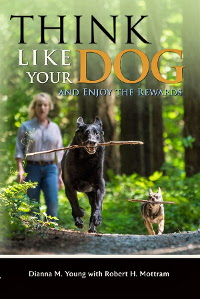
Book Review: Think Like Your Dog

ThinkLikeYourDogDogs are not our whole life, but they make our lives whole.
Roger Caras, as quoted in Think Like Your         Dog: and Enjoy the Rewards

Dianna M. Young (with Robert H. Mottram) has shown with undeniable expertise the value of communicating with your dog in a language canines understand. In Think Like Your Dog: and Enjoy the Rewards, Young gives readers the step by step process necessary to have a canine companion to bond with in a rewarding relationship.

The most important lesson to be learned is that in every human and dog team, there is one leader and one follower. In a dog’s eyes, there is no in-between. Young clearly reiterates this principle throughout the book and gives understandable examples of how it can be achieved.

Think Like Your Dog discusses the important steps to take when your pup is first brought home, which ideally is not before eight weeks of age. Those first eight weeks with the pup’s mother assure that the puppy will get a strong foundation in tems of behavioral characteristics it will possess for the rest of its life. The next eight weeks with the new owner are critical in providing socialization skills, exposing him to people, kids, trains, buses, other dogs, noisy places, crowded places. Further, the pup should go through these experiences on his own four feet, not to be scooped up in the protective arms of his owner.

Each chapter in this valuable book discusses how a dog views the various elements of his life. The reader learns how a dog thinks through our verbal and body language, the senses and how all that relates to his comprehension. She discusses the various breeds and how they may differ when it comes to choosing a family pet. She talks about getting a dog as a puppy, or a mature dog and, in either case, how to proceed with meaningful training.

It’s important to have the proper dog equipment and in the book various types are illustrated and explained. Methods of training are outlined, with emphasis on positive reinforcement. The importance of a structured environment, patience and compassion are directly related to a successful dog and handler relationship.

Our chocolate lab Toby is 10 years old, yet I learned techniques in this book that we can use to enhance our family’s relationship with him. Not only that, I’ve learned the mistakes we’ve made, primarily relating to getting him too young, at five weeks, before he had that essential time with his mother.

Think Like Your Dog: and Enjoy the Rewards makes an ideal all-in-one reference book. It’s an enjoyable read with interesting stories and photos emphasizing the various principles Young teaches. For more information about the author and her training and boarding facility on Camano Island, visit: www.HowtoThinkLikeYourDog.com

Review: The Heart Trilogy

In The Heart Trilogy, Carmen Peone has skillfully created three novels about a Native girl in the emerging American West. Filled with heart and compassion, the character Spupaleena grows in skill, knowledge, leadership, and in her relationship with her newly found Christian God.

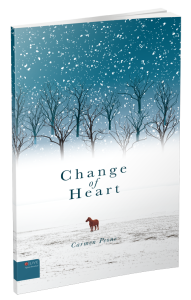
Change of Heart


Change of Heart

When Spupaleena, 13, runs away from her Arrow Lakes pit home near Eastern Washington’s Columbia River, she escapes from more than a bossy big sister. But she doesn’t consider the difficulty of traveling by foot in the dead of winter. Change of Heart is a story of survival, compassion, love and enduring faith.


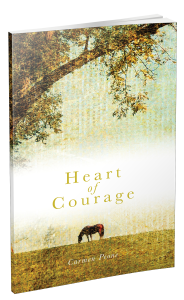
Heart of Courage


Heart of Courage

Spupaleena,16,dreams of breeding and racing horses. Although her father is against her pursuing this male-dominated sport, Spupaleena feels that God has put into her heart the love of horses and that she is fulfilling her destiny. She receives a gift of a four year-old Tobiano stud colt that is ready to ride and a perfect match for Spupaleena’s enthusiasm and skill. Heart of Courage is a story of a girl determined to fulfill her destiny.


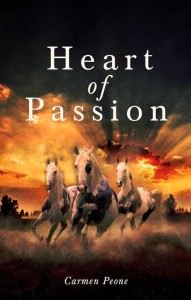
Heart of Passion

Heart of Passion

Spupaleena, now in her late teens, has built a stable of powerful race horses. Her team of relay racers are consistent winners, much to the chagrin of a vengeful boy. Passionate about her vocation, Spupaleena overcomes many obstacles, including both human and horse injuries. She turns to God for direction in how to handle her enemy, this boy who is determined to see her fail. Heart of Passion is a story of compassion, faith and determination.


Carmen Peone has written an engaging trilogy steeped in Native American and religious culture. She lives on the Colville Confederated Indian Reservation and has studied the language and customs of her husband’s people, the Sinyekst. With her American Paint horses she has competed in local Extreme Trail Challenges. It’s no wonder The Heart Trilogy rings true with knowledge and authority. For more information about the author, visit www.CarmenPeone.com

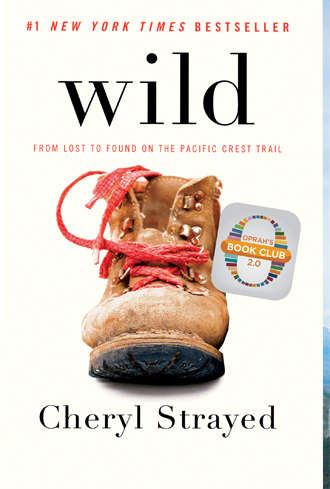
Book Review: Wild

WildTP_Books-330 (1)


I love a title with more than one meaning. In this case. Wild can refer to the idea of hiking more than a thousand miles of the 2,663 mile Pacific Crest Trail, the wild trail itself, and even to the author, particularly in her former life. Wild by Cheryl Strayed is well named.

When Cheryl Strayed contemplated hiking the Pacific Crest Trail (PCT) she had no idea of the magnitude of her impulsive decision. She was totally unprepared for this rugged endeavor. She had researched the trail a bit, inquired and shopped for equipment at REI, and bought a trail guide. But she hadn’t done any preliminary back-packing to test her equipment, nor to build up her stamina. Indeed, she’d never backpacked at all, only day-hiked.

She starts her journey at the south end of the trail, near the Mexican border. She actually packs her backpack for the first time in the motel room the morning she is to begin her journey. She can barely lift it off the floor. She soon learns that her boots don’t fit her correctly, a mistake that plagues her during the entire trip. When she encounters snow and ice, she’s woefully unprepared and under equipped. Although she has arranged to have relief packages mailed to herself along the way, she underestimated the amount of money she’d need.

Still, over the next several weeks she strives on, overcomes fear and struggles through pain and extreme exhaustion. Her daily mileage is at first pathetic, but she eventually achieves an impressive 17 to 19 miles per day. Strayed’s appreciation of the beauty around her bolsters her morale. Her intention is to achieve this ambitious feat alone and for the most part, she is alone, though she encounters a few people along the way. She gains a reputation among other hikers and is dubbed “Queen of the PCT.”

Strayed skillfully includes flashbacks of her life, many of which directly relate to the purpose of this seemingly insurmountable quest.

Coming from a “hippy” background, Strayed’s sense of values will undoubtably differ from many readers, perhaps even to an irritating degree, but her sense of achievement and dedication to her goal will inspire and resonate with many readers. The author’s writing style sparkles with vivid descriptions and humor as this incredible journey unfolds against all odds. To learn more about the author, visit www.CherylStrayed.com


Book Review: A Dog Named Boo

A-Dog-Named-Boo-SmallA Dog Named Boo:The Underdog with a Heart of Gold by Lisa J. Edwards is a moving account of a dog’s achievement despite his many disabilities, or perhaps because of them.

Lisa J. Edwards, a full time professional dog trainer and behavioral consultant, meets her match when she and her husband Lawrence adopt a dog they called Boo. As a dyslectic, Lisa suffers with learning disabilities as well as physical limitations. In addition, Lisa carriies emotional scars stemming from her childhood.

On a quick errand, Lisa encounters a box of puppies for sale. The runt of the litter, Boo is picked on by his siblings and it’s unlikely he’ll ever be adopted. But somehow a chord is struck between Lisa and the pup and she can’t resist taking him home.

Boo is a challenge from the beginning–it takes an entire year to potty train him. In puppy classes, he doesn’t respond to basic commands, which prove difficult and embarrassing for Lisa: a dog trainer who can’t train her own dog.

Still Lisa persists. She puts into practice her belief in gentle and effective positive reinforcement dog training, always reinforcing the good things and looking beyond the negative. Lisa learns that Boo actually has learning disabilities, physical limitations with vision problems and awkward motor skills. Still, in working with him, she finds talents that make Boo an exceptional therapy dog. Together they achieve
heights Lisa never dreamed possible.

For a heart-warming treat, I recommend A Dog Named Boo: The Underdog with a Heart of Gold. You’ll learn about the philosophy of training a dog, about life itself, and the power of persistence and unconditional love.


Book Review: Forgiving Effie Beck

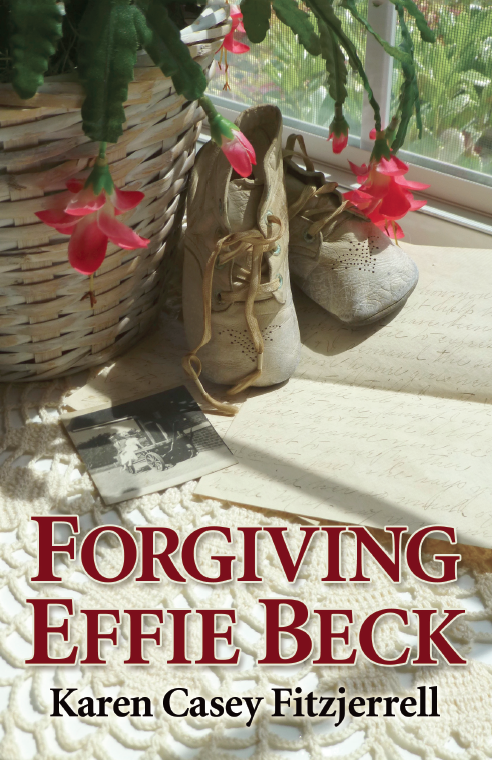
Forgiving Effie BeckKaren Casey Fitzjerrell has done it again, she’s written another outstanding novel. In her first book, The Dividing Season, the native Texan spins a story set in the early 1900s. In her latest work, Forgiving Effie Beck, Fitzjerrell takes us to the Great Depression years, the decade preceding World War II.

Mike Lemay had been one of those men standing in endless bread lines, hungry, without sustainable work. When he’d left the indignities and human misery in North Carolina, he felt beaten. Through President Roosevelt’s New Deal program, he managed to get a job with the Federal Writer’s Project (FWP) to work as an interviewer. The idea of FWP was to interview people from all over the country and compile the stories into a series of volumes. With the promised pay, Mike would send money home to his younger brother and his family, who were also taking care of their widowed mother.

He walks and hitches cross country to the tiny town of Cooperville, Texas. He manages to find a place to stay at Cora Mae Travis’s place in a separate little building they call the tank house. Cora’s daughter, Jodean, handles the rental business along with their home-based beauty parlor she and her mother operate.

Almost immediately upon Mike’s arrival, an old-time resident, eccentric Effie Beck disappears. Although a recluse with few friends, Effie’s disappearance is a matter of concern and the townspeople organize and begin a search. Mike is drawn into the mystery.

Effie’s disappearance isn’t the only mystery. Mike senses that Jodean carries a secret. Cora Mae’s despicable attitude toward her daughter heightens the mystery. As Mike meets the townspeople, he must sort gossip from fact. There’s always plenty to talk about, but some people are close-lipped and Mike has to skillfully ferret out the truth.

Fitzgerrell draws her characters so clearly, I felt I’d known these people all my life. Each character is fine-tuned and as real as my next door neighbor. Rancher Red and Ada and their love for each other and their children is obvious, but then they, too, have a secret. Everyone knows that the sheriff’s wife has a secret, but really, they don’t have a clue as to the real story. As Mike delves into long-held secrets, all the while trying to solve Effie Beck’s disappearance, he learns about himself and faces his own needs.

For true reading pleasure, read this Depression-era novel. I couldn’t believe how fast the pages flew by. Dinner waited, bedtime waited, my own writing was put aside until I finished this compelling novel. I recommend reading this book straight through, then return to the Prologue for an intriguing full-circle.

Forgiving Effie Beck is available in trade paperback and ebook formats. For more information about the author, visit www.karencaseyfitzjerrell.com