Book Review: Time Lines: poetry and prose

time-lines-poetry-and-prose


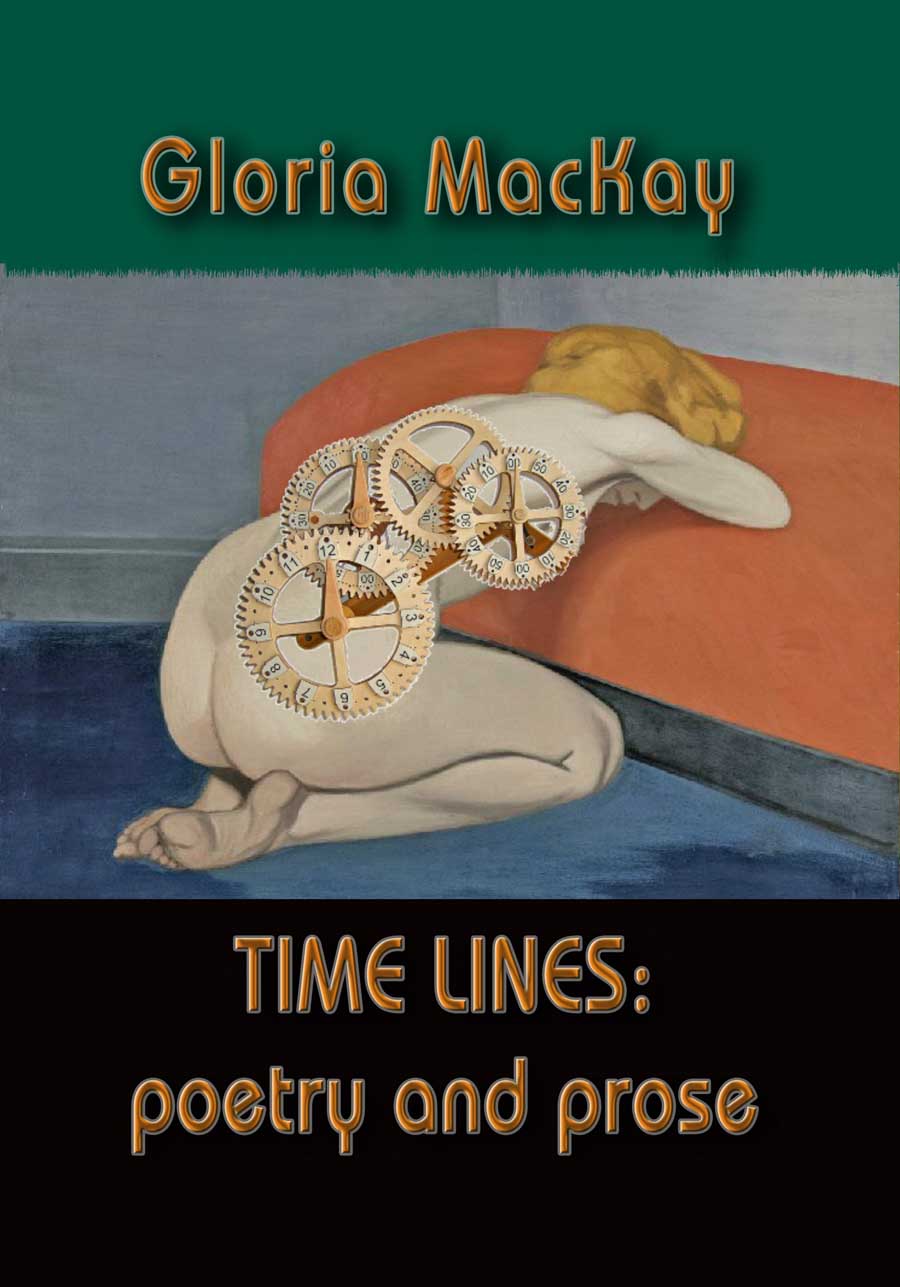
Gloria MacKay’s poems and prose are at their best in her latest book, Time Lines: poetry and prose. The freshness of her words engage and enthrall. The variety in this slim book is far-reaching and thought provoking.

This isn’t MacKay’s first book of poetry, yet her repertoire continues to grow and captivate the heart and mind with fresh, original topics,

Here’s a small sample of how this author’s mind can create a string of words that will keep on working in the reader’s mind:

A stanza from the poem “My Truth on the Loose”:

My truth on the loose
is as hard to control
as a kite and as risky
to grab as a spark

I am no poet, but I can appreciate poetry and its often hidden meaning. I read, then fashion them to fit my own heart, my own experience. Time Lines offers that opportunity in elegant style.

Book Review: Incommunicado by Randall Platt

Incommunicado (1)

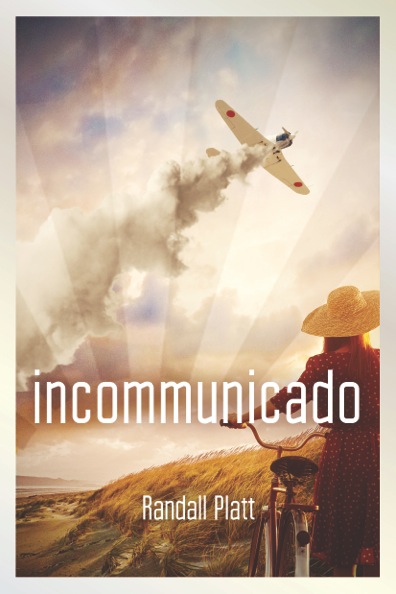
Twelve-year-old Jewels Stokes doesn’t have an easy life, but her spunk and determination at least make it interesting. Her brother Rex, a senior in high school and a nerd at that, takes life pretty seriously and mostly thinks his sister is a pest. Their mother hasn’t the best reputation in the small coastal town of Sea Park, Oregon, and the two kids are left pretty much on their own. Jewels has one true and faithful friend, Tommy Kaye, a respected resort owner who has contributed generously to the town.

When Pearl Harbor is bombed on December 7, 1941, people are shocked, but uncertain just what it means. Where is Pearl Harbor, anyway? But when the facts are uncovered and the townspeople realize the Japanese are suddenly their enemy, their rage is directed at Jewels’ friend Tommy Kaye, who is of Japanese ancestry.

The town erupts into paranoia and it’s obvious that Tommy Kaye is in danger. When the FBI gets into the picture, it’s clear that Jewels has to do something to save her friend from what they’re calling “internment” or even prison.

Incommunicado is a fun read, but more than that, it offers a glimpse of what life was like in 1941, and how people reacted to the Japanese surprise attack on Pearl Harbor. The author does a good job of describing mob mentality, of how people get caught up in rumors, and their fear of the unknown. Platt goes into some detail about the precautions people had to take during the war, such as maintaining blackout conditions in coastal towns. She describes gas, food and specific product rationing, and collecting goods needed during the war, such as scrap metal.

Although this book might be considered a coming-of-age story, I found it enlightening and enjoyed this spunky girl’s attempt to make things right during the turmoil of World War II.

To learn more about Incommunicado and author Randall Platt, visit http://www.plattbooks.com/

Dearest Darling by Andrea Downing

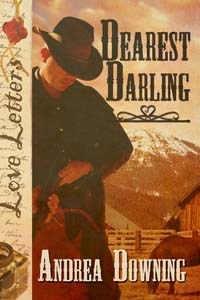
dearestdarlingWhen Emily Darling intentionally reads a letter left on her doorstep, but addressed to Ethel Darton, it becomes more than a mistake in postal service. It becomes a chance of escape from her over-bearing brother. The letter, starting with the greeting “Dearest Darling” captivates her heart and hopes. What kind of man would write such an endearing and tender letter? He is obviously in need of companionship, living in the wilds of Wyoming, and is making travel arrangements for his mail-order bride. But wait, there’s more: a train ticket to Cheyenne with instructions to take a stagecoach to Jackson Hole where he will meet her.

From the letter she learns these two have never met, but that Ethel Darton has sent a picture of herself in an earlier letter.

When Daniel Saunders meets the stagecoach on the appointed day, he meets an imposter, someone who has taken advantage of a free train ticket. He’s outraged. But what is he going to do? He can’t leave her in town, alone, with no means of supporting herself. He needs time to sort this out.

A novella, Dearest Darling is a delightful read, cleverly paced with seemingly insurmountable complications, and realistic, convincing dialog. Details of Wyoming ranch land enhance the story, giving the reader an exciting view of yesteryear’s west.

To learn more about the author, visit http://andreadowning.com/

My Guest Today: Shanna Hatfield

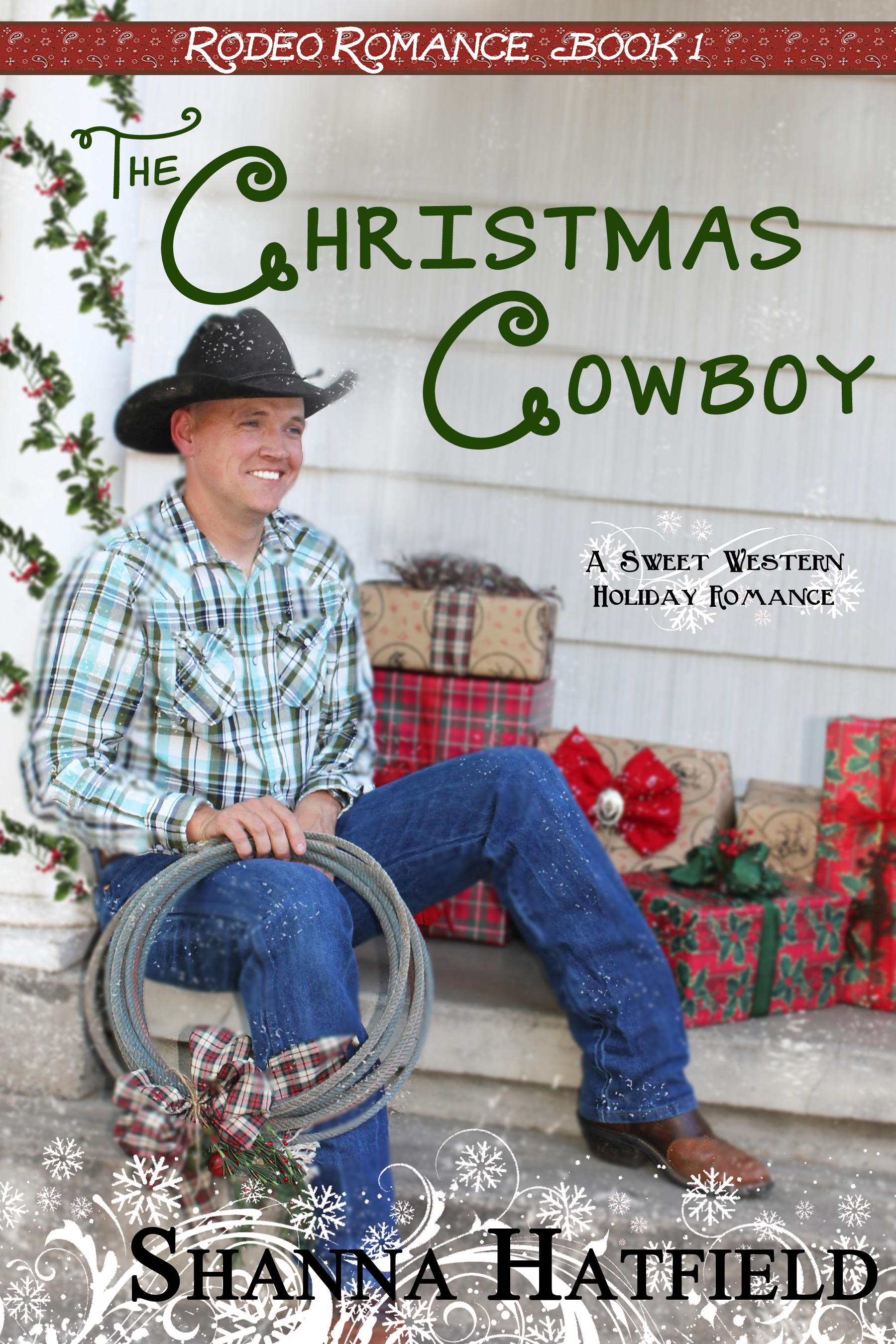
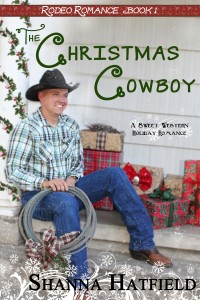
the-christmas-cowboy-cover

My blog guest today is USA Today bestselling author, Shanna Hatfield. Let’s start our celebration with a book review of her novel The Christmas Cowboy.

When Kenzie Becket meets a fellow traveler at the airport, she’s naturally attracted to him. Who wouldn’t be? Tate Morgan is the epitome of a cowboy—attractive, impeccable manners, and a champion rodeo saddle bronc rider to boot. But she knows better than to do anything but admire him from a distance. She been burned from this type before, and she will never let it happen again.

Tate Morgan recognizes a class act when he sees one, looking so attractive, yet professional in her business suit. Tate learns Kenzie Becket is a corporate trainer for one of the most successful direct sales companies in the country. But she resists every attempt he makes to become friends.

Both coming from the Tri-City area in eastern Washington, they happen to meet several times in their various travels, he to rodeo events, she to meetings and workshops. Their attraction grows, and slowly Kenzie’s reluctance begins to melt. She finds herself looking forward to running into Tate and disappointed when it doesn’t happen.

But when she sees Tate in another woman’s arms, she rebukes herself for thinking anything could come of a relationship with a cowboy. No matter what her friends say, no matter Tate’s attempts at explanation, she’s done. She should have known better in the first place.

Tate’s hurt and confused with Kenzie’s hostile attitude toward him. When an incident occurs that sends their lives spinning like a lariat, their world changes.

The Christmas Cowboy by Shanna Hatfield is a fun, lively way to kick off the Christmas season. The author writes with authority about rodeos, the corporate scene, and especially matters of the heart. The Christmas Cowboy is the first of Hatfield’s Rodeo Romance series, followed by Wrestlin’ Christmas, Capturing Christmas, and The Christmas Vow.

In the back of The Christmas Cowboy is information about one of the author’s charitable interests: Justin Cowboy Crisis Fund (JCCF), an organization that provides need-based financial assistance to athletes injured through their participation in professional rodeo.

The following is from my blog guest, Shanna Hatfield, who will explain JCCF in greater detail.

Ring in the Holidays with a Helping Hand

Shanna JCCF logo

The idea for my sweet Rodeo Romance series started with The Christmas Cowboy, a story that invaded my thoughts while CC and I sat in the Las Vegas airport after the Wrangler National Finals Rodeo, waiting for our flight home.

Once I started writing the story, I did some research about what would happen if a cowboy sustained a serious injury at a rodeo. My research led me to the Justin Sportsmedicine Team® where one of the team members kindly answered my many questions. The team provides medical support services to professional rodeo athletes at rodeos across the country.

Beyond treatment at the arena, professional rodeo athletes can find help from the financial hardships that arise when they’re unable to compete due to serious injuries. Many don’t have a guaranteed salary or provisions for income upon injury. While injuries are part of the business of rodeo, financial worries don’t necessarily have to be par for the course.

The Justin Boot Company formed a partnership with the Professional Rodeo Cowboys Association (PRCA) and the Women’s Professional Rodeo Association (WPRA) in 1989 to establish the Justin Cowboy Crisis Fund (JCCF). The idea behind the JCCF is to assist professional rodeo athletes and their families in the event of catastrophic injuries resulting from professional rodeo activities.

Since my first encounter with the folks at JCCF, I’ve been impressed by all they do and how much they care about others, and decided to give something back to them.

November 1 through December 24, ten percent of the net proceeds from all my book sales will be donated to the Justin Cowboy Crisis Fund. Every book purchased during this promotional period adds to the donation total. Don’t forget to add books to your Christmas shopping lists!

To kick off the promotion, I’m releasing two new books and celebrating with a party.

November 12, Capturing Christmas, the third installment in the sweet holiday western Rodeo Romance series, releases. Pre-orders are available today! http://amzn.to/1FC8ZQj

In addition, The Christmas Vow   , the fourth book in the Hardman Holidays sweet Victorian romance series releases that day. Pre-order your copy for only $2.99! http://amzn.to/1KQHhvI

Also, a party to celebrate the release and raise awareness for JCCF will take place from 10 a.m. to 2 p.m. (Pacific Time) November 12 on Facebook. Join in the fun with guest authors, games, and oodles of cool prizes. Here’s the link to the party: http://tinyurl.com/cowboychristmasparty2

~*~

Convinced everyone deserves a happy ending, hopeless romantic Shanna Hatfield is out to make it happen, one story at a time through her sweet historical and contemporary romances. When she isn’t writing or indulging in chocolate (dark and decadent, please), Shanna hangs out with her husband, lovingly known as Captain Cavedweller. This USA Today bestselling author is a member of Western Writers of America, Women Writing the West,  Romance Writers of America,  Sweet Romance Reads, and Pioneer Hearts.
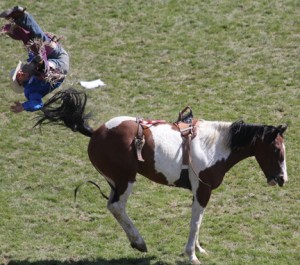
Shanna alleyoop


Book Review: Moonshadows

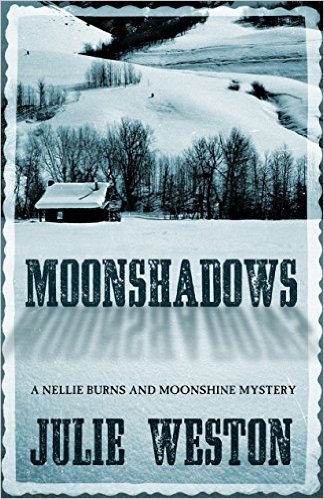
Moonshadows


Settle in for an engaging period mystery with Moonshadows by Julie Weston.

Nellie Burns steps into a man’s world of photography in the small mining town of Ketchum, Idaho in the early 1920s. In Chicago she’d worked in a photography studio, but only with portraits. Now she plans to follow her heart’s desire with nature photography.

Nellie hires crusty retired miner Rosy Kipling to take her out to capture a winter night scene where “the moon will shine full on and create shadows on snow.” Although he’s never far from his bottle of whiskey, he and Nellie form a sort of bond.

While on her cold night-time trek, she makes a startling discovery at a nearby cabin. She discovers a hideous crime, then another. Nellie uses her talents as a photographer to capture on film what she discovers, but then finds herself embroiled in the mystery. Nellie’s fierce desire to be independent may cause her to be a victim as well. As the story spins into a tight mystery, Nellie emerges as a reluctant heroine, sometimes doubtful of her course, but determined that right will prevail.

The reader sees, through Nellie’s observant eyes, the flavor of Idaho’s rugged landscape in the early 20th Century. Moonshadows is packed with Idaho history, rich characters and information about the early days of photography and its cumbersome equipment. Weston does a worthy job of capturing the spirit of small town living and the attitudes of the day.

Moonshadows is the first of the series, ”A Nellie Burns and Moonshine Mystery.” For more information about the author, visit julieweston.com

Book Review: Free Spirit

Free SpiritJoshua Safran’s Free Spirit: Growing up on the Road and off the Grid is a haunting, beautifully written memoir about his appalling childhood. Although the subject matter is grim, the book is never-the-less poignant and often wryly funny.

Joshua’s early memories take place in the l970s San Francisco. His mother Claudia, steeped in hippie/revolutionary activism, searches for what she believes to be utopia. She leaves San Francisco in search of the perfect “intentional community,” a promised land free of nuclear war.

Joshua and his mother embark on a series of wild on-the-road adventures. There is no doubt Claudia loves her son, but many of her actions show a gross lack of common sense. In one instance, mother and son travel for days–mostly hitchhiking–to a Rainbow Gathering. She doesn’t think to bring a tent, or even food. Joshua is left on his own for days while his mother takes up with a just-met lover. Rain-soaked and miserable, the six-year-old pilfers a blanket and, on his own, finds food and shelter. Drugs and alcohol are plentiful; real food scarce.

Through the years Claudia travels with different men, but Joshua, even as a young child, can see no idealistic future with any of them. Claudia is unbelievably naive, always making excuses for her current lover’s failings. Through all their travels, she teaches her son a love of books and he learns to read at an early age.

They try a variety of living situations–communes, make-shift homes, a teepee, buses, a trailer, an abandoned ice-cream truck, and on Camano Island, Washington, a lean-to built on a stump. In the meantime Claudia has married an abusive Salvadorian guerrilla. Joshua struggles with his step-father’s alcohol-fueled abuse to both his mother and to him, or alternatively listens to their noisy love-making in their tiny water-logged shack. Joshua is eager to go to school, but he has huge obstacles to overcome to even get ready. They have no running water, no electricity, not even a decent outhouse. Joshua doesn’t own a comb, toothbrush, or a mirror. His clothes are patched and dirty. Kids bully him and tease him about his unkempt appearance. Still, he loves school, loves to learn and especially loves being warm. Eventually they move to Stanwood, just across the bridge from Camano Island, and he takes solace in the Stanwood library, relishing in the many books, being able to use the bathroom to wash himself with warm running water, and as a refuge from his abusive step-father.

Free Spirit is, in the end, a story of triumph. The language is rough and the situations harrowing, but it is an honest, stark but eloquently-told coming-of-age story. At the end of the book the author sums up his adult life. What he has accomplished is impressive.

To learn more about the author, visit http://www.jsafran.com/


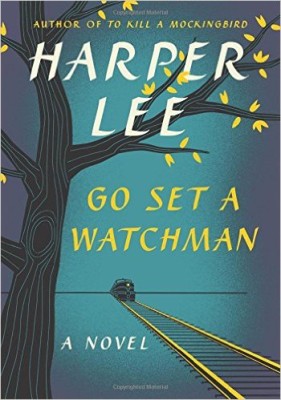
Book Review: Go Set a Watchman

go-set-a-watchman-281x400Go Set a Watchman, the book itself, has an interesting history. When Harper Lee presented her first novel to a literary agent in the 1960’s, the author was persuaded to rewrite it from the main character, the child Jean Louise Finch’s, point of view. To Kill a Mockingbird was the result, a book that became one of the most widely read books dealing with race in America. Now, 55 years later, the “original” book has been released.

Go Set a Watchman begins with Jean Louise Finch, now 26, returning home to the small town of Maycomb, Alabama, from New York City, where she has lived and worked for the past few years. She plans to spend three weeks visiting her father, 72 year-old Atticus Finch a beloved attorney who, despite suffering the crippling effects of rheumatoid arthritis, still practices law. Although the novel doesn’t specify the date, it is presumably in the mid-to-late 1950’s, because the Supreme Court has passed the school desegregation law, a 1954 law that has incensed most Southerners.

Having lived in New York, Jean Louise is seeing Maycomb County in a different light. In New York she has worked and lived near people of color, but in Maycomb she’s taken aback by what she sees as gross inequality. Worse, she sees her father, whom she has always worshiped, in a different, unfavorable light.

Go Set a Watchman is an important book for our times. Harper Lee doesn’t gloss over racial attitudes. She looks at the whole person, strengths and flaws together. While To Kill a Mockingbird is considered a coming-of-age novel, Go Set a Watchman is a coming-of-age novel for an adult, a work of wisdom, humanity and passion, a book evocative of another time, but relevant today. It isn’t necessarily a fun or easy read, but it’s a book that made me think. I highly recommend Go Set a Watchman.

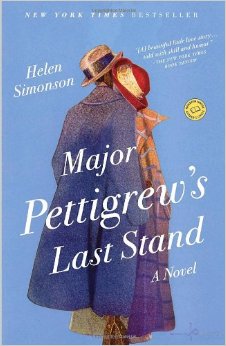
Book Review: Major Pettigrew’s Last Stand

Major Pettigrew

Helen Simonson’s debut novel, Major Pettigrew’s Last Stand, is a delightful, charming story centered around Major Ernest Pettigrew (retired).

In the small English countryside village of Edgecombe St. Mary, Major Pettigrew, a widower, is attracted to a lovely widow, Pakistani shopkeeper, Mrs. Jasmina Ali. Although Mrs. Ali was born in Great Britain and, in fact, has never been to Pakistan, she follows many of the traditions of her culture.

The Major and Mrs. Ali are drawn together by their love of literature and loneliness resulting from the loss of their spouses, but soon find themselves caught up in stronger feelings than mere friendship and a good pot of tea.

When they attend a country club program that spirals out of control, they find their relationship threatened. The village considers the Major a pillar of their community, while regarding Mrs. Ali as a foreigner.

The author, Helen Simonson, was born in England and raised in a small village. The English humor and way of expression is part of the enchantment of this novel. At one point the Major finds himself in a stressful situation. “He calmed his voice to a tone suitable for placating large dogs or small, angry children.” Great emphasis is placed on tradition, the importance of one’s family, and appearances. The threat of change can be one’s undoing, or can it be a good thing?

Major Pettigrew’s Last Stand is a fun read, but it also has its moments of truth, issues most of us face in our modern world. I loved spending time in the English mindset, particularly of an older man happily set in his ways. And I particularly appreciated Major Pettigrew’s wit. To learn more about the author, visit http://www.helensimonson.com/

Book Review: Arctic Dreams

Arctic DreamsArctic Dreams by Barry Lopez is a compelling masterpiece about the Arctic, the mysterious land of stunted forests, frozen seas, and animals perfectly suited to the harsh far north.

The book offers exquisite descriptions of the biology, anthropology, and history of a land few of us will ever see. The arctic’s harshness has carved a way of life unknown to all but a few. Through the centuries, various countries have sent men to explore this mysterious land, and more often than not, the explorers did not live to tell about it.

Arctic Dreams is not a book you rush through. Nor does the author hurry through his descriptions of the animals, plants, sea life, or the frozen sea itself that is both the giver and taker of life.

Lopez’s keen observation of life is amazing in its scope. He is an uncompromising defender of the wild country and its native inhabitants, and shares minute details of the far north. He lingers with his description of the polar bear, its habits, its ability to not only survive but thrive in this cold country. He shares his fascination of the narwhal with its ivory tusk spiraling out of its forehead. This “unicorn of the sea” lives year round in the Arctic waters of Greenland, Canada and Russia. Many animals, birds and sea life are discussed in great detail: how they survive, how they relate to each other as sources of food, and how they serve the native people.

The author speaks highly of the Eskimos and normally uses that broader term for the native Arctic people throughout the book. Eskimos today more often speak of themselves in terms or their origin, such as “Inuit” that refers specifically to Eskimos of the eastern Canadian Arctic. Lopez has high regard for the Eskimos’ skill of survival, of observation, and adaptation to the harsh environment.

Memorable moments in the book stay with me. In describing a particular scene at Melville Bay, Lopez states, “It was so beautiful it made you cry,” but in the next breath, while looking at an iceberg, he says, “It was so beautiful it made you afraid.”

Lopez’ Arctic is a land of contradictions and mystery, of rare, raw beauty. Through Barry Lopez’s precise and thorough descriptions, I experienced a sense of this frozen landscape and could see, through his observant eyes, the beauty of this wild place.

If you’re a lover of nature and value detailed descriptions, you will appreciate Arctic Dreams. It’s a scholarly and engaging Arctic experience. To learn more about the author, visit http://www.barrylopez.com/

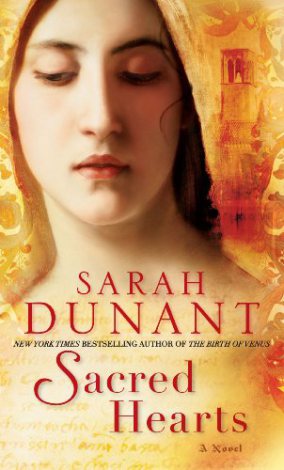
Book Review: Sacred Hearts

Sacred HeaartsI was riveted to this book. Having read Sarah Dunant’s The Birth of Venus, I hoped this last novel of the trilogy would be as good. I wasn’t disappointed. Sacred Hearts is a powerful account of convent life in the northern Italian city of Ferrara.

In the late sixteenth century, the price of wedding doweries was so exorbitant that most noble families could afford to marry off only one daughter. The remaining women were dispatched to convents, with doweries to be sure, but much less than for a wedding. Many of these women went against their will. Some adjusted to the rigors of convent life, others chafed at the idea of spending their lives cloistered in a strict environment, following rigid rules, sometimes at the whims and dictates of the outside world.

When sixteen-year-old Serefina is forced into the Santa Caterina convent, ripped from her family and the man she loves, she is consumed with rage. She’s a talented young woman, bright and gifted with a thrilling singing voice, but she is determined to never surrender to what she believes to be a place of horrors.

Sister Zuana, the convent’s dispensary mistress and the daughter of a doctor, is sent to sedate the ranting young newcomer. Remembering her early years at Santa Caterina, the older nun becomes a mentor. What follows–the intricate relationship of trust and betrayal–is the story of Sacred Hearts. The Abbess, Madonna Chiara, who commands the convent’s total and unquestioning obedience, plays an important role in the intrigue and complications of life in a shuttered world.

Durant describes convent life in such realistic detail that the reader can feel the chilly dampness of the stone walls and floors, the bone-weariness of 2:00 a.m .prayers, the discipline of imposed fasting, silence, and humiliation. But one also feels the pure acceptance of Christ, the joys of serving, and of being able to exercise one’s talents to benefit sisters of the convent to the glory of God.

Sacred Hearts is an absorbing, meticulously researched novel of historical fiction. Durant gives life to the Renaissance period, particularly of its brutal affect on women.

I highly recommend this book and plan to read the second of the trilogy, In the Company of the Courtesan.