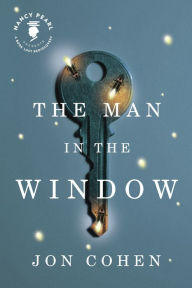
Book Review: The Man in the Window

The Man in the Window 2

Nancy Pearl, my favorite literary critic, said after reading The Man in the Window, “Here was a novel to love.” And indeed it is. Author Jon Cohen has captured the essence of life in this poignant, funny and often caustic novel.

Louis Malone, now 32, badly disfigured in a fire when he was 16, became a recluse, hidden away in the family home. His world was what he could see from his upstairs bedroom window.

Iris Shuda, an extremely capable nurse, was resigned to never finding love. As Cohen describes her, Iris had been an unappealing baby, and as it turned out, that was her physical highpoint.

Gracie Malone, Louis’ loving mother and a recent widow, is not yet used to living without her husband, and now her son is her whole world.

Widower Arnie Shuda, Iris’ father, is a rough and tumble sort of guy, full of earthy humor. His right hand is a hook and he openly jokes about it.

The Man in the Window develops these four characters with such living force, I felt I knew them, that they were my neighbors. The hospital scenes with Iris are so realistic I wondered how the author knew so much about medicine. But then I learned that Jon Cohen was at one time a critical care nurse.

When Louis falls out of his second-story bedroom window, he and Iris are brought together. And then, along the way, their parents meet.

The Man in the Window is a marvelous, well developed, heart-rending love story. I loved it so much I dreaded reaching the end.
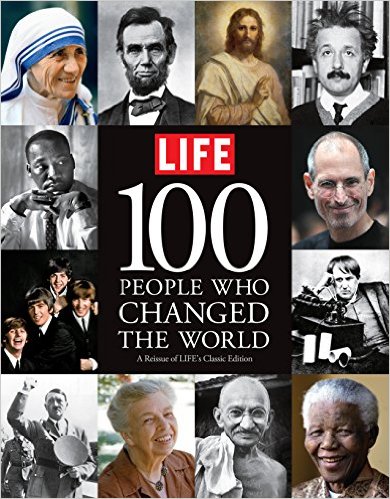
LIFE: 100 People Who Changed the World

LIFE 100 People

I found this treasure with the magazines by the check-out stand at my local grocery store. The publication makes it clear that those represented are not the 100 people who changed the world, but rather features a collection of individuals who contributed to the world in memorable ways, people who shaped history.

LIFE’s special edition is organized into four realms: philosophy (which includes religion), politics (including the politics of war or dominion), invention, and culture. Within each category, the people are listed in chronological order. Typical of LIFE, the pictures are splendid, some replications are very old and many in brilliant color.

The Religious Figures & Philosopher Kings section includes 13 notable figures dating from 2100 B.C. to 2011, ranging from Abraham, to Jesus, to Mohandas Gandhi, to Mother Teresa. (This was my favorite section.)

Leaders: Elected and Not dates from 2551 B.C. to present day. The 23 listed include Alexander the Great, George Washington, Nelson Mandela and Barack Obama.

Scientists, Inventors & Innovators dates from around 1300 to 2011 and the 25 listed include Leonardo da Vinci, Alexander Graham Bell and Steve Jobs.

Cultural Icons list 39 people dating from 1000 B.C. to present day, including Homer, Helen Keller, The Beatles and Muhammad Ali.

I think everyone would find persons of interest in this book. I read every entry, but some might enjoy simply browsing the glossy pages. This is a well thought-out, attractive and interesting publication.

Barcelona Calling by Jane Kirkpatrick

Barcelona Calling

When writer Annie Shaw attempts to attract Oprah’s attention to her book, her efforts become a charade of misadventures. Annie recently had a romantic experience while visiting Spain, and her book is roughly based on that experience. The problem is, real life gets in the way of fiction.

Barcelona Calling: A Novel is a departure from other works of Jane Kirkpatrick who is known for her award-winning historical fiction. It took a little adjustment on my part to settle in with this “different” Jane Kirkpatrick, but once adjusted, I found the story an enjoyable read.

In addition to the main character’s quirks and passion for her work, the novel holds many of life’s truths applicable to more than authors. For instance, “…fame is a door best opened without pushing.” As a writer myself, I could relate to Annie Shaw’s efforts to promote her work, trying to find that elusive “bestseller” status. I sympathized with Annie’s efforts and drew comfort knowing that success isn’t always what it seems.

Barcelona Calling is a fun, enlightening novel. To learn more about the author, visit http://jkbooks.com/

Book Review: Home by Toni Morrison


Home2

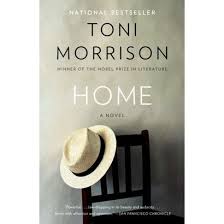
Frank Money couldn’t wait to leave his drab, little hometown of Lotus, Georgia. The Korean War gives him the opportunity to escape, along with his two best friends. His one regret is that he must leave his cherished little sister, Cee, whom he has always protected. His friends are killed in action and Frank returns to the States with PTSD.

Frank’s life no longer has purpose. He carries a secret guilt that no amount of drink will ease. An affair in which he barely participates ends badly. Nothing satisfies the emptiness he feels. But when he hears that Cee is critically ill and likely dying, he begins his long journey home.

The book’s chapters rotate with the various characters, but I never doubted whose voice I was reading, but rather found myself in the mindset and plight of the African American.

A novella, Home is packed with insights of the black man’s difficult situation in the segregated south. It talks of an era “that rich people called the Depression and they called life.” It also shows that even beaten and deprived, people can muster strength to help one another. Toni Morrison’s prose is flawless, without a wasted word. This is a deeply-felt story, one that I’ll carry with me for a long time.

Toni Morrison won the Nobel Prize in Literature in 1993, and previously received the National Book Critics Circle Award, and the Pulitzer Prize.

Book Review: The Boys in the Boat

Boys in the Boat

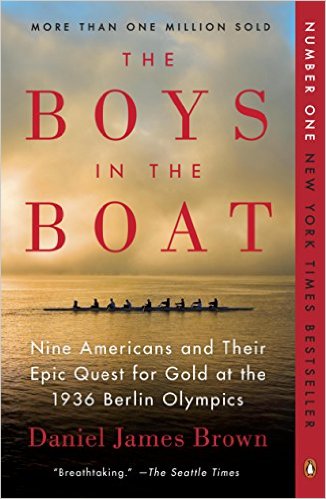
Life was tough during the 1930s Depression, especially for Joe Rantz, abandoned by his family as a teen. But he was a boy determined to make something of himself. Joe and his University of Washington rowing teammates, mostly sons of loggers, shipyard workers and farmers, showed the world what dedication, hard work, and teamwork can do.

The Boys in the Boat is based on the true story of the University of Washington rowing team in the 1930s, culminating in 1936 at the World Olympics in Berlin. Along the way, we meet British-born Joe Pocock, the boat designer with a magic touch. Pocock is quoted as saying, “Just as a skilled rider is said to become part of his horse, the skilled oarsman must become part of the boat.” Coaches like Al Ubrickson inspire the boys along the way, but it is really the teammates themselves who endure the physical and psychological demands of rowing, and show the world what sheer determination can do.

Throughout the book, we learn what’s involved in shaping up an eight-oar rowing team, what it means to become one under the guidance of the coxswain. In later years, I grew up in Seattle and occasionally saw teams practice on Lake Union, gliding along in those long wooden boats, but I didn’t imagine the grueling effort it took. I wish I’d known then what I know now after reading this book.

Author Daniel James Brown brings readers into the lives of these dedicated rowers. As the team travels around the country in national competition, we learn about “harmony, balance and rhythm” of the sport. Finally, in Berlin, under the haughty eye of Adolf Hitler and under unbelievable pressure, we feel the heartbeat of a fiercely dedicated team.

The Boys in the Boat is an extraordinary, satisfying read. Brown’s research is impeccable. He sets the stage locally, in Seattle’s Depression years, nationally as the team competes, and internationally in the sinister atmosphere of Europe pre World War II.

To learn more about the author and his work, visit http://www.danieljamesbrown.com/

Book Review: High Hunt by Susie Drougas

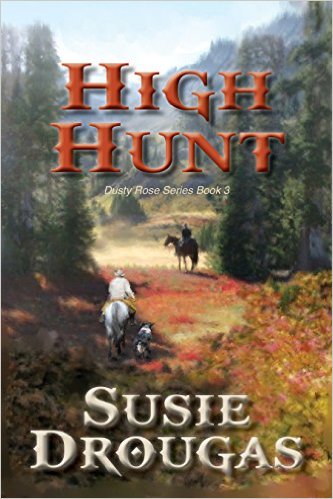
High HuntAttorney Dusty Rose takes a break from his law practice to work as a hunting guide for his Uncle Bob, leading pack-horse trips into the Pasayten Wilderness at the crest of the Cascade Mountains. Dusty looks forward to his backcoutry vacation, but what should be an ideal get-away turns into a dangerous, deadly ordeal.

Cassie Martin, also a lawyer, is on Dusty’s mind as he manages his chores hosting hunters and tending stock. His worst fears become reality, and it looks likely that this could be his last wilderness adventure, and that what he had hoped to have with Cassie will never be.

Author Susie Drougas brings the reader into a wintery wilderness in this captivating novel. We view the rugged Pasayten country from the saddle. A guide’s job not only entails expert riding skills, but also tending to clients’ safety and comfort. Life slows down on the trail. Preparing a meal includes collecting wood for a campfire, patiently waiting for water to boil before making camp coffee, meanwhile fashioning an oven in the coals. We learn from experts the special care trail horses and pack animals need.

High Hunt is the third in the Dusty Rose Series. The first two, Pack Saddles & Gunpowder and Mountain Cowboys, also include wilderness pack trips.

Susie Drougas is a long-time active member of Back Country Horsemen of Washington and shares the work and struggles of that group to keep the wilderness available to everyone. To learn more about the author and her love of riding and writing, visit http://www.susiedrougas.com/

Book Review: Daring Greatly

Daring Greatly Daring Greatly 2 Daring Greatly 3

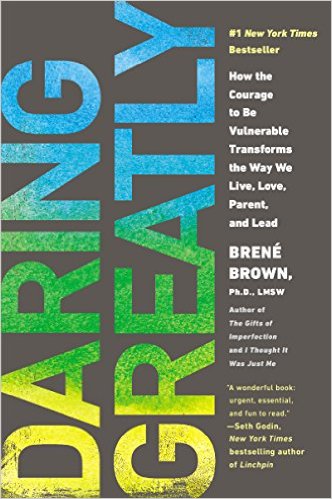
Daring Greatly: How the Courage to Be Vulnerable Transforms the Way We Live, Love, Parent, and Lead

When author Brené Brown uses the term “daring greatly,” she refers to the phrase from Theodore Roosevelt’s 1910 speech, “Citizenship in a Republic.” In the speech Roosevelt encourages citizens to try to do their best, and that even though they may fail, they have dared greatly. It is a wonderful, inspiring speech, and throughout her book, Brown refers to the concept of vulnerability, of being engaged, of being all in, no matter the consequences. In other words, “daring greatly.”

Vulnerability is not a comfortable state. You’re exposed and open to scrutiny. But to live life, to be engaged, vulnerability is necessary. Vulnerability is our most accurate measure of courage.

The book helps readers identify what is important in life and how we can connect wholeheartedly with our families, work associates, and friends. In order to live a more meaningful life, we need to step into the arena, rather than stand on the outside and look in.

Daring Greatly is an enlightening mixture of hard-core research (Brené Brown, Ph.D. is a research professor at the University of Houston) and kitchen-table chats. It’s a fascinating book about every-day living. Sometimes it is easy to get side-tracked when determining what is important in life. Our “never enough” society makes its demands, often pulling us away from the core of what we really want, what we really need, out of life.

Brown identifies shame, fear, and vulnerability, and encourages readers to embrace these feelings in order to live wholehearted lives. She doesn’t say it’s easy, but suggests that the way to a fulfilling life is to be fully engaged in all its aspects.

Daring Greatly is a remarkable book and fun to read. To learn more about Brené Brown and her work, visit http://brenebrown.com/

Book Review: The Memory Weaver

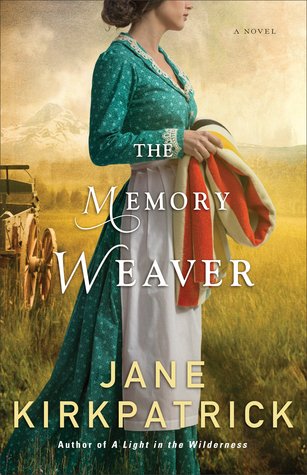
The Memory WeaverJane Kirkpatrick’s latest novel, The Memory Weaver, weaves a poignant story of the mid-1800’s in Oregon and Washington Territories. Based on true events, this historical novel reveals the life of Eliza Spaulding, the daughter of missionaries who worked with Native Americans at the time of the Whitman massacre, near what is now called Walla Walla, Washington. At the age of ten, she witnessed horrifying sights during the massacre.

The story begins when Eliza Spaulding, thirteen, is grieving the death of her mother in Brownsville, Oregon. Her mother was beloved by all, whites and Indians alike, and was known for her keen mind, her ability to speak in Native tongues, and for teaching the word of God in artistic, innovative ways.

Eliza’s memories of the massacre are full of dark thoughts of death and betrayal. The mission was seized by the Cayuse and Eliza was one of several who were held hostage. At ten, she, too, could speak Sahaptin, the language of the Nez Perce and other tribes of the region, and during the siege on several occasions was asked to interpret. After the British paid a ransom for the survivors, the missionaries were ordered by the Mission Board to leave, causing great bitterness and disappointment to the Spauldings and to newly baptized Native Americans.

Throughout the novel are excerpts from Eliza’s mother’s diary, a document Eliza wouldn’t have an opportunity to read until years later.

After her mother dies, Eliza is expected to take on the role of keeping house, cooking, and caring for her younger brother and two sisters. She manages the house and family well, but is often in mental turmoil with frightening memories of the massacre, and she still suffers from her mother’s death. When, at age fifteen she leaves to marry Andrew Warren, it is without her father’s approval. The newlyweds set up a homestead in Brownsville, Oregon.

Andrew acts on a ranching opportunity in Washington, near where the massacre occurred. Eliza is torn between staying on their homestead with the children or going with her husband, which would mean returning to the land of her captivity.

Later, when details of the massacre are revealed, Eliza is shocked to learn that her recollections are only part of the story. She remembers only what a child of ten could absorb.

I loved this novel. I found myself thinking about my own memories and wondering how distorted they might be. Kirkpatrick has a way of touching the heart with words and there were times I read through tears.

Jane Kirkpatrick is the author of many historical novels. The Memory Weaver is among the finest, but I’ve probably said that about all of them.

To read more about the author, visit www.jkbooks.com

Book Review: Write Within Yourself

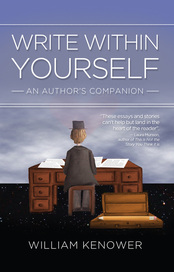
Write within YourselfWilliam Kenower’s Write Within Yourself: An Author’s Companion is a precious little gem. As an author, I find it inspiring, but you don’t have to be a writer to gain helpful, insightful self-knowledge.

The book is comprised of short essays, pieces aimed at the heart, mind and spirit. William Kenower shares of himself in a way that opens the door for the reader to better understand the treasure that lie within. The book isn’t intended as a guide, but a companion. It’s a book you’ll want to keep handy so that you can take a few minutes to remind yourself where you want to go, and how to sift through information you need.

Kenower shares stories of his own life in a way that I could apply to my own experiences. Many of life’s incidences become fodder we can write about, and even change the ending to suit ourselves.

The book sparkles with fresh wisdom. At first I tried to devour the book as I do with much of my reading. But then I realized I would gain more insight by rationing it out, only reading two or at the most three essays in one sitting. By doling the stories out slowly, I could more readily absorb its lessons of passion and creativity.

I love this little book. Its 179 pages are crammed with life skills, wry humor, and wisdom applicable to every day living. It is indeed a companion, a little friend for writers, but also for those seeking to know themselves better.

To learn more about the author and his work, visit www.WilliamKenower.com.

Book Review: Rose of Sharon

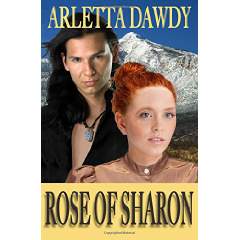
Rose of Sharon_When two little children, twins Rose of Sharon and Jacob Welty, weary, bug-bitten and hungry, stumble upon Blake Harris’ camp in the Arizona desert, he feeds them. After hearing their tragic story of hiding in a cave while a gang of men murdered their homesteading parents, he takes them to the nearest town. It’s obvious they need a home, and Harris becomes their guardian.

Through the years, Harris plays the father role, and before long marries the local school teacher, and they became a family. Rose has an unusual talent for writing, as well as a gift for “knowing something without the usual ways of knowing.” But sometimes a gift becomes a burden.

An Apache Indian boy, hungry for knowledge, lurks at the school house window, knowing he is not welcome. The twins become friends with White Buffalo and he is a regular visitor in the household, and later a ranch hand. Through White Buffalo we learn the sad plight of the Indian as they become displaced in their own land.

The author vividly portrays life on an Arizona scrub ranch in the late 1880’s. As Rose and Jacob mature, other children are born into the family and at times life becomes complicated. White Buffalo’s presence becomes a serious issue as he and Rose become sexually aware of one another.

Author Arletta Dawdy’s love of the land is obvious as she vividly describes the wild Huachuca Mountains and surrounding wildlands, She beautifully portrays the different seasons, each with its own uniqueness and challenges.

A novel, Rose of Sharon is  the third of The Huachuca Trilogy. The first was Huachuca Woman followed by By Grace. To learn more about Arletta Dowdy and her work, visit http://www.arlettadawdy.com/