Making Lists Isn’t Always the Answer

Worker preparing to be lowered into a well site.

From Tubob: Two Years in Africa with the Peace Corps

My husband Bruce’s job with the UN well-digging unit continued to be one frustration after another. He described it as “running a business on promises.” Getting supplies in a timely fashion was challenging. Many trips downriver could have been avoided if the upriver crew could have depended on routine supplies, such as motor oil, fuel and spark plugs. As it happened, they had been unable to change oil in the vehicles for some time because they couldn’t get enough oil to perform this task. They could only top up the oil when it was desperately needed. The disregard for vehicle maintenance grated on Bruce.

Sometimes equipment would go into the bush, only to break down and have to be rescued. Bruce knew many of these breakdowns could have been avoided with consistent maintenance. It was expensive for yet another vehicle to go into the bush to rescue the first, change a tire because there was no spare, take fuel which should have been filled before they left. The wasted time and resources slowed down the operation and raised expenses.

To help alleviate needless trips, Bruce made an itemized list of things that needed to be checked off before the Land Rovers and trucks left for the bush. Bruce instructed the lead mechanic to check off the items on the list as they were performed.

__ Tires checked
__ Spare tire checked
__ Radiator Level Checked
__ Oil changed, if needed (see schedule)
__ Check battery
__ Check brakes

A truck was about to depart and Karafa, the head mechanic, handed the to-do list to Bruce, with all items dutifully checked.

Bruce looked over the form. “Karafa, you’ve checked off ‘Oil Changed.’”

“Yes.”

“But we’re out of oil.”

“Yes.”

“How could you check this off then, if we don’t have oil?”

“We must check this off before truck can go to bush.”

“But you couldn’t change the oil.”

And on it went. Bruce then realized that Karafa, as well as most of the other men at the shop, couldn’t read nor write. Yet Karafa managed to maintain a fleet of trucks under very difficult conditions. Until you’re faced with situations like this, it’s hard to realize the advantages of education that we take for granted.

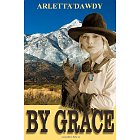
Book Review: Hauchuca Woman

Arletta Dawdy manages to pass on an amazing amount of southwest history in Hauchuca Woman. The story ranges from 1886, toggling to 1952, and ends with a satisfying 1961 epilog. The historical fiction is the first of the Huachuca (pronounced Wha-chew-ca) Trilogy, followed by novels By Grace and Rose of Sharon.

Josephine, the story teller, born in 1877, was about nine years old when she first met the famed Chiricahua Apache, Geronimo. Josephine’s family befriended the small starving band and in turn were considered the infamous chief’s friends.

Although the episode with Geronimo is a short scene, it sets the pace of a historical novel about the life of a white woman who lived through the taming of the Southwest, particularly in Arizona, in the late 1800’s. Josephine, 75, tells her story to her two young-adult grandchildren who are cousins, and offspring of Josephine’s twin sons. The young people are eager to tape record their grandmother’s fascinating history, bits and pieces of which they’ve heard all their lives. Toggling from 1952 and the telling of the story back to the events of 1880’s, makes for an interesting contrast. The three travel to the nearer story settings, allowing the reader to “see” through more modern eyes various historical events.

Through Josephine, the grandchildren are able to piece together their grandmother’s complex and enlightening story. Josephine’s Lazy L ranch, is her family’s homestead and a place the grandchildren cherish. They hope to encourage their families to help make it a place where family, friends and guests could gather and relish in an atmosphere of history carved from decades of dedicated labor.

Josephine’s colorful life takes surprising and often unconventional turns and twists. Her story demonstrates the highs and lows of a life well lived.

I found the segment about Fort Huachuca particularly fascinating. The Fort, still in active use, headquartered the famed 10th Calvary, the “Buffalo Soldiers,” one of the Army’s elite black cavalry corps.

Arletta Dawdy does a good job captivating the spirit of yesteryear. The details of time and setting, dialect, clothing and transportation, add immeasurably to the work.

Huachuca Woman is available in print and e-book formats. To learn more about the author, visit www.ArlettaDawdy.com

Dodging Longhorns in The Gambia

From: TUBOB: Two Years in West Africa with the Peace Corps

After work one day I walked to the farmers’ market with a long list of items we needed. Heading home, I tried not to think about the heat and the heavy pack on my back. Instead I planned our Easter dinner. Absorbed in my thoughts, I trudged along the winding path. Suddenly I stopped in my tracks. A large herd, maybe fifty head or so of longhorn cattle, grazed on the scrub grass, completely blocking the path.

To turn around and go back to take the road home would add at least a mile to my walk, not appealing in that heat. I looked around for a Fula herdsman, but didn’t see him, though I was sure a herd this size wouldn’t be here on its own. Most cattle, especially this many, were owned by the Serahule tribe, but herded by a Fula tribesman. Well, I’d just take my chances. I walked down the dusty path, talking softly so I wouldn’t startle them.

“Hi, guys,” I murmured. “I’m just going to slide right by you here.” I kept watching out for those long horns, hoping one wouldn’t stick me. Almost as worrisome was being swished by a shitty tail.

“Okay, here I am, just step aside.” I kept my voice low key, almost a whisper. A few of the cows mooed at me, some sort of grunted. None were alarmed, though they rolled their huge eyes at me. A few stepped out of my way; others let me step around them. Flies from the cattle landed on me, but I concentrated on not waving them off, trying not to make sudden moves. Churned-up dust settled on my shoulders and hair. I walked perhaps a quarter of a mile through the scattered herd before reaching the other side of them.

At one point along the path, a small hill rose on one side. From the hill I heard, “Abete ata bake, Mariama!” Well done, Mariama!

I looked up and saw the herdsman sitting in the shade. He waved. I waved back. The poor guy probably had held his breath the whole time I wove my way through the cattle, expecting to have to pry me off one of those long horns.

For weeks afterward, I heard about that incident. Word spread like locusts in a maize field. Woman couldn’t imagine why I would do such a thing. Men thought I was probably just ignorant of what could have happened to me. I kept telling everyone who questioned me that it was just too hot to turn around and go home the long way.

Book Review: Coins in the Fountain

Judith Works gives readers a fascinating Italian experience in Coins in the Fountain: The Story of an Italian Intermezzo. The book is a memoir of the author’s ten-plus years in Italy.

Equipped with her newly acquired law degree, Judith Works accepted a position with the United Nations Food and Agricultural Organization (FAO) headquartered in Rome. Together with her husband Glenn, they set up housekeeping, a task fraught with obstacles and lack of conveniences.

Rome, is called the Eternal City–even the ancient people thought it would go on forever. The author claims it would take an eternity to see it all. When time permits they explore it, piece by piece, street by street. Once settled at work and in what eventually would be “home,” Judith and Glenn were able to travel on weekends, holidays and vacations. The author and her husband know how to travel, to observe, and to experience a way to life. Often putting up with nightmare traffic, they attend concerts, visit churches, museums, galleries, flea markets, quaint shops, countrysides, big cities, small villages. Sometimes they travel with friends, other expatriates, sometimes on their own. The author is obviously knowledgeable in art and readers have the wonderful advantage of seeing church frescos, sculptures, paintings, ceramic tiles, fountains, etc. though her experienced and critical eye.

Food is an obsession in Italy and takes a prominent role in this memoir, as does wine. The book describes in detail cuisine in Rome and in other parts of Italy. Glenn became adept in Italian cooking, which further enriched (pun intended) their food experience.

The Works returned to the States after finishing her four-year contract with FAO, but were delighted to return to Rome a short time later, this time to work with United Nations World Food Program (WFP) on a six-year contract. Works’ job necessitated travel to other countries as well and she briefly describes these ventures.

The name of the book, Coins in the Fountain refers to the Trevi Fountain, the most famous and beautiful fountain in Rome. It is thought that if visitors throw three coins in the fountain, they will return to Rome. At least it worked for the author, to the delight of all who read this book.

Coins in the Fountain: The Story of an Italian Intermezzo could be a guidebook for tourists visiting Italy, as well as for armchair travelers who may never step on Roman soil, but have the advantage of traveling vicariously through this exceptionally well-written book. Coins in the Fountain is available in ebook format. For more information about the book and author, visit www.coinsinthefountain.com

The Gambia: The Art of Carrying Water on Your Head

From: TUBOB: Two Years in West Africa with the Peace Corps

I marveled that people in The Gambia always looked so clean. Although they might get dirty digging wells or working in the rice fields, or performing any number of physical chores, they bathed and changed clothes frequently. Men often wore spotless, long white kaftans when they went to mosque or on business. Impressive, since all washing was done by hand.

Traditionally, women and girls hauled the water. To pump water at our UN well, one climbed steps to a platform above the well that stood perhaps three feet from the ground. When I arrived at the pump with my two buckets, they often urged me to go ahead of them. I usually refused, saying I would wait my turn. One day I watched two girls, perhaps sisters, chatting while they filled their containers with water. The older girl, probably about twelve, filled a laundry tub; the other, maybe eight years old, a large bucket. After the older girl filled her tub, she slid it aside to the edge of the platform while the younger girl filled her bucket.

With both containers full, the girls returned to the ground and together lifted the large tub onto the older girl’s head which had a circle of cloth on it to cushion the load. Then, with that heavy load on her head, the older one helped the younger girl heft the pail of water onto her head, never spilling a drop. Throughout the whole procedure they carried on a normal conversation, pausing only briefly to heft the containers, then walked back to their compound, still chatting, the heavy containers balanced on their heads, with perhaps one arm raised to steady it.

When Gambian girls are quite young, their mothers train them to carry basins of water. We watched the young girl in our compound, Jariettu, carry water in a shallow basin from the well to their hut. At first, she spilled much of the water, but after a few months, she was able to carry her load with confidence and without spilling a drop.

No wonder Gambians have such wonderful posture.

Book Review: Where Danger Danced

Irene Bennett Brown again captures her readers with Where Danger Danced, the second of the Celia Landrey Mystery series. This second cozy mystery is as delightful as the first.

As Celia Landrey guides her last tour group of the season through town, they are distracted by screaming and confusion at a service station where an old fuel tank is in the process of being removed to make way for a new one. To the horror of onlookers, human bones are discovered buried near the old tank.

Celia works hard to preserve her town’s reputation. Pass Creek is not only where her home and livelihood, Landrey’s Inn, is located, it is where she and her late husband of twenty years lived. Active in the small community, Celia is devoted to keeping the town a safe haven, a place where people want to live and visit.

The grim discovery of the skeleton sets the town to humming speculation. The Police Chief, knowing Celia’s penchant for fiercely protecting her town and her determined drive to get to the bottom of a mystery, warns her to let the police do their job. In others words, stay out of it.

Even her fiance, Jake Flagg, discourages her from getting involved. It’s time they set a wedding date and he strongly prefers her to concentrate on that.

But, how did those bones get into that deep hole? She couldn’t let it rest. Cold cases are apt to be less important to the police than current problems. She inquires around town but the townspeople, especially the old-timers, clam up when she asks questions about whose remains have been unearthed. In many different ways, she’s told to mind her own business. Many of her friends are clearly exasperated with her. What’s going on?

Where Danger Danced is an entertaining, captivating read. It’s a perfect sequel to Where Gable Slept. I can’t wait for the next one. The novel is available in both e-book and print formats. For more information about the author, visit www.IreneBennettBrown.com
.

What Did That Drum Just Say?

From: Tubob: Two Years in West Africa with the Peace Corps

Woman at traditional well

The UN well in front of our compound was a popular watering hole for all of Mansajang. Although the village proper did have a water spigot, it often didn’t work and when it did, people complained of the water’s taste. All day long, women and girls came to the UN well to fill their tubs and pails of water, carrying the heavy loads on their heads as they returned to their compounds.

Because washing clothes has such a high demand for water, many women washed clothes right there at the well, then carried their clean wet clothes home to hang on their compound fencing. They used the local soap, OMA, made from peanut by-products. My husband Bruce became concerned about soap residue filtering through the soil into the well water.

He made a circle of rocks around the well a safe distance away and asked the women to wash clothes outside the circle and explained that this would keep the well water clean. It made more work for them, having to haul their heavy tubs farther from the water source, but they obliged him when he was there, and promptly went back to their former habits when he wasn’t. Bruce patiently reminded them with good natured banter. The problem, of course, was that the women didn’t understand they were jeopardizing their own water supply.

One evening a man from Mansajang called on us and asked Bruce to talk to the village about safe water. Probably, this particular man was sent because he could speak English. Apparently the village elders had gotten wind of a problem with the well and wanted everyone to understand. Delighted, Bruce accepted his invitation.

“What time should we be there?” I asked.

Surprised with the question, the fellow answered, “After evening prayers. You’ll hear the drum.” Gambians had a different sense of time than we did. Watches or even clocks were rare. Activities centered around Muslim call of prayers five times a day. When it was time, people, mostly men, stopped what they were doing, brought out their prayer mats, faced Mecca to the east, and prayed.

A word about the drums. Three basic types of drums are common in The Gambia: the rhythm drum, used for dancing; the ceremonial drum, used for more serious things such as funerals or other somber events; and the talking drum. The talking drum has a sort of “boink, boink” sound to it with varying pitches. People understand the talking drum, as they understand their language, whether it be Mandinka, Wolof, or any of the tribal languages. The talking drums provide tremendously efficient communication, especially in areas where there are no telephones

Knowing that we would hear the drum, we agreed to be at the village meeting place.
Sure enough, we heard the drum soon after we’d finished our dinner. We walked to the center of Mansajang, perhaps a half mile away. The meeting place, a raised platform under a giant baobob tree, was devoid of people. One lone person walked by. In Mandinka, I greeted the man, then said, “Where are the people?”

“The people aren’t here.” Such a typical response. I never got used to it. The man resumed his walk.

“But we heard the drum. We are here for the meeting,” I called after him.

He turned to look at me, shook his head and tsked. “The drum said there was no meeting.”

Apparently one of the village’s important people couldn’t attend so the meeting had been postponed.

Gambians found it hard to believe that we could understand, or “hear,” Mandinka, but we couldn’t “hear” the drums. I’m sure in their eyes we were so hopeless.

The Dividing Season

Rarely do I find a book as captivating as The Dividing Season by Karen Casey Fitzjerrell.

Nell Miggins is at a crossroads of her life. It’s 1910 and time to move on, to let go of Carrageen, the Texas cattle ranch she inherited from her father. Nell is no longer a young woman and life is passing her by. She’s done well, managing the ranch. She handles just about anything the ranch hands can and she’s tough. But there must be more to life and she’s determined to find it. Just what “it” is, she’s unsure.

Fitzjerrell spins a wonderful tale, a story that includes a dusty Texas ranch, the humid jungle of Mexico and a near-death experience at sea. Diverse personalities help spin this tale. Nell’s ranch hosts, in addition to the ranch hands already there, a windmiller, college professors, and a smelly cowhand with a bent for making wrong decisions. All the characters have a purpose, all add depth to the story.

The author, a life-long Texan, exhibits great passion for her state and her descriptions put me right there. I felt the dust creep under my collar, I gasped at the brilliant orange sunset, I shivered in the cold rain, I felt the weariness at the end of an exhaustive day. Fitzjerrell knows people and writes with compassion, heart and quiet humor. I loved this book. It has the earmarks of a classic and yet was only published in 2012. She speaks with authority on ranching and, surprisingly, on Mayan archaeology in Mexico’s steaming jungle.

The Dividing Season is a page-turner, but the reader doesn’t feel rushed. Fitzjerrell’s timing and pace are impeccable. We know her characters, we feel their pain, their joy, and, for some, their strength and determination borne of love for those who have become family.

I highly recommend The Dividing Season. The novel is available in trade paperback and e-book formats. To learn more about the author, visit www.karencaseyfitzjerrell.com

On Yukon Time

About this time of year, my husband Bruce and I begin to dream about where we might go for our summer vacation and reminisce about past trips. Yukon Territory is high on our list of special trips taken. Canada’s Yukon Territory is still as wild as it sounds. Look at this region on a map, and you’ll find precious few roads. The main highways–some paved but many still gravel–are well maintained.

Driving this loop tour, we often traveled for more than a hundred miles before encountering another vehicle. And this was in August–the peak of Yukon Territory’s tourist season. If you like privacy, you will love the Yukon, where it’s said that caribou outnumber the people five to one.

We were thrilled to see an abundance of waterfowl, deer, bear, caribou, stone sheep, a variety of squirrels; a pair of red foxes; a cow moose and her calf.

The number of lakes in the Territory is astounding. These sparkling jewels often are surrounded by shimmering aspen trees. We saw forests of white spruce, sometimes interspersed with the more scraggily black spruce. The trees are small due to a short growing season.

As we traveled around Yukon Territory, we noted the “On Yukon Time” icons, signs of special attractions worthy of visitors’ attention, an invitation to slow down, explore and enjoy.

Our 750-mile loop, two-week tour began at Watson Lake. From there we traveled northwest on the Campbell Highway to Carmacks. We then headed south on the Klondike Highway through Whitehorse, then drove southeast on the Alaska Highway from Whitehorse back to Watson Lake. Here are some of the highlights:

Robert Campbell Highway was completed in 1968 and closely follows sections of the fur trade route established by Robert Campbell. In the 1840s, Campbell explored this region and named virtually every major river in the Yukon. The highway bearing his name parallels several major waterways, including the Frances, Finlayson, and Pelly rivers. The distance from Watson Lake to Carmacks along this route is 362 miles (583 kilometers).

The communities of Ross River and Faro, situated along the Campbell Highway, obviously were built to withstand the winter more than provide visual aesthetics. Ross River, population approximately 350, is located at the junction of the Ross and the Pelly rivers. From there you can walk across a suspension foot-bridge that spans the Pelly River.

We found very few people inhabiting Faro, the next town along the Campbell Highway. Apparently, this town, named after a card game, comes to life when the nearby lead-zinc mines are active, but when we visited, they were closed.

An RV campground is located across the street from Faro’s Campbell Region Interpretive Tourist Information Centre. The center is well worth visiting for its historical displays. Faro is ideally situated for wildlife viewing and hiking, not to mention golf: The town offers an unusual nine-hole urban course that plays through the town’s green spaces.

Klondike Highway. The Campbell Highway terminates just north of Carmacks. We turned south on the Klondike Highway (Route 2) and traveled to the town of Carmacks, a good place to stop for provisions and services.

Carmacks was named after George Washington Carmack, who set up a trading post in the 1890s. Carmacks’s post went bust in 1896, so he settled elsewhere. It was a good thing he did. He later found more than a ton of gold in Bonanza Creek, and word of his discovery launched the Klondike Gold Rush.

From Carmacks we traveled south on the Klondike Highway toward Whitehorse. We stopped for the night at Lake LaBerge, named after Western Union Telegraph explorer, Michael LaBerge of Quebec. Our lakeside campsite was secluded and serenely quiet. As we sat on Lake LeBerge’s shore, Bruce recited from memory Robert W. Service’s wonderful poem, “The Cremation of Sam McGee,” a tale that brings Yukon’s rugged history to life.

Only 15 miles south of Lake LeBerge via the Klondike Highway is Whitehorse, Yukon Territory’s capital city since 1953. Whitehorse was named for turbulent, frothy rapids on the Yukon River that resemble the flowing manes of white horses. A hydroelectric dam on the river has since harnessed the “horses,” making the waters more placid.

In addition to provisions and several RV supply and repair shops, the city offers opportunities to view architectural, art, and gold-rush memorabilia.

Alaska Highway. The final part of this loop tour involves taking the Klondike Highway to Jake’s Corner, and then turning east toward Watson Lake on Route 1, the Alaska Highway.

The Alaska Highway was built jointly by military and civilian personnel from Canada and the United States, and was to serve as an important access road to Alaska. It is now mostly paved and, compared to yesteryear, easy to drive.

The Alaska Highway dips briefly into British Columbia, then continues on to Watson Lake, where the loop is completed. For more information about the Yukon Territory, visit www.touryukon.com or call 1-800-661-0494.

Tips for Yukon Travel
● Place a mesh screen over your radiator to protect your vehicle from rocks and to filter out insects. Consider protecting your towed car with a rock shield.
● Be sure your spare tire is reliable and ready to install.
● Bring plenty of insect repellent. To keep mosquitoes at bay, wear lightweight pants and tops with long sleeves.
● In August, we found nights can be cool, but daytime temperatures quite warm. Be prepared for these extremes.
● Take advantage of all fuel stops. In some cases, there may be long distances between gas stations.

Camping in The Yukon: Many privately operated campgrounds are available in Yukon Territory, but we stayed exclusively at the government campgrounds, and found them to be delightful and reasonably priced. You must purchase a camping permit before you arrive at the campground. Permits are readily available at visitor reception centers as well as at retail outlets throughout the Yukon.

Most Yukon government campgrounds do not offer hookups. Most locations do have picnic tables, campfire pits, firewood and at least one picnic shelter. Outhouses and hand-pumped water are the norm. At many of the campgrounds, signs indicate that the water should be boiled before being consumed. For your convenience, you might want to carry your own drinking water if you choose to stay at these camps.
.

A Logger’s Daughter: Growing up in Washington’s Woods

Joan Rawlins Husby’s delightful memoir, A Logger’s Daughter: Growing up in Washington’s Woods gives readers a poignant view of the life and times of growing up in Washington’s wilderness in the ‘40s and ‘50s.

Joan Rawlins was born just months before her parents, Delbert and Marie Rawlins’, moved from North Dakota to Washington’s Robe Valley, at the foot of Mt. Pilchuck. The Rawlins lived in a tiny cabin until Joan’s father could build a larger cabin of scrounged material. Eventually, the Rawlins had five children who played in the great outdoors with other loggers’ children.

Husby shares with readers a life of growing up in Washington’s forests, the daughter of a logger. Although her parents didn’t have a lot of ready cash and worked hard for every advantage they had, there was always food on the table and love to spare. The family was years in getting electricity and running water. Their “bathroom” was a two-holer a distance from the house. Heating fuel was wood, hand-cut and split. They raised chickens for eggs and meat, and rabbits for meat and skins to sell to Sears, Roebuck and Company.

If logging was shut down by fire, strike or snow, Husby’s father earned money by making roofing shakes, or taking on any job that would put food on the table.

Equally interesting is Husby’s writing of the area’s history. When they arrived in Robe Valley, most of the timber was virgin. Many of the cedar trees were as wide in diameter as her father was tall. In the early days, timber was cut by hand-saw. Raging rivers changed the lay of the land. The purpose of railroads evolved from mining to tourism.

Husby creates vivid pictures of family and landscape, giving the reader a taste of yesteryear and a glimpse of a childhood in a pre-tech age.

I highly recommend this memoir of a simple life in a simpler time. Many will relate to at least parts of this book, while others will marvel at the grit it took to simply survive deep into Washington’s woods.

To purchase a copy of A Logger’s Daughter, visit www.rainsongpress.com or contact the author, Joan Husby <hjhusby@frontier.com>.