What Day is This?

calendar  1980-01


From: Tubob: Two Years in West Africa with the Peace Corps

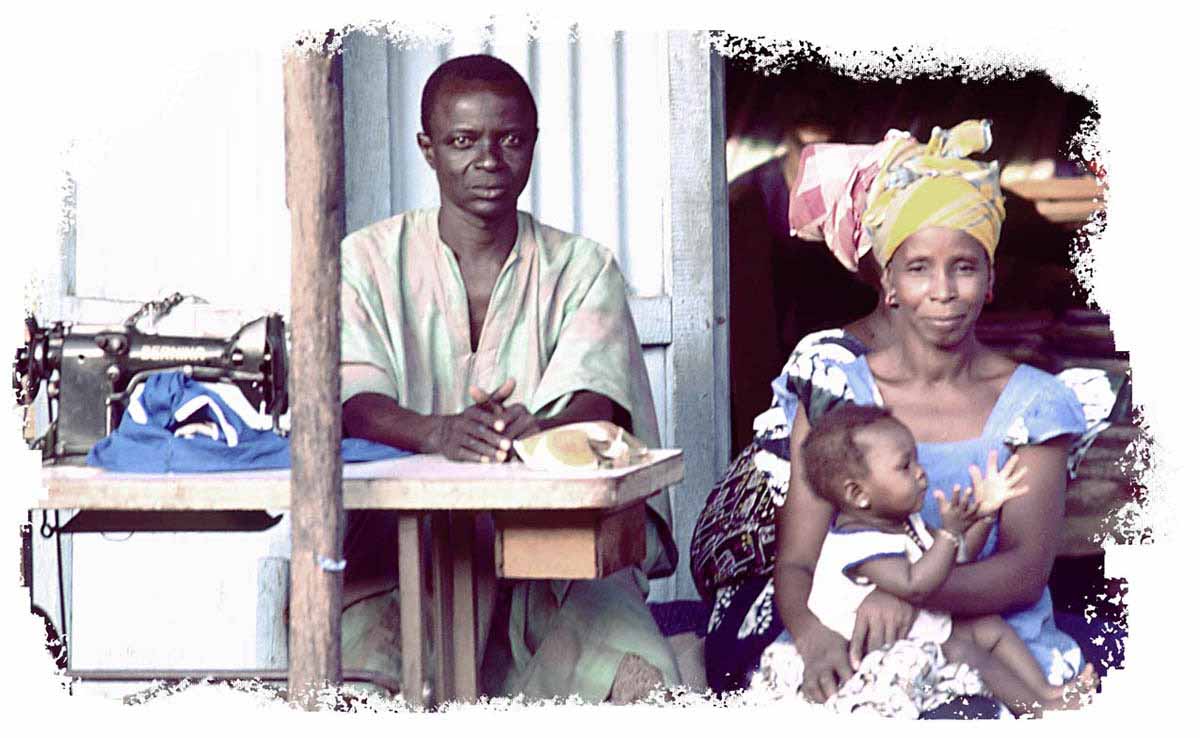
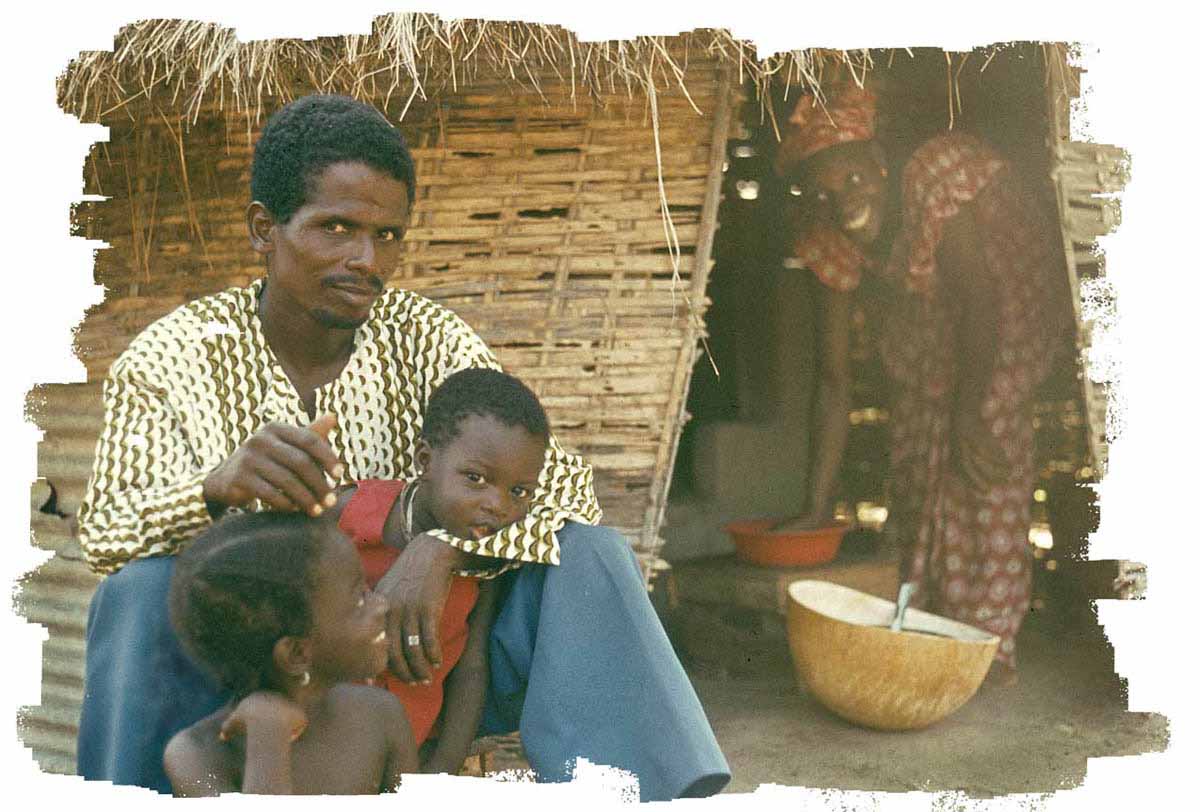
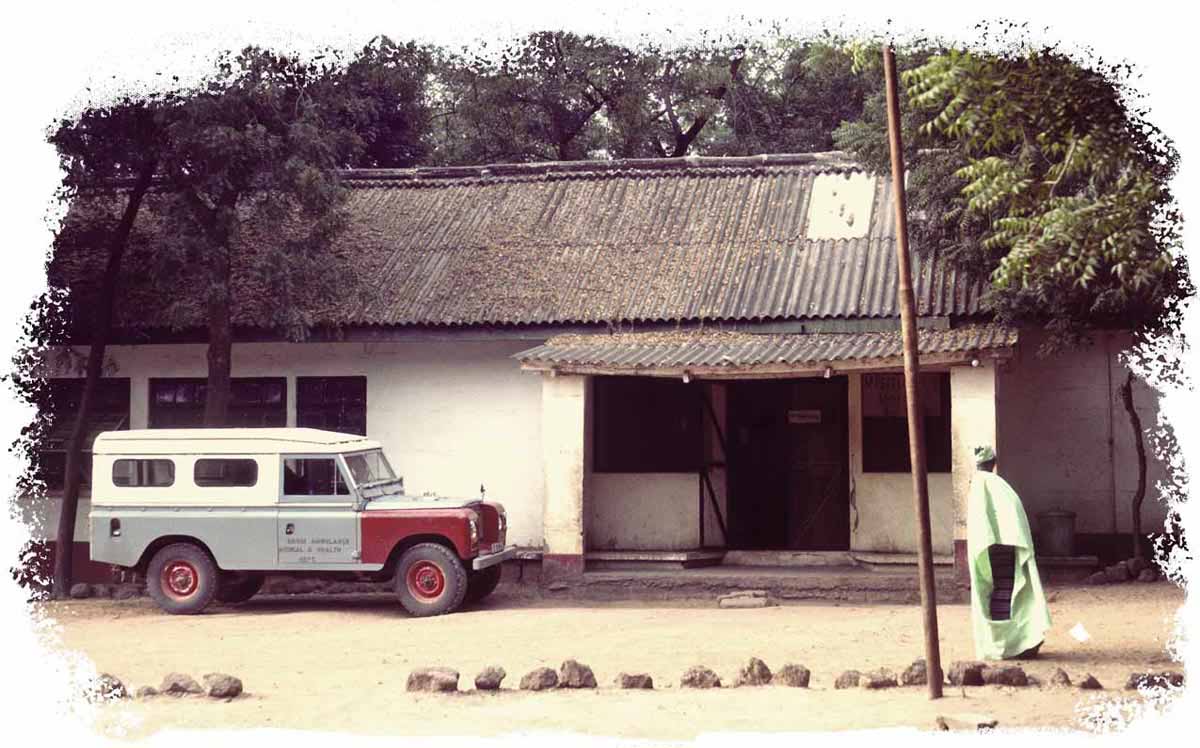
I noticed the hospital had no calendar. I wondered how people kept track of days, but soon learned they really didn’t. It worried me that the correct dates weren’t always noted on medical records. More, I worried that instructions for administering medications weren’t being followed with an accurate indicator of days.

I had asked Bruce’s mom to send me a calendar for the hospital in our Christmas package. Luckily she air-mailed two calendars, one for the hospital and one for us. It was a good thing since we still hadn’t received our Christmas packages (nor would we until mid-March).

I hung up the pretty calendar and showed everyone at the hospital where it was. “Now we can keep better track of the days.”

The next day it was gone and no doubt decorated someone’s hut. I hated to do it, but I donated our own to the hospital. It, too, disappeared.

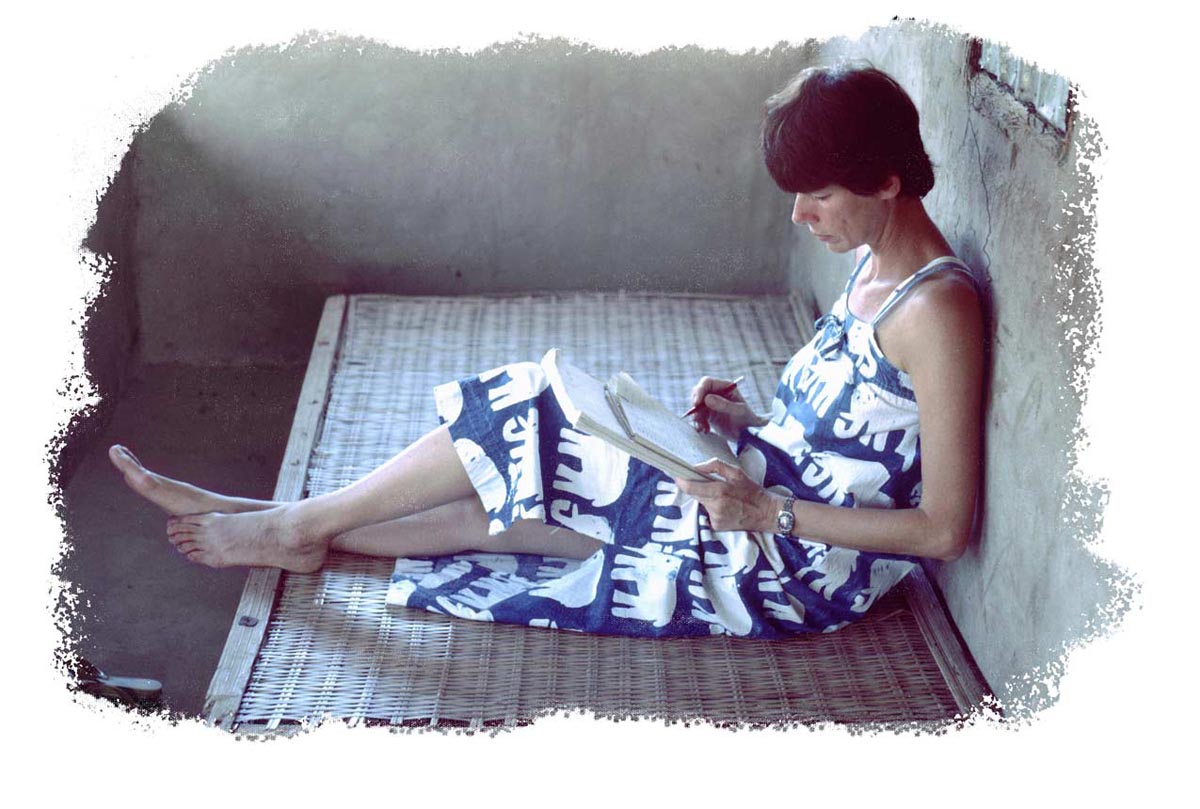
That night, at home, I drew two blank monthly calendars on typing paper, using carbon paper to duplicate. I filled in that month’s dates for both the hospital and home. Not surprisingly, no one took my home-made calendar home. I did that each month. At least now the nurses had a way to keep track of dates and medications given.

Book Review: No Escape: The Sweetwater Tragedy

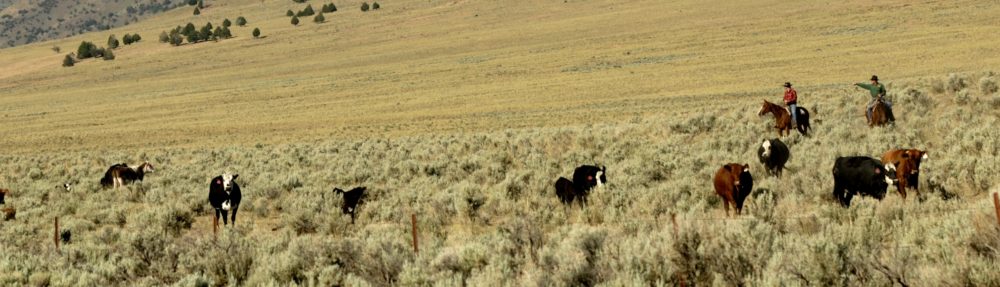
no-escape-coverWhen Susan Cameron arrives in Sweetwater Valley, Wyoming, she is full of hope for her new life. At last, she will answer to no one but herself–she is free to pursue her dream of owning her own land and making her own choices. She gets off to a rocky start, but undaunted, doggedly follows her plan to file for her own section of land. Along the way, she meets Michael O’Brien who shows a romantic interest in her. Susan, however, meets Michael’s every effort with frosty response. This is her time to prove herself and nothing, no one, will deter her.

Early on, Susan has the good fortune to meet her generous and helpful neighboring homesteaders, Ella and her husband Jim. Susan soon learns that cattlemen are actively making life miserable for homesteaders. The free grazing land cattlemen have used for years is being “ruined” by homesteaders’ houses, fences and crops, tying up precious water resources. The lawlessness and tragedy that follow is a bleak part of western history.

This excellent historical novel, No Escape: The Sweetwater Tragedy, by Jean Henry Mead, is based on an actual 1889 Wyoming incident involving the vigilante hangings of Ellen “Ella” Watson-Averell and her husband, James. The homesteaders were falsely accused of running a “brawdy” house” in exchange for rustled cattle. To carry the story, the author has drawn a fictitious character, a composite of thousands of single women who attempted to prove up on homesteads, some successfully, some not.

Versatile author Jean Henry Mead’s impeccable research is evident in this gripping fast-paced tale.

No Escape: The Sweetwater Tragedy by Jean Henry Mead is available in e-book and print formats.

Desperate for Rain

umbrellaFrom: TUBOB: Two Years in West Africa with the Peace Corps

The Gambia was desperate for rain. Flashes of heat lightning and thunderclaps teased us with promises, but other than a few scattered raindrops, no real rain. Even Africans complained of the heat and the thirsty crop’s need for rain.

Our Peace Corps friend Nathaniel invited his colleague Norman to Basse for a work related meeting and invited us to join them for dinner afterward at Jobot’s All Necessary Foods. The walk into Basse was especially humid, hot and sticky. I could almost feel rain in the air.

I grumbled to Bruce. “I couldn’t feel any wetter if it actually rained.”

He agreed. “I’ll bet before the end of this evening, we’ll have rain.”

It couldn’t be too soon for us. We had our usual great dinner at Jobot’s, making a big effort to ignore the heat. We headed over to Pa Peacock’s White House Fuladu East Bar for a cold drink. We’d been there for only a few minutes when it finally came, a few tentative drops, and then a deluge.

Bruce and I stepped outside and stood in the rain, laughing and getting soaked to the skin.

Most Gambians don’t like to get wet and will take great steps to avoid it. Nathaniel and Norman stood in the doorway watching us, amused. An African fellow watched with them and said to Nathaniel, “What’s wrong with those people?”

“They’re from Seattle,” Nathaniel replied.

Book Review: May the Road Rise Up to Meet You

May the Road Rise UpPeter Troy, author of May the Road Rise Up to Meet You writes a compelling story, weaving the lives of four main characters as they cope with turbulent times. The novel encompasses first Ireland and its Great Famine and then moves on to America just before and then during the Civil War. His description of the Civil War, seen through the eyes of these diverse characters, makes this novel a unique read. The book chronicles years 1853 through 1867.

Mary Wilkins, a slave,.is a young girl when she’s sold to a family who treats her kindly, but she is nevertheless a slave, unable to personally benefit from the beautiful garments she creates.

Ethan McOwen is only twelve when he leaves his grieving mother and aunt in Ireland to join his father and brother in America. For the first time in his life, he’s alone for the endless dangerous journey across the sea. He’s reunited with his father and brother whom he hasn’t seen for two years and his life begins again in America.

Micah, a slave, eventually gives himself the last name of Plowshare, but for much of his life, he is simply Micah. An extraordinary carpenter, he is much in demand, but has no control over his own life, and sees his skills benefit only his master. When it comes to rights, he’s on an equal par with a mule.

Marcella Arroyo, originally from Spain, is the daughter of a wealthy merchant, but becomes involved with the Abolition Movement to end slavery. In order to follow her heart, she must leave her father’s house to join others of like mind.

As the stories of these individuals unfold, I found myself embroiled in this great saga. Troy doesn’t always follow the rules of writing literature, but rather follows what captures your heart. His use of colloquial language and accents enriches the narrative. He skillfully balances the perils and joys of each life as they encounter one another. The ravages of the Civil War drive their individual stories, giving the reader insightful behind-the-scenes glimpses of America during this dark period.

I highly recommend May the Road Rise Up to Meet You. ‘Tis a book you’ll not soon forget.

An African Encounter with Hippopotamus

HippoFrom: Tubob: Two Years in West Africa with the Peace Corps

One of our big goals while serving with the Peace Corps in The Gambia was to visit Niokolo Koba National Park in Senegal. We were able to take the 3-day trip with two other couples, US AID people who had a vehicle at their disposal.

The drive getting to the park was long, hot and dusty. After some viewing, we were ready to call it a day and make the next day our main viewing day.

Camping was allowed only in designated areas and we found the camps spartan but adequate. On our first night, the riverside camp had a round grass-roof hut and a cooking hut with a bench. The hut nicely held four people so Bruce and I elected to pitch our borrowed tent outside.

After getting that hot work done, we couldn’t wait to cool off in the river. The six of us rushed into the river and gave a collective sigh of relief. I heard yelling and looked up to see the park ranger frantically waving for us to get out. “What? Get out? We just got here!”

We didn’t want to get into trouble, so we reluctantly climbed out of the river and up the bank, not yet really cooled off. Once he saw us safely out of the water, he pointed upriver. There, we saw a family of hippos, their tiny ears and eyes reflecting red showing just above the surface of the water. Oops. Guess it was the wrong time of day to be cooling off in the river.

As we climbed into our tent later that night, I said to my husband Bruce, “I don’t suppose this little tent is much protection from those hippos.”

“There isn’t room for two more in the hut.”

“I suppose we could set the tent up in the cooking hut.”

“Forget it. I don’t have the steam.” With that, he fell sound asleep.

Oh, well, I thought, and immediately drifted off to sleep.

The next morning, we saw dozens of big, flat hippo footprints leading from the river through the campground. Those huge animals had walked within two feet of our little tent, leaving footprints the size of turkey platters.

Book Review: The Emperor of All Maladies: A Biography of Cancer

The_Emperor_of_all_MaladiesHow old is cancer? What are the roots of our battle against this disease? Where are we in the war against cancer? In this comprehensive book’s almost 600 pages, Siddhartha Mukherjee does a magnificent job in answering these questions. The Emperor of All Maladies: A Biography of Cancer, a Pulitzer Prize winner, is a powerful, engrossing read, beautifully expressed and understandable to a lay person.

As this scholarly book takes readers through the ages, the author sites specific cases, some through his own oncology practice, that give the book a human touch and facts that a lay person can relate to.

Cancer is possibly one of the oldest human diseases. Although we’ve come a long way in learning what it is and what can be done toward curing, or at least controlling it, cancer, in many respects, is still a mysterious disease.

We tend to lump the different forms of cancer altogether. In many respects there is a commonality among the many different kinds, but oncology, the branch of medicine concerned with the study and treatment of cancer, has learned that cancer is not a disease, but a whole family of diseases. These diseases are linked at a biological, cellular level. The particular types of cells, though different within the various types of cancer, abnormally divide and multiply, and eventually “take over” critical organs of the body.

Each type of cancer cell has its own look, its own personality, its own method or pathway it takes through the body. Interestingly, when cells break away from their origin, for instance, with breast cancer, those rapidly multiplying cells might attach themselves to another part of the body, a process called metastasis. Even though it may be in another part of the body, it is identified as metastasized breast cancer.

The study of cancer and its treatment involves a multitude of disciplines, from the many oncology sciences, to cancer screening, to specialists in surgery, radiation, chemotherapy, monoclonal antibody therapy, and even palliative care. In some cases oncologists have isolated probable causes of cancer, such as smoking and working with asbestos. Screening for early detection, such as pap smears and mammograms, have allowed treatment before cancer spreads to other parts of the body. In some cases prevention, such as a vaccination against human papillomavirus (HPV) have avoided incidences of cancer. However, the war on many types of cancer is still raging. New medicines are on the horizon, but testing and availability take funding and time, commodities that many cancer patients don’t always have. Sometimes the best an oncologist can do is redefine victory by focusing on prolonging life rather than eliminating death, making expectations manageable.

Thankfully, gone are the days where a single treatment is tried, then, failing that, another. Nowadays, a cancer patient can consult a team of specialists who work together to provide the best care known to date.

The Emperor of All Maladies:A Biography of Cancer, published in 2010, is an important work, full of compassion, energy and impeccable prose. At the end of the book (at least in the copy I read) an interview with Siddhartha Mukherjee sheds even more light on his passion for cancer enlightenment.

Uganda: Helen Keller Would Be Proud

Uganda Man Receiving Eye Care

(Photo by Roy Lesher)

Helen Keller overcame the adversity of being blind and deaf and became one of the America’s leading humanitarians. In 1925 Ms. Keller spoke at Lions Club International Convention at Cedar Point, Ohio. She concluded:

“The opportunity I bring to you, Lions, is this: To foster and sponsor the work of the American Foundation for the Blind. Will you not help me hasten the day when there shall be no preventable blindness; no little deaf, blind child untaught; no blind man or woman unaided? I appeal to you Lions, you who have your sight, your hearing, you who are strong and brave and kind. Will you not constitute yourselves Knights of the Blind in this crusade against darkness?”

For more than 85 years, the Lions Club has carried out Helen Keller’s plea. Recently, Roy Lesher of Camano Island and an active member of Stanwood, WA Lions Club, joined a team from the Seattle chapter of the Volunteer Optometry Services to Humanity (VOSH) on a 5-day mission trip to Uganda, Africa. Lesher has also trekked to Mexico with Lion/VOSH teams.

For many years, the Lions Club has collected eyeglasses in store receptacles, both prescription and over-the-counter, The eyeglasses are turned over to VOSH who then cleans, adjusts and runs them through a lensometer to be rated for strength.

On the recent mission trip to Uganda, the 15-member team, lead by Dr. Willow Thompson, took with them about 14,000 pairs of glasses. Setting up a clinic in Kapchowa District on the eastern border of Uganda, the team saw about 2,200 patients and fitted 1,300 pairs of glasses to those who otherwise would not have the benefit of corrected vision. Patients with other eye problems were referred to specialists for treatment.

On a typical day, 300 to 400 people wait to be seen, so great is the need. The team examines patients, tests vision, and fits them with glasses, giving people from developing countries the gift of vision.

The primary mission of VOSH is to facilitate the provision of vision care worldwide to people who can neither afford nor obtain such care. The Lions Club, also an international organization, is dedicated to serving their communities, meet humanitarian needs, encourage peace and promote international understanding. In the spirit of Helen Keller’s challenge and in partnering with VOSH, the Lions Club has enabled thousands to have the benefit of eyeglasses.

Roy Lesher extends his gratitude to readers in the Stanwood Camano area for their faithful contribution of eyeglasses. The next time you need a pair of glasses or sunglasses, consider donating your old pair to the Lions. You’ll often find a receptacle near a grocery store’s pharmacy or next to the checkout, also at Camano and Stanwood senior centers and libraries. If you don’t see a receptacle, ask a clerk, or call your area Lions Club and ask where to find the closest drop-off. The recycled glasses may enable someone to earn a living for their family, or make it possible for a child to attend school.


Book Review: The Vanishing Act of Esme Lennox

Maggie O’Farrell’s The Vanishing Act of Esme Lennox makes me thankful that I wasn’t a woman living in the thirties. When Esme Lennox failed to comply with what was considered normal behavior, her family committed her to a mental asylum.

Sixty years later, Iris Lockhart receives notice from the asylum that she needs to make arrangements for her grandmother’s sister, Esme Lennox, her great-aunt, because the institution is closing. Iris, unaware that Esme even exists, is overwhelmed, not only with worry about what to do with Esme, but with the vague memories and clues she’s always known were there, but never acknowledged.

O’Farrell’s novel skillfully toggles between the present with Iris handling the situation, to Esme, both in the past and present. The story also includes Iris’s grandmother, Kitty, the favored older sister, in her past and in her present-day Alzheimer’s ramblings, which hint of an ugly secret. The early recollections of Esme and Kitty take place in India, and later in Scotland.

The story is a tragic revelation of yesteryear’s inhumane treatment of women who didn’t comply with the strict standards of the day. Unraveling the past, Iris discovers shocking secrets, which were largely the result of a family not communicating in order to preserve its reputation. At least in the upper middle class existence of Esme and Kitty’s childhood, much emphasis and engergy was spent in keeping up appearances and what was thought of as propriety.

The Vanishing Act of Esme Lennox is a spellbinding novel of depth and complexity that I won’t soon forget.

Fly-Day in The Gambia

From: TUBOB: Two Years in West Africa with the Peace Corps

There were always flies. We never got used to them, but in Africa flies are a fact of life. Over the two years we served with the Peace Corps, I spoke to many an African while a fly ran along the rim of an eye and the person barely flinched. We never acquired that acceptance.

When my husband Bruce and I drank anything out of a bottle, we automatically kept our hand over the opening to keep out flies. Woven straw fans were as much for batting away flies and mosquitoes as for stirring up a breeze.

But the day we forever after called “fly-day” was unbelievably awful. It happened on a Sunday and we were home all day. Conditions must have been just right, or just wrong, to create the “perfect storm” of flies. Our screened, thatched-roof hut remained relatively fly free, other than those that sneaked in when we entered, but we could control those few. On that day, the small mud-brick house where we cooked was another story. Flies and other flying critters could enter through the gap between the wall and corrugated tin roof. Flies were on every surface. There must have been three hundred flies on the overhead electrical wire that reached between the kitchen and the dining/living room, where we ate breakfast. We couldn’t bring a bite of food to our mouths without flies landing on it. In the old days we might have thrown out the food, but you’d starve if you did that every time a fly landed on your food in Africa. But this day that scenario was magnified a thousand times.

A video of us would have revealed people who appeared to have delusions with arm waving, hands suddenly going to our ears, nose and eyes. It was a nightmare.

“Whose idea was this?” Bruce asked, using Newsweek as a fly swatter, nailing three at one time.

I laughed. “Not mine! I think coming here was your idea.”

As soon as we could after eating breakfast we retreated to our hut, to spend the day hiding out, reading, and writing letters.

We had to brace ourselves to leave the hut to prepare meals. We worked like a well-oiled team, swatting and carrying on, then making a dash for the hut with our prepared food.
Fly-day lasted only the one day, to be followed by lots of flies, but not at that level.

Book Review: By Nightfall

For a close-up view of man’s frailties, the novel By Nightfall may be just what you’re looking for. Michael Cunningham tells a good story, digging deep into man’s inner thoughts, family dynamics, and the whims of the business of art.

Peter Harris, 43, owns an art gallery in present-day Manhattan. His wife Rebecca is editor of an arts and culture magazine. From all appearances they live well, are happily married, work hard, and are reasonably content. Their only child, Beatrice, now living on her own, plays a minor role, but recollections of her bring regret.

Their world changes forever when Rebecca’s much younger brother Ethan, nicknamed Mizzy, short for Mistake, comes to stay for an unspecified time. For years, Rebecca and her sisters have come to Ethan’s rescue in his various efforts to grow up. Although Ethan is now an adult, he seems to constantly need support from family and friends. Handsome and charming, he brings anxiety and unrest into Peter and Rebecca’s lives.

Author Michael Cunningham delves deep into Peter and Rebecca’s family backgrounds. These back-flashes bring texture to who the characters are in the present. When Ethan arrives, their routines are interrupted as they both try to cater to his needs. Rebecca takes on the role of big sister, but tries desperately to “let go.” Peter attempts to be a big brother, a friend, but surprising emotions spring to the surface.

Throughout the novel, readers learn about the inner workings of the business of contempory art. Most of the book is written from Peter’s viewpoint and his ever-present pangs of growing older, of how he appears to others, and how his work affects his bevy of artists and customers. By Nightful is an in-depth and memorable study of human nature, particularly in privileged society.

Although many readers may not relate to Peter Harris, his journey makes for an interesting glimpse into his world.