Book Review: Emily, Alone

Emily AloneStewart O’Nan’s Emily, Alone touched my heart as it follows Emily Maxwell on her final journey, alone. The novel is a sequel to the acclaimed Wish You Were Here.

Now 80, Emily manages to fill her days maintaining the home where she and her late husband raised their children. She hires a few things done, but she has her rigid housekeeping rituals, her music, her garden and her old dog, Rufus.

Emily’s children live a distance from her Philadelphia home, so visits with them and her grandchildren are infrequent. In any event, she finds their relationship as distant as the miles that separate them.

When Arlene, Emily’s best friend and sister-in-law, faints at their favorite breakfast buffet, Emily finds herself without transportation. She dusts off her husband’s old, treasured Oldsmobile, and drives to the hospital where Arlene has been admitted. Emily is intimidated with the huge car, but for now she can’t rely on Arlene for transportation.

Another vehicle sideswipes the car where it’s parked on the street and Emily feels compelled to replace it with a new, smaller car. The new car paves the way toward a new independence. Arlene is discharged from the hospital and now Emily is often the driver for their excursions. She discovers she can go places and do things on her own and she savors these new possibilities.

Emily, Alone follows the daily life of a woman used to an orderly life. The novel goes into the sort of detail that brings Emily into the reader’s world. It’s a rare glimpse into the life of a person in her twilight years with typical anxieties, hopes and frustrations. I found myself holding my breath as Emily braves the freeway by herself to visit the graves of her parents, an errand she feels duty-bound to fulfill.

Emily, Alone isn’t a fast-paced novel with a breath-taking plot. It’s a quiet story of a lovable woman who faces life with dignity, hope and wry, sometimes quirky humor. I loved this story and its humane, intricate details.

From Eggs to the Pot

Chickens JonPicture courtesy of Jon Stevens, Growing Gardens for Life

From: TUBOB: Two Years in West Africa with the Peace Corps

It seemed much of our time and effort at home went into food. The chickens created some work. Using a flashlight at night, when the chickens were subdued and didn’t seem to mind being turned upside down, we examined their cloacae. If it appeared dry and unyielding, the hen was likely past producing eggs. She would soon be in the stew pot.

Bruce tried several slaughtering methods, none worked very satisfactorily. Cutting off their heads left a chicken running around, getting sand in the carcass. Bruce heard that if you held a chicken by its head, gave it a quick jerk, the neck would break, thereby killing the bird, but keeping the body intact, avoiding the macabre running around. I watched as he tried it, watched the chicken again run across the compound without a head. This wasn’t how it was supposed to work. Bruce opened his hand and looked at the head with a startled little face looking up at him.

Bruce finally found a good way to slaughter a bird. He held the chicken, gently stroking her neck, speaking softly and once the hen was lulled, he would quickly slice the neck. It made us sad each and every time, but if the chicken was through giving us eggs, we needed to slaughter her. We couldn’t afford to do otherwise.

Preparing a chicken for cooking is a chore: Gutting, de-feathering, and cutting up the bird, all without the benefit of running water was a sticky messy event, then making the stew. We found local chickens too tough for frying or barbecuing.

A hen will lay an egg without a rooster’s input, so to speak. In order to have chicks, of course, a male has to fertilize an egg. Chickens ovulate every day, but a rooster’s sperm lasts several days so that eggs are fertilized as they are formed. Mating can take place every seven to ten days in order to maintain fertilized eggs.

We had one rooster, George, a gift to me while on trek. George took his role very seriously. Every afternoon when we opened the chickens’ gate to let them forage, George crowded ahead, knocking the hens aside. He then stood at the exit, blocking the way, and nailed each hen as she tried to emerge. It was a noisy business with indignant clucking and lots of flying feathers.

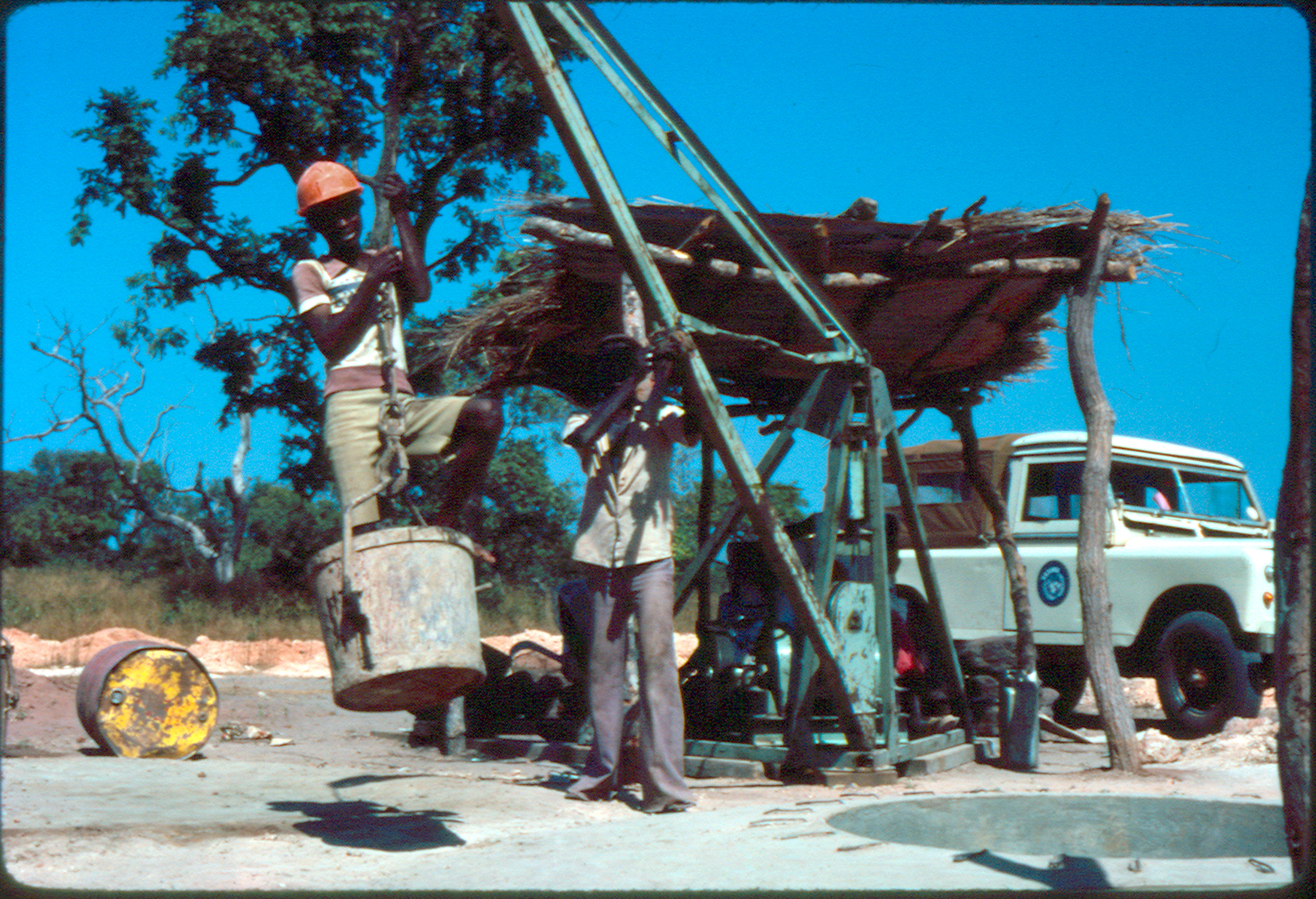
Our other big food effort was growing vegetables. We had fair success with gardening, but that also required a lot of work and constant watering, which meant hand-hauling buckets of water from the well. Sometimes we borrowed a wheelbarrow from the UN shop and collected sheep, donkey and cattle droppings to add to our sandy garden soil.

It all took time and energy.

Note: To leave a comment,,click on “Leave a Reply” or “Replies.”

Sagebrush: More Than a Weed

Sagebrush 1

At one time I considered sagebrush a sort of useless weed, a wasteland by-product, but since have become fascinated by this important and productive plant and its useful place in a healthy ecosystem.

On a recent trip to central Idaho, we drove for miles on roads winding through sagebrush meadows, a terrain often called prairie or steppe. An attractive roadside sign titled “Wildlife in the Sagebrush Meadow” piqued my interest and when we returned home I delved deeper into the marvels of sagebrush.

Sagebrush comes in a variety of sizes and is a coarse, many-branched, silvery-grey shrub with yellow flowers and silvery-grey foliage. Sagebrush thrives because a long taproot draws water from deep underground. In the meantime, its shallow roots collect scarce rainwater near the surface. Rub a silver-green leaf between your fingers to smell the sagebrush’s distinctive pungent odor, similar to terpentine. Once sagebrush has passed the seedling stage, it can reach ages of more than 100 years. It can grow 2 to 12 feet tall.

Although often too dry to support trees, sagebrush prairies support nest sites and provide cover from wind and predators, harbor food for insect-eating wildlife and provide the main winter food for sage grouse and pronghorn antelope.

Many species of animals call sagebrush “home,” including hundreds of birds, 70 mammals, 23 reptiles and amphibians, 72 spiders and more than 100 insects. Interestingly, pronghorn antelope are the only large herbivores who browse on sagebrush extensively. Some birds, such as sage grouse live nowhere else. These many species are important to the sagebrush ecosystem itself, providing crucial services such as dispersing seeds and preying on insects and rodents. Idaho grows ten different kinds of sagebrush and all provide unique habitat for wildlife prairie dwellers.

In addition, plants and grasses that grow under the sagebrush provide nesting materials and protein-rich insects for birds. Sage grouse depend on mature shrubs for shelter in winter and camouflage nesting sites under the protective canopy of leaves in spring.

Sagebrush habitats across the West have been greatly altered by a century of settlement, livestock grazing, agriculture and weed invasion. With care, these valuable sagebrush prairies can be managed and rejuvenated to enrich habitat for the myriad of wildlife that depend on it.

Here are a few steps that can be taken to preserve sagebrush:

– Eliminate invasive plants, such as cheatgrass that chokes out native sagebrush. Other invasive plants include Russian knapweed, jointed goatgrass, and musk thistle.

– Off-road vehicles, primarily all-terrain vehicles (ATVs) can damage biological soil structure. Their wheels can carry and transport seeds of invasive plants. Regulated areas should be off-limits to such vehicles. In addition ATVs create noise and disturbance to the animals that the sagebrush prairie supports.

– Limit the conversion of sagebrush land to cropland or pasture. Reduce the number of stock allowed to graze the small plants and grasses in sagebrush prairies, and also eliminate grazing May through mid-July to avoid trampling of ground nests and nestlings.

Sagebrush is a rugged plant, but is suffering from human interference. This essential shrub now needs human intervention to protect its vital existence in a healthy ecosystem.

Note: To leave a comment, click on “Leave a Reply.”


Book Review: Rules of Civility

Rules of CivilityAmor Towles’ debut novel, Rules of Civility is a captivating period piece that takes place in New York City, particularly in Manhattan. The story begins in 1966 but quickly turns back to New Year’s Eve, 1939.

Kate Kontent and her roommate Eve meet wealthy Tinker Gray at a jazz club on New Year’s Eve. A solid friendship forms and the three of them share many enjoyable times together. An accident abruptly changes their relationship and the direction of their lives.

Kate, who narrates the novel, is at first in a secretarial pool at a successful law firm, but quickly moves on to become a secretary at a trendy magazine. The daughter of a Russian immigrant, she never denies her background and that she is among “the working class,” but finds herself socializing with a privileged group of people (white, rich and sophisticated). Kate, extremely well-read and intelligent, remains grounded, but finds herself involved in the social activities of the well-to-do with their well-kept secrets and expensive life-style.

As we ride along with Kate, we learn about the lives of the New York rich. The book takes place toward the end of the depression and the wealthy portrayed don’t seem to have suffered unduly. It’s an era of surprisingly aimless goals among the rich, smoking, drinking martinis, rarely cooking one’s own meal, living exclusively in apartments, and commuting in cabs or chauffeured limousines. The dialog is fast-paced and witty, the sense of New York rich in detail.

Rules of Civility takes its name after the 110 rules that George Washington crafted during his teenage years, “Rules of Civility & Decent Behaviour in Company and Conversation.” Towles ends the book with the complete list of rules, often mentioned in the novel as either rules to be followed in a civilized society, or possibly rules no longer relevant. Here’s Washington’s 6th Rule of Civility:

“Sleep not when others Speak, Sit not when others stand, Speak not when you Should hold your Peace, walk not on when others Stop.”

I enjoyed Rules of Civility. I marveled at the differences between New York and the mid-west or west. The novel concentrates on either the very rich and the poor working class. There must have been some “middle class” but this novel does not touch on what most of us recognize as normal. The author’s descriptions of scenes and scenery feel realistic and vibrant. The book gave me a glimpse of an era and place now changed forever. I recommend Rules of Civility and look forward to reading more of this author’s work.

A Trip to Our Future

B&M Termite hillFrom: Tubob: Two Years in West Africa with the Peace Corps

Left: Mary & Bruce standing by a termite hill.

Toward the end of our first month in The Gambia, while we were still in training, we took a three-day trip with George Scharffenberger, The Gambia’s Assistant Peace Corps Director, to what would be our assigned village, Mansajang, near the small town of Basse.

A word here about how the Peace Corps operates. Before sending a volunteer to a village, the Peace Corps first talks to the village chief, the Alkala. They determine the need and discuss the work expected of the volunteer and where he or she will live. In Bruce’s case, the UN had determined they would continue the UNICEF well-digging project and Bruce would serve as a mechanical advisor. In my case, the Health Department said they could use a health worker in the Basse area, the closest town to the village of Mansajang. So our visit at this time was expected and many of the details worked out beforehand.

We were excited to see where our future life would be. George picked us up in the Peace Corps’ small Peugeot truck. The first 120 miles were paved, but for the next 125 miles we bumped along on deeply rutted roads with potholes that could easily break a truck’s axle. It was a long, hot drive.

Along the way, we stopped at several volunteer homes so George could deliver their mail. It was interesting to see how they lived. Some lived in round grass-thatched roof huts, but most lived in row houses. These row houses, much nicer than those we saw in the capitol city of Banjul, normally housed two to four families, commonly an extended family. In most, each “apartment” had two rooms, but some only one. I found the row houses much hotter than huts with thatched roofs. Without a ceiling, heat radiates from the corrugated roofs. Some row houses, and huts too, had dirt floors; others had concrete.

We visited the working places of two volunteers, one at a clinic and one at a hospital. As it happened, the volunteers we visited were health workers.

At one point we gave two women volunteers a ride to the next village. We three filled the truck’s small cab, so they sat in the open back of the pickup. The weather had been very dry and clouds of red road dust shrouded the truck. When the two women climbed out, they were covered with red dust. They just laughed and brushed off themselves, and each other, and went on their way.

We had fun traveling with George. His quick sense of humor and his vast knowledge of West African culture impressed us and helped put us at ease. At one point he pulled off the road and pointed to a cone-shaped mound. “Do you know what that is?”

The mound looked solid, was about eight feet tall and about five feet across at its base. We hadn’t a clue.

“A termite hill. They’re as hard as concrete. I knew a fellow who died when his car plowed into one.”

After George pointed them out, we continued to see them in rural areas.

We passed many people walking with loads on their heads, the women often with babies slung on their backs. The men often stopped and waved. Hitching for a ride isn’t done with a thumb, but rather the whole arm extended with a limp hand waving up and down. We picked up two men and gave them rides to the next village.

We were thrilled with the trip. Finally, we saw African life more like what we imagined it would be: family compounds, peaceful village scenes and friendly people. Chickens, goats, sheep, cattle, horses and donkeys grazed near family compounds. Amazingly, the sheep, bred for meat, didn’t have wool coats like in America. It took us awhile to tell the difference between sheep and goats since their coats were so similar. On the road we saw monkeys in trees, swinging from branch to branch and scampering around on the ground, and even saw a troop of baboons.

Finally, we arrived at what was known as the UN (United Nations) Compound. The currant volunteer, Howard, whom Bruce would replace, happened to be downriver at Yundum overseeing equipment repairs, so we pretty much had the place to ourselves.

We would live in two structures. One, an oblong mud-brick building, about 10 feet wide and 30 feet long, with a corrugated tin roof, had been built by Howard’s predecessor and had three small rooms, one used for cooking, the middle as a dining-living room and the third as a spare bedroom. One of the drawbacks of this structure was that flying insects could easily enter in the space between the top of the wall and the corrugated roof. Just a few steps away stood the second structure, a traditional round hut.

Because travel at night was difficult, UN people coming and going from Banjul to Mansajang needed to have a place to spend the night, so they slept in the oblong house which was already equipped with a bed covered with a mosquito net.

Howard used the round hut as a bedroom, as would we. The large round hut, about twenty feet across, had double-wall construction with perhaps four feet of space between walls, two fully screened doors, and was topped with a cone-shaped grass-thatched roof. We loved the arrangement. Actually, we probably had the best volunteer housing in The Gambia.

Besides our two structures, there were three other huts. A UN project mechanic and his family lived one. The other two were empty but often temporarily housed UN drivers who needed a place to stay for the night. None of the structures in the compound were painted or whitewashed, but were all made of mud-brick smoothed over with a thin layer of concrete.

Everyone in the compound shared one latrine. About one hundred feet from our hut, the latrine had been dug as a practice well. A deep concrete-lined hole, it was actually quite nice by local standards. The few latrines I’d used had dirt surrounding the hole. No outhouse, but krinting, the fencing commonly used consisting of coarsely woven reeds, provided privacy. Naturally, upon arrival, my first stop was to the latrine. One simply squats over the hole, and when I did perhaps 200 flies buzzed out of the hole, banging against me. I shuddered and wondered if I’d ever get used to that.

Krinting also surrounded the entire compound, as in other compounds we’d seen. The fencing provided privacy but its real purpose was to keep roving stock, cattle, sheep and goats, out. Chickens wandered about and I saw no chicken coops. A few sparse patches of grass poked through the sandy soil.

We walked to Bruce’s shop a short distance away, and met a few of the crew who weren’t downriver working on equipment. George left Bruce with them and took me to the home of Sister Roberts, my future boss. After greetings and introductions, George left to visit friends.

I immediately liked Sister Roberts, who was not a Gambian, but from Sierra Leone. The “Sister” title, the equivalent of Registered Nurse (RN), was the result of her training in England. She spoke beautiful English. I would learn more about the details of my job later, but she made it very clear she wanted me to take over record keeping. “Other than that, Mariama, you should do what you want to do. There’s plenty of work.” It felt good to be welcomed and have something solid to work toward.

Bruce didn’t come away with that feeling, however. No one he talked to at the shop seemed to have a grasp of the situation. Those who were knowledgeable were no doubt downriver at Yundum.

This worthwhile upriver trip gave us many insights so that we could prepare with confidence for when it was time to live there.

To Make a Comment: Click on “Leave a Reply.”

Book Review: Matterhorn

Matterhorn

Matterhorn: A Novel of the Vietnam War by Karl Marlantes is a gripping, gritty account of life as a Marine in Vietnam.

We were torn as a nation over Vietnam. As the war between U.S. backed South Vietnam and U.S.S.R. backed North Vietnam raged, so did the U.S. citizens at home. As far as U.S. Marines were concerned, they had a job to do, a job for which they had been rigorously trained.

Lieutenant Waino Mellas, a young Marine on his first mission, together with his comrades in Bravo Company are dropped into the mountainous jungle of Vietnam with orders to take Matterhorn, a mountain renamed by Americans after the Swiss Alps. The North Vietnamese Army (NVA) isn’t their only enemy. The Marines, most of whom are boys in their late teens and early twenties, fight their way through thick, nearly impenetrable jungle, monsoon rain and mud, blood-sucking leeches, jungle rot that seriously infects their skin, immersion foot which can result in amputation, malnutrition, dehydration, diarrhea, and even killed or maimed by tigers. When the company is nearly overwhelmed by the sheer numbers of a highly trained enemy regiment, the Marines are thrust into the raw terror of mortal combat.

Luckily, the author has furnished a flowchart of the Chain of Command and principal characters. I found myself referring to that many times to refresh my memory as to names and ranks. Another great aid is a glossary explaining slang, military jargon and technical terms. I’d recommend marking these two sections with sticky-note bookmarks for easy reference. The maps furnished also help to clarify troop locations.

Matterhorn was an eye opener to me. Although I was acutely aware of the Vietnam War, I was unaware of many of the issues and obstacles involved. Now, forty-some years after the war, it’s hard to remember that integration had just recently been introduced into the Marine Corps. Although African Americans kept to themselves during their off-time, in combat they worked in closely-knit units.

Matterhorn was written by a highly decorated Vietnam veteran who turned his own experience into this raw, emotional novel. His honesty is stark and disturbing. Marlantes removes all doubt that many decisions of war are made by ambitious men who use troops to further their own careers. Counts of enemy dead are magnified, of American troops, minimized.

Another disturbing fact is the reality of “friendly fire,” when a fellow warrior is in the way of fire, or mistaken for the enemy. It is a constant nightmare to a combatant who may have been responsible for a comrade’s death or serious injury.

Probably the most disturbing fact is the practice called “fragging,” murdering someone, usually an unpopular officer or sergeant, by throwing a fragmentation grenade into his living quarters or fighting hole. In his glossary, Marlantes states that the Marine Corps had forty-three fragging incidents during the Vietnam War, although not all ended in fatalities.

I was surprised to learn how much liquor was consumed, especially nights before battles. My practical spirit would dictate getting all the rest you can before a huge push, but the mind-set is different among those going into a battle from which they possibly won’t return.

War is hell, of this there is no doubt. It’s a hell that continues on long after the actual battle in the form of life-changing injuries or PTSD and the resultant chronic rages and fear attacks.

I recommend Matterhorn, though it isn’t for everyone. At first I didn’t think it was for me, but I slogged on and was soon “hooked.” The book is a raw, naked look at war and all its blood, filth and exhaustion. It’s also a book about bravery and the bonds of friendship forged in battle. It’s a large book, the paperback version is 608 pages, so plan on spending a block of time reliving the horrors of the Vietnam War. It isn’t all grim–there are humorous, fun parts, too. For sure, it’s a memorable chronicle of war.

To leave a comment: Click on “Leave a Reply”


The Art of Getting a Driver’s License

Ch-1-RGB 2From: Tubob: Two Years in West Africa with the Peace Corps

Peace Corps volunteers in The Gambia were urged to get a drivers license. Most of us would never drive while in The Gambia, but you never knew. My husband Bruce and I were in Banjul, the capitol city, taking care of the many details before we went to our assigned village. We had opened a joint checking account and now I needed to get my drivers license. Early on, when we stayed in Banjul, Bruce was issued his license so he could drive project vehicles. He now had to catch a bus to the Yundum shop to take care of business, so he walked with me to the police department building where I would get my driver’s license. At the police station, we walked down dark dingy stairs and along dirt-streaked hallways.

He squeezed my arm affectionately. “Brace yourself. This is going to take awhile.” He left to catch his bus.

As it happened, no one was in front of me in line, but still I waited for a long time for someone to help me. Many people milled around behind the counter, but it was hard to tell if anything was actually getting done. One woman slept, draped over her typewriter. Finally, I was given a form to complete and I showed the man my Washington State driver’s license. He left for several minutes, then handed me my paperwork and told me to go to another room where they would attach the picture I’d brought. I did as instructed and waited again.

Back and forth I went to four different counters. At the last one, which was also the first, I stood at the window and watched the fellow “process” my paperwork. He shuffled the papers around, then looked at something else on his desk. He went over to another desk and talked with that fellow, glanced at me watching him, returned to his desk, pushed papers around some more. His desk was piled with papers and I could imagine mine getting lost. Like the shell game, I kept watching to keep track of the pea, my application. Seething at this senseless delay, I said nothing but never took my eyes off my paperwork. Finally, he stood, shuffled over to the counter and, without a word, he slid my license toward me.

Three of the five items on the license were incorrect: my date of birth, my middle initial, and the spelling of my last name. I let it go, not willing to make this an even longer exercise.

In the Immigrants’ Footsteps

ID Covered Wagon 4


As early immigrants struggled along the Oregon Trail, they had a tough decision to make as they made their way through Idaho. Should they risk the danger of crossing the Snake River or endure the dry, rocky route along the river’s south bank?

The original course of the Oregon Trail was from Independence, Missouri to Oregon City in the Willamette Valley. Although fur trappers and explorers used the travel corridor since 1811, most pioneers traveled the trail by wagon train from 1841 through 1848. By the 1860’s the trail was used very little as an emigration route.

The Oregon Trail entered Idaho in the southeast corner of the state. At Fort Hall, it joined the Snake River, following the south bank until a crossing was reached near what is now known as Glenn’s Ferry. The route left Idaho near Fort Boise after winding through 500 miles of the state.

Crossing the Snake was always dangerous, but when the water was low enough to negotiate, everyone who could took advantage of the more favorable northern route to Fort Boise. Those who crossed the river found more potable water and better feed for their stock. But during high water, most immigrants were forced to travel along the South Alternate route into Oregon, a difficult dusty trail that took its toll on man and beast.

About half of the immigrants chose to attempt the crossing by using the gravel bars that extended across the river. Not all were successful and many casualties were recorded in pioneer diaries. Many diaries also recounted how the Shoshone and Piutte Indians helped the immigrants cross the river, claiming they would have never made it without their help.

The Three Island Ford was used by pioneer travelers until 1869, when Gus Glenn constructed a ferry about two miles upstream.

Three Island Crossing State Park is located on the Snake River, just four miles off I-84, 72 miles east of Boise. As weary travelers, we drove into the park in the late afternoon on a scorching hot day. Although we didn’t have a reservation, we lucked out with a lovely, shaded campsite. We breathed a sigh of relief as we settled into our green oasis. Once rested, we enjoyed hiking the trails throughout the park. One of our hikes took us to the site where Gus Glenn’s ferry entered the water. Cables and equipment are still visible and informative signs helped us to imagine immigrants, covered wagons, stock, and freight crossing the river.

A special attraction here is the Oregon Trail History and Education Center where emphasis is placed on the Euro-Americans and Native Americans working together at the Snake River crossing. Many exhibits demonstrate the hardships of the trail. Of particular interest was a packing list for the Oregon Trail and a life-sized covered wagon. The Center also features Native American life, together with a tipi and native craft work. A small theater shows an orientation film about the Three Island Crossing.

Three Island Crossing State Park was a memorable experience with comfortable surroundings and an opportunity to learn of the area’s place in Oregon Trail history.

Book Review: Where Lilacs Still Bloom

Where Lilacs


Award winning author Jane Kirkpatrick’s historical novel, Where Lilacs Still Bloom, filled my heart. It’s a compelling story of enduring love of family and God’s earthly bounties.

The story begins in 1889 in Woodland, Washington, when German immigrant and farm wife Hulda Klager seizes an idea to improve the pie apples growing in their small orchard. She’s weary of the scrawny fruit that’s hard to peel. Her experiments with apple hybridization result in a crisp, juicy apple that’s easy to peel. Her consuming interest is questioned by those who feel she’s overstepping boundaries of a simple housewife and mother. Some even assert that she’s tampering with God’s plan.

Hulda’s father encourages her to follow her God-given talents. Even though her husband Frank teases her about her “hobby,” he encourages her to pursue her growing interest, providing there’s “bread on the table and pies in the oven.” She begins to experiment with flowers, concentrating on lilacs, with a dream of growing a creamy white lilac with twelve petals. By 1905 Hulda had created 14 new varieties of lilac, using a turkey feather to cross-pollinate, always seeking to produce “bigger blooms, hardier stalks, richer color, and finer fragrance.”

Interest in Hulda’s garden grows and she begins to hold open houses, sometimes drawing hundreds of people, even from distant communities. She resists selling cuttings, preferring instead to share God’s bounty. Her four children help in the garden, and as they leave home to begin their own families, Hulda opens her home to two young girls who need a loving home and who can help in the garden. These girls’ lives, thread throughout the book, show how tender care for plants mirrors life.

Throughout Hulda’s long life she sees tragedy in the loss of loved ones, but she endures and finds comfort in her horticultural interests. Her gardens, along with their farm and their neighbors’ property, are threatened with seasonal floods and when the Columbia and Lewis Rivers overflow in 1948, the entire community is flooded. We learn the true character of this legendary woman as she deals with this calamity.

Where Lilacs Still Bloom is filled with the richness and grace found in Jane Kirkpatrick’s work. This novel is her twenty-second book and nineteenth novel. A master storyteller, Kirkpatrick researches her subjects, then brings their story to readers in a compelling, refreshingly creative way, yet always keeping true the subject’s spirit. I highly recommend this book. It would be of special interest to garden enthusiasts, but also to anyone drawn to an inspirational story of loyalty, faith, family values and God’s bounty. For more information about the author, visit www.jkbooks.com

Reviewers Note: I was especially fascinated with this book since I also live in Washington. Next spring I hope to drive to Woodland in the southwest part of the state to visit Hulda Klager Lilac Gardens. For more information, visit www.lilacgardens.com

An Object of Superstition

AlbinoFrom: Tubob: Two Years in West Africa with the Peace Corps

Each week, the Basse Health Centre where I worked in The Gambia conducted an antenatal (prenatal) clinic and a separate well baby clinic for children five years and younger. Sister Roberts suggested that I attend these clinics where record keeping was vital. I agreed, not knowing that I would be involved in a local superstition.

The next day, Tuesday, I helped in the antenatal clinic. The clinic, a separate building in the hospital compound, had rows of perhaps fifty chairs on one side and a couple of tables at the other. Outside, the overflow waited in a covered area. Many of these pregnant women had come from miles away, most walking, some arriving in bush taxis. or donkey-pulled carts. Many carried babies on their backs.

Women and their children stood in line, which, at first, was a phenomenon to me. My African experience so far had been crowds of pushing people, at banks, the post office, the ferries and bus stops. But here the woman formed a queue, as instructed, and stayed in line with their well-behaved children in tow.

At one table, the auxiliary nurses reviewed the woman’s personal health record, took blood pressure, and pulled down the lower eyelid to look for pale coloration, a sign of anemia. Many Gambian women were anemic due to frequent childbearing. The woman then progressed to the next table to see the nurse mid-wife while I recorded the woman’s name and entered information in a ledger. All during this procedure, I noticed women shielding their eyes from me. Some actually cupped their hands around their eyes to avoid looking at me.

I asked the nurse mid-wife why the pregnant women wouldn’t look at me. “Oh, Mariama, it’s a stupid superstition that if they see a white person they’ll have an albino baby.”

I had seen African albinos and it is an unfortunate condition. Their skin is white and very sensitive to the sun. An albino’s eyes are affected with extreme light sensitivity. Having an albino baby would be something to fear. It bothered me that the women felt threatened by my presence.

After clinic that first day, I told Sister Roberts about my concern. She also scoffed at the superstition.

“But still,” I countered, “I don’t want to give them that worry.”

We agreed that I wouldn’t attend the antenatal clinics, but she definitely wanted me to attend the well baby clinic on Fridays. It was a good compromise. I felt odd enough without having to bear the burden of having women think I would be the cause of their having an albino baby.