My Guest Today: Shanna Hatfield

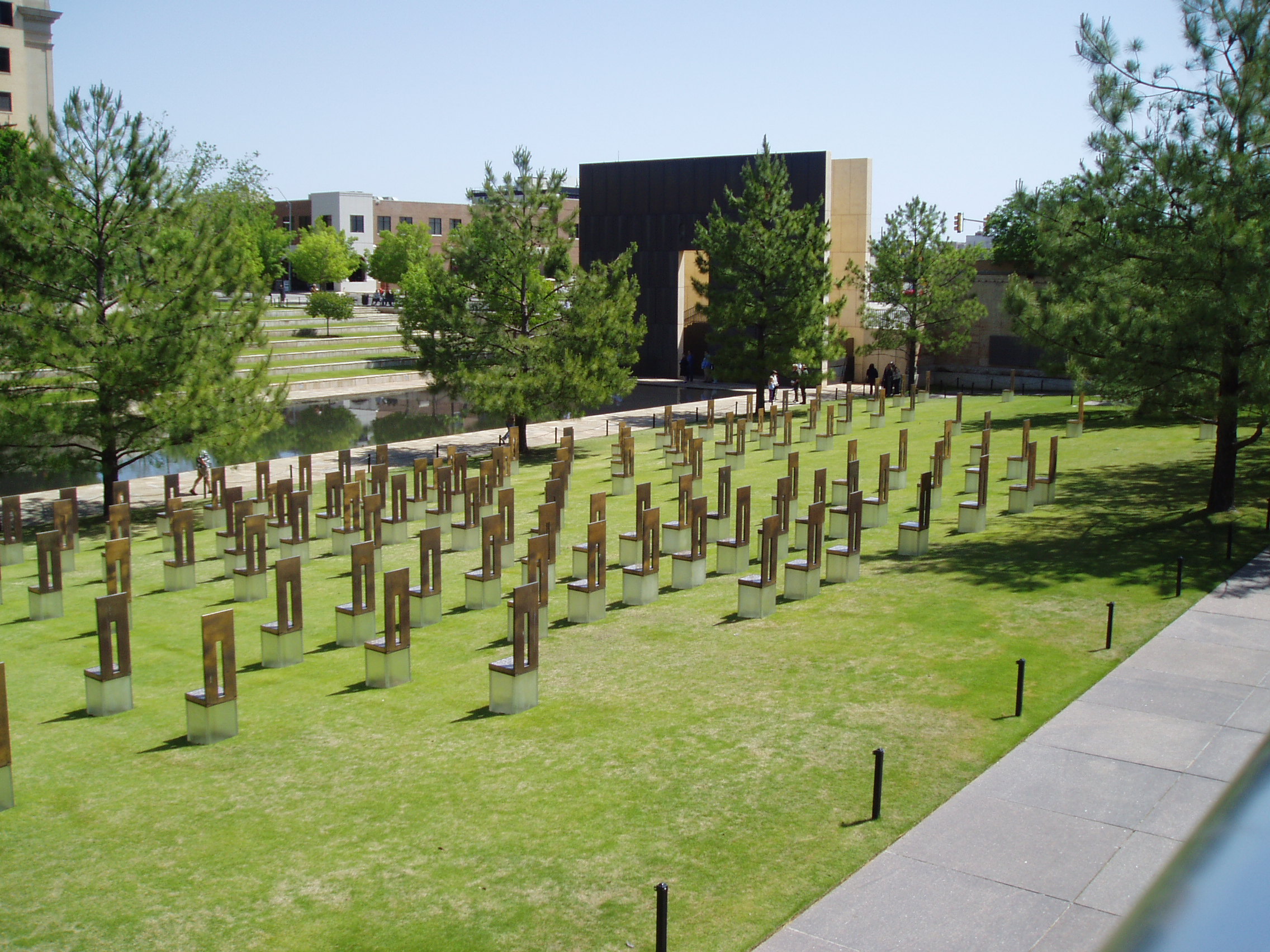
Hardman Community Center

Hardman Community Center


My guest today is Shanna Hatfield, author of the Hardman Holidays series. Shanna, tell us about the setting for your exciting new series. I understand you’ve breathed life back into the ghost town of Hardman, Oregon.

Thank you, Mary. Two years ago, I decided to write a sweet Victorian holiday romance. As I debated making up a town or using a real one, I happened to come across information about Hardman, Oregon and chose it for the setting of The Christmas Bargain, the first book in my Hardman Holidays series.

Although classified today as a ghost town, Harman was once quite an exciting place to be.

John L. Royse, reportedly one of the most successful farmers in the area, and his brother were said to be the first permanent settlers in Hardman.

Originally named Dairyville, the town was popular as a freighting center and saw promising growth in its early days. Dairyville became known as Raw Dog, while a mile away a rival settlement sprang up, known as Yellow Dog.

Stagecoaches and wagon trains traveling north and south through eastern Oregon and Washington found convenient shopping points in both Raw Dog and Yellow Dog. The rivalry between the two locations escalated as they competed over which town would secure the stagecoach depot for the area. When Raw Dog received a permanent stagecoach station, the two towns became one, known as Dogtown.

The town’s name changed to Hardman in 1881 when David N. Hardman, a pioneer farmer, moved to town and, with the government’s consent, brought with him the post office which previously had operated from his farm. The town took the name of the post office, Hardman.

In the 1800s, the town boasted a skating rink, four churches, a school, and newspaper office.

In the late1800s, excitement rippled through Hardman with rumors that the railroad would be coming through town. When the railroad was routed through the nearby town of Heppner instead, the community of Hardman suffered a devastating blow, effectively stunting future growth.

By the 1920s, trucks replaced horses, mail routes changed and Hardman began its decline. The last business in Hardman closed in 1968.

Thank you, Shanna. I’ve always found ghost towns fascinating and your bringing fictional life back to Hardman is intriguing. For more information about the author and the Hardman Series, visit http://shannahatfield.com/contact/media-kit/cowboys-christmas-blog-tour/


Shanna christmas-bargain-cover

Book Review: Once Upon a Time, There was You

OnceUponATime_2-16Once Upon a Time, There was You by Elizabeth Berg, is an engaging study of family dynamics, its humor, frustrations, scares, scars and secrets.

Even on their wedding day, John and Irene had serious reservations whether they were doing the right thing. But their plans were made and they did what was expected of them. Now divorced and living in different parts of the country, the one thing they have in common is their mutual love for their eighteen-year-old daughter, Sadie.

Sadie lives with her mother in San Francisco, John lives in their original home state, Minnesota. Four times a year Sadie visits her father, mostly in Minnesota, but sometimes he comes to California. She’s a bright girl, itching to be on her own. It’s late summer when the story takes place, and Sadie is looking forward to college and independence.

Irene passionately loves her daughter, knows it’s time to begin letting go, but is finding it hard to accept that Sadie will soon be on her own. The empty nest is looming, but she’s not ready to let it happen. John, as the absent parent, is seen at the “good guy,” someone Sadie can confide in, and sometimes Sadie can get him to intercede for her with her mother.

Sadie has a boyfriend, Ron, whom she’s dated on several occasions, but hasn’t yet introduced to her mother. She’s asked her mother’s permission to go on a rock climb, but with no success. Rock climbing isn’t something Irene could imagine anyone doing and she can’t fathom why Sadie would want to do such a dangerous thing. At Sadie’s request, John talks to Irene, who reluctantly gives in. Sadie has actually made other plans, the rock climb is a ruse, but her clandestine plan backfires. When tragedy strikes, Irene and John come together to support Sadie.

Author Elizabeth Berg’s character development is superb. Like them or not, her characters ring true, flaws and all. The story is a portrayal of love: love between man and woman, love toward their child, and the sometimes spotty love a child has for her parents. The novel is a realistic look at the pains and perils of raising a child in today’s world of broken relationships.


Book Review: House Rules

house-rules-157Stephen King nailed it when he said, “Picoult writes with unassuming brilliance.” Jodi Picoult, author of House Rules, has written a splendid novel, a truly memorable account about the complexity of human relationships.

Jacob is eighteen and suffers with Asperger’s syndrome, the highest functioning form of autism. His life is driven by routine–foods of a certain color must be served on scheduled days. No matter what else is going on, it is imperative that he watch reruns of a favorite daily police drama while making meticulous notes in his journals. All changes of routine must be planned well in advance. Jacob has a strong and highly informed fascination with forensic science. He’s even surprised the local police with a correct analysis of a puzzling crime scene. Although brilliant, Jacob lacks social skills, has no friends, is brutally honest, and struggles to understand slang or sarcasm. Although he has a good vocabulary, his voice is a monotone and he finds it difficult to look someone in the eye. When worried, Jacob displays tics and twitches.

Emma, Jacob’s mother, a single parent since her husband walked out on the family when Jacob was diagnosed, has devoted her life to making life easier for Jacob. Her life evolves around this son who can’t fit into the world. When a routine is broken and Jacob goes into a meltdown, she’s the one who physically calms her son, sometimes by lying on top of him. Emma has seen to it that Jacob attend high school, one that has special needs facilities. She has no social life–all her energy is aimed at helping Jacob fit into a sometimes unfriendly world.

When Jacob’s social skills tutor is found dead, the evidence points to Jacob. He is arrested, jailed and must stand trial to prove his innocence.

Other characters play important parts in this fascinating drama. At 15,Theo, Jacob’s younger brother, fights to be a normal teen. But how is that possible when he’s embarrassed to bring friends home?

Oliver, Jacob’s young, brand-new attorney, is suddenly confronted with a case for which he is professionally unprepared, but is compelled to accept.

Rich, the arresting officer, is tough but compassionate. He sees this case as unusual, but facts and evidence cannot be refuted.

Put this all together and you have a rich masterpiece, a book you won’t forget. House Rules is not only a fascinating and enjoyable read, it gives readers insight into autism, and Asperger’s in particular. This is a magnificent novel and one I highly recommend.

Book Review: The Invention of Wings

The Invention of WingsOne of my favorite authors, Sue Monk Kidd, a native Southerner, has written another memorable book, The Invention of Wings, a novel that spans 35 years, beginning in 1803.

For her eleventh birthday, Sarah Grimke is given a personal slave, Hetty, who goes by the name Handful. Horrified, Sarah tries to refuse the gift, but is seriously rebuked by her aristocratic family. Sarah’s father is a highly respected South Carolina Supreme Court justice and her mother a rigid taskmaster who doles out harsh punishment to their many slaves.

Handful, ten when the story begins, is third-generation slave. She’s adorned with lavender ribbons, like a wrapped present, when she’s “given” to Sarah. Although the gift cannot be rescinded, Handful and Sarah form a bond that will eventually shape their lives. Sarah refuses to treat Handful as a slave, but a slave she is and as such is expected to work long hours, then sleep on the floor in the hallway by Sarah’s bedroom in the event her “mistress” has needs during the night.

The book artfully toggles between Sarah and Handful’s stories. Deeply affected by the mistreatment of the slaves, Sarah silently rebels. She develops a speech impediment after witnessing the whipping of a woman slave, an impediment that haunts her the rest of her life. When Sarah teaches Handful to read, an act that’s against the law in antebellum South Carolina, both girls are severely punished.

Sarah has a good relationship with one of her older brothers and later, when little sister Angelina is born, the two girls become inseparable.

Divided into six parts, the book progresses through Sarah and Handful’s lives and the social attitudes of the time.

Sarah and sister Angelina move north, to slave-free Philadelphia, and begin promoting abolition of slavery and for women’s rights. Surprisingly, they find strong support for abolition, but resistence for women’s rights.

Meanwhile, Handful has reached middle-age and yearns to be free. Sarah and Handful have remained friends, keep up a correspondence, and struggle for their common goal, freedom.

The Invention of Wings is loosely based on the true story of Sarah and Angelina Grimke who became famous, even infamous, speakers against slavery and for women’s suffrage. Many of the situations portrayed are real-life events. Kidd describes the barbaric mistreatment of slaves in vivid detail. The story takes place pre-Civil War, and Kidd does a good job presenting both sides of slavery. I highly recommend this powerful and sweeping novel of American history.

Book Review: Orange is the New Black: My Year in a Woman’s Prison

Orange is the New BlackSeeking excitement and freedom, Piper Kerman makes some bad choices after graduating from Smith College. Her naivete in briefly getting into the drug trade costs her dearly when, ten years after the deed, she faces a 15-month prison term at a women’s federal prison at Danbury, Connecticut.

The adjustment to lack of privacy, dignity, and rights is understandably tough and at first Kerman mostly keeps to herself. But slowly, she gets into the rhythm of incarcerated life, acquires a prison job as an electrician and tries to maintain a positive attitude.

To her surprise, in the early days before her financial account is available, many of her fellow inmates are helpful, even generous with their limited supplies of soap and shampoo, and clothing. Kerman is quick to point out that her situation is unusual in that she has a supportive family and friends who see to it that she has funds available in her account so that she can purchase what she needs in the rather meager prison “store.” She also emphasizes that her fiancé, family and friends visit, write regularly, and send books, giving her moral support. Most incarcerated woman don’t have nearly the advantages that Kerman has and through her experiences, it becomes clear why many women’s lives take downward spirals while in prison and after their release.

Through Kerman’s eyes we see the anguish and moral degradation of life in prison, the overwhelming feelings of guilt and humiliation. It’s easy to say the inmates “have it coming,” but it’s also clear that the emotional and physical needs causing the original problems aren’t being met. Many women are themselves victims of circumstances of violent or abusive home environments. Kerman has a strong support system to return to, but often times the women, once released, will be in homeless shelters, or will return to desperate home situations with no hope of living decent, fulfilling lives.

Orange is the New Black doesn’t offer solutions to these social problems, but offers a look into what poor choices, for whatever reason, can cost. The book offers an engaging glimpse of life in prison, sometimes heartbreaking, at times humorous, often enraging.

To learn more about the author and her memoir, visit http://piperkerman.com/


Book Review: Plan D: Lose Weight and Beat Diabetes

plan-dPlan D: Lose Weight and Beat Diabetes (Even If You Don’t Have It) is a fun, enlightening approach to living a healthful life. Even if you don’t have diabetes, author Sherri Shepherd’s approach to living healthfully is practical and attainable.

Sherri Shepherd grew up in the south side of Chicago, in a neighborhood where diabetes was almost the norm. In her family alone, her mother, aunts, uncles, grandparents, cousins, plus her neighbors, seemingly everyone eventually got diabetes. African Americans are twice as likely to be diagnosed with diabetes as non-Hispanic whites, and it wasn’t uncommon in Shepherd’s neighborhood to see people with amputated limbs, people with serious vision problems and heart disease, to say nothing of early deaths. She thought her mother’s fatigue, lack of energy and irritability were normal. Her mother died from complications of diabetes when only forty-one. The disease was called “the sugar.” It’s hard to get too upset by something with such a sweet name.

In the book Shepherd describes her childhood and early adulthood. She found she could “fit in” by being funny–a talent that took her into adulthood as a stand-up comedian by night and working at a law firm by day. As a young adult, she lived a fast life and had some risky relationships. As it turned out, her most dangerous relationship was with food. At 5’1″ Shepherd could pack on weight easily, and, as a younger woman, could take it off fairly quickly. This yo-yo cycle of binging and starving played havoc not only with her health, but with her emotional well-being as well.

She married, had a baby and was soon offered the enviable position as cohost on the television show The View. In the meantime, she had been diagnosed with pre diabetes, but ignored all the warning signs and advice that might have prevented the full-blown disease. Inevitably, after many scary and telling symptoms, she was diagnosed with diabetes. Finally, a crises occurred that made her look at her life and her responsibilities as a mother.

The book outlines a practical, healthy way to live. She describes in detail how a diabetic can prepare foods ahead of time for quick healthy meals. Exercise, vital to anyone, but especially to a diabetic, can be snatched from spare moments–it isn’t necessary to have gym membership.

Plan D isn’t only for diabetics or pre diabetics. It’s an enjoyable read for anyone wanting a healthy lifestyle. Shepherd’s writing is candid, fun and funny. For readers serious about changing their lives for the better, or even just looking for new ideas for healthy living, I highly recommend Plan D: Lose Weight and Beat Diabetes. The book is available in paper and ebook formats.

Book Review: The Girl’s Guide to Homelessness

Girl's Guide to HomelessnessBrianna Karp has written a brutally honest memoir, The Girl’s Guide to Homlessness.

Sexually abused by her father as a very young child, then physically and psychologically abused by her bi-polar mother, Karp still manages to excel in school while working numerous jobs to help the family eke by. She stays focused on her desire for independence and finally realizes her dream when, in her early twenties, she has a good job as an executive assistant. She’s able to rent a small cabin and acquire a big, goofy dog. Brianna is happy and finally in a position to live a positive, useful life.

But then comes the recession of the 1980’s and, like millions of others, Brianna is laid off. She scrambles for work, even temporary work. Brianna inherits a 30-foot travel trailer from her biological father in which she lives on a Walmart parking lot. The trailer offers only minimal conveniences and she must go elsewhere to bathe and use the bathroom.

Brianna continues her job search, in person and on-line. Later, she begins to blog about her search for work and about living a homeless life. She joins a cyber community focused on the homeless and acquires a following. Through the Internet, she meets a Scotsman, Matt Barnes, a columnist who advocates for the homeless and they begin a cyber romantic relationship which eventually blossoms into a personal relationship when Matt visits Brianna in California.

Brianna’s life takes unfortunate turns when she is confronted with a multitude of overwhelming problems.

Brianna Karp’s memoir is well articulated and informative about homelessness. She addresses common misconceptions, judgements and fears about homeless people. For those of us fortunate enough not to have faced this problem, it’s easy to fall into a trap of stereotyping, judging and assuming that “those people” could help themselves if only they would make sound decisions. Karp gives her readers something to think about, another view of one of America’s greatest problems.

Book Review: In a Sunburned Country

In a Sunburned CountryIf you’ve always wanted to go to Australia but haven’t had a chance, reading In a Sunburned Country is the next best thing. Bill Bryson presents a thorough and humorous look at a country that remains mysterious to most of us.

As Bryson goes off the beaten track to thoroughly explore this vast country–the cities, the deserts, the outback, the tropics–he takes the reader along, even when conditions aren’t that comfortable or convenient.

It’s obvious that Bryson loves Austrailia and I’ve now had the pleasure, through him, to appreciate its uniqueness. His historical and trivial facts are enlightening and enrich his story.

Although he’s not the most organized traveler, it’s fun to laugh at Bryson’s ineptitude and his ability to poke fun at himself. During his travels, he has at times a sidekick and those encounters add spice to the adventure.

I especially enjoyed vicariously visiting places so often mentioned such as the Great Barrier Reef, Alice Springs, the Gold Coast. At times I laughed out loud with his historical asides, observations, and wry humor. Bryson doesn’t strictly stick to the usual touristy cultural icons, but delves into the weird and wacky, too.

Reaching many of the remote places involves hours of travel by car. Searching for a radio station for distraction to while away the miles, Bryson finds only one station, a cricket match. His description of that match is hilarious.

If you want to learn more about Australia and have some good laughs along the way, read In a Sunburned Country. It’s a treasure.


Book Review: Exploring Camano Island: A History & Guide

Exploring CamanoVal Schroeder’s Exploring Camano Island: A History & Guide is an enjoyable, informative guide to Camano Island, the second largest island in Island County, Washington. Comma-shaped Camano’s 95 square miles has no town and is connected to the mainland by bridge. The island is about an hour’s drive from Seattle and is nestled on Puget Sound between its larger sister island, Whidbey, and the mainland.

Great strides have been made to ensure that Camano’s wild spaces are being preserved for future generations. Since 1994, more than a dozen nature preserves and parks have been established by islanders working together to protect the land from further development. Even before then, in 1949, 500 local citizens united to create Camano Island State Park, literally in one day. They cleared land to make roads and trails, campsites and picnic areas. They built buildings and picnic tables, and cleared a spring for a clean water source. By the end of the day, that dedicated group had transformed 92 publicly owned acres into a park that is still thriving 65 years later.

The well-organized book has sections identifying Camano’s major nature preserves and protected land. The author describes each place, how it is today, its history, and its legacy and what it contributes to its people and wildlife habitants.

Schroeder quotes the famous anthropologist Margaret Mead: “Never doubt that a small group of thoughtful committed citizens can change the world. Indeed it’s the only thing that ever has.” It is this principal and commitment that has kept Camano Island a special place for its inhabitants. The author emphasizes the many contributions that individuals and organizations have made through the years to protect and preserve the island’s cherished natural sites.

Val Schroeder, a high school teacher, is a strong advocate for the protection of wildlife and was recognized by the National Wildlife Federation in 2006 as Volunteer of the Year. She resides on Camano Island and has been instrumental in furthering public awareness of wildlife preservation.

Camano Island explorers will find Exploring Camano Island a helpful guide. Those who live on the island will appreciate what it took to make the island the special place it is today. Readers from other areas will learn from how they might manage, preserve or restore their own natural habitats. I highly recommend this enlightening book.


Book Review: American Nations: A History of the Eleven Rival Regional Cultures of North America

American Nations 2Colin Woodard’s American Nations: A History of the Eleven Rival Regional Cultures of North America is a scholarly study of the eleven “nations” that make America what it is today.

We often think of the forming of America as immigration developing from east to west, expanding from the English beachheads of Massachusetts and Virginia to the shores of the Pacific. In truth, the European culture first arrived from the south, borne by the soldiers and missionaries of Spain. From American Nations, the reader discovers that many of the things learned in history classes were not quite accurate; in some cases, far from reality.

In the development America, virtually no consideration was made toward the people who already resided throughout the land, the Native Americans. The indigenous cultures before immigration often had a higher standard of living than their European counterparts. They tended to live in a healthier environment, some had public water supplies fed by stone aqueducts. The Native people had organized continent-spanning trade networks. Epidemics brought by foreigners, warfare, and their being forced to live in unsuitable areas diminished Native American populations and influence to only a small fraction of what they once were.

The states as we know them today do not define America. The eleven nations, or regional cultures, more clearly define the United States of America: Yankeedom, New Netherland, The Midlands, Tidewater, Greater Appalachia, The Deep South, New France, El Norte, Left Coast, Far West, First Nations. Some of these nations now spread into Canada and Mexico. The book contains a map which clearly defines the regions, as does the book’s cover.

Each of the founding nations are steeped in their own cultures and cherished principles, often contradicting one another.

American Nations delves into the different philosophies of our country’s regions and what it is about the dissimilarity that causes the challenges we face today in uniting our country.

I found American Nations fascinating. Woodard presents compelling explanations of the regional differences that make up America’s cultural and political landscape. It becomes clear why twenty-first century northern Democrats and Republicans have far more in common with one another than with their counterparts of the south. Values that one region holds dear aren’t necessarily shared in other parts of the country.

To learn more about Colin Woodard, award winning author and journalist, visit colinwoodard.com