Book Review: Sycamore Row by John Grisham

Sycamore RowOn a Sunday morning after church, Seth Hubbard, a wealthy man dying of cancer, hangs himself from a sycamore tree. Just before his final act, he hand-writes a new will, one that replaces his previously filed will that named his adult children his primary beneficiaries..

On Monday, when Clanton, Mississippi attorney Jake Brigance receives a letter from Seth Hubbard and the hand-written will, he’s astonished. The will reads that Seth Hubbard has left 90 percent of his vast holdings to his black maid, Lettie. The attorney doesn’t know Mr. Hubbard nor Lettie, but he feels obligated to handle this case judiciously.

The estate is estimated to be $24 million, mostly in cash assets. When Hubbard’s daughter and her husband and Hubbard’s divorced son learn of their father’s death, they come running, unlike their behavior when their father was alive. Of course, they’re already mentally spending their inheritance.

When the facts of the hand-written will become known, the chaos begins. Attorneys gather to contest the more recent will, salivating at the money to be earned in defense of the family.

The case goes to trial and surprising, even shocking, events are revealed. Author John Grisham, a southerner, doesn’t soft-peddle race relations in the late 1980s, when this story takes place.

Readers of Grisham’s first legal thriller, A Time to Kill, will recognize the attorney Jake Briggance and some of the characters from his world. I especially enjoyed the banter between the lawyers.

A former attorney, John Grisham practiced Mississippi law before he turned to writing. His popularity is well deserved. In reading his books, you learn about the law, but his stories aren’t steeped in legalese. Coming from the Northwest, I cringed at some of the racial insinuations. I realize they are true in the south, or were in the 1980’s, and especially further back when some of the story takes place.

Sycamore Row is a fast-paced and engrossing legal thriller, one I heartily recommend.

How Can I Help?

George MacKay IMG_1687We often ask “How can I help?” when someone we’re close to—a relative, friend or neighbor—loses someone to a death, or is burdened with caring for a convalescent or terminally ill loved one. How can we help?

We ask this with sincerity, but people burdened with caring for a loved one are often so overwhelmed they cannot concentrate on what other people could do for them. On the other hand, some of us find it difficult to ask for help. We don’t want to impose, or can’t even imagine what someone else might do to ease our burden.

Instead of asking what you can do, think about what you can do, then do it. Right now.
Here are a few ideas:

– Fix a meal. This is a huge time and expense saver for the person responsible for feeding a family.

– Prepare a goody bag for those waiting at the hospital. Those in all-night or all-day vigils hesitate to leave to go to a hospital cafeteria (if there is one). A selection of sandwiches, crackers and cheese, cut up vegetables, nuts, apples, bottled juices, and even a thermos of coffee is a welcome and healthful treat, and beats eating junk from a dispensing machine.

– Consider a gift card. It’s expensive to have a family member in the hospital. Consider giving the caregiver a prepaid gas or parking card. It’s not only the money, but the thought that means so much to a stressed family member.

– Find a helpful job. Look around and see what you can do to make a grieving family’s life easier. I once read of a neighbor wanting to help a family who had just lost a beloved relative and were preparing for a cross-country flight to attend the funeral. The neighbor took his shoe-shine kit to their house and said, “Bring me all the shoes that you’ll be taking.” He shined five pairs of shoes, filling a real need while at the same time showing his love and concern.

Maybe mowing a lawn would help, cleaning a house, or making a needed repair. Washing windows could be a blessing for someone short on time or energy.

– Fill an urgent need.  A friend of mine took on the care of an adult son who was suddenly a quadriplegic after a diving accident. Her brothers stepped in to build a wheelchair ramp, redesign the bathroom and adjust doorways to accommodate a large wheelchair. This resulted in huge savings, but even more important, gave emotional support when it meant the most.

– Offer to babysit or adult-sit. People can only be in one place at a time and it’s stressful to be concerned about children or an elderly parent at home while being needed at a hospital. If it’s too much for one person, organize a team who will take turns taking care of the child or person in need of attention at home.

– Give a caregiver a break. Offer to stay with the patient for a few hours or overnight while the caregiver attends to her own needs, or just takes some time off. Everyone needs time to themself and this break can go a long way toward giving needed relief.

– Offer transportation. Getting to a hospital or health center can be daunting to someone who doesn’t drive. Offer to drive, perhaps setting up a schedule so you can be counted on. If the frequency is too much for you, organize a team to provide transportation on a regular basis.

– Give them a reason to laugh. Laughter is healing and relieves stress. Reminisce with a grieving or burdened person, recalling the good times, the funny times. Laughter also helps to bring life into perspective.

– Express appreciation. Let the family know how much the patient has been admired and what good things he or she accomplished. It’s comforting to a family losing a beloved member to know how much that person meant to others. After my father’s sudden death, I delivered a promised set of tellers’ floor mats to a bank, a long-standing customer of my father’s. After the workmen unloaded the items from my car, they gathered around and told me how much they had admired my father, his steady good work, and his wonderful sense of humor, even telling me some of the funny things he had said. Of course, it brought fresh tears to my eyes, but I’ve always been grateful and touched that they shared those feelings with me.

– Keep the family in your prayers and thoughts. No matter what the family’s or your religious affiliation, offer your prayers, or concerns and thoughts if that’s more appropriate. Letting someone know you’re praying for them, or thinking about them, offers moral support. Illness can be a lonely battle and it’s comforting to know others are rooting for you.

Whatever you do, be assured that you’ll be giving a grieving or anxious family a lift that will touch their hearts. Knowing that other people care helps lighten a difficult burden.
Book Review: Angel Falls

angel_falls_smAngel Falls by Kristin Hannah is a fast-paced story of depth, a story of love between husband and wife, love between parents and children, and passionate love that sometimes turns into regret.

When Mikaela Campbell lapses into a coma after a horse-back riding accident, her doctor-husband, Liam, is beside himself with grief and worry. He knows how serious this type of brain injury can be. Their two children are frightened and confused with their mother unresponsive and away from home.

While Mikaela is in the coma, her family rallies to help. Her mother comes to take care of the family. Liam spends hours, days, talking, reading, playing music to his comatose wife, hoping to bring her back to consciousness,

Mikaela never wanted to discuss her previous marriage. Her daughter was four when Liam and Mikaela were married ten years ago, and they have a son, now 9. While searching for something in their closet, Liam stumbles across evidence that his wife’s previous marriage was to world-famous actor Julian True. Desperate to bring his wife back, Liam turns to her ex-husband for help. He knows what a chance he’s taking, but love for his wife overrides his own happiness.

Angel Falls is a poignant story about love and commitment. The author’s characterization and sense of place is superb. This novel is more than a love story, it’s a story of hope, faith, and commitment.

To learn more about the author, visit http://kristinhannah.com/content/index.php

Book Review: Getting Stoned with Savages: A Trip Through the Islands of Fiji and Vanuatu

Getting Stoned with SavagesJ. Maarten Troost’s Getting Stoned with Savages provided hours of fun as I vicariously traveled along with him to the South Pacific island nations of Vanuatu and Fiji.

When Troost’s wife accepts a job offer in Vanuatu, they jump at the chance to revisit the South Pacific. Their previous adventure to the Republic of Kiribati resulted in his first book, The Sex Lives of Cannibals. This next venture led to another set of Oceania misadventures and ironic twists of fate.

Although it sounds idealistic, actually living in Vanuatu on the rugged island of Efate, while it has its pleasures, can be plagued with typhoons, frequent earthquakes, and giant centipedes. Troost brings hilarity into his account with an impressive command of narrative and place. The title of the book refers to the use of kava, a potent drink used for medicinal, religious, political, cultural and social purposes throughout the South Pacific. While not available for recreational use in many countries, including the United States, in Vanuatu it is apparently abundant. Its use and misuse brings lively accounts of the bitter muddy-looking drink.

When Troost’s wife becomes pregnant, they move to Fiji for its more comprehensive medical facilities. While in Fiji the author delves into the incongruities of tribal politics. He has a deep curiosity of cannibalism and learns surprising facts, primarily that it isn’t restricted to being only an ancient custom. Cannibalism has occurred within native people’s memories.

I greatly enjoyed this travel book. Although we sailed through the South Pacific, Vanuatu and Fiji weren’t on our itinerary. In any event, it takes living and working in a place to really know it and its people. Troost’s account, with his sly self-depreciating humor, makes for a lively, fun read.

Book Review: A Man of His Own

A Man of His Own


Susan Wilson’s novel, A Man of His Own, delves into a dog’s world and shows the powerful connection between dog and man.

Rick Stanton is out with his fellow baseball players, relaxing at a neighborhood tavern. He steps outside and a little stray pup, apparently a German shepherd mix, appears out of the darkness. The two quickly become attached. The pup adopts Rick and enjoys having this young bachelor all to himself.

When Francesca comes into their lives, it isn’t love at first sight for the dog, Pax, but once Francesca and Rick are married, he accepts her as family, though the dog still treasures the time when he has Rick to himself.

Rick’s ambition as a baseball pitcher for the majors is put on hold when he’s drafted into the Army and sent to Europe. Francesca and Pax sadly adjust to Rick’s absence. She treasures Pax now–he’s her connection to Rick.

As World War II escalates, the government is calling for war dogs, smart, sturdy dogs that could be trained to help men in the battlefield. Although it’s a tough decision, Francesca, with Rick’s written permission, volunteers Pax into the K-9 Corps.

At first Pax is reluctant to respond to his new master’s commands. But Keller Nicholson’s gentle persuasion wins the dog’s heart and the two of them become an inseparable team, forming a strong and profound bond.

The agreement is that after service, war dogs will be returned to their original owners, but Keller has become so attached to Pax that he can’t bear to give him back. In the meantime, Rick, Pax’s original owner, has returned home with serious, life-altering injuries.

Keller goes to Rick and Francesca’s home to ask their permission to keep Pax, but he finds a difficult situation. Rick’s health needs are more than Francesca can physically cope with. The three of them form an arrangement where Keller will be Rick’s live-in aide. Pax now has all his loved ones in one place and he manages to serve his three humans.

Complications set in. Rick’s injuries are creating severe depression. An attraction between Keller and Francesca can’t be denied. As his three people struggle with feelings they can’t control, Pax, with his unconditional love and loyalty, may be their only hope.

A Man of His Own is an extraordinary novel, a captivating story about the bond between dog and human, love and loyalty, duty and sacrifice.

For more information about the author, visit http://www.susanwilsonwrites.com/

View from the Top: Seattle’s Great Wheel

Gerry Hall Photo

Gerry Hall Photo

Ever since it was erected, I have had my eye on that magnificent Ferris wheel on Seattle’s waterfront. On a recent sunny Sunday, our family made a day of going out on the town by visiting the heart of Seattle.

The Seattle Great Wheel is a wonderful destination, and on a clear day the view is spectacular. The wheel extends 40 feet beyond the end of Pier 57 over Elliott Bay. Our party of six filled one of the 42 gondolas and our 20-minute ride was three full revolutions of the wheel.

The day was particularly beautiful with Puget Sound sparkling, and we could see as far away as Mount Rainier and the Olympic Mountains. Our closer view of Seattle’s waterfront and the city’s skyscrapers was fun, too. We enjoyed identifying the many buildings, including the Smith Tower, a building that has stood for 100 years. Now dwarfed by other buildings, it was once the tallest building on the West Coast.

This latest Seattle icon was built in less than a year and opened to the public in 2012. The wheel, manufactured in Europe and the United States, was assembled right at the end of Pier 57. Standing 175 feet tall, Seattle Great Wheel weighs 280,300 pounds. Its foundation consists of 550 tons of concrete.

The Seattle Great Wheel’s enclosed gondolas are climate-controlled, allowing twelve-month operation, no matter the weather. From inside, passengers have a 360-degree view.

At night, the wheel is lit up with white gondola lights. On special occasions, such as the evenings of University of Washington or Seattle Seahawks home football games, or on holiday evenings, the wheel features an LED light show.

The Seattle Great Wheel is the third in North America with this design, following Niagara SkyWheel in Canada, also 175 feet, and the 187 foot Myrtle Beach SkyWheel in South Carolina. The Seattle Great Wheel is the only one of the three to be built over water.

The United States’ first Ferris wheel appeared in Chicago at the World’s Columbian Exposition in 1893 and was a creation of George Washington Gale Ferris, Jr. It was the largest attraction at the World Fair and was hugely popular. Today, the Ferris wheel is a major attraction at county fairs, large and small. It’s a grand way to look around the fair itself and nearby countryside.

The Seattle Great Wheel. It operates daily. Consult their website for hours, prices and announcements: www.seattlegreatwheel.com

Book Review: The Walk Series

thewalk-194x300Richard Paul Evans touched my soul with the Walk Series: The Walk, Miles to Go, The Road to Grace, A Step in Faith, and Walking on Water. Each of these five books is a treasure, full of heart wrenching and heartwarming moments, bits of wisdom, humor, determination and self-discovery.

When Alan Christoffersen’s cherished wife, McKale, dies from complications after falling off her horse, his grief is indescribable. Not only that, but, unbelievably, his associate absconds with Alan’s advertising business, and the bank forecloses on his home and cars. He’s lost everything.

Alan decides to walk across America from Seattle, Washington to Key West, Florida, roughly 3,500 miles. With nothing but the pack on his back, he faces challenges both physically and emotionally, but he keeps going, determined to meet his goal.

Each book covers the section Alan treks, and in each book Alan discovers hope, healing, and the power of second chances. The series was a fast read, probably because I simply couldn’t put them down.

I highly recommend The Walk Series written by this inspirational writer. It’s a journey worth taking.

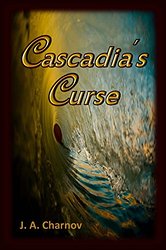
Book Review: Cascadia’s Curse

Cascadias CurseTwo elderly sisters, Emily and Laura, are jolted awake by a piercing tsunami alert warning. They and many of their Oregon coastal neighbors trudge out of their comfortable homes in the middle of a cold, dark March night and drive to a designated assembly area. A large earthquake has occurred 2,000 miles away in the Aleutian Islands.

Emily, a retired geologist, knows the destruction a tsunami could wreak. She knows enough to come prepared with emergency supplies for what could be an extended stay away from home. The assembly area begins to fill, causing tempers to flair. The sisters and a few others decide to drive further up the mountains.

In Cascadia’s Curse, a novel, J. A. Charnov brings awareness to those who live along the Cascadia Fault, or more technically the Cascadia Subduction Zone (CSZ), that runs from northern Vancouver Island, B.C. to Cape Mendocino, California. What many would like to avoid thinking about is brought to life.

Cascadia’s Curse follows the small group that leave the main assembly and also those left behind. When the tsunami hits and then is followed by a massive earthquake, it is far worse than ever imagined. Nature continues her destruction, rearranging Oregon’s coastline. Charnov’s description of these disasters and the affect it has on its victims is vivid and realistic.

Before I retired after twenty years as a volunteer with the American Red Cross, I responded to many national disasters–tornadoes, hurricanes, floods, massive fires, earthquakes and 9/11. The disaster situations described in this book resonated with me. In any disaster scene, natural leaders emerge, as do those who resent them. There will be people who are prepared, who have given thought to survival in disaster. There will be people who have put off preparing for disaster and those who have scoffed at preparedness, who will then have to rely on others. There will be injuries; deaths; violence–caused by both nature and by man. In disasters of this magnitude, the grim fact is that you cannot count on the help of local authorities. They, too, have been overwhelmed and are concerned with their own families. Emergency vehicles are a tangled mess, roads are destroyed, power cut off, sewage lines have burst, clean water contaminated. Charnov has presented both the geological side of such a disaster as well as the human reaction to catastrophe in this realistic thriller.

I highly recommend Cascadia’s Curse. It is a gripping read and keenly describes what many feel is a pending disaster.

For more information about disaster preparedness, visit http://www.ready.gov/

Book Review: An Object of Beauty: A Novel

An Object of BeautyI knew Steve Martin was a comedian and actor. More recently I saw him perform on the banjo and was impressed. But an author? I hadn’t known, yet he’s written three novels, three works of nonfiction, plus plays and screenplays. I just finished An Object of Beauty, A Novel, and continue to be impressed with his talents. Not only is he an accomplished writer, he is a buyer, seller and lover of art. In this novel, he demonstrates his depth of knowledge of fine art as he weaves a story of the art world and its personalities.

The novel is written with an underlying theme in first person, Daniel Franks, an art reporter. Interestingly, the book is also presented in third person, as seen through Daniel Franks’ eyes, when dealing with Lacey Yeager, a young, ambitious art dealer who climbs New York’s art and social world. The novel takes place in the 1990s though the present time. As Lacey learns the ins and outs of dealing in art, she learns that a dealer doesn’t “have to sell paintings. All you have to do is put a good picture in front of a knowledgeable collector and stand back.” But there’s an art to that, and her ambition knows no bounds. Neither do her scruples.

An Object of Beauty is an enjoyable read as it delves into the art world and the people who run it. Twenty-two four-color art reproductions are woven throughout the novel, often as part of the story. I found the book not only entertaining, but I learned about the business side of art, its schemes and tactics.

Take Time to Make a Friend

Tonga M rowing ashoreSP_T2_21 CropNote: On a small sailboat at sea, you take the bad with the good. Over a 14-month period, Bruce and I sailed 13,000 miles on our boat Impunity, journeying from Seattle through the South Pacific and home again. There were many serene moments with fair winds and calm seas, and also tense moments with violent midnight squalls and even a cyclone in Samoa. This is an excerpt from my memoir of our many adventures, Sailing with Impunity:Adventure in the South Pacific, 

In the Kingdom of Tonga, we anchored Impunity near one of many tiny islands. This particular island had a long protected point with only two houses on it. From our boat we could see a woman walking to a well and home again. I rowed ashore in our dinghy to meet this older woman whose name was Marie. Rather than conversing, our exchange was really more of a mime since she knew very little English and I knew no Tongan. Much of the week Marie, a widow, lived a simple, quiet life alone on the island, but on weekends others came to gather coconuts and to dig clams. I gave Marie gifts of a packet of sewing needles and a card of pretty buttons, and from her broad smile I could tell she was pleased. These items were not readily available in Tonga.

Marie signaled for me to wait and she stepped into her square hut made of palm fronds. She emerged with a string of reddish-black beads and offered it to me as a gift. Showing me the tree from which the berries came, from the ground she picked up a fallen one and a rock. Rubbing the berry against the rock, she showed me how she polished the dried berry to make the beads. The necklace was threaded on a strong, thin vine.

The old woman asked if I liked oranges and we walked to a small orange grove. Oranges indigenous to that area are green when they are ripe, have tough skins and many seeds. Reaching for a knife from a holder at her waist, she whittled away the skin and handed me the orange to eat while she fixed one for herself. She asked me to call on her niece, a public health nurse, who lived in Neiafu. I promised her I would.

I stood to leave and Marie walked me back to my dinghy. I had in the boat an empty green, four-liter wine bottle. In this strongly Christian community, I wasn’t sure that an empty wine bottle would be an appropriate gift, but I hated to throw it away and had left it in the dinghy. When I asked her if she would like to have it, her eyes lit up. “Oh, yes. Wonderful!” For the next several days, from the boat we saw Marie walk back and forth to the well with her green bottle.

The next morning I rowed the dinghy to Neiafu and found the public health nurse’s home. Marie’s niece answered the door, expecting me. I was surprised when I saw two shiny needles pinned to her collar. Ruth spoke English and told me her aunt had shared my gift with her. She also mentioned how pleased she was that I had called on her aunt and thanked me for my kindness in taking the time. I knew Ruth had children and I’d brought gifts of an inflatable world globe and a few packages of dried fruit. The children squealed with delight when they saw the globe. The nurse, too, was excited. Her husband was a teacher and he’d be able to show it to his students.

The next evening, we heard a loud knocking on our hull. The nurse’s husband, Nuku, stopped by in his skiff to invite Bruce to go fishing with him the next day. We invited him aboard. Nuku had never been aboard a live-aboard sailboat and was curious about everything—how we cooked, navigated, the engine, the sails. He was a handsome man, tall and strong with sparkling eyes and good humor. Nuku taught school on a neighboring island and fished on his way home from work. The next day he swung by to pick up Bruce and they trolled in Nuku’s skiff for about an hour and caught four fish, two barracuda and two tuna. The teacher tried to give all four to Bruce, but Bruce declined saying we had no refrigeration, but that we would enjoy one of the tuna.

As it turned out, my little trip to see Marie developed into three friendships and enriched our stay in Tonga. I was so glad I’d made the effort.