
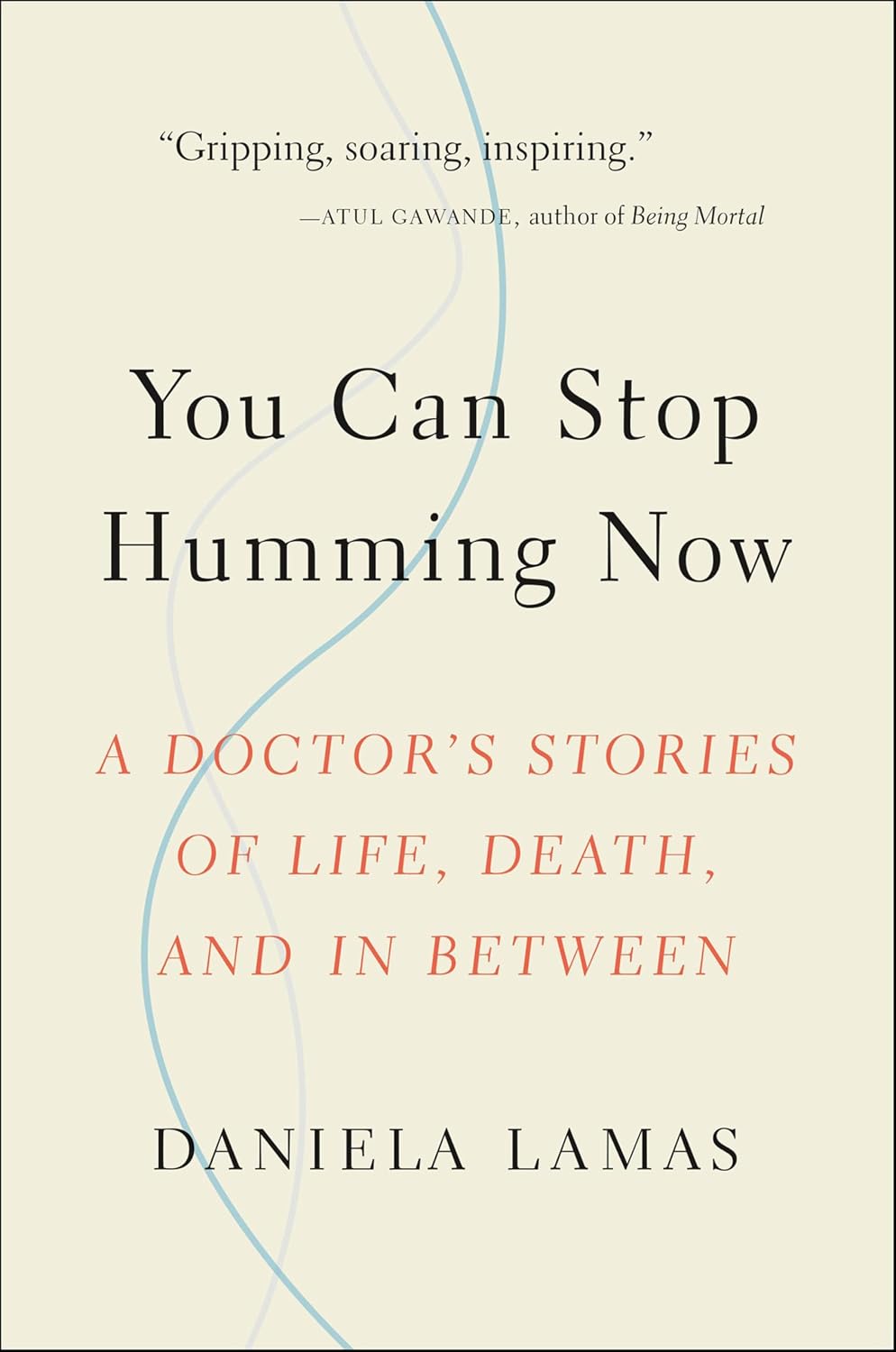
You Can Stop Humming Now: Stories of Life, Death, and in Between by Daniela J. Lamas is an enlightening book about the impact of making choices of how we live, the consequences of life-saving devices, and the cost of survival.
Dr. Lamas is an attending physician in the intensive care unit (ICU) in the hospital where she was born. I found the title of the book interesting. It refers to a chest examination of a patient where she asks the patient to hum which will decrease the pressure in his chest.
Chapter by chapter the author goes into the true stories of individuals who require medical decisions that may affect the rest of their lives. For some it was a condition they were born with. Others might suffer from trauma due to an accident. Or perhaps the emergency is from making bad choices, such as the consequence of using illegal drugs, smoking or excessive drinking.
Although You Can Stop Humming Now is about serious, often harrowing health conditions, Dr. Lamas tells various stories with compassion and gentle humor. She has her moments of dread, of sorrow, or even questioning the wisdom of further treatment. Is the treatment worth the outcome? Will treatment result in better quality of life?
Unlike some physicians, Dr. Lamas frequently follows through with her patients, even visiting them at their homes, making observations about on-going care. She observes their attitudes about the care that enabled them to survive, but at what cost? Does on-going, never-ending care result in a worth-while life? In many cases once the condition has passed, life goes on as usual. But in others, the patient has on-going, life-long treatments, affecting other family members, often requiring assistance of another person, or the need to live in an acute-care facility, often at tremendous cost.
Dr. Lamas tells her story in easy-to-read cases, with explanations of what various treatments involve. She listens to her patients and their families, helping weigh the different possibilities that will affect them for the rest of their lives. Will modern technologies that allow patients to live longer lives mean those lives will be worthwhile, or just existing? I found You Can Stop Humming Now informative and insightful. Her explanations of various conditions are clear and understandable. Many would benefit from reading this book with its easy-to-understand language. I think this volume would be of interest to anyone, but particularly to those facing the possibility of life-long treatments.