
Our Far Reaching Military

We’re all familiar with American military training and the resulting expertise churned out. I hadn’t realized how far-reaching this training was until we were in a desperate situation in The Gambia, West Africa, while my husband and I were serving with the Peace Corps.

In the early morning hours of July 30, 1981, a group of political dissidents seized The Gambia’s only radio station, the airport and other key installations in an attempt to overthrow the government of President Alhaji Sir Dawda Jawara. We happened to be near the capitol city of Banjul at the time, rather than our home village 250 miles inland. We found ourselves stranded and in an unenviable position.

We crammed ourselves into a house with 116 other expatriates, mostly Americans, but also citizens of Germany, Sweden, India and others who sought safety and shelter. The battle raged around us for eight long days. Peace Corps and US AID personnel took leading positions in organizing the group. Bruce operated two radios, providing the only communications link between the Embasy in Banjul and the United States. The coup put us all in a precarious position and, although we remained officially neutral, our safety was not assured.

On the eighth day, we heard the whump, whump of helicopters landing on the nearby beach. In order to see this new threat, I stood on a chair to peek over a mattress we had put in front of a window for protection from flying glass.

Camouflaged African troops, all heavily armed, filed up the steep bank. They formed a circle around the house and began setting up their weapons. From my perch I described the scene to the others, wondering if this was good news or bad.

“Are they facing toward the house or away?” someone asked.

“They’re facing away.”

“Well, then, I’d say they’re protecting us.”

Two Englishmen accompanied the troops and we learned from them that these men were special forces from Senegal and were there at the request of President Jawara who was in England at the time attending the royal wedding of Prince Charles and Diana. The Gambia and Senegal, which surrounds The Gambia on three sides, had a long-standing agreement for military assistance.

After things calmed down, I ventured outside to talk to one of our protectors. I started to walk toward him, then realized we probably couldn’t converse because I spoke neither Wolof nor French, the national languages of Senegal. I turned to look for someone who could interpret for me, but to my surprise the soldier said, “May I help you, Ma’am?” in a perfect Southern drawl.

“Where are you from?,” I asked, thoroughly confused.

“Senegal, but I received my training at Fort Benning, Georgia.” He sounded like a true Georgia native.

So here they were, Special Forces from Senegal, trained at Fort Benning, Georgia, protecting American citizens in The Gambia. It’s a small, wonderful world.
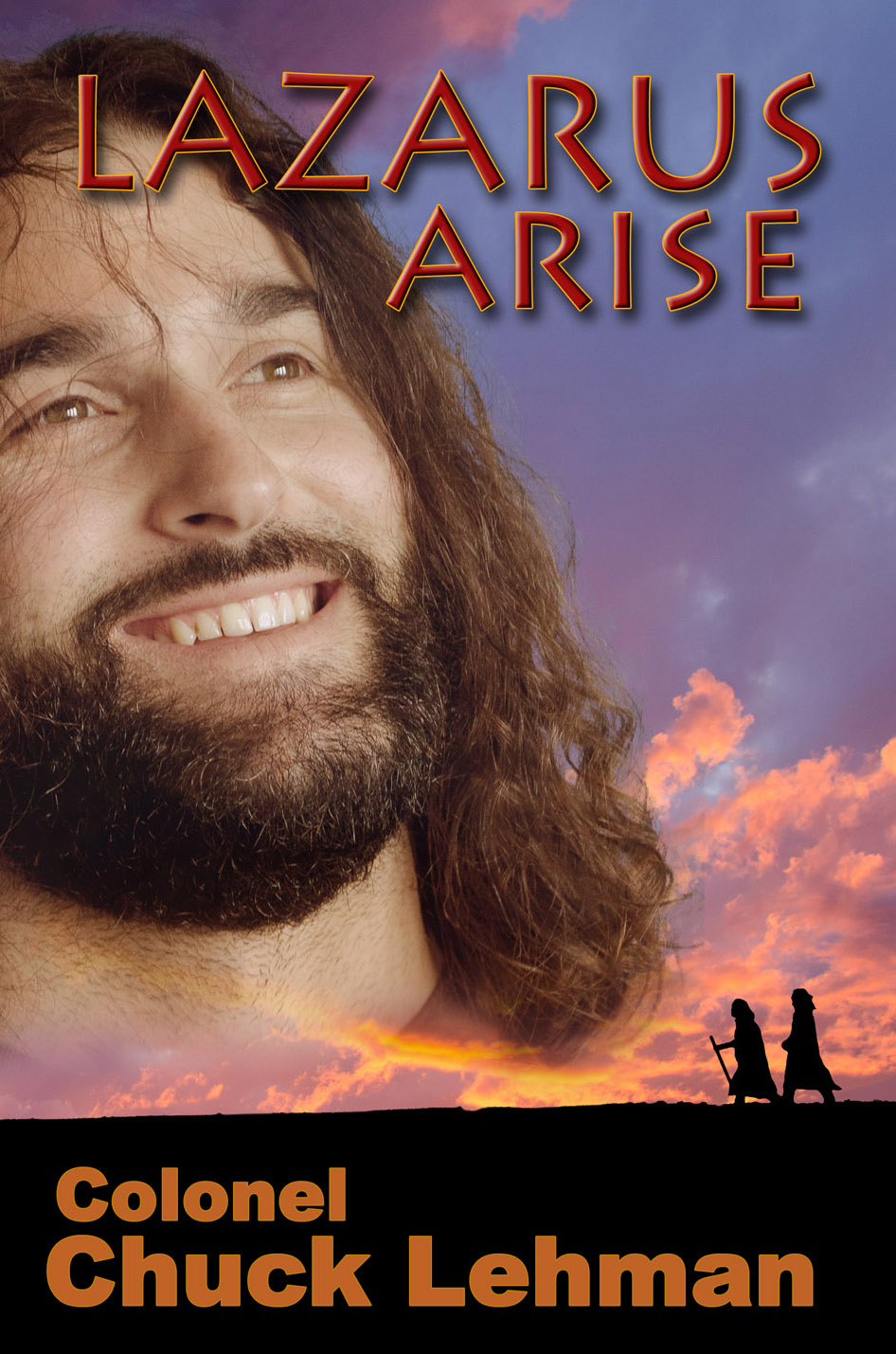

 

Book Review: Lazarus Arise

Lazarus Arise by Colonel Chuck Lehman gives life to the Biblical story of Christ bringing Lazarus back from the dead.

Y’shuah (Jesus’ Hebrew name) and Lazarus were boyhood friends in Nazareth. As teens they began working with their fathers; Lazarus as a builder and Y’shuah as a carpenter. Within a short period of time, both their fathers die and Lazarus and Y’shuah form a partnership and successfully support their families.

Y’shuah moves on to begin his mission as the Son of God. Before he leaves, Y’shuah tells Lazarus of his calling, that God is his true father, and that he is the Messiah of the Jews, but Lazarus finds it impossible to believe. Now without a partner, Lazarus finds work in Judea and becomes an accomplished builder. From time to time Lazarus and his sisters hear about Y’shuah and his work as a healer.

A splinter in his hand becomes infected and causes Lazarus great pain and eventually he dies from the wound. His sisters send for their friend Y’shuah and four days later he arrives and brings Lazarus back from the dead. Many witnesses see the miracle, but Lazarus is forbidden by the Sanhendrin Court to speak of it. He feels bound to tell the truth and is sentenced to death, but then given a reprieve if he promises not to speak of his resurrection. Lazarus witnesses Christ’s crucifixion and flees to Galilee to find work and to seek the freedom to tell the truth about Y’shuah and his own miraculous story.

Lazarus struggles to make a living when customers and suppliers are warned not to do business with him. In the meantime, he feels compelled to tell the truth; he cannot deny his resurrection.

Lazarus Arise is a fascinating and gripping story. Lehman’s research and knowledge of early first century AD is impressive as he follows the familiar Biblical account, filling in with plausible and realistic narrative and settings. The author’s details of period customs, building materials and tools used, and the strife between various warring factions are impressive. The book is available in print and e-format.


Book Review: My Stroke of Insight

Jill Bolte Taylor, Ph.D., a Harvard-trained brain scientist, woke up one morning with a sharp pain behind her left eye. She tried to continue with her morning routine, but one by one, her left brain lost its functions. Like dominoes, she lost the ability to walk normally, talk, read, write, or recall any of her life. In My Stroke of Insight (A Plume Book), Dr. Taylor describes her thoughts and progressively limiting reactions as she realized she was having a stroke.

Although her right hemispheric brain worked correctly, it was limited in what it could perceive from the non-functioning left brain. Dr. Taylor knew she needed help, but she no longer had the capability to figure out how to get it. Calling 9-1-1 did not occur to her. She did think of calling a doctor. She had gone to a particular doctor for the first time six months prior. Although she couldn’t remember the doctor’s name, she did remember the design, a right brain perception, on the doctor’s business card. Knowing it was imperative she receive help quickly, she clumsily pawed through her stack of business cards until she found the correct one. But then she found she could not discern numbers, she only saw unidentifiable squiggles. She painstakingly matched the squiggles on the card with those on the phone pad and managed to dial the number. Much to her dismay, when the doctor’s office answered, her voice came out garbled and she could not be understood. She then called a co-worker, after finally remembering the telephone number at work because it sounded like a rhyming jingle, again a right brain activity. When her colleague answered, he recognized the sound of her voice, even though he couldn’t understand the words. He immediately came to her assistance.

Diagnosis at the hospital revealed that Dr. Taylor had suffered a severe hemorrhage in the left hemisphere of her brain, caused by an undiagnosed AVM (arteriovenous malformation). AVM’s normally occur in people 25 – 45 years of age; Dr. Taylor was 37. She later described herself on the morning of the stroke so disabled she was like an infant in a woman’s body. She had surgery to remove a golf-ball sized blood clot and to remove excess blood from the left brain.

Dr. Taylor praises her mother who came to stay with her daughter in the initial months of recovery. Dr. Taylor had to learn everything from scratch: how to walk, talk, eat, read, write, dress herself. Learning to read again was the hardest and took years. In all, it was eight years before Dr. Taylor fully recovered from the stroke.

Recovery was a decision Dr. Taylor had to make “a million times a day.” The right brain was perfectly content to let matters float along in space, dwelling in a sort of “ecstatic bliss.” She knew the grueling work ahead of her if she chose the chaos of recovery. She had to constantly reaffirm that she was willing to go through that agony.

One of the important aspects of this book are the steps and influences necessary for others to observe in order to facilitate healing of a stroke or brain-injury patient. The author explains in detail what these steps are, such as needing people to treat her as though she would recover completely, or for people to offer only multiple-choice options and never ask yes/no questions.

As a brain scientist, Dr. Taylor’s explanation of how the brain perceives information gave me valuable insight. She goes into some detail as to the left brain (what you think) and right brain (what you feel) functions. She also discusses the conscious choices we make that affect ourselves and how we relate to others. The book offers inspiring testimony that inner peace is accessible to anyone. Much of the nature of these insights are not only useful to stroke or brain injury victims, but to those of us simply living our lives.

My Stoke of Insight offers tangible instructions useful for diagnosis and treatment of stroke. Dr. Taylor’s Warning Signs of Stroke are a valuable resource:

Warning Signs of Stroke

S – Speech, or any problems with language
T – Tingling, or any numbness in the body
R – Remember, or any problems with memory
O – Off Balance, problems with coordination
K – Killer headache
E – Eyes, or any problems with vision

STROKE is a medical emergency. Call 9-1-1

In addition, two appendices in the back provide valuable information. In Appendix A, “Recommendation for Recovery,” she lists ten assessment questions. In Appendix B she identifies “Forty Things I Needed Most to Recover.”

My Stroke of Insight provides valuable information about the human brain and particularly how it is affected by stroke. More than that, it gives us an opportunity to reevaluate our own lives and become aware of the choices we are capable of making.

A Vegetable Garden: Is it Worth the Hassle?

There’s nothing like the thrill of picking crunchy carrots or juicy red tomatoes right out of your own garden, or being able to by-pass the grocery store’s produce department because you’ve “grown your own.” But is having a vegetable garden a big hassle? Is it really much of a savings? Can only people with lots of time on their hands manage a successful garden? Do you need a lot of space?

With planning, gardening can be rewarding and yet not consume much time or space. For one thing, you can be selective with the types of vegetables you grow, choosing only low-hassle, high-yield products. Examples of high-yield vegetables that furnish a lot of food per plant are tomatoes, broccoli, spinach, green beans, peas, cucumbers, and zucchini. If you grew no more than these, you would enjoy a good supply of vegetables. Even if you only have space for tomatoes, gardening can be tremendously satisfying.

Health-wise, growing your own veggies ensures that you’re getting all the nutrients possible from your product because they are picked when ripe. Also, you have control over what sprays, insecticides, etc. have been used.

Money-wise, it most certainly can be a savings. For a very reasonable price, you can purchase starter vegetables in pots. Or, you can start your vegetables with even lower cost by growing them from seed. For instance, one package of snap peas or green bean seeds provides enough for our family with plenty extra to share with neighbors. We usually start our tomatoes from starter plants and all other vegetables are grown from seed.

I no longer care to preserve vegetables by canning, but I do blanch (briefly boil or steam and plunge into ice water) green beans, peas and broccoli and freeze them in meal-size portions. I cook tomatoes, sometimes with zucchini, green pepper and onion, and then freeze containers of the stewed tomatoes for casseroles, spaghetti, or for a tomato side-dish. This may take a few minutes during harvest season, but saves money, time and effort in the winter months.

Vegetables need plenty of sunshine for strong, steady growth, so plant your garden where it will receive at least six hours of sunshine each day. Also, avoid planting in a windy spot as wind will dehydrate plants, requiring more water.

Adding compost–grass clippings, vegetable and fruit scraps–to your garden is a good way to build up mineral-rich soil. We dig a hole in an open spot in our garden each week and dump compost material into it. The next week we dig a new hole, covering the previous hole with the extra soil. It’s amazing how quickly the food scraps are absorbed into the soil.

Mulching is also a helpful aid to gardeners. Grass clippings, leaves, straw, or hay placed around the plants allow water to enter the soil, but keep the soil from drying out. Mulch also keeps weeds under control. Make sure that any materials used for compost and mulch are pesticide and herbicide free. Compost and mulching material cost nothing, take little time to prepare, and adds to your garden’s efficiency.

What about rototilling? An established garden doesn’t need rototilling. If you’re creating a new garden plot, rototilling will make your work easier. After one or two growing seasons, turning the soil with a shovel isn’t difficult. Whether you use a shovel or a rototiller, the goal is to mix and loosen the soil, allowing the plant roots to spread to obtain nourishment.

What about watering? This is a tough question to answer without knowing specifically the location and soil conditions to be considered. One rule of thumb: water thoroughly, but infrequently. Newly planted vegetable plants and seeds need watering more frequently than established, larger plants. Mature vegetable plants don’t like too much water, but they can’t thrive on too little moisture, either. Water your plants before they begin to droop.

Don’t sprinkle in the heat of the day, water evaporates quickly and it’s a waste of water. A soaker hose works well in a garden and is a water and time saver.

Investing a little time planning your garden and you’ll find growing your own vegetables fun and economical.

Pass the peas, please.

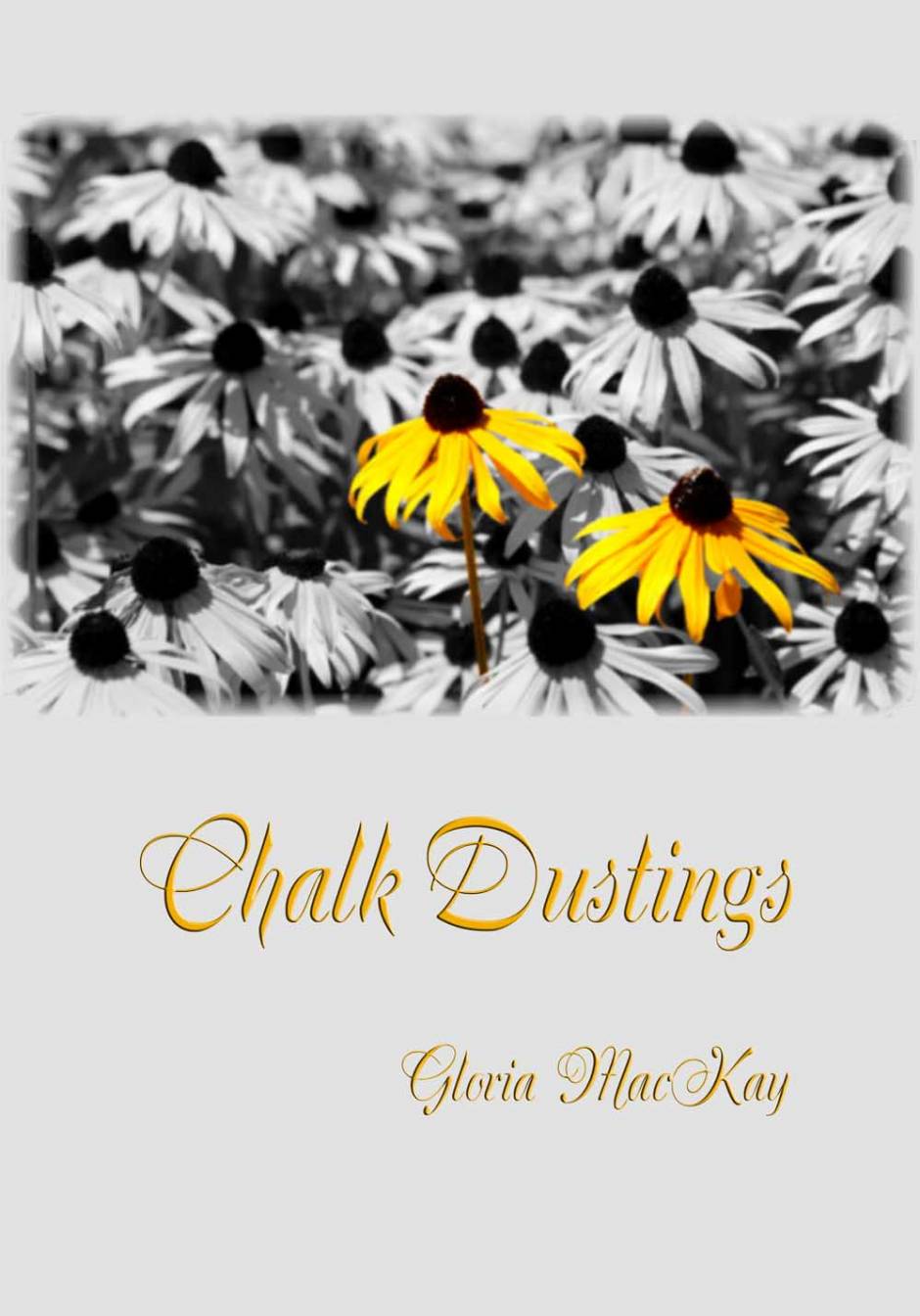
Book Review: Chalk Dustings


Chalk Dustings by Gloria MacKay is a rare slice of homespun philosophy. MacKay’s unique view of life, evident on every page of poignant poetry and insightful prose, is sometimes charming, sometimes witty. Her wisdom gives you something to think about while recognizing life as a mixed bowl of beans.

MacKay’s poetry, laced with wisdom and observations, is rich with truisms. She shares with us heart-warming wisdom that only someone who has really lived can do.

Scattered throughout the book, short prose defines life according to Gloria MacKay. She manages to impart amusing yet milestone moments that have defined the person she is. One of my favorites is the last, “Salt Is More Than a Seasoning,” in which she shares her love for Puget Sound. The piece gives life to a body of water that many would take for granted. It ends:

Puget Sound is family. I dunk my fingers in it and splash in it and taste it and float on it and dig around the edges. It gets into my lungs and clings to my hair. I always have. I always will. It suits me.

Chalk Dustings is a book you’ll put in a special place, the kind of book you’d be proud to give to someone special in your life. Chalk Dustings, published by Aquillrelle, is available through www.Lulu.com.