Writing TUBOB: A Dream Fulfilled

Well, it’s about time. What I had fantasized about for so many years–writing about our two years in West Africa–has at last become a reality. What took me so long? I wonder that myself. I guess in my mind it was such an overwhelming experience, so personal and heart-felt, I wasn’t sure I could put it adequately into words.

For me, it’s easy to make up a story. I’ve done it since I was a little kid. My older sister taught me. I’d beg her to tell me a story and she finally said, “Mary, make up your own story. Think of something you’d like to hear or read, and tell yourself a story.” That first time, she gave me an opening sentence and I took off from there.

Along the way my need to tell stories became three novels, all contemporary western, all well received: Tenderfoot, McClellan’s Bluff, and Rosemount.

But to tell something that’s true, that represents our own heart-felt and hard-won experiences, is different. For some reason I couldn’t get past the idea that it wasn’t a “story,” it was true to life, sometimes painfully so.

Sure, I could write little snippets and I did write about a few experiences on my blog with favorable results and encouragement to write a book. But these were usually positive experiences, and our two years in Africa were not all positive. They were often grueling, discouraging, even scary. But are we glad we did it? Absolutely!

Finally, I decided I would have no peace until I at least tried to write the story about our Peace Corps experience in The Gambia. We had asked our families to save our letters to them. I couldn’t stand the duplication of effort to keep a journal and write home. This was before email, so all our letters were either hand written or typed (I had sacrificed space and weight to take a manual typewriter).

I sorted through all the letters written by both of us, putting them in date order. I began to see I needed to have some sort of index so that I could avoid volumes of data entry, so I created a computer index with various subjects: names, Bruce’s work, my work, animals, etc., and referred to a coded recipient and the date. Soon, I had 42 pages of categorized key words. And I had my inspiration. I relived those years, remembered the sweat and tears, and the joys. Despite the elapsed years, thanks to our letters home, I could recount details that would make the story real to readers.

It took me two months to go through and annotate all the stacks of letters. In January, 2012, I began to write my memoir and wrote straight through to May. Editing and proofing is another matter, but I enjoyed that part, too.

I had worried that I might offend some people we knew in Africa. In most instances, I use actual names for real people. But in a few cases, I have changed the names to avoid hurt feelings or embarrassment. In a couple of instances, in the interest of clarity, I have combined characters.

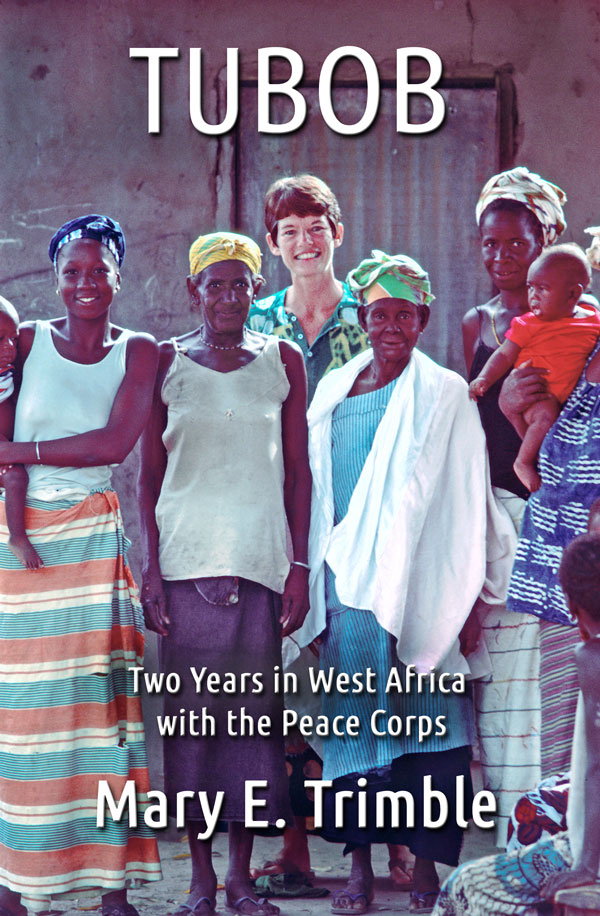
Bruce took hundreds of 35 mm pictures while in The Gambia. We had mounted the slides in trays and every once in awhile we viewed them or shared the pictures and stories with others. Once I could see an actual memoir in the making, we invested in the equipment necessary to convert the slides into digital form. Bruce spent countless hours selecting and editing the pictures so that we would have meaningful images for the beginning of each chapter. Bruce also designed the book’s cover, using his artistic talent to make a cover representative of the story.

So, finally, we have produced an honest recounting of our two years in The Gambia with the Peace Corps. I have made every effort to be objective, and to fairly and honestly tell the story of our time in a third-world country.

Perhaps I needed to wait 30 years so that I could be more objective. Surely, I have gained in wisdom and global awareness in that time. We have never been back to The Gambia, but I hear from people who have and they report not much has changed. Electricity does not reach many homes, people still haul water from a well, many of the struggles remain the same. Education is more available. With the Internet, Peace Corps volunteers now have better communication with family and friends back home. That would be a huge improvement and eliminate many of the anxieties we felt.

Some lessons I learned remain. You take the bad with the good. You live in the moment. And in the bad times, remember that “this too shall pass.”

TUBOB: Two Years in West Africa with the Peace Corps is available at local bookstores, Amazon.com, or through my website, www.MaryTrimbleBooks.com
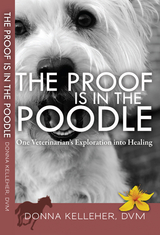

 

Book Review: The Proof is in the Poodle

The Proof is in the Poodle: One Veterinarian’s Exploration into Healing by Donna Kelleher, DVM, gives readers a chance to explore alternatives to traditional treatment for ailing dogs, cats and horses. Kelleher seeks to treat the whole animal, the physical, emotional and spiritual facets of their lives.

In her youth, Kelleher works on Saturdays with Iris, a neighborhood healer. Gardening with Iris, Kelleher learns the healing qualities of plants, how to preserve them, how to prepare them to make teas or salves. From Iris, she also learns that public opinion isn’t as important as following your heart.

While attending Washington State University College of Veterinary Medicine, Kelleher becomes aware of certain practices that are contrary to what she believes would be better, more effective healing treatments. She finds the common practice of dispensing chemicals repugnant, of euthanasia as being a choice too easily taken.

Kelleher becomes further trained in veterinary acupuncture and chiropractic medicine and becomes a member of the Veterinarian Botanical Medical Association. Using these skills along with those she learned from Iris, her childhood mentor, she finds ways to holistically treat animals without pharmaceutical intervention.

Not everyone will agree with Dr. Kelleher’s views. Eking out another week of an old dog’s life may be difficult for many to grasp. But to cure a disease with herbs rather than with chemicals that often introduce harmful side-effects, may make sense to many.

The Proof is in the Poodle: One Veterinarian’s Exploration into Healing offers well-founded viewpoints on healing. Whether or not you’d want to take this path, the small volume offers enlightened opinions on healing and treating the whole animal. The book is written with humor and heart.

To learn more about Donna Kelleher, DVM, visit www.wholepetvet.com

Obesity: It’s Time to Act

It’s a national problem. Look around and you’ll find obese and overweight people outnumbering the healthy and fit.

The statistics are grim. About 34 percent of kids 2 to19 years old in the U.S. are obese or overweight. One third of adults are obese, another third overweight.

What’s the difference between obese and overweight? Overweight means a body exceeds the recommended weight for height and bone structure. Generally, obesity in adults means 100 pounds over their recommended weight. Childhood obesity occurs when a child is well above the normal weight for his age and height.

A serious problem with childhood obesity is that it puts the child on the path of adult obesity and introduces associated diseases such as diabetes, high blood pressure and high cholesterol. Childhood obesity can also lead to poor self-esteem and depression.

Genes play a role, but DNA in humans has not changed in the last generation. The American lifestyle and eating habits have changed.

What can be done? How can we reverse this trend? Adults need to take the lead, not only to promote a healthy lifestyle for themselves, but for their children as well.

Following are ideas to embrace a healthy lifestyle:

– Think in terms of a healthy life style, rather than the negatively perceived “losing weight.” Do not restrict food, instead have a variety of healthy foods available. Avoid labeling foods “good” and “bad,” but rather emphasize that protein and calcium will give strength in sports performance. Fresh fruits and vegetables will give luster to skin and hair. Walking and/or running will make your legs shapely.

– Kids, and adults, will eat what’s in the pantry and refrigerator. Stock only healthy foods. Keep a bowl of fruit handy on the kitchen counter. A parent’s example is stronger than anything you can tell a child. Don’t expect a child to reach for an apple when he sees a parent munching on potato chips.

– Make meals count. Eat at the dinner table, not in front of the TV or in the car. Be mindful of what you eat. Make family dinners a pleasant event and a time for sharing thoughts. Prepare dinner plates in the kitchen to ensure balanced meals. After everything on the plate is eaten, allow second helpings of favorites. Serve the family’s favorite fruits and vegetables more frequently, giving everyone a say in what is served.

– Health experts suggest covering half the plate with fruits and vegetables. Fresh fruits and vegetables will satisfy appetites better than snack foods.

– Educate the family on healthy food. A diet soft drink isn’t a healthy choice, even if it has fewer calories. Praise family members and friends when you see they make healthy choices.

– Don’t use food as a reward. Instead reward yourself and your children with some fun time out that involves physical activity.

– Become physically active. Walk, play ball, swim, join a health club. Try to do something physical for at least an hour a day. Children should spend even more time with physical activity. Limit time in front of a TV, computer or cell phone.

As a nation, we must act on this unhealthy overweight epidemic. I often see people buying cases of soft drinks, giant packages of chips, super sized bags of candy. This trend must stop or we’ll have a nation crippled by our eating habits. Change won’t happen overnight, but it’s imperative we start NOW.

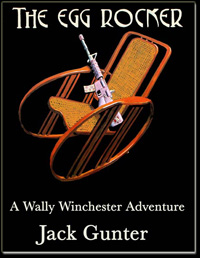
Book Review: The Egg Rocker

The Egg Rocker by Jack Gunter takes you from tranquil Camano Island, WA to the jungles of South America, with hair-raising stops in between. The fast-paced novel is the second in the Wally Winchester Adventure series.

Wally Winchester makes a winning on-line bid on an antique chair, an egg rocker and he naively plans to go to South America to pick it up. As it happens, his live-in partner, Rae Roberts, a professional photographer, has a photo shoot assignment from National Geographic in Chile, so they travel together. Wally leaves Rae in Chile and drives a rented truck to collect his treasured chair from South America. The chase is on.

Wally picks up the chair, but then is drawn to other antiques, European artifacts stored in old barns or run-down shops in unsavory parts of various towns. Later, Wally is joined by an old friend, a recently retired Russian who worked for a United Nations agency recovering stolen national properties. Together Wally and Yvgeney scour shops in the South American countryside, seeking antiques. Along the way, Yvgeney’s investigative background begins to surface, revealing alarming facts.

The story maintains high-pitched excitement as the two antique dealers weave themselves into a web of underground intrigue. When they finally return to Camano Island, their troubles aren’t far behind.

The author, a well-known northwest artist, is also an antique collector, so speaks with authority on the subject. His sense of humor, together with his knowledge of antiques make for a fascinating read. The three book series, Original Finish, The Egg Rocker, and Mother of God, all deal with mystery and intrigue. They’re meaty, complex mysteries that provide scary moments with plenty of laughter thrown in.

To learn more about the author, visit www.JackGunterArt.com.


Sixty Miles of Beauty: Oregon’s Central Coast

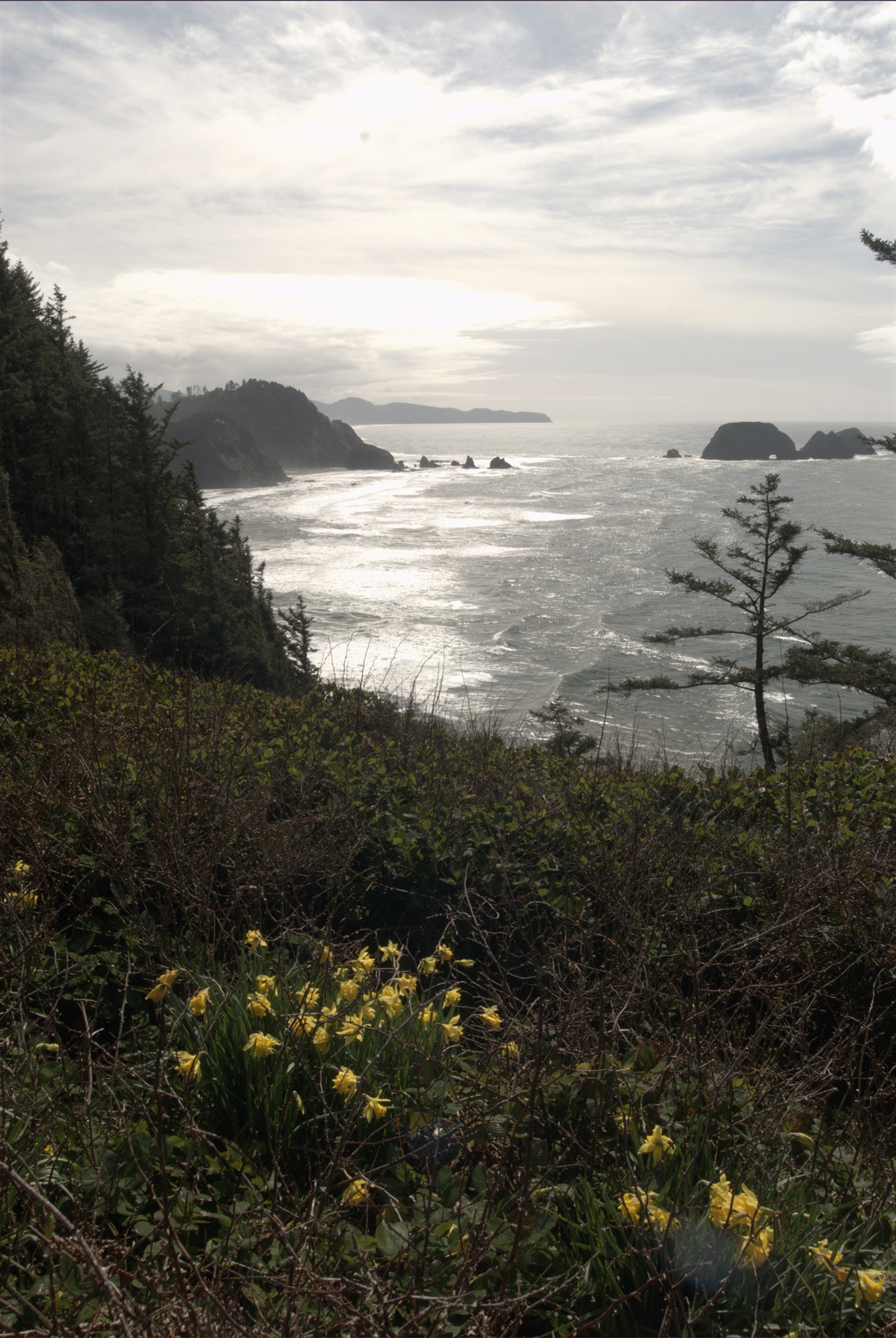
One of the most beautiful coastlines in the world can be viewed along Oregon’s Highway 101. The amazing variety of sights include broad, sandy beaches, high, sheer cliffs, craggy shoreline rock outcroppings, historical lighthouses, majestic forests and gigantic sand dunes, all connected by architecturally impressive bridges.

State and private parks abound for RVers and campers, or hotels, motels, condos, and bed & breakfast establishments for those who don’t care to haul equipment. Over the years, we have visited most of the coastal parks and have our favorites. On our last trip, we concentrated on Oregon’s Central Coast which stretches 60 miles from Lincoln City to Yachats with Depoe Bay, Newport, and Waldport in between.
.
We camped north of Newport at Beverly Beach State Park where getting to the beach is a breeze. An attractive arched walkway leads visitors under the highway and onto a wide, sandy beach stretching from the Yaquina Head Lighthouse to the headlands of Otter Rock. Brave souls surf; beach combers find their treasures along a shoreline known for its fossils.

The park’s interpretive programs and the displays found along nature trails teach visitors about bats, beavers, cocoons and salmon migration. Close by, whale watching is popular at several spots including Depot Bay, Boiler Bay State Scenic Viewpoint and Yaquina Head.

Stopping at a Visitor Center is worthwhile for tips on what to see and do in the area, to purchase books or souvenirs, or talk to the knowledgeable people behind the counter.

We like to make a State Park our headquarters and branch out from there to explore. The seaside towns are fun and we spent time in several. Newport is one of our favorite places and is home to the famous Oregon Coast Aquarium and Hatfield Marine Science Visitor Center. Each unique little town offers its specialty and the drive between them is always spectacular with ocean views.

Yaquina Head Lighthouse, visible to the south of Beverly Beach State Park, is a must-visit. Its 93-foot tower is the tallest on the Oregon coast and stands 162 feet above sea level. Completed in 1873, the Yaquina Head Lighthouse beacon is visible 19 miles out to sea, flashing its unique pattern of 2 seconds on, 2 seconds off, 2 seconds on, 14 seconds off. The adjacent Yaquina Head Interpretive Center helps visitors appreciate the rich history of the area.

The town of Florence, Oregon, south of the park and situated on the bend of the Suslaw River, is the gateway to the spectacular Oregon Dunes National Recreation Area. The area is popular among off-road-vehicle riders, but also has areas closed to all but foot traffic.

Five bridges cross channels along Highway 101: Yaquina Bay in Newport, Alsea Bay in Waldport, Siuslaw River in Florence, Umpqua River in Reedsport, and Coos Bay in North Bend. Four of the five bridges were built in 1936 and were designed by Conde B. McCullough, Oregon’s master bridge builder. The bridge McCullough designed for Alsea Bay had to be replaced in 1991, but the new bridge pays tribute to McCullough by incorporating an arch, which was a hallmark of his bridge designs. An impressive little free museum, Alsea Bay Bridge Interpretive Center in Waldport, offers good information on Oregon’s McCullough bridges.

The Oregon Coast is a satisfying, exciting destination, whatever your preferred lodging might be. Oregon’s coastline is often referred to by North, Central and South Coast. Each is unique and beckons, “Come, stay awhile.”


Book Review: The Inheritors

The Inheritors, a novel by Judith Kirscht’s (New Libri Press), offers thought-provoking views of challenges and conflicts between nationality, class and race.

Alicia Barron attends the funeral of her dearest girlhood friend, the friend’s husband and their child who were killed in an automobile accident. Although once as close as kin, she finds herself an outsider now, not only to this family, but even to her own mother. This animosity dates back to Alicia’s college years when she participated in the violent Vietnam War demonstrations.

Raised Latino, Alicia never knew her Chilean father who was killed in Korea before she was born. With her dark hair and eyes, she never suspected she was anything but Latino. Even when asked, her mother didn’t share information about her own background, but simply lived in the moment. Alicia and her mother were a pair without history, without relatives, but still, her mother insisted, were a family.

After a long absence, Alicia has returned to the working-class Chicago community where she was raised and she teaches at the same elementary school she attended. Alicia and fellow teacher Ricardo Moreno are in love and share many of the same interests.

Alicia inherits an old, run-down mansion, an estate left by a Chicago industrialist whom she eventually discovers was her grandfather, her mother’s father. She learns that her mother was the daughter of an Italian woman and a white father. Delving into her past, she discovers a line of women who fought and overcame the battles of nationality, class and race.

When she shares her discovery with Ricardo, he is upset and wants her to reject her gringo roots. Their love is threatened and Alicia must decide what path she will take. Should she investigate further and work with her new status? Or, should she follow Ricardo’s desire and pretend she never made the discovery?

The Inheritors is a well-researched book, written about bias, though without bias. It was an eye-opener to me to learn views of some Latinos who live in a diverse, industrial city like Chicago, at least how it was in the 1960’s and 1980’s. Kirscht handles flashbacks smoothly, giving plausible reasons for misunderstandings and conflicts. This is an important novel that reveals views from a fresh perspective.

The Inheritors is currently available as an ebook and is scheduled to be published in print in the fall. To learn more about the author, visit www.JudithKirscht.com.


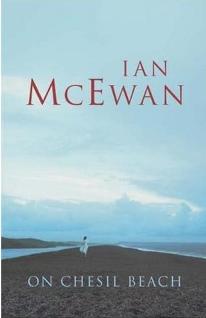
Book Review: On Chesil Beach

On Chesil Beach (Anchor Books), a novella by Ian McEwan, is a burst of fresh air, a book that swiftly moves along and took my heart with it.

Both virgins on their wedding night, Florence and Edward can only imagine what the evening will hold. They eat dinner in the honeymoon suite as they gaze out onto Chesil Beach. Florence tries not to think about what will soon happen; Edward hopes he’ll know what to do and when to do it.

The book, set in England in 1962, flashes back to when they met and how their love gradually blossomed. Although a university graduate, Edward’s vocation was still illusive. Florence, however, never doubted her choice as a professional musician. Their differences melt away as their love develops.

Back to their wedding night, Edward anxiously begins to make love as he has so often fantasized. Florence, overwhelmed with this sudden closeness feels herself mentally backtracking. The inevitable plays itself out, but not as they expect.

I found this small book haunting, yet filled with compassion. McEwan is a master at detachment while evoking intimate details. On Chesil Beach is a profound novel, a story that demonstrates that what isn’t said can transform lives.


GARDENERS’ BEST FRIENDS: Beneficial Insects and Other Friendly Critters

“You’re kidding! There’s such a thing as a good bug?”

We tend to think of all garden predators as enemies. Not so. Entomologists (insect specialists) tell us there are actually only ten or twelve insects or pests that cause problems in a vegetable garden, the worst being cutworms, aphids and slugs. In contrast, there are hundreds of different kinds of insects and other garden helpers that befriend gardeners.

By avoiding or reducing pesticide use, gardeners can protect those predators which actually improve the condition of gardens. In addition to providing food for birds, good bugs help break down organic matter to enrich the soil, pollinate crops, and give us honey and beeswax. Many of the good insects are parasitic and eat the bad ones. Insect-eating insects are an important factor in controlling the population of pest species.

Garden predators which actively feed on damaging organisms are often called “beneficial insects.” Here are a few examples of gardeners’ friends.

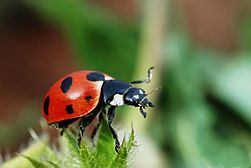
Ladybugs and their larva (sometimes called “grubs”) have big appetites for aphids. These oval-shaped, bright colored, spotted insects will reproduce in your garden if the alligator-shaped larvae is left alone to develop. You can purchase ladybugs, or lady beetles, as they are sometimes called, by mail or in a garden store and then release them in your garden.

Ladybugs are strongly attracted to marigolds and damp mulch. Other flowers, especially ones with small or flat flowers like sweet alyssum and daisies, attract ladybugs and other beneficial insects. Gardeners will have more success with ladybugs if the insects are allowed to hatch in the garden.

Ground Beetles come in a variety of kinds and sizes, usually ½ to 1½ inches long. They have hard forewings that protect the abdomen, hindwings, long legs, and prominent mouthparts. Beetles eat garden pests including moths, cutworm larvae and slugs. The beetle usually feeds at night and hides under sod or logs during the day.

Lacewings are either green or brown with golden eyes, long antennae, and finely veined wings held tent-like over the body. Their larva are 3/8 inch long with flattened, wedge-shaped bodies and long sickle-shaped jaws. Adult lacewings feed mostly on nectar but larval lacewings eat aphids and other small insects, mites and insect eggs.

Syrphid Flies, sometimes called hover flies because of the way they pause in mid-air, are usually black and yellow and resemble yellowjackets or bees. The adults eat pollen and nectar but the wrinkled, fleshy, brown or green maggots feed on aphids.

These and other helpful insects, such as dragonflies, wasps, and centipedes, are particularly vulnerable to insecticides, in many cases, more so than pest species. In order to avoid destruction of these good bugs, use pesticides only when absolutely necessary and choose narrow spectrum types, those formulated for specific pests.

In addition, other friends of the gardener include birds, earthworms, and garter snakes.

Birds can be real troupers in eating unwanted garden pests. Although you may want to use bright flags to keep birds out while your garden is sprouting tender new shoots, as soon as possible welcome birds into the garden area. They love to feast on bugs and will help rid your garden of unwanted insects.

Earthworms ingest organic matter such as decaying leaves, roots, and weeds. The castings earthworms leave in their wake are rich in minerals and the granular substance improves soil structure.

Garter snakes consider slugs a treat. They’ll even eat slug eggs. The garter snake has three stripes, one on the back and one on each side. Encourage snakes to take up residence in your garden by providing warm, protected places, such as a compost pile.

Learn to recognize “the good guys” in your garden. Remember: if you eliminate beneficial bugs and other helpers, you inherit their job.

Book Review: Starlight Rescue

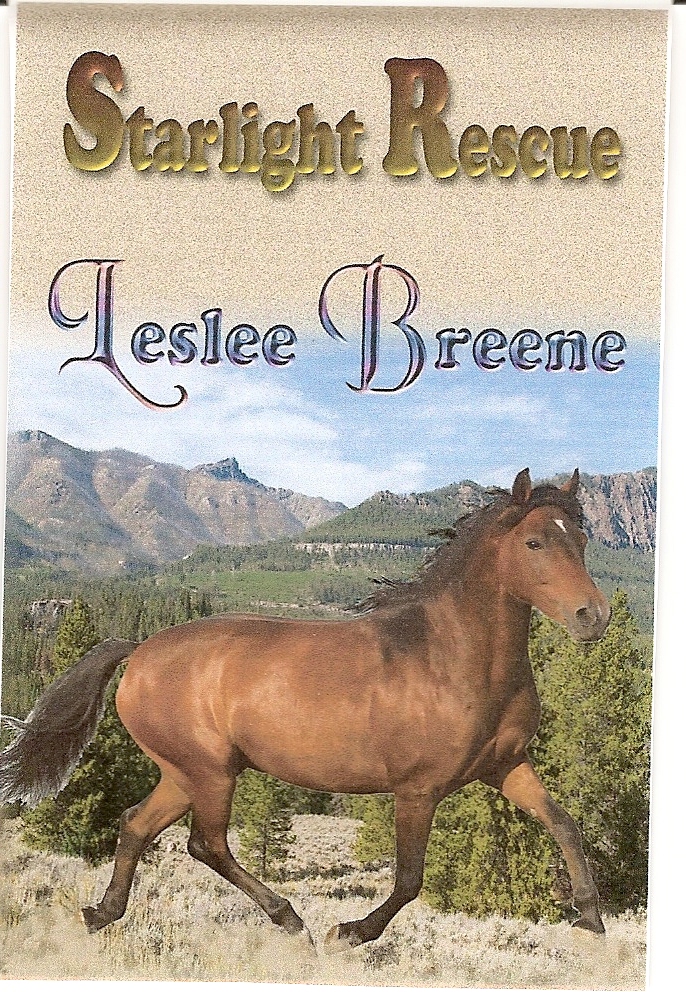
Starlight Rescue by Leslee Breene, a Contemporary Western Romance, is a story of a woman with a big heart, and a big debt.

Veterinarian Kimberly Dorn, runs a Wyoming ranch on which she keeps rescued animals, mostly horses and llamas. She’s facing a large loan payment and the threat of greedy land developers. Gabe Trent, from Montana, is a wildlife photographer and filmmaker who needs a temporary place to stay while working in the area, and rents a building on Kimberly’s ranch.

Sparks are ignited, but Kimberly must keep reminding herself that Gabe is just passing through. One of the highlights of the book is when a llama gives a complicated birth and Kim and Gabe assist.

The intriguing love interest is well handled. Breene also does a good job of portraying the personalities of the animals in her charge. Readers have an opportunity to learn about horses, llamas, and emus as Kimberly conducts her daily business.

Starlight Rescue is a fun read, full of life’s passions, compassion, and vivid Wyoming landscapes. For more information about the author, visit www.LesleeBreene.com.