Book Review: Desert Wives

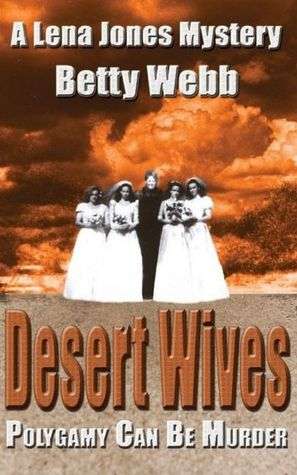
Desert Wives (Poisoned Pen Press) by Betty Webb is a mystery with an eye-popping expos of modern-day polygamy.

Private Detective Lena Jones is approached by Esther Corbett to rescue her 13-year old daughter, Rebecca, from Purity, a small village cult that straddles the Arizona-Utah boarder. The daughter has been promised in marriage by her non-custodial father to Prophet Soloman Royal, a leader of a polygamist sect. Prophet Soloman, an older man, already has multiple wives and dozens of children.

The rescue is perfectly executed, but on the way out of the area, Lena and the girl Rebecca stumble upon Prophet Soloman’s body. Lena’s client, the girl’s mother, is the only suspect and is jailed with the likelihood of prosecution.

Lena goes underground, pretending to be the second wife of a disgruntled cult-member, a man she meets on the “outside” who goes along with her scheme.

Along the way to solving the case, Webb does a masterful job of exposing what is still practiced in various communities in the Western United States, even though polygamy was banned in the United States in 1862. Some sects that practice do so by having a man marry one wife, divorcing her (though she retains his name and continues to live with him) and then marrying the next wife who also takes his name. This is repeated until he has married and divorced all his wives, except possibly the last one. Since only one wife is officially married to the husband at any one time, the polygamous family appears to exist within the law.

One of the common manifestations of this arrangement is that the now single wives can claim public support as single parents. Cults are encouraged to have many children and a man may have dozens of children, all supported by the state.

Another polygamist practice commonly used is for a man to seek only one marriage license for the first marriage, and the subsequent marriages are secretly carried out in private ceremonies. Thus, the subsequent wives are seen by law as single parents.

Young men are often forced to leave their community so that women they would otherwise marry will be left to provide wives for older polygamous males, thus increasing the community income. Within many cults, young girls, often younger than the legal age of consent, are subjected to arranged marriages. Since marriages often take place within their own communities, it is not uncommon for fairly close relatives to marry, leading to inbreeding and subsequent birth defects.

In this review, I have presented the polygamist practices as presented by Desert Wives. I conducted additional research to determine the accuracy of the author’s premise for this novel and found the facts well supported. NOTE: My research also revealed that there are other polygamists who don’t live in cults and who are not organized to profit by collecting welfare.

Desert Wives is the second of the Lena Jones Mystery Series. Webb does a good job of creating suspense, using humor along the way. But for me, the value of this book is the exposure of what today is still happening in the Western United States. Desert Wives is a worthwhile, educational, yet enjoyable read. For more information about the author, visit www.bettywebb-mystery.com


The Perils of Babysitting

When I was a schoolgirl, we lived in a neighborhood with very few children, so when a family moved in with little kids, I pounced on the opportunity to earn money babysitting. At thirteen, I was the youngest of two children. My sister Alice, three years older, was beyond babysitting and into the world of horses. I had always wanted a younger sibling, but it was clear that wasn’t going to happen. I loved little kids and, as I saw it, babysitting could not only help me earn money, I could satisfy my “big sister” craving.

I called on Mrs. Little, our new neighbor, to offer my babysitting services. I couldn’t have called on her at a better time. The Littles had five children, boys nine, seven and five, and boy-girl twins nine-months old. Mrs. Little was at the point of desperately needing to get out. She asked me to babysit once a week.

Mrs. Little made a surprising statement. “Unless we have something special to go to, it doesn’t matter which night we go out, Friday or Saturday. You make your plans and we’ll go out on the other night.” Who could ask for a better arrangement than that?

I was in junior high school, eighth grade, at an age where I wanted to get together with girlfriends for movies and overnights. My babysitting arrangement was perfect. The children were all good kids and I had opportunities to cuddle the twins to my heart’s content.

I wished I could have taken a girlfriend along to babysit, as many of my friends did. But, my parents were adamant about my not having friends along; they felt my attention would be compromised.

One evening, I arrived at the Little’s at dinner time, since they were attending a progressive dinner, an event where guests have one course at one house and go on to other homes for the following courses. She mentioned that Elaine, the girl twin, had a slight cold, but she didn’t seem sick. Mrs. Little couldn’t leave a phone number with me (this was light-years before cell phones) but she would call me from time to time throughout the evening.

I fed the kids dinner, bathed the little ones, supervised the older ones, and eventually put them all to bed. As was my practice, I checked on them every hour. When I went into the twins room, I heard a raspy sound and realized it was Elaine. When I picked the baby up and held her upright, her breathing seemed less labored, but as soon as I laid her down, she struggled for breath. Alarmed, I called my mother and she rushed over and agreed we had a sick baby.

We looked in the phone book and found their family doctor’s phone number written on the inside cover. My mother called him and he came right over. In those days doctors made house calls. He strongly suspected the baby had pneumonia. As it happened, Mrs. Little called while he was there and they rushed home to take the baby to the hospital.

What would have happened, I’ve always wondered, if I’d had a girlfriend with me. Would I have been so diligent?

Okay, one more story about babysitting. I was probably fourteen by now and Mrs. Little asked me to spend the weekend so they could attend a conference. I jumped at the chance–just think how much money I would make in a whole weekend!

The weekend went well, but I was beyond weary by the end of it. To take care of five children’s every need for an entire weekend–meals, keeping the house tidy, changing two sets of diapers, chasing after two toddlers, the whole bedtime routine–it was exhausting.

When I dragged myself home, afraid I’d never have the energy or strength to spend my hard-earned money, I told my mother, “If you want grandkids, you’d better count on Alice–I never having kids.

Mother laughed. “Rough weekend, huh?”

I got over it and had many more years of babysitting. Later, I had four children of my own. Remembering my earlier experience, our standing rule was that our babysitters could not have their friends along.


Book Review: The Soloist

The Soloist (Berkley Books) by Steve Lopez takes readers on an extraordinary journey into the world of Nathaniel Anthony Ayers, a black musician and paranoid schizophrenic.

The amazing story written by a Los Angeles Times journalist, begins with a chance encounter by Lopez as he hears violin music while walking along the street. He looks around to investigate. On a corner, he finds a man in his fifties, dressed in rags, exquisitely playing Beethoven on a battered violin with some missing strings.They strike up a conversation.

In the encounter, Lopez sees the possibility of a column, but as he investigates further, he uncovers a man of immense complexity and talent, and unfortunately, a consuming mental illness that has taken him from a promising young musician at Juilliard to the depths of life as a street person in the harrowing ghettoes of Los Angeles.

Lopez recognizes the gift of Ayers’ brilliance and is obsessed with trying to help him, only to be rebuffed at every turn. Ayers trusts no one, convinced that people will steal belongings from his shopping cart. The journalist writes about the street musician and spurs interest among his readership. In his attempts to help Ayers, Lopez explores the possibility of finding suitable housing. He tracks down Ayers’ family, seeks professional mental help, even goes to Juilliard in New York to try to find the missing pieces that might help Ayers put his life back together. Lopez’ efforts result in the musician’s angry outbursts, disinterest and crushing disappointments. Lopez doesn’t give up and seeks common ground for his down-and-out friend with professional symphonic musicians, arranging to watch performances, meeting the musicians in person, even setting up appointments for him to play for a member of the philharmonic orchestra.

Although Lopez knows he is straining his own family and professional life of time and considerable funds, he doggedly attempts to find a better life for Ayers. On the way, Lopez learns about the power of classical music, the crippling affects of schizophrenia, and is able to see with more clarity why people end up living on the street.

The Soloist is written with compassion, heart and humanity. It’s a heartbreaking read, yet it leaves room for hope. I’ll never again look at street people without remembering this poignant story.

Take Winter by Storm

Damage from the Columbus Day Storm of 1962 in Newberg, Oregon Courtesy:  Wikipedia, the free encyclopedia

Fifty years ago, the Northwest suffered a deadly windstorm, named Columbus Day Storm of 1962. The storm was the strongest non-tropical windstorm in American history ever to hit the lower 48 states. Winds peaked at 150 mph along the Oregon and Washington coasts, with gusts of more than 100 mph in many parts of the Western Washington interior.

Hopefully, we’re more prepared today than we were then, but our world has changed in the last fifty years presenting new challenges. In today’s high-tech society, we rely on electrical power to conduct every day business. In stormy conditions, it’s entirely possible that we’ll have to do without modern conveniences for a matter of days. We can do much to minimize the impact of storms, earthquakes and man-made disasters.

Make a Plan Everyone, including kids, should have a plan for how they will communicate during an emergency and where they will meet family members if separated. Here are suggestions for family communication during disaster:

– Establish an out-of-area contact. This person would receive calls from various family members, letting callers know the status of the others.
– Be aware that texting may still work even if phone calls can’t go through.
– Telephone land lines may work. Surprisingly, long-distance calls will often go through even where local calls cannot.
– Establish a nearby meeting place where members will meet if it’s unsafe to go home.

Build a Kit Have on hand basic supplies, enough for your family for a minimum of five days. Include:

– Nonperishable ready-to-eat food
– One gallon water per day per person
– Medications and hygiene items
– Sturdy shoes and warm clothing
– Blankets
– Radio and batteries so that you can be aware of local conditions
– Flashlights and extra batteries. Candles are NOT recommended because of fire hazard
– First aid kit
– A whistle
– Pet supplies

Get Involved Disasters are managed by people who have taken the time to work together and learn life-saving procedures.

– Know your neighbors. Discuss emergency procedures with them.
– Learn CPR and basic First Aid. These skills can make a difference between life and death.
– Volunteer with community disaster programs. The American Red Cross offers training and resources as do local emergency response teams.
–Attend community events that discuss emergency preparedness.

We can’t stop disasters, but we can take realistic steps to survive them. By being prepared, we can not only protect people and property, we can have peace of mind knowing we’ve taken positive steps to protect ourselves from disasters.

Reference: “Be Prepared for Severe Weather,” Lynne Miller, King County Office of Emergency Management

Photo Credit: Damage from the Columbus Day Storm of 1962 in Newberg, Oregon Courtesy Wikipedia, the free encyclopedia


Book Review: One Island, One Ocean

Alarmed by the condition of the world’s oceans, Captain Mark Schrader and a group of friends set upon an idea to organize an extended educational voyage to “raise awareness in meaningful ways and change behavior.” Schrader, a veteran solo ocean circumnavigator, began the intricate process of making the challenging voyage a reality. One Island, One Ocean by Herb McCormick chronicles and illustrates the epic journey of the first-ever continuous circumnavigation by sail of the American continents.

Outfitting the steel cutter Ocean Watch involved more than just preparing the vessel for the rigors of sailing 25,000 nautical miles through rough seas over a 13-month period. It also entailed installing analytical equipment, computers and the myriad equipment to meet the needs of the various disciplines to observe, record and report findings.

The core crew of four were joined by educators, scientists, an oceanographer, a photographer and other guests who supported and added talent to the voyage. Critical roles were also played by various partners, contributors, educators, scientists and other practical shore support.

The book’s photography is impressive with exquisite details of the journey, starting in Seattle, circling the Americas, and back to Seattle. The documentary is written in four parts: “North to the Ice,” the ship sails north from Seattle to Newfoundland via the Arctic Circle and Northwest Passage. Next, the “The Long Slog South,” the ship crosses the equator sailing from the Canadian Maritimes to the Falkland Islands. The third part, “Cape Horn to Starboard,,” celebrates the triumphant rounding of the Horn and a sobering passage through Patagonia. Finally, “Closing the Circle,” a Pacific passage where they encounter El Nino, the Baja Bash where they endure extremely rough weather, the Golden Gate and finally, home to Seattle.

Their findings? Fisheries are being shamefully depleted. Coral reefs are being diminished. Plastic and chemical pollutants are clogging and poisoning life-giving oceans. Ocean acidification is jeopardizing all sea life. The remedy? R. Bryce Seidl, Pacific Science Center President and CEO, who wrote the Preface for One Island, One Ocean says, “The degradation of the oceans is the result of billions of us doing small, largely inadvertent things that in their totality are hugely damaging.” Conversely, billions of us making small changes in our lives can result in positive influences on our oceans.

One Island, One Ocean documents the importance of ocean conservation. Captain Schrader also lectures and presents a slide show, which we were fortunate to attend. Both the lecture and the book leave lasting impressions. Our oceans are changing for the worse which will eventually affect human life on the planet. The decline, both chemical and physical, are visible and measurable in virtually all of the world’s oceans. It is clear: We must take steps to reverse this environmental damage.


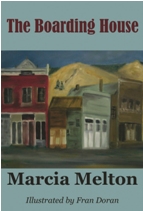
Book Review: The Boarding House

Marcia Melton’s The Boarding House (Raven Publishing) brings the early 1900’s to life. Although listed as a Young Adult novel, adults will also love this slice of Montana history.

When eleven year-old Emmie Hynes’ father dies in a mining accident, her world changes forever. In those days, mining companies didn’t take financial responsibility for families of injured or killed miners. The small family–her twelve year-old brother Conrad, her mother and Emmie–move from Butte to a small town across the mountains to Philipsburg, Montana to run a boarding house.

The family scrapes by. Conrad’s slacking off of chores comes to an abrupt halt when his scheme to earn money backfires. Both children support their widowed mother, still fragile from their father’s death. In addition to running the boarding house, Emmie’s mother works with mine officials for financial benefits for families of miners. In addition, Emmie’s mother also supports the growing suffrage movement and takes her children to rallies.

When the owner of the boarding house dies, it looks as though the little family will lose their new-found security. Although the children try to be helpful, there is no way they can close the looming financial gap that faces them. How will this family survive?

The author’s library and teaching experience serve her well. The Boarding House
is written with knowledge of the life and times of the era. The novel is a fun read, yet readers are reminded of many things we now take for granted, such as workers’ compensation and women’s right to vote. This excellent story was inspired by the experiences of the author’s mother and uncle. I recommend this novel for all ages.

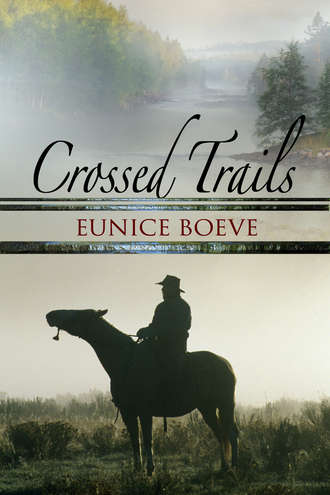
Book Review: Crossed Trails

Crossed Trails (Whiskey Creek Press) by Eunice Boeve is a fast-paced, skillfully crafted and exciting western.

After trailing a herd of longhorns from Texas to Montana, Joshua Ryder is determined to settle near the Pacific Ocean, a place where no one would know his father was a violent outlaw and his mother a prostitute.

In the spring of 1877, Josh begins his journey west when he encounters a Nez Perce woman and her newborn baby. The woman is unresponsive and unable to care for her new-born on her own. He feels obligated to do what he can and takes them to Virginia City, Montana. Knowing the town will not welcome an Indian woman, he finds a home for them with an old washerwoman, Jesse, who has met with an accident and is unable to work. In order to pay the woman for board, Josh takes on whatever work he can find. Their lives are further complicated when a little Chinese girl joins the make-shift family.

As their lives become entwined, Josh’s intentions to move on become more distant. With all these complications, he can’t in good conscience leave. Adding to their hardships, the old woman becomes ill and Josh must hire someone to take care of her, the Nez Perce woman and her child, plus the little Chinese girl.

As much as he tries to avoid admitting it, Josh is smitten with Jolene, the young woman he hires to help. But a relationship is impossible. He won’t subject her to someone with his past. In any event, if she knew about his parents, she wouldn’t want anything to do with him.

Along comes Eli, the old woman’s worthless grandson, and their world turns from troubled to dangerous. Josh is framed for a murder. He could run from the law, probably successfully. Or he could stay and face his accusers. But can he hide from his past? In either case, he’s bound to lose those he’s come to love.

Crossed Trails is a sequel to Ride a Shadowed Trail, though each book stands alone. Boeve provides the reader with enough of the first story’s details to enhance the threads of the second. Boeve is a gifted storyteller and knowledgeable about the times and mannerisms of the era.

To learn more about the author, visit www.euniceboeve.net

A Writers’ Platform

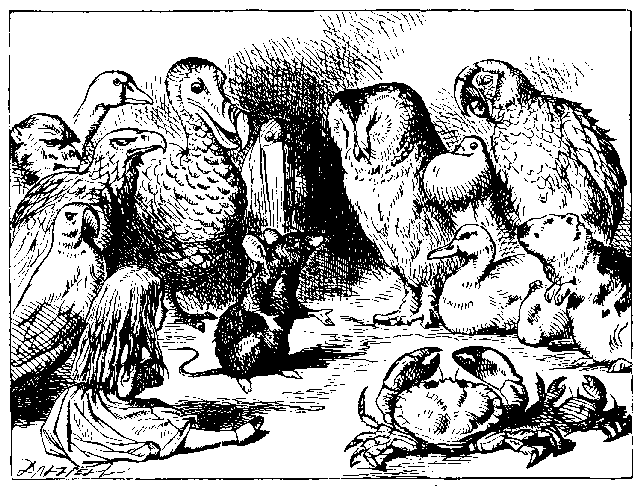
From Alice in Wonderland by Lewis Carroll, illustration by Sir John Tenniel, 1865(Picture Caption: From Alice in Wonderland by Lewis Carroll, illustration by Sir John Tenniel, 1865)

 
I used to think of a platform as a raised surface to stand on, a stage for public speaking, something to give the audience a better view of the speaker.

Today’s platform, at least in a writer’s sense, is really the same thing. It’s a way for people to see us, get to know us, to be recognized. For writers, a platform is a necessity, particularly with the decline of promotional assistance from publishers. Here are ways we as writers can build our platforms:

A website is a must for writers. People crave information about their interests. An attractive, uncluttered website offers readers a chance to get to know you, your work, and how to achieve the bottom line, buy your books. Adding links to other points of interest helps enrich your visitors’ experience, along with your Google ranking..

Videos have become a popular way to show your work. My husband Bruce recently created a video on the popular venue, YouTube, for my latest book, a memoir, TUBOB: Two Years in West Africa with the Peace Corps. In this video he featured many of the images and sounds of Africa. There was a learning curve, even for a computer savvy person like Bruce, but he found a free program to accomplish what he wanted to do. You can view the video here:

Social media such as Facebook and Twitter provide a way to reach out to the world. Facebook allows people to build connections, express identities and tell their unique stories. Many writers have a personal page and a professional page. This allows two types of contacts and helps to reach a wider audience. Not always, but on occasion a writer may want to link back to her website to emphasize a point, to share a video or a good review..

Twitter provides bite-sized updates on people you have chosen to follow or those who follow you. It’s another way to stir up interest in your passion, your book, or to open up your world to others’ ideas. The point is, social media provides an avenue of communication otherwise not possible.

Although there are other social media besides Facebook and Twitter, such as Google+, LinkedIn, Pinterest, Tumblr, most of us have to limit our time and energy to two or three types of social media. Each one is distinct with different benefits and abilities to engage and connect with others.

Many authors are finding a terrific niche in on-line sales. They’re reaching an audience they could never have tapped before.

Blogging provides an excellent venue for marketing our work. I was a reluctant blogger, but once I started I realized it opened a new world of communication for me. I can write about anything that interests me, knowing that some of what I blog about will interest others, too. I vary my topics, interspersing book reviews, health tips, pieces about travel destinations, topics relating to my own writing, such as research, or even writing tips. My blog is mine to do with as I please. As my list of readers grows, so does my reputation. Interviewing others on your blog and being interviewed on other blogs also widens your reach. Making meaningful comments on others’ blogs is another way to reach out.

Newsletters are an excellent way to stay in touch with readers. It has been my observation that writers either blog or send out newsletters. It would be hard for me to imagine having time for both. Newsletters are great for bringing people into your life with up-to-date information on what you are doing.

Media publicity such as local newspapers, radio and television, are rich sources of promotion. Right after I received my first shipment of Tubob, I sent our local newspaper a press release and followed up with a phone call. The editor asked for additional information and a copy of the book. From the resulting article, I could tell the reporter had not only read the book, he referred to material from my website.

Some people feel this type of promotion should be done well before the release of a book, even as long as six months. In my experience, I have found it works better to have the book in hand. We live in a fast-paced society and people demand instant gratification or they lose interest.

Printed Material, such as business cards, bookmarks and postcards, give people a tangible reminder of who you are and helps to showcase your work.

Personal appearances are a powerful way to be noticed. Setting up a table to showcase my books at arts and crafts shows, fairs, retail store events, local festivals and speaking engagements bring me the biggest sales. The problem with this is that it isn’t practical to go too far from home unless you are funded. Within a reasonable distance from home, book stores, libraries, community centers, and specific clubs aimed at your genre, would love to have speakers, either on the topic of writing or specifically about your book, such as its required research, or even what you learned from writing your book.

With a variety of low-cost or even free aids, writers can build a platform to reach readers who otherwise would not have noticed us. Through a well-designed website, videos, social media, blogging, newsletter, media publicity, printed material, and personal appearances, our interests and our creative works can be shared all over the world.

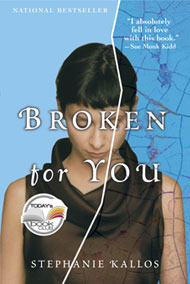
Book Review: Broken for You

Broken for You (Grove Press) by Stephanie Kallos is a beautifully crafted debut novel, a story of repair, healing and redemption

Elderly Margaret Hughes lives alone in the Seattle mansion where she spent her childhood, surrounded by valuable antiques her father collected. She can identify each object and spends her days alone, caring for her house and its precious contents.

Wanda Schultz, although able to capably function professionally, is nursing a broken heart. Her only goal in life is to find her boyfriend who has left her to “find himself.” Abandoned as a child and now as an adult, she clings to the idea of what never seems possible to her, a solid relationship.

Margaret learns she has a terminal illness and forms a plan to take in a boarder. Wanda, who, after her boyfriend left, is living at the YWCA, takes up residence with Margaret. Although their relationship is formal at first, they soon form a bond.

The population in the mansion increases as one person after another finds their way to Margaret’s home, each contributing a vital role. Although on some level Margaret knows where many of her antiques came from, she is suddenly faced with the horror and guilt that they had once been possessions of European Jews and confiscated by Nazis. The household bonds in their determination to do the right thing by these stolen treasures.

This novel is many things, but primary are the importance of family and the power of forgiveness. The many irresistible characters Kallos has woven into this memorable tale all have a story, but eventually their paths lead to the same destination.

Raised in Seattle, I loved the setting and could picture the author’s vivid sense of place. Kallos furnishes just the right amount of detail, so that readers not familiar with Seattle will have an understanding of the area.

Broken for You is a moving, endearing story of survival and triumph.

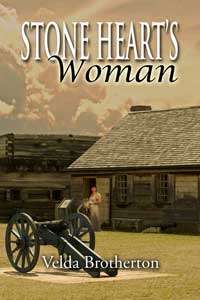
Book Review: Stone Heart’s Woman

Stone Heart’s Woman (Wild Rose Press Publication) by Velda Brotherton is a finely crafted historical romance. Brotherton’s vivid descriptions quickly bring the reader into the thick of the story, whether it’s a passionate love scene, or a stark, frozen landscape.

Seriously injured in battle, Stone Heart, the son of a Cheyenne woman and George Armstrong Custer, painfully makes his way to what appears to be an abandoned sod house.

Aiden Conner, deserted by her financ , is run out of town in the dead of winter as a “loose woman.” After walking a distance and nearly freezing, she seeks shelter in a run-down soddy. To survive she must build a fire in the pot-belly stove and goes out to collect wood. When she returns, she finds a fierce blonde-haired Indian.

At first, Stone Heart speaks only his native tongue, having made a vow that he would never again speak the language of his father. It becomes clear that in order to survive, Stone Heart must accept the help of Aiden to treat his wounds. Likewise, Aiden needs his help to survive the wilderness.

Stone Heart is filled with hate for his father who betrayed the Cheyenne. His people have been forced from their land, starved and slaughtered. He lived with his mother until he was twelve, then sent away to be educated in white schools, passing as a white boy. He knows both worlds and has returned to live the life of a Cheyenne to do what he can for his people.

Aiden wants only to return to the safety of her family in the East. But once Stone Heart speaks English and they converse, they find a passionate attraction. But it appears to be a hopeless love–they have opposite goals and neither wants to interfere with the other’s plans.

A gifted story teller, Brotherton weaves an unforgettable tale. Stone Heart’s Woman passionately describes the plight of the Indian and the ensuing terror on the frontier.

To learn more about the author, visit www.VeldaBrotherton.com