The Dividing Season

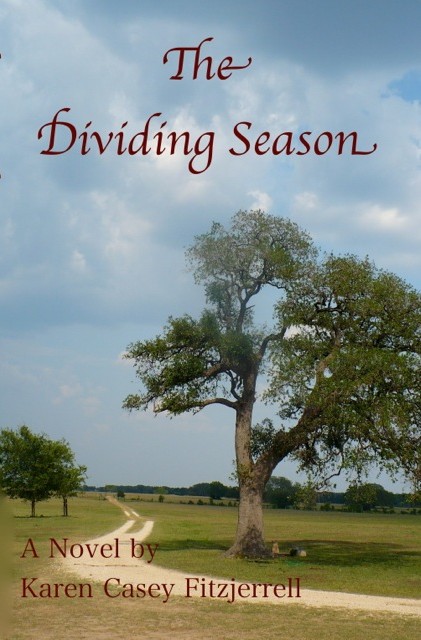
Rarely do I find a book as captivating as The Dividing Season by Karen Casey Fitzjerrell.

Nell Miggins is at a crossroads of her life. It’s 1910 and time to move on, to let go of Carrageen, the Texas cattle ranch she inherited from her father. Nell is no longer a young woman and life is passing her by. She’s done well, managing the ranch. She handles just about anything the ranch hands can and she’s tough. But there must be more to life and she’s determined to find it. Just what “it” is, she’s unsure.

Fitzjerrell spins a wonderful tale, a story that includes a dusty Texas ranch, the humid jungle of Mexico and a near-death experience at sea. Diverse personalities help spin this tale. Nell’s ranch hosts, in addition to the ranch hands already there, a windmiller, college professors, and a smelly cowhand with a bent for making wrong decisions. All the characters have a purpose, all add depth to the story.

The author, a life-long Texan, exhibits great passion for her state and her descriptions put me right there. I felt the dust creep under my collar, I gasped at the brilliant orange sunset, I shivered in the cold rain, I felt the weariness at the end of an exhaustive day. Fitzjerrell knows people and writes with compassion, heart and quiet humor. I loved this book. It has the earmarks of a classic and yet was only published in 2012. She speaks with authority on ranching and, surprisingly, on Mayan archaeology in Mexico’s steaming jungle.

The Dividing Season is a page-turner, but the reader doesn’t feel rushed. Fitzjerrell’s timing and pace are impeccable. We know her characters, we feel their pain, their joy, and, for some, their strength and determination borne of love for those who have become family.

I highly recommend The Dividing Season. The novel is available in trade paperback and e-book formats. To learn more about the author, visit www.karencaseyfitzjerrell.com

On Yukon Time

About this time of year, my husband Bruce and I begin to dream about where we might go for our summer vacation and reminisce about past trips. Yukon Territory is high on our list of special trips taken. Canada’s Yukon Territory is still as wild as it sounds. Look at this region on a map, and you’ll find precious few roads. The main highways–some paved but many still gravel–are well maintained.

Driving this loop tour, we often traveled for more than a hundred miles before encountering another vehicle. And this was in August–the peak of Yukon Territory’s tourist season. If you like privacy, you will love the Yukon, where it’s said that caribou outnumber the people five to one.

We were thrilled to see an abundance of waterfowl, deer, bear, caribou, stone sheep, a variety of squirrels; a pair of red foxes; a cow moose and her calf.

The number of lakes in the Territory is astounding. These sparkling jewels often are surrounded by shimmering aspen trees. We saw forests of white spruce, sometimes interspersed with the more scraggily black spruce. The trees are small due to a short growing season.

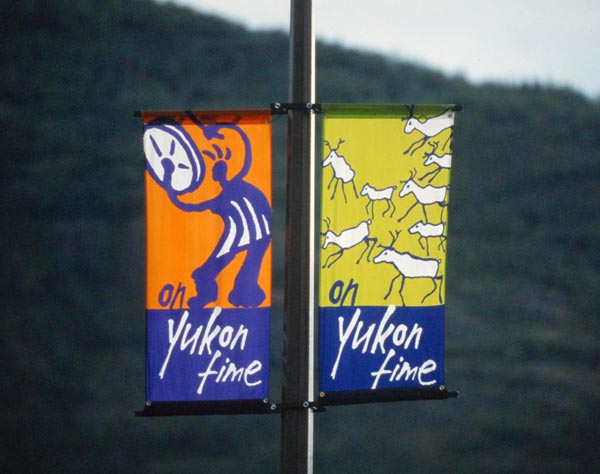
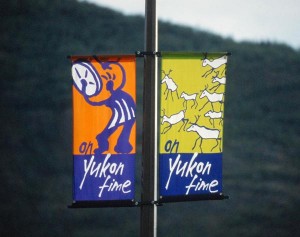
As we traveled around Yukon Territory, we noted the “On Yukon Time” icons, signs of special attractions worthy of visitors’ attention, an invitation to slow down, explore and enjoy.

Our 750-mile loop, two-week tour began at Watson Lake. From there we traveled northwest on the Campbell Highway to Carmacks. We then headed south on the Klondike Highway through Whitehorse, then drove southeast on the Alaska Highway from Whitehorse back to Watson Lake. Here are some of the highlights:

Robert Campbell Highway was completed in 1968 and closely follows sections of the fur trade route established by Robert Campbell. In the 1840s, Campbell explored this region and named virtually every major river in the Yukon. The highway bearing his name parallels several major waterways, including the Frances, Finlayson, and Pelly rivers. The distance from Watson Lake to Carmacks along this route is 362 miles (583 kilometers).

The communities of Ross River and Faro, situated along the Campbell Highway, obviously were built to withstand the winter more than provide visual aesthetics. Ross River, population approximately 350, is located at the junction of the Ross and the Pelly rivers. From there you can walk across a suspension foot-bridge that spans the Pelly River.

We found very few people inhabiting Faro, the next town along the Campbell Highway. Apparently, this town, named after a card game, comes to life when the nearby lead-zinc mines are active, but when we visited, they were closed.

An RV campground is located across the street from Faro’s Campbell Region Interpretive Tourist Information Centre. The center is well worth visiting for its historical displays. Faro is ideally situated for wildlife viewing and hiking, not to mention golf: The town offers an unusual nine-hole urban course that plays through the town’s green spaces.

Klondike Highway. The Campbell Highway terminates just north of Carmacks. We turned south on the Klondike Highway (Route 2) and traveled to the town of Carmacks, a good place to stop for provisions and services.

Carmacks was named after George Washington Carmack, who set up a trading post in the 1890s. Carmacks’s post went bust in 1896, so he settled elsewhere. It was a good thing he did. He later found more than a ton of gold in Bonanza Creek, and word of his discovery launched the Klondike Gold Rush.

From Carmacks we traveled south on the Klondike Highway toward Whitehorse. We stopped for the night at Lake LaBerge, named after Western Union Telegraph explorer, Michael LaBerge of Quebec. Our lakeside campsite was secluded and serenely quiet. As we sat on Lake LeBerge’s shore, Bruce recited from memory Robert W. Service’s wonderful poem, “The Cremation of Sam McGee,” a tale that brings Yukon’s rugged history to life.

Only 15 miles south of Lake LeBerge via the Klondike Highway is Whitehorse, Yukon Territory’s capital city since 1953. Whitehorse was named for turbulent, frothy rapids on the Yukon River that resemble the flowing manes of white horses. A hydroelectric dam on the river has since harnessed the “horses,” making the waters more placid.

In addition to provisions and several RV supply and repair shops, the city offers opportunities to view architectural, art, and gold-rush memorabilia.

Alaska Highway. The final part of this loop tour involves taking the Klondike Highway to Jake’s Corner, and then turning east toward Watson Lake on Route 1, the Alaska Highway.

The Alaska Highway was built jointly by military and civilian personnel from Canada and the United States, and was to serve as an important access road to Alaska. It is now mostly paved and, compared to yesteryear, easy to drive.

The Alaska Highway dips briefly into British Columbia, then continues on to Watson Lake, where the loop is completed. For more information about the Yukon Territory, visit www.touryukon.com or call 1-800-661-0494.

Tips for Yukon Travel
● Place a mesh screen over your radiator to protect your vehicle from rocks and to filter out insects. Consider protecting your towed car with a rock shield.
● Be sure your spare tire is reliable and ready to install.
● Bring plenty of insect repellent. To keep mosquitoes at bay, wear lightweight pants and tops with long sleeves.
● In August, we found nights can be cool, but daytime temperatures quite warm. Be prepared for these extremes.
● Take advantage of all fuel stops. In some cases, there may be long distances between gas stations.

Camping in The Yukon: Many privately operated campgrounds are available in Yukon Territory, but we stayed exclusively at the government campgrounds, and found them to be delightful and reasonably priced. You must purchase a camping permit before you arrive at the campground. Permits are readily available at visitor reception centers as well as at retail outlets throughout the Yukon.

Most Yukon government campgrounds do not offer hookups. Most locations do have picnic tables, campfire pits, firewood and at least one picnic shelter. Outhouses and hand-pumped water are the norm. At many of the campgrounds, signs indicate that the water should be boiled before being consumed. For your convenience, you might want to carry your own drinking water if you choose to stay at these camps.
.
A Logger’s Daughter: Growing up in Washington’s Woods

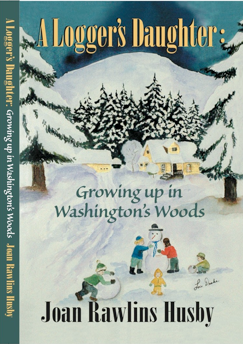
Joan Rawlins Husby’s delightful memoir, A Logger’s Daughter: Growing up in Washington’s Woods gives readers a poignant view of the life and times of growing up in Washington’s wilderness in the ‘40s and ‘50s.

Joan Rawlins was born just months before her parents, Delbert and Marie Rawlins’, moved from North Dakota to Washington’s Robe Valley, at the foot of Mt. Pilchuck. The Rawlins lived in a tiny cabin until Joan’s father could build a larger cabin of scrounged material. Eventually, the Rawlins had five children who played in the great outdoors with other loggers’ children.

Husby shares with readers a life of growing up in Washington’s forests, the daughter of a logger. Although her parents didn’t have a lot of ready cash and worked hard for every advantage they had, there was always food on the table and love to spare. The family was years in getting electricity and running water. Their “bathroom” was a two-holer a distance from the house. Heating fuel was wood, hand-cut and split. They raised chickens for eggs and meat, and rabbits for meat and skins to sell to Sears, Roebuck and Company.

If logging was shut down by fire, strike or snow, Husby’s father earned money by making roofing shakes, or taking on any job that would put food on the table.

Equally interesting is Husby’s writing of the area’s history. When they arrived in Robe Valley, most of the timber was virgin. Many of the cedar trees were as wide in diameter as her father was tall. In the early days, timber was cut by hand-saw. Raging rivers changed the lay of the land. The purpose of railroads evolved from mining to tourism.

Husby creates vivid pictures of family and landscape, giving the reader a taste of yesteryear and a glimpse of a childhood in a pre-tech age.

I highly recommend this memoir of a simple life in a simpler time. Many will relate to at least parts of this book, while others will marvel at the grit it took to simply survive deep into Washington’s woods.

To purchase a copy of A Logger’s Daughter, visit www.rainsongpress.com or contact the author, Joan Husby <hjhusby@frontier.com>.


Book Review: Close Calls: The True Tales of Cougar Bob

Close Calls: The True Tales of Cougar Bob (Gray Dog Press) by B. J. Campbell is the perfect read for outdoor and wilderness enthusiasts.

Robert L. Campbell, aka Cougar Bob comes to vivid life as his wife, B. J. Campbell relates colorful stories beginning from his childhood on through his senior years. Written in first person, the book is chock-full of colorful descriptions of outdoor adventures, hunting, trapping, sometimes for sustenance, sometimes to save farm stock, often for hire when wildlife stalks too close to civilization.

As a boy, Bob loved to run–he could run for miles. He ran for the love of running. He ran nine miles to catch the school bus in rural Idaho. He ran for survival. He ran for play. While in the Navy, he contracted polio and, for most people, that would have been the end of running. But not for Bob. As soon as he could he was up and struggling to walk. He graduated to walking with leg braces and eventually managed without the braces. Although continuing to be an active outdoorsman, he still suffers from the pain of post-polio syndrome.

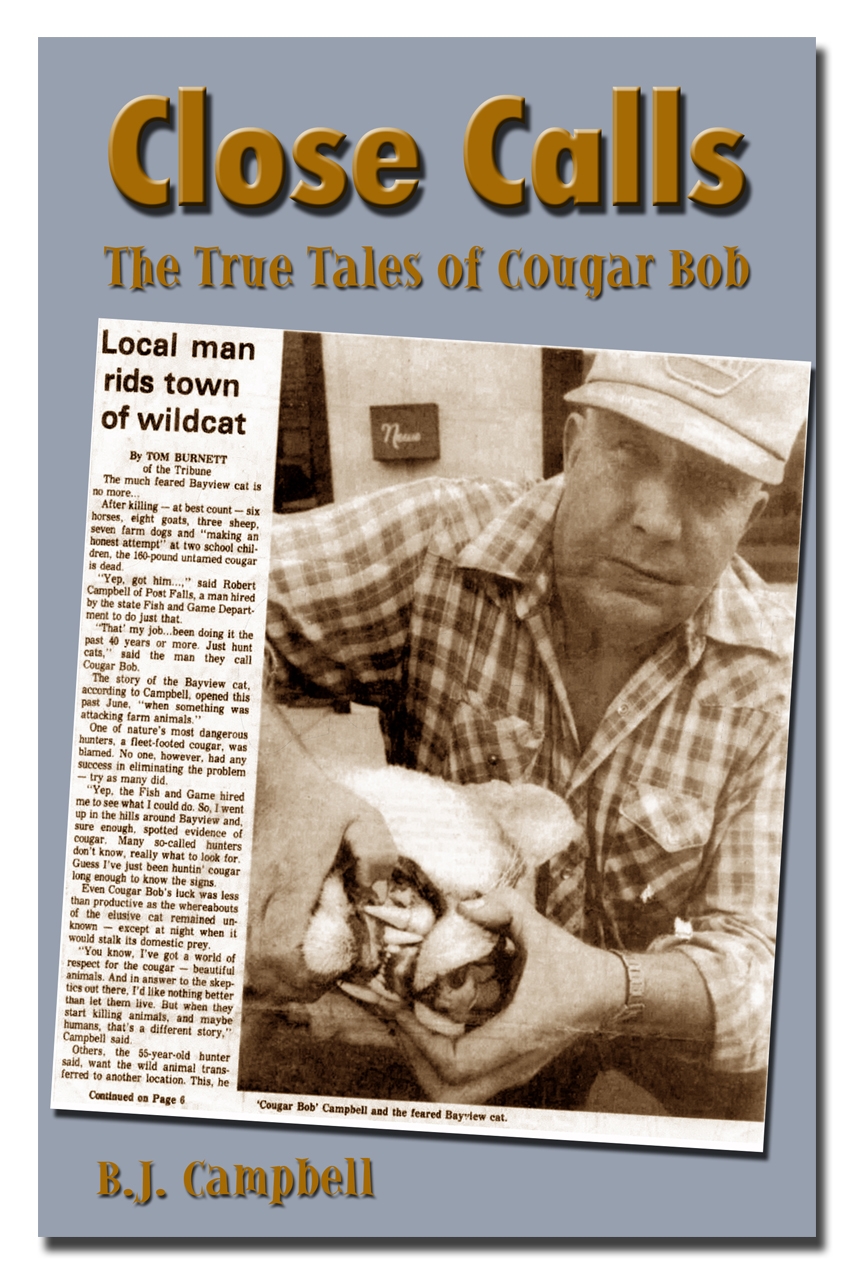
Interspersed with the chapters, each of which tells a story, are excerpts from The Cougar Bob Review, an annual newsletter that “captures the hunter, trapper and straight shooter’s endless supply of stories that happens because he is himself.” Also included throughout the book are clips of newspaper articles. One such article tells of the state Fish and Game Department hiring Cougar Bob to hunt down a cougar, known as the Bayview cat, who was blamed for killing 6 horses, 8 goats, 3 sheep, 7 farm dogs and stalking children at the school bus stop.

All of the stories in the book are true and are told in Cougar Bob’s voice, with attitude. It’s a book full of humor, yet awe inspiring in the courage of one man who conquers threats, dangers, and his own health issues to solve problems at hand.

Animal activists might have issues with some of the stories A fair amount of the hunting is done for the meat, or simply for the sport. On the other hand, authorities hire Cougar Bob to trap wildlife that threaten the safety of people or their property. When practical, the trapper will displace the animal, but when necessary, he will kill it. That might seem harsh to some, but it’s reality to many.

I enjoyed Close Calls: The True Tales of Cougar Bob. I love a good story and this book captures the essence of rugged wilderness and its sometimes eccentric occupant, outdoorsman extraordinaire Cougar Bob Campbell. For more about author B.J. Campbell and her husband, Bob Campbell, visit www.cougarbob.com


The Heroes Among Us

Snohomish County has heroes that most of us never hear about. Each year the Snohomish County Chapter of the American Red Cross honors these heroes by hosting a breakfast celebration. Held at the lovely Tulalip Resort Casino, about nine hundred people attended the gala event. As in the past, the Tulalip Resort Casino served a scrumptious breakfast. Humorous inspirational speaker Pat Cashman served as Master of Ceremonies.

Following are the featured Real Heroes of 2012:

Snohomish County Volunteer Search & Rescue On May 19th the Search and Rescue, a non-profit organization, received a phone call that a 13-year old boy had fallen into the river above Wallace Falls. He had been carried over one waterfall and was only a few feet from plunging down a 265-foot drop. The boy had managed to climb onto a one-foot wide rock The team immediately responded. They first tried to reach the boy by helicopter, but an overhanging rock prevented them from reaching him. After several attempts at repelling down to the boy failed, the final solution was for the team to anchor a fire ladder across the river. The team was able to get the boy into a harness and off the rock he clung to.

Robert Bentz On his way to drop off his 16-year old son Roudy at school, Robert Bentz saw that they were about to be struck head-on by a man driving what they later learned was a stolen car. In the split second of seeing the oncoming car, Bentz cranked the steering wheel as hard as he could to put himself in the path of the speeding car, in order to spare his son injury. He awoke at Seattle’s trauma center, Harborview Hospital, with a broken jaw and extensive loss of teeth, severe spine injuries, massive leg trauma and fractures. Robert’s heroic actions spared Roudy from serious injury, exactly the outcome he’d hoped for.

Sam Simball came to the aid of his 69-year-old neighbor, Dick Thibert, who had suffered a stroke. (The boy’s age wasn’t given, but I assume he was about 14 years old.) On March 8th, Thibert’s wife called the Simball residence to ask them to check on her husband. She had been trying to call him, but he wasn’t answering the phone. Sam ran next door and looked through the window and could see Thibert lying on the floor. The door was locked, but Sam kicked in the door. Sam’s mother called 911 and Thibert received the help needed to save his life.

Sgt. Bill Lange & Officer Mike Braley responded to a 2:00 a.m. Everett house fire. They learned from Dispatch that a female confined to a wheelchair was unable to get out of the burning house. They tried multiple times to break the glass door to reach the victim. They finally managed to break the glass and reach her. Although all three suffered from smoke inhalation, Lange and Braley’s actions saved the life of the elderly resident.

Bob Esmay and Gene Pierce, friends and neighbors for more than 40 years, were fishing in Puget Sound near Mukilteo. Bob heard Gene mutter, “Oh, my God.” Thinking his friend had already caught a fish he turned to take a look, but instead saw his friend slumping to the deck. Bob caught his friend, but panicked when he couldn’t feel a pulse. As he dialed 911, he began performing chest compressions, all while steering the boat toward shore. Members of the Mulilteo Fire Department met them on shore and were able to stabilize Gene for transport to the hospital. Due to Bob’s heroic action, Gene is alive today.

But there’s more to the story. Two years ago, Bob and Gene were returning from an outing when Bob suddenly suffered a heart attack and passed out as he was driving his car. Gene reached over and managed to steer the car to the side of the road, then moved his semi-conscious friend over and jumped behind the wheel to drive him to the hospital. These two close friends owe their lives to one another.

Chris Robertson, Tim Browning, Craig Rankine, Juan Lira and Stan Boyle were climbing near Luna Peak in the North Cascades when another member of their team, Kevin Weed, lost his footing when soft snow gave way. During the first 800 feet of his fall, Kevin unsuccessfully tried to stop the slide with his ax. For the last 400 feet, he was in an unconscious free-fall tumble which ended when he slammed into rocks. Fortunately, two other nearby climbers were able to use a spot beacon that could send out a message for help. As Kevin’s climbing companions reached him, they began assessing his condition and making efforts to keep him warm and to prepare him for airlift evacuation. Six hours later he was airlifted to Harborview Medical Center where he made steady improvement and in less than two weeks returned to his home in Snohomish.

Kim, Talley & Jacob Anderson and Travis Anderson were floating in the Pilchuck River when a strong current grabbed Travis’ legs and carried him downstream, wedging him underneath a log. His mother Kim screamed and his sister Talley went for help. Kim and Jacob tried to free Travis but the log could not be budged. They could see Travis drowning before their eyes. Tally found a man nearby who was able to use his added weight to help move the log. Once Travis floated free, Kim immediately began CPR. When emergency crews arrived, Travis and the family were rushed to Children’s Hospital where Travis remained for three weeks. Travis would not have survived had it not been for his mother’s knowledge of CPR and his siblings’ quick actions.

Phil Gaston was midway through his route as a waste truck driver when he noticed a man in distress with a profusely bleeding leg. Phil grabbed a roll of paper towels from the truck and started applying direct pressure to the man’s wound. It became apparent he couldn’t apply enough pressure to staunch the bleeding. He took off the man’s belt and applied it as a tourniquet. All the while the man was on his cell phone and Phil realized the man was trying to give the 911 operator directions to the location. Phil took the phone and gave the operator directions and stayed with the victim until paramedics arrived. Later it was learned that the resident had cut an artery with a box cutter while working in his garage just seconds before Phil arrived.

Geri Kellison and Ian & Katie Duncan. Geri Kellison and her husband Ed were enjoying an evening in their hot tub when Ed suffered a heart attack and collapsed. Geri tried to pull him out, but she couldn’t manage his weight. She screamed for help as she held his head above water. A neighbor came to their deck and Geri yelled for him to call 911. At the same time another neighborhood couple, Ian and Katie, arrived. Katie grabbed Ed’s arms and Ian took his feet and together they lifted him out of the tub and onto the deck. Katie had been trained as a lifeguard and quickly began CPR and continued until EMT’s arrived. Ed was treated for ventricular fibrillation and is now doing fine, thanks to his wife and neighbors.

Dr. Ellen Farrokhi, George Litz & Dr. Mohammed Quraishi. Dr. Farrokhi was on-call when she received a page from the hospital about a patient who needed emergency surgery for a burst aortic aneurysm. Emergency surgery was needed as the patient was bleeding to death. Dr. Farrokhi got into her car and sped to the hospital. The doctor soon noticed a State Patrol car with its lights flashing, obviously intending to pull her over. She called 911 to let them know she was a surgeon and needed to get to the hospital immediately or her patient would die. She continued on, deciding that a man’s life was more important than consequences from speeding and not pulling over. She soon noticed three patrol cars pursuing her, all with flashing lights. She realized she had no choice and pulled over. Luckily she was still able to make it to the hospital in time. Her team, George Litz and Dr. Mohammed Quraishi, had prepped the patient for surgery. The surgery was successful, thanks to Dr. Farrokhi’s willingness to put the patient above all else.

To learn more about your American Red Cross, visit www.redcross.org

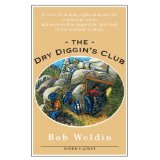
Book Review: The Dry Diggin’s Club

The Dry Diggin’s Club by Bob Weldin is an ideal novel for readers interested in geology, particularly in mineral discovery and mining in the 1960’s. More than that, the novel delves into the personal aspects of the miner persona, particularly into the life of a young woman, Sara, who braves the masculine world of mining.

Sara Mullins and her twin brother Steve are the children of a Montana rancher/miner and a mother who is head of the Mathematics Department at the University of Montana. Sara works along side her dad and brother at the ranch tending cattle and logging on their own land, and also at the family gold mine situated on their ranch property. Because of the huge distances involved, both Sara and Steve get pilot licenses at the age of sixteen. The children benefit from the hard work of ranch life, but also from the intellectual influence of their academic mother.

After graduating from college in the 1960’s, the twins are eager for their next step. Steve plans to attend law school and get a degree that will equip him to practice law in the field of geology. Sara is eager to have practical field experience and gets a job working for a mining company. She is met with scepticism–a female mining professional is highly unusual. She is offered and accepts other positions, each time gaining in responsibilities and stature. She finds she must repeatedly prove herself in a segment of the industry primarily reserved for college educated, macho men. Sara has neither the support of management nor the protection of a union. As a field geologist, she proves herself capable, but meets with challenges–and dangers–along the way.

Sara and her brother become involved in the Dry Diggin’s Club, a clandestine group whose membership network for pleasurable, economic and intellectual advantage. Inevitably, Sara becomes romantically involved with a fellow geologist which bring unexpected complexities and consequences into her life.

The Dry Diggin’s Club offers an in-depth examination of northwest mineral mining as it was in the ‘60’s. Readers learn how mineral discovery and the resultant mining was conducted. It was a tough field, not only because of unforgiving terrain, but also because of the secrecy shrouding findings. Although mining and minerals have never been high on my list of interests, I found this book not only educational, but a fun, worthwhile read. Author Bob Weldin speaks with authority having made a career in the mining industry. Now retired, he is a sought after speaker on the subjects of mining history, mineral deposits, wilderness areas and humor.

The Dry Diggin’s Club is available in both trade paperback and e-book formats.


MOLOKAI: The Most Hawaiian Island

“Slow down, this is Molokai” the road sign advised as we drove our rental car from the Molokai airport. It’s good advice, but challenging when you’ve just arrived from a rush-rush and highly scheduled world. It didn’t take long to get into the swing of things though and oh! letting go and slowing down was one of the best parts of our two-week visit to Molokai, the Most Hawaiian Island.

The fifth largest of the Hawaiian chain and located just south of Oahu, Molokai has made no attempt to keep up with the tourist attractions of its big sister islands, Hawaii, Oahu, Kauai and Maui. Rugged mountains, crashing surf, sweeping empty beaches, a definite lack of tourist catering and strong Hawaiian culture lure only a certain type of traveler. You won’t find a commercial lu’au, big resorts, mega shopping centers, or a number of fancy restaurants here. But if you’re looking for a true Hawaiian adventure, where native culture is woven into everyday life, Molokai is just the place for you. Outdoor activity is supreme here with horse-back riding, biking, hiking, kayaking and swimming, all under the umbrella of wild outdoor beauty. Going for a drive is a pleasure with very little traffic. We drove as long as two hours without encountering another vehicle.

While the main roads going west to east, Highways 460 and 450, are paved, many roads are not. No road circles the island. You can pretty much drive from one end to the other, but then you must turn around and return on the same road. There isn’t a single stoplight on Molokai and we never saw a building over two stories high.

The people of Molokai love to share their culture and sites. For a small island–40 miles long and 10 miles wide–it possesses numerous natural wonders. One of the first things I would recommend is buying a good map. The most accurate one we found is published by the University of Hawaii Press, available at many of the Molokai stores. Road signs aren’t always posted and if you’re like us, poking around back roads is what we love to do most, but getting hopelessly lost isn’t.

Lodging is available through condominiums, bed and breakfast, home and cottage rentals and small-scale hotels. One constant condition in Molokai is the ever-changing ownership and availability of lodging, stores and restaurants. A good idea is to check the Internet for rental opportunities. We did, and were delighted with our condo located close to the beach, and only a few steps from a gorgeous pool.

Molokai’s main town, Kaunakakai, is located in the center of the island on the south coast. In appearance Kaunakakai is unassuming with its tin-roofed buildings but you’ll find pretty much everything you’ll need–a gas station, groceries, clothing, hardware, pharmacy, and bakery. At Molokai Fish & Dive you can make arrangements for a cruise, a fishing expedition, a snorkel dive, or a kayak adventure at the largest barrier reef in Hawaii. Another excellent stop is the Kamakana Gallery, featuring local craftsmen and artists is located in Kaunakakai on Ala Malama Avenue.

We noted that most Hawaiians speak Hawaiian to one another; even the children, a strong indicator of their cultural pride. Most people do speak English as well, so language is not a barrier for visitors.

We brought our own, but you can also rent snorkeling gear. You must be cautious though and inquire first before swimming. Many of the beaches are treacherous with strong currents, rough wave action and rocky shores. Swim only at recommended locations. Generally, south shore beaches, such as Murphy’s Beach Park, are sheltered and quiet within the protection of the barrier reef, while east end beaches outside the reef can be dangerous with pounding surf. North and west shore beaches range from quiet to rebellious, depending on the season. Ask about local conditions before you enter the water.

Guided and unguided hiking trails abound here. The Halawa Valley guided hike is beautiful and not too challenging. Cool off by taking a delightful swim at the base of Moa’ula Falls. Another splendid guided hike is to the Mo’omomi Beach Preserve where you see unique coastal dunes that are an important nesting site for the endangered green sea turtle. On the Kamakou Preserve guided tour you follow a boardwalk through rain forest near the summit of Molokai’s highest mountain, home to more than 200 species of plants found nowhere else in the world. Unguided tours are all over the island–follow mountain trails, miles of sparkling beaches or red-dirt roads winding through lush fields of crops including sweet potato, watermelon, coffee, corn, tomato, onion and papaya..

Camping is popular on Molokai at state, county or private parks. Horseback riding and bicycling are available through various outlets. Contact the Molokai Visitor Association for names of camping sites, hiking guides, bicycle rental and horseback riding opportunities.

A drive to the Halawa Valley at the extreme eastern tip of the island is a spectacular destination and is known as one of the world’s great wilderness regions. As you enter the valley, the road narrows to one lane, so drive with caution, but the view is worth the adventure! The end of the road opens up to a tiny bay and a breathtaking view of a valley so green I had to keep reminding myself it was real.

One memorable day we rode mule-back down the 1,786-foot Kalaupapa Trail to visit Kalaupapa National Historical Park on the northern coast to learn about Father Damien’s work in a leper colony. The adventure was sobering, yet inspirational.

If your idea of a great getaway is wide open space, crashing seas, pristine barrier reefs, breathtaking views, all wrapped up in friendly local culture and a low-key, old-fashioned “aloha” spirit, you’ll surely find your dream on Molokai. For more information, visit http://www.gohawaii.com/molokai

Book Review: The Orchardist

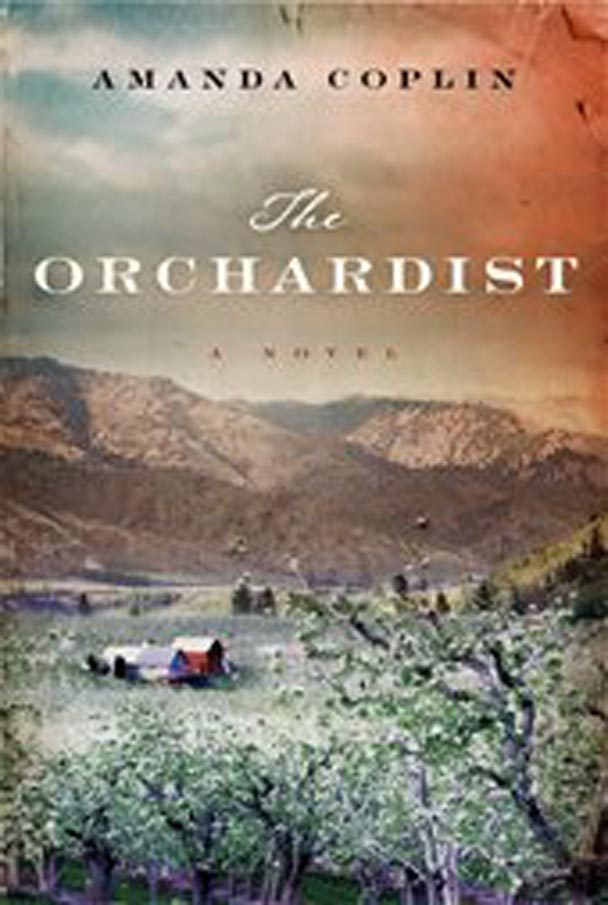
Rarely is a novel so poignant as to arouse the reader’s every sense: taste, smell, visual images, sounds, love, compassion, hate, fear–it’s all there in The Orchardist (Harper Collins) by first-time novelist Amanda Coplin. The story takes place at the turn-of-the-century in rural Pacific Northwest.

Talmadge is a quiet man, a man whose life and passion exist in an orchard. His father died when he was just a boy and the three of them–his mother, sister and Talmadge–walked a great distance to the Wenatchee Valley where they settled. Eventually his mother died, leaving the two children, now in their teens, to carry on. Talmadge was devoted to his sister, and when she mysteriously disappeared he was heart-broken. He lives alone, steadily increasing the size of his orchard. He never married, but he does have a close relationship with Caroline Middey, a wise woman who lives in town.

On market day, two teenage but very pregnant sisters, steal fruit from him. A kind man, Talmadge realizes that the girls stole the fruit because they were desperate. Later, they appear at his orchard, but are shy as feral animals. Talmadge sets meals out for them and they take them away when he isn’t watching. Finally, he gains their trust and they manage a strained relationship. When it is time for the girls to give birth, he sends for his friend, Caroline Middey who is commonly called upon as midwife. Talmadge helps bring into the world Angelene from one sister and stillborn twins from the other.

Through a tragic chain of events, Talmadge becomes the sole caretaker of Angeline, Although they never speak of love, the devotion shown is apparent. Talmadge isn’t always sure of himself, but his kindness toward his foster daughter never wavers. Caroline Middey plays an important role in supplying a listening ear, advice, and companionship to the growing girl.

Although it may seem that I have “given away” the story, I have only touched on the highlights. The Orchardist is an in-depth story covering many years, situations and people.

The Orchardist is a stunning, unique novel. Coplin’s crisp style involves the reader in the life and times of the early Northwest, its place and people. She conveys a sense of love without ever using the word but by showing what happens when a simple man opens his heart and home, even when it means his peaceful lifestyle is disrupted.

Book Review: The Birth of Venus

The Birth of Venus (Random House) by Sarah Dunant is an engaging novel set in Florence, Italy during the Renaissance period in the late 1400s. Written in first person, the craft of writing is at its best, taking us into the depths of the subject’s soul.

Precocious Alessandra Cecchi, fifteen, is fascinated by art. Tutored with her older brothers and sister, she has many cultural advantages as the result of her father’s business acumen and high stature in the community. When her father brings home a painter from Northern Europe to decorate their private chapel, Alessandra is thrilled by the young man’s artistic abilities. She attempts to venture into his world, but when rebuffed by his apparent disinterest, she is even more attracted to both the man and his art.

Alessandra’s dreaded “coming of womanhood” presents the inevitable marriage to a person of her parents’ choosing. Cristoforo Langella, an older, wealthy man, and Alessandra marry when she is barely sixteen. But Cristoforo has an evil secret that clouds their marriage.

In the meanwhile, the luxury, love of learning and fine art in the region is being threatened by a fundamentalist facet of the church. Florence is plunged into violence, fear and political change. A plague further weakens and frighten the bewildered citizens.

The Birth of Venus recreates a past world with vivid descriptions of art and attitudes. Dunant writes with exquisite detail, allowing the reader to dwell in the heart and mind of Alessandra over a period of her lifetime. The Birth of Venus is an unforgettable novel.

Treasures of Old Town, Albuquerque

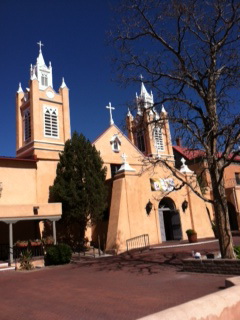
San Felipe De Neri Catholic Church. Photo Courtesy of Heidi Thomas

Strolling down Old Town Albuquerque’s cobbled streets lined with brightly colored adobe structures, I sense the area’s ancient, rich history. Haunting melodies from a Native American flute drifts among the ancient buildings. To the east, the Sandia Mountains sprawl in their majestic beauty.

The Albuquerque area has been inhabited for hundreds of years, first by Native Americans, then beginning in 1598, the area was conquered and reconquered. Finally, in 1706 Francisco Cuervo y Valdes founded a villa first named San Francisco Xavier de Albuquerque. It was later renamed and finally called the name recognized today, Albuquerque.

The settlement consisted mostly of farms strung out along the Rio Grande. Apache and Comanche raiding made it necessary to create a defensible populations center, so a villa, or plaza, was formed.

The Sante Fe Trail between Missouri and Mexico opened in 1821, after Mexico won her independence from Spain. Albuquerque became an important stop and freighting center along the way. In 1850 New Mexico became an American Territory.

Between 1867 and 1878, Albuquerque was a quiet community with a population of less than 2,000 people. A few businesses served local farmers and sheep herders. With the promise of a railroad coming to Albuquerque, businesses and immigrants flocked to the area.

Then came the discouraging news that the railroad would be routed about a mile and a half to the east of the plaza. Starting in 1880, a “New Albuquerque” began to spring up by the tracks and many of the Old Town business relocated.

In 1912 New Mexico became the 47th state.

In the 1930’s and ‘40’s, Old Town was rediscovered by artists and merchants. In the 1950’s, many buildings were restored in the Spanish/Pueblo Revival Style. Today a stroll through Old Town reveals a delightful mix of businesses and residences in Spanish Colonial, nineteenth-century and modern styles, representing Old Town’s long and varied history.

Winding down colorful brick paths, visitors discover The Rectory, San Felipe De Neri Church, Sister Blandina Convent, Our Lady of the Angels School and many other historical sites. Several of the structures, mostly built of adobe, are still used today, though not necessarily for their original purpose.

Of particular interest is The Albuquerque Museum in Old Town. The large facility is dedicated to preserving the art of the Southwest as well as 400 years of Albuquerque history as shown in exhibits and artifacts of colonial life in New Mexico. Delightful sculpture gardens grace the Museum grounds. Both indoor and outside tour guides share fascinating tidbits of Albuquerque history.

If you travel to Albuquerque, be sure to take in Old Town. Step along ancient streets, do a little shopping and treat yourself to a traditional southwest dining experience. Old Town Albuquerque has a unique flavor shaped by centuries-old cultures.