Book Review: Sarah’s Key

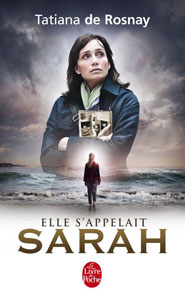
Sarahs Key

In 1942, Sarah, ten years old, was frightened when she and her parents were rounded up in the middle of the night by French police. Her younger brother, only four years old, refused to go and Sarah helped him hide in their secret hiding place, believing they’d only be gone for a short while and then return home.

A multi-layered, well-crafted novel, Sarah’s Key by Tatiana De Rosnay alternates between 1942 France and present day. The story evolves around the true events of the dark period in France’s history where thousands of Jewish families were rounded up and forcibly kept in the Velodrome d’Hiv, eventually taken to transit camps and finally packed off to Auschwitz.

Even before the roundup, Sarah realizes grim changes in her homeland. Jews are required to wear yellow stars on their clothing, even to school. They are no longer allowed in some stores and restaurants, places of business are closed, leaving many Jews without income. The year 1942 signaled dark times for Jews, but they had no idea of the horrors that awaited them.

Julia Jarmound, a present-day American journalist living in France with her French husband and daughter, investigates the little known Vel’ d’Hiv Roundup of Jews, conducted and enforced by French authorities in the heart of occupied Paris under Nazi Germany command.

When Julia uncovers truths that took place in 1942, she is consumed by Sarah’s story. Even when she discovers secrets about her husband’s family and stirs up resentment of repressed guilt, she is compelled to seek the truth about Sarah.

Sarah’s Key is a moving novel that delves into a little known piece of history now often referred to as France’s Dark Years. The author’s handling of the two time periods is flawless, her characterizations vivid.

For more information about the author and her work, visit http://www.tatianaderosnay.com/


Swimming in The Gambia River

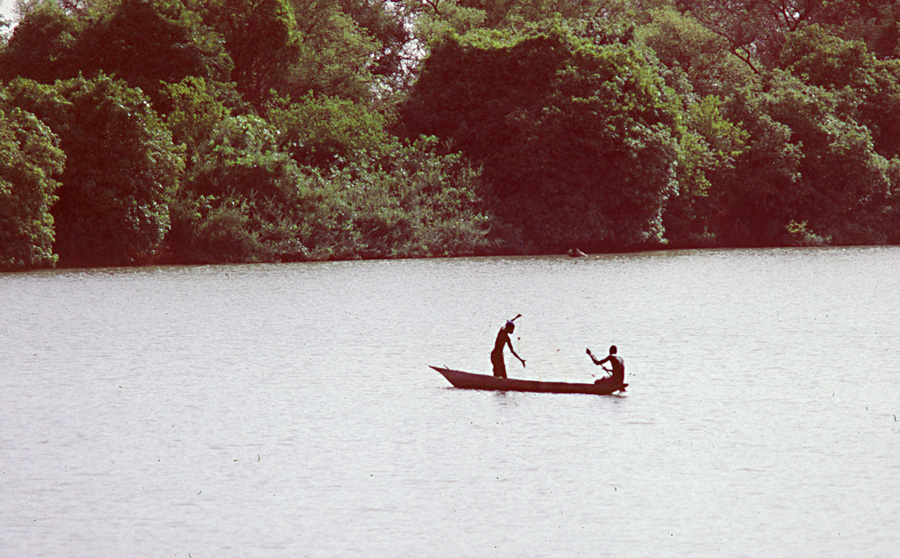
Fishermen in RiverAn excerpt from Tubob: Two Years in West Africa with the Peace Corps

One particularly hot Sunday my husband Bruce and I decided to cool off in The Gambia River. The river was probably two miles from home, beyond the marketplace. Hot when we arrived, we stripped off our clothes to our swimsuits and made our way through dark sticky sand to wade in.

We longed for our two-person kayak, currently being stored at Bruce’s parents’ home. What a joy it would be to paddle the river. Overhanging trees and brush provided shade along the shore. Just being on the water seemed cool and refreshing.

Once in the water, it was glorious. Unfortunately, we drew a crowd. Gambians really never swam in the river. They fished in it, paddled their dug-out canoes in it even washed clothes in it, but never swam for pleasure.

One man waved frantically.“There are crocodiles in the river!”

Another man warned, “I’ve seen hippopotamus in there!” Actually, I had to look that Mankinda word up when I got home. All I knew at that time was that it must be something bad.

After walking that distance in 100-degree heat, we really didn’t care what we shared the river with. It was cool and we luxuriated in it. At that point, the river was about two hundred feet across. We swam out to get into relatively clean water. Even so, we made every effort to keep our mouths closed, knowing the water would be polluted.

Though wonderful while it lasted, all cooling effects were gone by the time we walked home again, leaving only a pleasant memory.

Book Review: Dare to Dream

Dare to Dream, the third novel in Heidi Thomas’s Cowgirl Dreams trilogy, brings a satisfying conclusion to the story of Nettie Moser, a strong woman who dares to fulfill a life-long dream of becoming a champion rodeo steer rider.

Dare Cover Final 1.5x2Now in her thirties, Nettie’s time has finally arrived. She and her husband Jake are eager to sign up as riders at a Cheyenne RAA (Rodeo Association of America) rodeo, Jake as a bronc rider, Nettie as a steer rider. Since she was fourteen it had been her dream to be a professional rodeo rider and she had found success. Much to the surprise of the audience, and to the dismay of her family, this tiny 105-pound girl had sat atop of a half ton of writhing steer muscle and bone and rode it to the end.

Nettie had held on to her dream through the years though for a while had to put it aside because of injury, family illness, the tragic death of another woman contestant, starting her own family, and working with her husband and young son on their horse ranch. But now her dream is again becoming a reality. The time is right for her to resume her rodeo competition.

But her dream is shattered when in 1941 RAA refuses to let women compete in rough stock riding. Sometimes dreams take a detour. It’s up to Nettie’s creativity to find a way to be a part of rodeo.

Dare to Dream is the continuing story of ranch life in the early forties. WWII is threatening and Nettie and Jake’s son is approaching draft age. Love and sorrow is a part of life and it takes courage to handle them with grace. The war years bring sorrow and hardship and it’s left to those at home to carry on.

Author Heidi M. Thomas grew up on a Montana cattle ranch. Her first two books of the series, Cowgirl Dream and Follow the Dream are based on Thomas’s grandmother who rode rough stock in the 1920s heyday of rodeo. Dare to Dream follows a historical timeline, but is more a work of fiction than the first two. I found the trilogy a worthy and fulfilling account of the early days of ranch life and rodeo. Thomas brings warmth and believability to her characters and to the countryside in which they live.

For more information about the author and her work, visit www.HeidiMThomas.com

Book Review: Killing Jesus

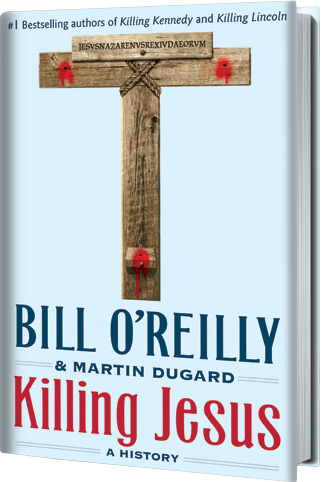
killingjesus-3dKilling Jesus: A History by co-authors Bill O’Reilly and Martin Dugard is an extraordinary account of the most influential man who ever lived: Jesus of Nazareth.

Jesus is born surrounded by fear, fear that the baby boy will be slaughtered like other baby boys in the small town of Bethlehem and surrounding area. King Herod will kill anyone who threatens his throne. For centuries, Jewish prophets have predicted the coming of a new king to rule their people. What people of power don’t realize is that the “power” is not of this world.

Jesus’s parents, Mary and Joseph, strive to keep a low profile. As the baby Jesus is presented in the temple, it becomes obvious that he is a special child. He leads a fairly normal childhood, learning his father’s trade as a carpenter. He often shows signs of wisdom beyond his age.

As he becomes an adult, it is clear to Jesus that he must see to his Heavenly Father’s work. He acquires a following, and he acquires enemies, people who fear they will lose their political power.

Killing Jesus is not a religious book, it is a study of a man “who galvanized a remote area of the Roman Empire and made very powerful enemies while preaching a philosophy of peace and love.” Many familiar people play roles in the political and historical events that made Jesus’s death inevitable: Julius Caesar, Cleopatra, Caesar Agustus, Herod the Great, Pontius Pilate and John the Baptist.

Throughout the book extensive footnotes support facts presented. In the forward, Bill O’Reilly states, “To understand what Jesus accomplished and how he paid with his life, we have to understand what was happening around him.” O’Reilly and Dugard do a thorough job of helping the reader understand the political mind-set of the time.

I found Killing Jesus riveting. No matter what religious beliefs the reader follows, this book brings to light the meaning of Jesus’s life. The book is quite graphic in describing extremely cruel executions. Life was cheap and political power safe-guarded at all costs.

Authors Bill O’Reilly and Martin Dugard have also co-authored two other notable books, Killing Lincoln and Killing Kennedy. To learn more about these books and the authors, visit http://killingjesusthebook.com/

Today’s Guest: Anne Schroeder

Last week I featured Anne Schroeder’s novel, Cholama Moon and today have the pleasure of reading her first-hand account of writing a historical western.

Anne Schroeder:
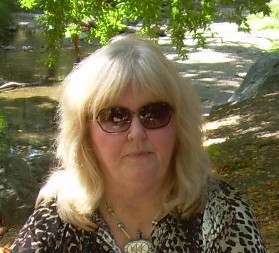
Anne croppedWriting an Historical Western, as with other historical romances, involves two equally important processes—research and story. I recall seeing Isabel Allende posed beside dozens of books she used to research one of her novels. At the time I was impressed. Now, not so much because I realize that all historical fiction writers do the same. We’re just not all savvy enough to have our publicist capture the pile of oversized books we lug home.

As with every genre, storytelling is king, but historical authors rely on actual places, people and events to provide a stage for the storytelling. It’s part of the fun for both reader and author. Because setting has such a prominent place in Westerns, it’s tempting to let the scenery steal the scene. One of my reviews on Amazon  http://www.amazon.com/Cholama-Moon-Anne-Schroeder/product-reviews/1610091299 mentions that very thing about Cholama Moon, my first historical western. In this story a fictional pioneer family settles in a remote section of Central California bordering the GreatValley. Ginny Nugent’s mother dies young and her father emotional abandons her in a downward spiral of addiction. In 1870s Central California, amid Mexican vaqueros, desperados and earthquakes, young Ginny fends for herself with a little help from an Indian cook and a half-crippled cowboy until a Southern gentleman sends her on a journey of self-discovery.

The young girl’s struggle to find family and belonging begins with her Cholama Valley roots and  takes her by stage, railroad and streamer through coming-of-age Central California to the coast at Santa Cruz and San Francisco—and home again. Although Ginny is a make-believe character, the historical figures, homesteaders, politicians, events and the times she lives in are true.

I have great passion for this era and setting. The nineteenth century saw great changes for the few inhabitants who called Alta California home. By 1878, Ginny is 11 years old. The great Mexican land grants are being broken off. Public land is being offered to homesteaders and preemptors. Discouraged Yankee miners replace the native Indians and the Californios Mexican land grants are nullified by the American courts, just as, fifty years earlier, the Mexican government secularized the Spanish Mission system and evicted Spaniards when they were unable to produce written proof of their Spanish land grants. Under American rule, population brings a railroad, which means towns, trade and transportation. Within seven years Ginny’s world changes from strict isolation to relative social opportunity.

CholameValley –pronounced Show-lam Valley—is only five miles wide. In 1878 it was a three day trip by horse, mail stage and train from San Francisco or Los Angeles. Rugged, remote and filled with natural beauty, the valley has played host to Indian tribes, Spanish land grants, Mexican bandits, wild mustangs and earthquakes. It is today known as the epicenter for the San Andreas Fault.

At the edge of Ginny’s valley a small mountain called the MiddleRange was born—technically, the southwest slippage of the North American plate against the Pacific plate at a rate of six centimeters a year.  To a girl of the nineteenth century, tectonic science was unknown—its results, mere curiosity. Her world was bounded by her DevilMountains and La Luna Cholama, the moon that illuminates her fractured valley.

My writing explores the social and political events of an era. But as with all novels, the story is key. Romance is important in the context of the challenges that the heroine must overcome. The sequel to Cholama Moon is a novel entitled Maria Ines. It traces the Salinan Indian cook in Cholama Moon back to her roots at the Mission San Miguel de Arcángel in Alta California where she was born. A third novel, Son of the Troubles, is already underway.

My hope is that the emotional scenes in this fictional series will leave a permanent impression on readers that will create curiosity about California’s turbulent and colorful history, its Missions and historical places.

http://anneschroederauthor.blogspot.com/
www.readanneschroeder.com
www.facebook.com/anneschroederauthor


Book Review: Cholama Moon

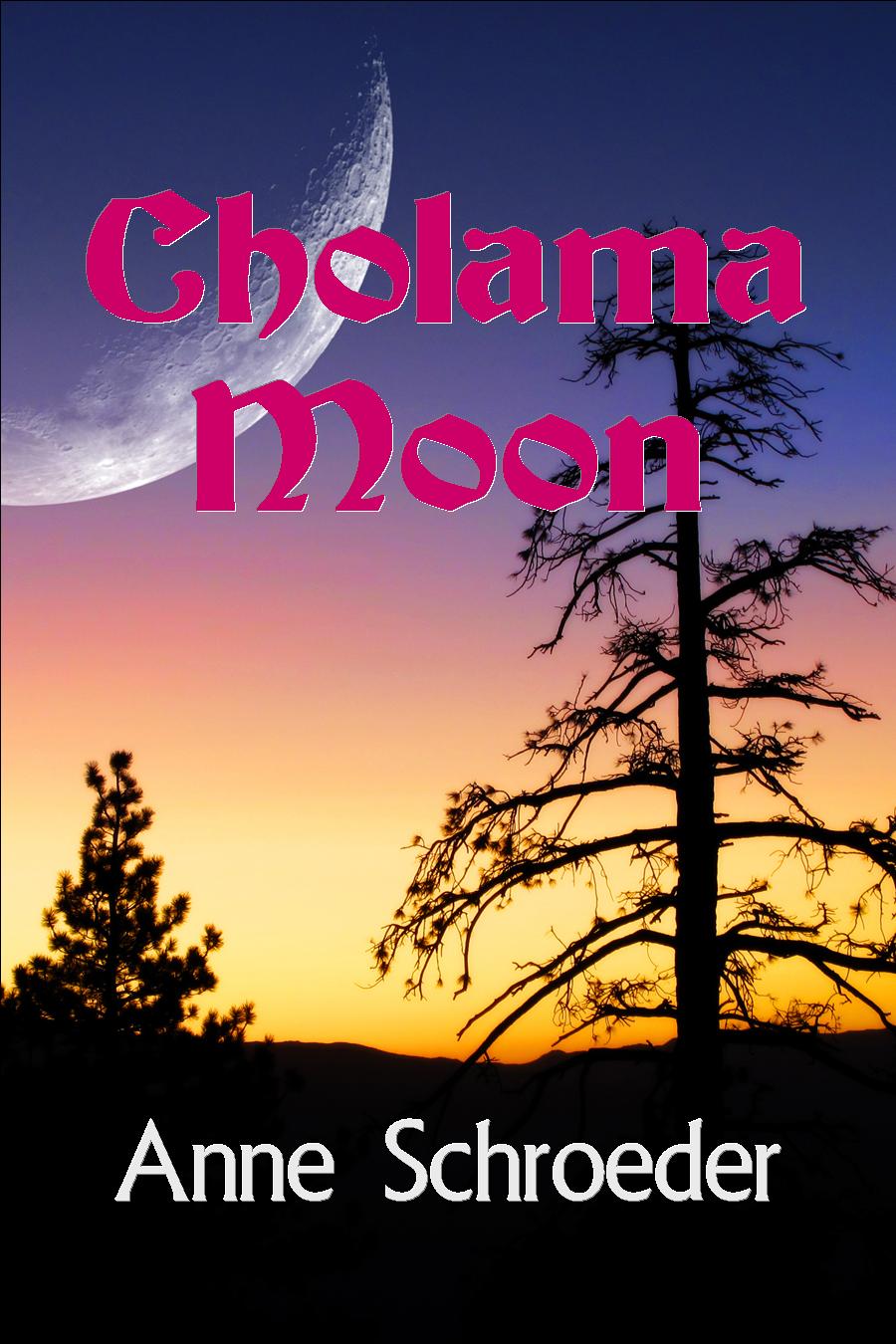
Cholama MoonWhen she was three years old, Ginny Nugent’s mother died, and so did her loving home. Cholama Moon by Anne Schroeder tells Ginny’s story in this late 1800’s novel which takes place in a remote section of southeastern Monterey County, California.

Ginny has a loyal friend in an old cowhand, Sancho Roos. When her father, Charlie Nugent, doesn’t provide the nurturing his daughter needs, Sancho is there for her. What is lacking–a well-kept home, proper clothes, schooling, the things a growing girl needs– is at least partially compensated by Sancho’s attention and teaching.

When Jeremy Larsen, a stranger from Virginia, comes along bearing greetings from Ginny’s mother’s relatives and friends, he’s appalled by Ginny’s lack of education and refinement. The ranch is in ruins and her father absent much of the time.

Cholama Moon brings to life how homesteaders struggled amid harsh conditions. When the burden becomes too great the weak succumb, but the strong rise above the hardships. Sometimes change takes a creative approach and Jeremy may be just the person to change Ginny’s destiny.

Author Anne Schroeder has the gift of bringing the reader into the grit and dust of a run-down ranch, of rocking with the frequent earthquakes in what was and still is the center of the San Andreas Fault. Schroeder shows how a caring person can change the course of what could be a hopeless life.

Cholama Moon is an excellent novel written by a writer with an obvious passion for the West and its people. This is the first of the Central Coast Series.

Book Review: Nights in Rodanthe

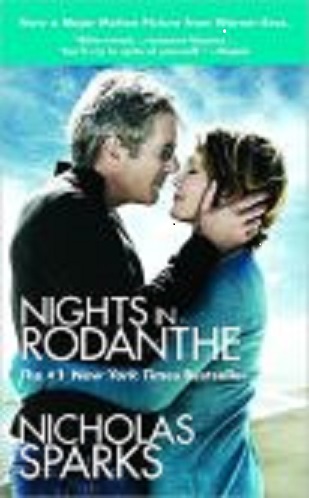
Nights in Rodanthe2Nights in Rodanthe by Nicholas Sparks is a poignant, heart-warming novel that I couldn’t put down.

Adrienne Willis’ daughter has suffered the death of her husband, leaving her with two small sons to raise alone. Adrienne is concerned that her daughter’s grief is consuming her, leaving her sons adrift without their mother’s attention. Adrienne decides to share with her grieving daughter an experience that happened years before.

In a flashback to fifteen years earlier, Adrienne is raising her three children alone since her husband left her for a younger woman.

Dr. Paul Flanner was a highly sought-after physician who poured all his energy into his practice. After their son leaves for college, his wife leaves him. Dr. Flanner sells his practice and plans to attempt to reconcile with his son who is now practicing medicine in Ecuador.

While her children are visiting their father, Adrienne is taking care of a friend’s bed and breakfast for a few days in the small coastal town of Rodanthe, North Carolina. Only one guest is expected for the weekend, a Dr. Paul Flanner. Also expected is a fierce nor’easter. As residents prepare for the worst storm in years, another type of storm is brewing at the bed and breakfast.

When love goes bad or is neglected, it so often involves many more lives than the two directly involved. When new love is again found, it is a gift to be treasured, but invariably involves other people as well.

The novel seamlessly switches from present-day to fifteen years earlier, making for an enjoyable, exciting novel which keeps the reader guessing at each juncture.

A gifted novelist, Nicholas Sparks writes with deeply moving tenderness. He manages to keep suspense dangling while writing with detailed clarity. Nights in Rodanthe is a bitter-sweet story of the healing power of love.

Book Review: A Better Way of Dying

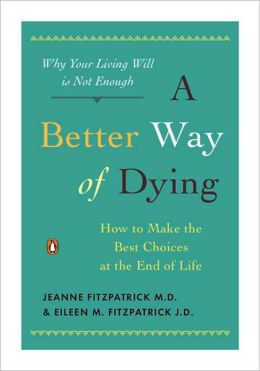
A Better Way of DyingMost people would say the ideal way to die is one where they’ve been able to a tie up loose ends, say farewell to loved ones and leave this world without plunging their family into dept with huge medical bills. A Better Way of Dying: How to Make the Best Choices at the End of Life, co-authored by sisters Jeanne Fitzpatrick, M.D. and Eileen M. Fitzpatrick, J.D. provides a logical method of making realistic end-of-life decisions.

The authors guide readers through various scenarios discussing usual medical procedures. We learn about choices we have the right to make to ensure control over our own end-of-life experience.

Having a Living Will and Do Not Resuscitate order are steps in the right direction, but inadequate to fully protect us from unwanted aggressive medical treatment when we are ready to die.

A long slow death in a nursing home is a nightmare most of us would avoid if given the chance. Whether the cause of death is the result of a terminal illness, dementia, an accident, or just old age, there are steps we can take to ensure our end-of-life experience is what we want it to be, not what insurance companies dictate, or what hospitals can do to prolong life with various life-support equipment.

A Better Way of Dying introduces The Compassion Protocol, a step-by-step guide that helps people experience a natural death in a timely fashion. The suggestions introduced in this book are practical and ethical.

I consider this compassionate book an important read for the young, old and everyone in between. Although we have already signed Living Will and Do Not Resuscitate forms, my husband and I now realize that we have more to do. From Doctor Jeanne Fitzpatrick we learn how end-of-life treatments are carried out unless patients have taken steps to avoid it. From attorney Eileen M. Fitzpatrick we learn how we can legally protect ourselves and our loved ones from expensive treatment that only prolongs the evitable.

For more information, visit www.compassionprotocol.com

The Pieces We Keep

The Pieces 1The Pieces We Keep by Northwest writer Kristina McMorris is a gripping multilayered story steeped in rich details and deep emotions. Newly widowed Audra Hughes hopes to get a fresh start by leaving Portland and accepting a veterinary job in Philadelphia. When she and her son Jack, seven, attempt to fly to Boston for her interview, Jack has a panic attack. Jack’s fears continue in the form of violent nightmares that threaten to consume him. An Afghanistan veteran Sean Malloy, struggling with his own injuries, becomes a part of their lives, but triggers in Jack memories that would be impossible for him to have.

The book alternates from present day to the war years, beginning in 1939 London, England. Vivian James is having a clandestine affair with Isaak, an American of German decent. As the war rages on, Vivian’s life becomes more complicated as she attempts to help Isaak extricate his relatives from Nazi Germany. Vivian finds herself embroiled in an FBI investigation involving German saboteurs in the United States.

Alternating between time periods, it becomes clear that there is a link between present day, World War II and Jack’s vivid nightmares.

The Pieces We Keep emphasizes the importance of family bonds and loyalty. Kristina McMorris does an excellent job of developing her characters in their respective time periods. Her research in many aspects of this novel was extensive and the story she weaves is believable. I highly recommend this book.

Book Review: The Divinity of Dogs

Divinity DogsJennifer Skiff has gathered a precious collection of stories about dogs and their people in The Divinity of Dogs, True Stories of Miracles Inspired by Man’s Best Friend. Skiff, an award-winning television producer, journalist and author, is personally and professionally involved with dogs in the U.S. and Australia.

The book is divided into sections: Love, Comfort, Intuition, Healing, Gratitude, Loyalty, Passing, Compassion and Forgiveness. Skiff begins each section with a personal story, followed by stories written by other people inspired by their own experiences with dogs. Each story has a picture of the dog involved and some of the pictures are so captivating I viewed them time and again.

As with many books of this nature, I gained insight into my own dog, Toby, a chocolate lab. This book has further opened my eyes as to the depth of a dog’s intuition, love and loyalty. Even when rejected, a dog will often rise above it and fill a human’s need.

Many of the stories carry messages of desperation, many of sadness, some of joy. No matter. You’ll come away enlightened, inspired, and enriched.

The Divinity of Dogs is a great read, compiled with the perfect balance of the many facets of the divine essence of dogs.