Book Review: The Thirteenth Tale

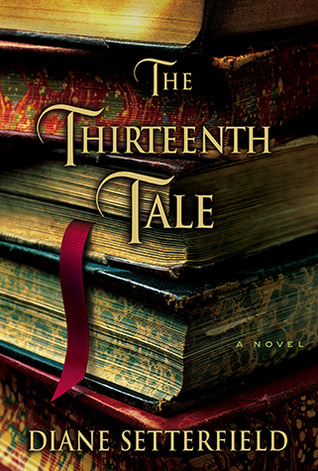
The Thirteenth TaleDiane Setterfield’s The Thirteenth Tale (Atria Books) is a breathtaking, suspenseful novel written in delightful English prose.

Vida Winter, a reclusive, immensely popular writer, has kept her audience guessing as to what her thirteenth tale might be. Would it be as delightful and enchanting as the twelve she’s already written? The writer is as famous for her secrets as for her stories. Winter disdains the truth. “My gripe is not with lovers of the truth but with truth herself. What succor, what consolation is there in truth, compared to a story?”

The famous writer commissions a little-known Cambridge biographer, Margaret Lea, with the offer to tell her life’s story. Lea journeys by train to Vida Winter’s big, old estate in Yorkshire where the biographer will live while gathering information from the elderly, dying author. They make a pact that Winter will tell only the truth and her biographer will not ask to skip around the story, that the story will be told in its proper order with a beginning, middle, and end, with no questions asked.

And what a story it is, reaching back to Winter’s family beginnings to an odd, wealthy household in the village of Angelfield near Banbury, England. Although the book encompasses many characters, it’s surprisingly easy to keep them sorted, thanks to rich characterization given to the many players.

Vida Winter’s story is compelling, but so is the biographer’s. Her role in the telling of the story is not without its own mysterious elements.

Setterfield spins a satisfying, richly descriptive tale to remember. I loved the British way of expression, the turn of phrase, the windswept-lay-of-the-land descriptions. It’s a multi-layered modern version of a Victorian novel, told with twists and surprising turns. I highly recommend The Thirteenth Tale.


Book Review: To Kill a Mockingbird

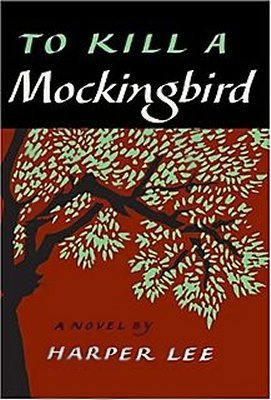
To_Kill_a_MockingbirdI read Harper Lee’s Pulitzer Prize winning novel, To Kill a Mockingbird, in the early 1970’s. Coming from the Northwest, it was an eye-opener for me to learn about segregation in the South, written by a Southerner. Later, I saw the movie. By this time I was much more aware and had strong opinions of the injustices dealt African Americans, particularly in the South. But the Northwest had its equality issues as well.

This month, our Stanwood, WA book club selection was To Kill a Mockingbird and I was delighted to again read this classic with my even more enlightened awareness. It is a remarkable novel, full of humor and insights into life in Alabama during the late 1930’s. Lee spins a wonderful coming-of-age story of a young girl’s observations of her very limited surroundings. Scout, and her brother Jem, live with their father, Atticus, an attorney in Maycomb, Alabama. Scout’s mother died when she was two, so their black maid, Calpurnia, manages to keep house, cook and take care of the children.

Their world changes when Atticus is appointed to defend a black man who is unjustly accused of raping a white woman. Opinions expressed about the case are, in today’s social climate, shocking. In those days, people were lavishly polite and proper, but many were totally blinded toward the injustices shown African Americans.

Coincidentally, while I was in the midst of reading To Kill a Mockingbird, a news item broke announcing that Harper Lee has another book, one that had first been shown her publisher, Harper & Row. The original novel, Go Set a Watchman, was about a grown woman named Scout who returned to her small Alabama hometown between 1955 and 1957 to visit her family. Lee’s editor suggested that she rewrite the book from the perspective of Scout as a young girl. That book, To Kill a Mockingbird, was published in 1960 and was considered to be Harper Lee’s only published book. The just-recently discovered novel, Go Set a Watchman, is expected to be published in 2015 by HarperCollins.

I highly recommend To Kill a Mockingbird. I await with eager anticipation to read Harper Lee’s original work, Go Set a Watchman.

Book Review: The Poisonwood Bible

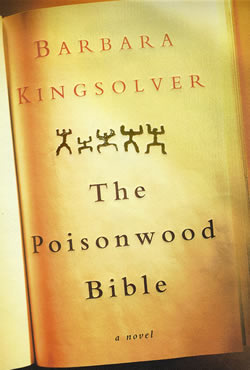
the-poisonwood-bibleI’ve been hearing about The Poisonwood Bible by Barbara Kingsolver since 1998, but have just now finished reading it. It is extraordinary. Having lived in Africa for two years, the novel was probably more meaningful to me, but this book will appeal to anyone interested in a world view of humanity.

Nathan Price, an evangelical Baptist minister, his wife and four daughters trek to a mission in the Belgian Congo in 1959. Nathan, a self-righteous bully is set on changing the village people of Kilanga to his view of Christianity.

The story is told in the voices of Nathan’s wife and their four daughters. Although Kingsolver titles each chapter with the name of the speaker, she wouldn’t have needed to. The author’s characterization is so good that within a few words you know exactly who is speaking. Orleanna, Nathan’s wife, tries to be obedient to her husband, but after years of struggle, is tired. The challenges of living in the Congo are seemingly insurmountable. She simply cannot adequately feed a family on what the local people eat. Rachel, almost 16, has a dry sense of humor and is immensely unhappy with her surroundings She longs to be a typical American teen. Leah, 14, walks in her father’s footsteps, hoping to find favor with him. She is eager to do things the “local way” and to make friends. Leah’s twin sister Adah, born handicapped with the left side of her body underdeveloped, is an observer and a deep thinker. She has a jaded view of her father’s occupation. The twins are considered “gifted” and learn languages and complicated concepts quickly. Ruth May, at 5 is the baby of the family and strives to keep up with her sisters. She organizes her little village friends into some semblance of order as she teaches them “Mother May I.”

While Nathan Price unsuccessfully tries to convert the villagers, rumblings of new leadership in the Congo are stirring. Patrice Lumumba is suddenly the Prime Minister of the Republic of the Congo, a newly independent country, and the Belgians are pulling out. The mission society in America will no longer support the Price family and they are told to leave. But Nathan’s work is not finished and he will not comply.

While political upheaval keeps the Congo in disarray, the Price family is facing its own challenges. When tragedy strikes, the family is profoundly affected. The novel then follows the various directions the family takes over a course of three decades.

The Poisonwood Bible offers an in-depth view of the many injustices affecting Africa. Outside political influences have claimed the wealth and energy from many African countries, but particularly the Congo with its treasure in gems.

I highly recommend this novel. Author Kingsolver deals with the realties of domestic tragedy and the everyday business of surviving in a country lacking basic needs. The book also offers insights to Africa’s bloody struggle for basic human rights, rights that have been ripped from them by outside powers.

Book Review: Sacred Hearts

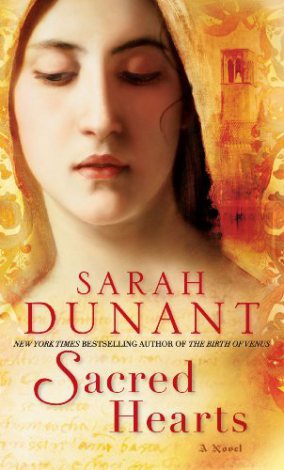
Sacred HeaartsI was riveted to this book. Having read Sarah Dunant’s The Birth of Venus, I hoped this last novel of the trilogy would be as good. I wasn’t disappointed. Sacred Hearts is a powerful account of convent life in the northern Itallian city of Ferrara.

In the late sixteenth century, the price of wedding doweries was so exorbitant that most noble families could afford to marry off only one daughter. The remaining women were dispatched to convents, with doweries to be sure, but much less than for a wedding. Many of these women went against their will. Some adjusted to the rigors of convent life, others chafed at the idea of spending their lives cloistered in a strict environment, following rigid rules, often at the whims and dictates of the outside world.

When sixteen-year-old Serefina is forced into the Santa Caterina convent, ripped from her family and the man she loves, she is beset by rage. She’s a talented young woman, bright and gifted with a thrilling singing voice, but she is determined to never surrender to what she believes to be a place of horrors.

Sister Zuana, the convent’s dispensary mistress and the daughter of a doctor, is sent to sedate the ranting young newcomer. Remembering her early years at Santa Caterina, the older nun becomes a mentor. What follows–the intricate relationship of trust and betrayal–is the story of Sacred Hearts. The Abbess, Madonna Chiara, who commands the convent’s total and unquestioning obedience, plays an important role in the intrigue and complications of life in a shuttered world.

Durant describes convent life in such realistic detail that the reader can feel the chilly dampness of the stone walls and floors, the bone-weariness of 2:00 a.m .prayers, the discipline of imposed fasting, silence, and humiliation. But one also feels the pure acceptance of Christ, the joys of serving, and of being able to exercise one’s talents to benefit sisters of the convent to the glory of God.

Sacred Hearts is an absorbing, meticulously researched novel of historical fiction. Durant gives life to the Renaissance period, particularly of its brutal affect on women.
I highly recommend this book and plan to read the second of the trilogy, In the Company of the Courtesan.

Book Review: Death of a Texas Ranger

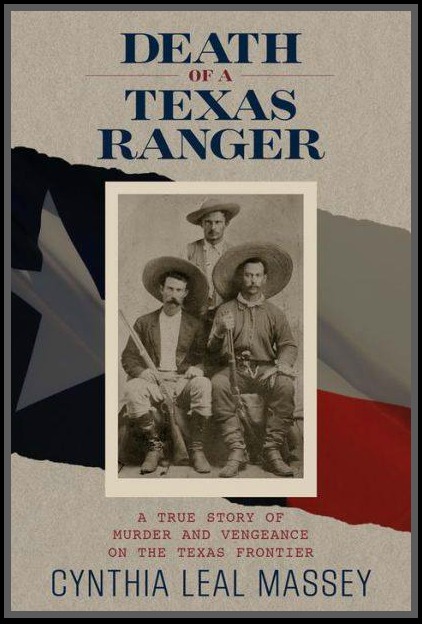
Death of a Texas Ranger


Life was precarious on the Texas frontier in the late 1880’s. The Civil War had left chaos with political and cultural clashes. To help keep order and to protect early settlers, the Texas Rangers was formed as a state militia.

In 1873, Sergeant John Green was shot and killed by a Ranger under his command, Cesario Menchaca. Death of a Texas Ranger: A True Story of Murder and Vengeance on the Texas Frontier by Cynthia Leal Massey delves into this incident with meticulous research and an enjoyable style.

Justice is constantly thwarted as Sergeant Green’s killer is protected by Mexico’s refusal to extradite Cesario Menchaca.

In the meantime, Texas was drawing the attention of those interested in the natural sciences in the nineteenth century, an era referred to as the Age of Darwin. Gabriel Wilson Marnoch became a frontier naturalist who discovered new reptile and amphibian species. In addition to snake bags and specimen jars, Marnoch also carried a secret involving Sergeant John Green’s death.

Years later, John Green’s son, Will Green, now Chief of Detectives for the San Antonio Police Department, while seeking justice for his father’s death discovers missing records and contradictory accounts of the crime.

Author Massey, a Texan, does a remarkable job capturing the essence of post-Civil War Texas and of fitting together the many pieces of the mystery surrounding the death of Texas Ranger Sergeant John Green.

To learn more about this award-winning author, visit http://www.cynthialealmassey.com/

Night Circus Brought Back Memories

Night Circus

When I was seven our family lived in the little town of Holt, Michigan. Across the street from our house were several acres of flat land. One hot summer day I noticed a lot of activity happening on that empty land. Colorful tents were being raised, a Ferris Wheel and other rides were being erected. A circus! I was beside myself with excitement. I simply had to go. Our family attended the circus the next evening. It was everything I could have imagined. I couldn’t get enough of it. The next evening I begged my father to go, just once more. My mother and older sister had no desire to see it again, so my father and I went, just the two of us.

This time, we looked at things differently, trying to see how they did it. We watched the contortionist, twice. We marveled at the acrobats and concluded it was real, but that it would take a lifetime of practice. I don’t remember an illusionist, but maybe she was so good we didn’t realize what was happening. I was in awe of the exotic circus animals. We rode the only “ride” that appealed to us, the Ferris Wheel. From the top we could see for miles. We watched the knife thrower, sure that there must be a trick to his uncanny aim. From a red-striped paper bag we shared a bag of caramelized popcorn. I’ll never forget that evening with my father. Over the years we often talked about that magical night at the circus.

Night Circus by Erin Morgenstern brought back those memories in exploding color. The story takes place in the late 1800s and early 1900s when life was supposedly simpler. But the Le Cirque des Reves is far from simple. It was created for the purpose of providing a backdrop for a fierce competition between Celia and Marco, two young people who don’t even know each other. But when they meet, it isn’t how their instructors had planned.

Erin Morgenstern has painted a vivid picture of unbelievable imagination. An illusion of depth is created before your eyes when you find yourself in the center tent. But more than that, you’re in the minds of those who create the spell.

Night Circus is magical. Morgenstern is an extraordinary, enchanting storyteller.

Book Review: The Last Time They Met

The Last TimeClear your calendar for a couple of days and read Anita Shireve’s The Last Time They Met (Little, Brown and Company). Pour yourself a cup of coffee and settle in for a treat.

Linda Fallon encounters her former lover, Thomas Janes, while they are both reading their work at a literary festival. Now in their early fifties and both finally free to pursue a life together, their pasts loom before them, pasts littered with passion, guilt and regret.

Linda, at last being seriously recognized, had been married, divorced and then happily married and blessed with children. She is now widowed. Although she has known happiness, she nevertheless has never felt free of the bond with her first love, Thomas. Thomas, a literary legend, has been twice married and divorced, and has never recovered from his young daughter’s accidental death.

The book is written in three parts, starting with the present and going back in time. At the festival, they look back to their painful, yet over-powering chance meeting in East Africa when they were in their twenties. They were consumed with infatuation, but also with guilt since they were both married to someone else. They knew there was no solution, yet their passion was stronger than their sense of decency, or even common sense. The novel then goes back even further to when Linda and Thomas were teens. She, an orphan, lived with relatives, felt unwanted, unloved, and nursed a secret shame. Thomas was a child of wealth and position. Both teens were bright, gifted, and full of joy with each other. A tragedy separates them and both carry the effects the rest of their lives.

The Last Time They Met is a story of passion and obsession. I loved the African section and the resulting strange influence it has on the story. But it wouldn’t matter where in the world this novel took place, it would still be a work of strong and unresolved emotions, of human frailty, and failed expectations. The book is a marvelous study of human behavior and of what might have been.

Book Review: The Help

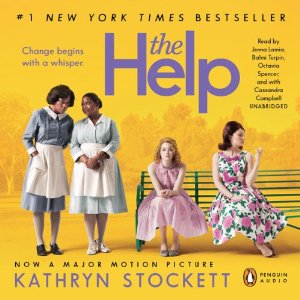
The Help 2_I couldn’t put this book down. I woke up during the night thinking about it, sometimes giving in and reading a few more pages. The Help by Kathryn Stockett is an insider’s look at life in the deep south in the 1960s. The story’s three narrators, a white woman and two black maids, live on the cusp of the civil rights movement.

Eugenia “Skeeter” Phelan, a recent college graduate, lives with her parents on a cotton plantation (though her mother is the only one who still uses that old-fashion description). Although a socialite through her family’s status, Skeeter has never felt like one of the girls. She’s too tall, her hair is never in the latest style, her clothes are not chic like her friends. She’s determined to be a writer, but her chances are pretty slim in Jackson, Mississippi. She arranges with the local newspaper to take over a housekeeping column, but, come to think about it, she really knows nothing about housekeeping. The help does all that sort of thing.

Miss Skeeter approaches a friend’s black maid, Abileen Clark. Abileen’s specialty is raising white folks’ children, and her housekeeping skills are impeccable. Abileen agrees to answer newspaper reader’s housekeeping questions for Skeeter for a small fee.

An idea forms in Skeeter’s mind, an idea that could bring terrible risks. Martin Luther King’s attempts at integration are making national headlines. In Mississippi, colored people aren’t allowed to enter white folks’ stores unless they’re in uniform and are shopping for their employers. They certainly can’t use “white” restrooms or attend their schools or churches. Even in private homes, every effort is made to keep the help from using bathrooms intended for family. The help’s bathroom is usually a roughed-out place, often attached to the garage. The help is expected to respond to their white employers needs, never mind if it interferes with their own life and family.

What would happen if a book were written, an expose’ about what it’s really like for a black person to work for a white family? Oh sure, the white people claim they “love” their black help; the black people “love” their white families. But the boundaries are firm and when they’re crossed, there can be serious consequences.

Abileen agrees, reluctantly at first, to share her experiences with Miss Skeeter. She enlists friend Minny Jackson who works for a lady local people call “white trash.” The idea gains momentum and grows to scary heights. The secret is kept by so many people, it’s hard to believe it won’t slip out. Skeeter gets a go-ahead by a New York publisher, but the offer to look over the manuscript doesn’t hold much hope of success.

The secrets shared by these maids could ruin them, right along with the people they’re talking about. Of course, there are a few good stories, too, stories about loyalty and generosity. Is the nation ready for such a tell-all? What will be the consequences? Is the awful risk worth the hope it might bring? The local society ladies live in a brittle, shallow world. The consequences of people learning the truth could be devastating. There’s a lot at stake for both whites and blacks.

The words “Change begins with a whisper” are displayed on the book’s cover. With change comes hope, hope that we’ve come a long way toward understanding one another and that we’ve been able to cross interracial lines in our every day lives. I highly recommend The Help. It’s not only a fun read, it’s an eye-opener. Coming from the State of Washington, my exposure to racism was pretty much limited to what I saw on the evening news. The Help is an inside look at “the rest of the story.”


Hibulb Cultural Center: Keeping the Cultural Fires Burning

WA-Hibulb-M-canoe2

The Hibulb Cultural Center & Natural History Preserve is a fascinating museum located on the Tulalip Reservation adjacent to the city of Marysville, Washington, 34 miles north of Seattle. Hibulb (pronounced Hee-bolb) is resplendent with tribal folk lore, carving, weaving, knitting, and sculpture.

The center is named for the large village of Hibulb that was at the end of a bluff overlooking Puget Sound. Warriors who lived in longhouses at Hibulb protected their people from invasion of their territories. From Hibulb, they could see enemies approaching from a long distance and they would light a huge signal fire to warn the other villages and longhouses across the bay and up the Snohomish River.

Tulalip Tribes, the People of the Salmon, are a federally recognized tribe of Duwamish, Snohomish, Snoqualmie, Skagit, Suiattle, Samish, and Stillaguamish people. The 22,000-acre Tulalip Reservation was established in 1855 by a treaty that guaranteed hunting and fishing rights to all tribes represented by the signers. In return for the reservation and other benefits promised in the treaty by the United States government, the Duwamish Tribe exchanged over 54,000 acres of their homeland which includes much of modern-day King County.

Today the Tulalip Reservation is thriving with businesses that serve more than 6 million visitors a year and is one of the largest employers in Snohomish County.

The Hibulb Cultural Center, which opened in 2010, is located on a 50-acre natural history preserve. The 23,000-square foot structure features a main exhibit, a revolving temporary exhibit, two classrooms, a longhouse, a research library and a gift shop. The Center provides an introduction to these Northwest tribes, their culture and history.

The exhibits of the Hibulb Cultural Center may be viewed on a self-guided tour, but we had the pleasure of joining a group guided by Lois, a tribal member who is knowledgeable and informative. We met first in the cedar Longhouse which is built into the museum, I learned that not all Indians were teepee dwellers. The Tulalip peoples lived in longhouses, each of which might house 14 to 20 families. Tribal meetings were held in the longhouses and even today it is an important center where teachings and traditions are passed from generation to generation.

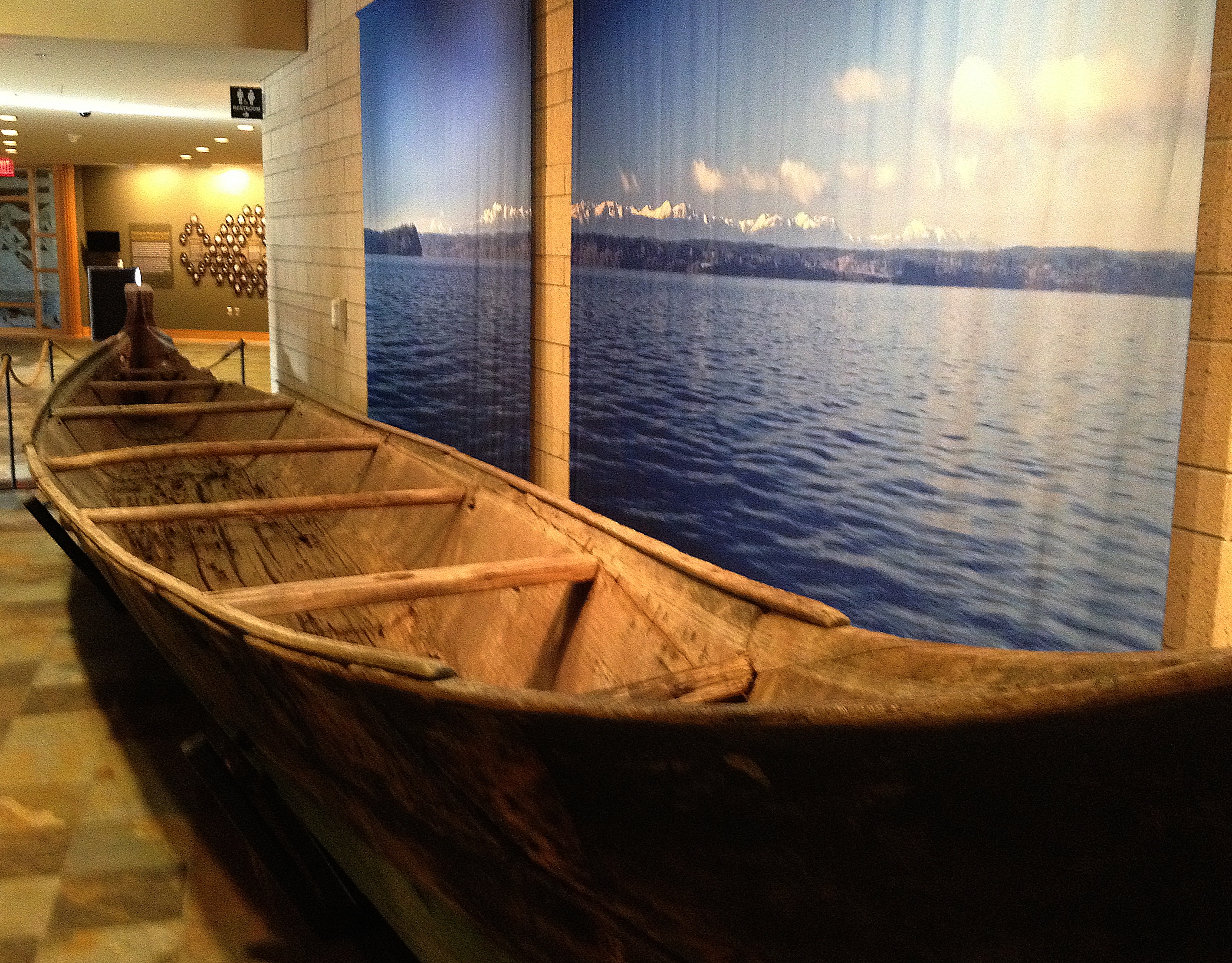
The Tulalip have a binding relationship to cedar and salmon. At the Center, visitors learn how weaving, fishing and cooking defined their culture. The cedar tree is considered a gift to serve throughout one’s life. Every part of the tree is used with nothing wasted. It is a perfect resource, providing everything from baskets, bowls, cloth, and canoes, to long-lasting carvings.

The Tulalip are a fishing people. The Cultural Center has a display showing fishing gear, traps and techniques. Also shown is a “summer house” where they lived while fishing, hunting, gathering berries, etc.

Formal education began at Tulalip in 1857 with a Catholic priest, Father Chirouse, who taught English, reading, spelling, history and math. He himself was a student of theirs as he learned to speak one of the local dialects, Lushootseed. Father Chirouse was revered by the Tulalip people and later became an Indian Agent and the voice of the people.

A sad period in the history of the Tulalip as well as many Indian tribes, is when, in the 1800’s, the U.S. Government required all native children to leave their homes and stay in boarding schools. In an attempt to “civilize” the children, they were forbidden to speak their native language, practice their own religion and beliefs, or wear their accustomed clothing. The children were allowed little contact with their own families. Father Chirouse’s school was closed and replaced by a more military-style education. The result of total immersion into the white man’s world caused the old customs and native languages to become nearly extinct.

Most of the languages have been restored, thanks to the elders who still remembered and who realized their culture was in danger of vanishing. Ancient languages were not written languages, but with dedicated effort, ways of writing the sounds have been found and, with great effort, many of these “lost” languages have been reinstated.

At the Cultural Center, many walls are decorated with small plaques of men and women who have served with the United States Armed Forces. Each wall acknowledges a particular war or period served. The Tulalip Tribes Veteran’s Department has combined forces with other veteran programs to help provide services for returning warriors.

A special exhibit, Coast Salish Canoes, will be on display until June, giving visitors an opportunity to learn about different types of canoes, their construction, and important canoe carvers. The display shows the canoe travel routes in Puget Sound and traditional canoe-based gatherings ranging from canoe races to festivals and journeys. Following a time-line approach, the display shows the history of canoes to present day.

Plan on spending some time at Hibulb Cultural Center. Although it can be self-guided, I recommend joining a guided tour. The short stories and anecdotes are fascinating and informative. To learn more about the Center, visit http://www.hibulbculturalcenter.org/

Book Review: Crow Planet

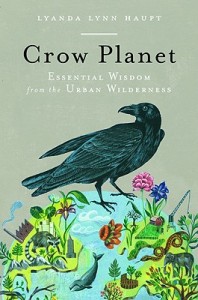
crow-planetCrow Planet: Essential Wisdom from the Urban Wilderness by Lyanda Lynn Haupt beautifully blends nature and science. Haupt, an award winning nature writer, shares her keen observations about how crows relate to ever-encroaching urbanization.

Crow Planet delves into the fascinating study of these distinctive members of the Corvidae family which also includes jays, magpies, and ravens. The book describes crows’ impressive intelligence, their living habits, and how they’ve adjusted to dwindling natural habitats. The author takes her readers into her West Seattle backyard and shares her own little pocket of wildness. Haupt’s vast knowledge as an observer of nature mixed with her gift of language makes this book of interest to anyone concerned about our planet.

It’s easy to become alarmed about diminishing wildlife, but Haupt presents a viewpoint of hope and inspiration of what individuals can do to enhance nature’s bounty to change the course of events.

I particularly enjoyed the many intriguing crow stories, especially my favorite about a crow following a mail carrier every day for more than two years, walking behind him like a golden retriever. This book is loaded with lore and facts, world concerns and minute details that only a keen observer would notice.

From Crow Planet the reader learns how to really observe. Haupt lists ways to become a student of nature and she emphasizes the beauty of living simply. The book is an informative, well-stated study of crows and how they have adjusted to the planet. Haupt makes a strong point of recognizing the importance of the interconnections of all life.

For more information about the author and her work, visit http://www.lyandalynnhaupt.com/