Swagger into Methow Valley’s Old West

MMF_7401c

When you drift into the Methow Valley, you’re in cowboy country where cattle and horses outnumber people. The Charlie Russell landscapes are the genuine article, and, in fact, it is widely believed that Owen Wister, famed author of The Virginian, derived many of the settings and heroes of his novel from Methow Valley and Winthrop.

Today, the Methow (pronounced Met-how) Valley comprises the small towns of Mazama, Winthrop, Twisp, Carlton and Pateros with lush open country in between where fields of baled hay, pastured livestock and big old weathered barns are graced with a backdrop of the rugged Cascade Mountains.

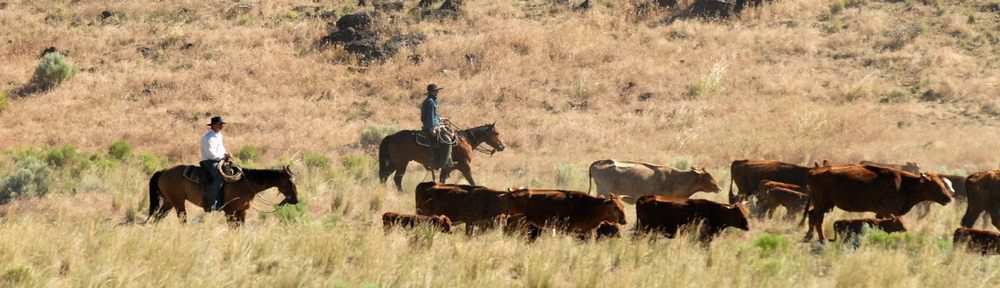
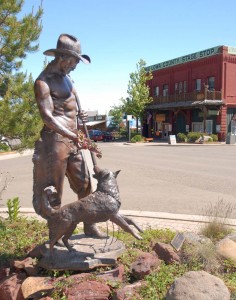
Winthrop, one of the most popular towns in the valley, offers the facilities and services you’d expect from a major vacation center but with a strong western flavor. Strolling down the town’s wooden sidewalks, you’ll find yourself back in the 19th Century West with false-front wooden buildings, hitching rails and other western trappings. If you time it right this fall, you may witness cowboys (the real thing!) on horseback driving cattle down Winthrop’s main street, moving them from mountain summer pastures.

Mountain lodges, resorts, dude ranches, conventional motels, and bed and breakfast inns abound in Winthrop. Seventeen campgrounds located within eight miles of Winthrop include state parks, forest service campgrounds and private campgrounds. It’s a great place to shop, especially for unique gift items and western clothing. A steak dinner takes on a definite western flavor here and if you happen to be visiting on a Saturday night, you’ll have a chance to dance to the strong beat of western music.

Of special interest in Winthrop is the Shafter Museum with exhibits of furniture, tools, bicycles and carriages depicting the area’s early days. Adjacent buildings feature a well-stocked old-fashioned country store and displays of old mining equipment.

For a romping, stomping good time, take in the rodeos Memorial Day weekend, May 23 & 24 and the Labor Day weekend, September 5 & 6, presented by Methow Valley Horsemen.

Twisp, like Winthrop and the other small valley towns, offers good browsing for western art and craft items made by local artisans. At the western edge of town, the U.S. Forest Service Smokejumper Base welcomes visitors during fire season, normally June through October. Parachuting firefighters in to fight forest fires began here as a national experiment in 1939.

Dozens of small lakes dot the region making the Methow and adjacent Okanogan country ideal for trout fishing. Most of the lakes have campgounds and small rustic resorts with rental boats available. The Methow River is a renown rafting destination and several outdoor companies operate regular trips. One-day or overnight horsepacking and backpacking offer a closer look at the forestlands and the spectacular Pasayten Wilderness north of Winthrop.

The Methow Valley is a great destination, rich in wild scenery and plenty of things to do. For more information, call the Winthrop Chamber of Commerce, (509) 996-2125,
or visit the Methow Valley website at www.methow.com.
Book Review: Hawkins Lane

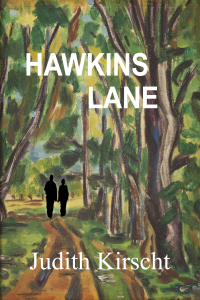
Hawkins Lane Cover

Hawkins Lane Cover

When Ned Hawkins meets Erica Romano, they’re in the heavily forested North Cascade mountains. Ned spends a lot of his time in the woods, alone, as far away as he can get from the town of McKenzie Crossing. The townspeople make him feel trapped, unwanted, lumping him with his rough, hard-drinking relatives and his father, in prison serving a sentence for murder. Ned won’t have anything to do with his father, uncles, not even his brother, but nevertheless he’s still associated with the Hawkins clan.

Ned finds Erica Romano fly fishing with the expertise of someone who is used to handling herself in the woods. She’s happiest on horseback, fishing, or hiking in the great outdoors.

As Hawkins Lane by Judith Kirscht surges forward in time, Ned, Erica and their daughter Bonnie are a family happily living the lives of forest rangers. Their world crashes when Ned’s father is released from prison. It goes into further decline when a tragic accident affects all their lives. The family learns the truth about themselves as the result of these incidences and struggles for the strength to cope.

Hawkins Lane is a sweeping novel delving into the Hawkins’ lives, not only of Ned and Erica, but of their extended families as well. Kirscht weaves a story teemed with suspense and laced with emotions borne of shame, fear and secrets kept too long.

A fine contemporary novel and a worthy family saga, the author shows a keen sense of story. Her characterization skills are extraordinary as she captures the lives of not only Ned, Erica and Bonnie, but also of Ned and Erica’s mothers and other family members. Kirscht’s in-depth descriptions of pristine mountain wilderness are exquisite.

Hawkins Lane is available in e-format, but will soon be published in trade paperback. Whatever your preferred format, don’t miss this splendid novel. For more information about Judith Kirscht, visit www.judithkirscht.com


In Memory of the Oklahoma City Bombing

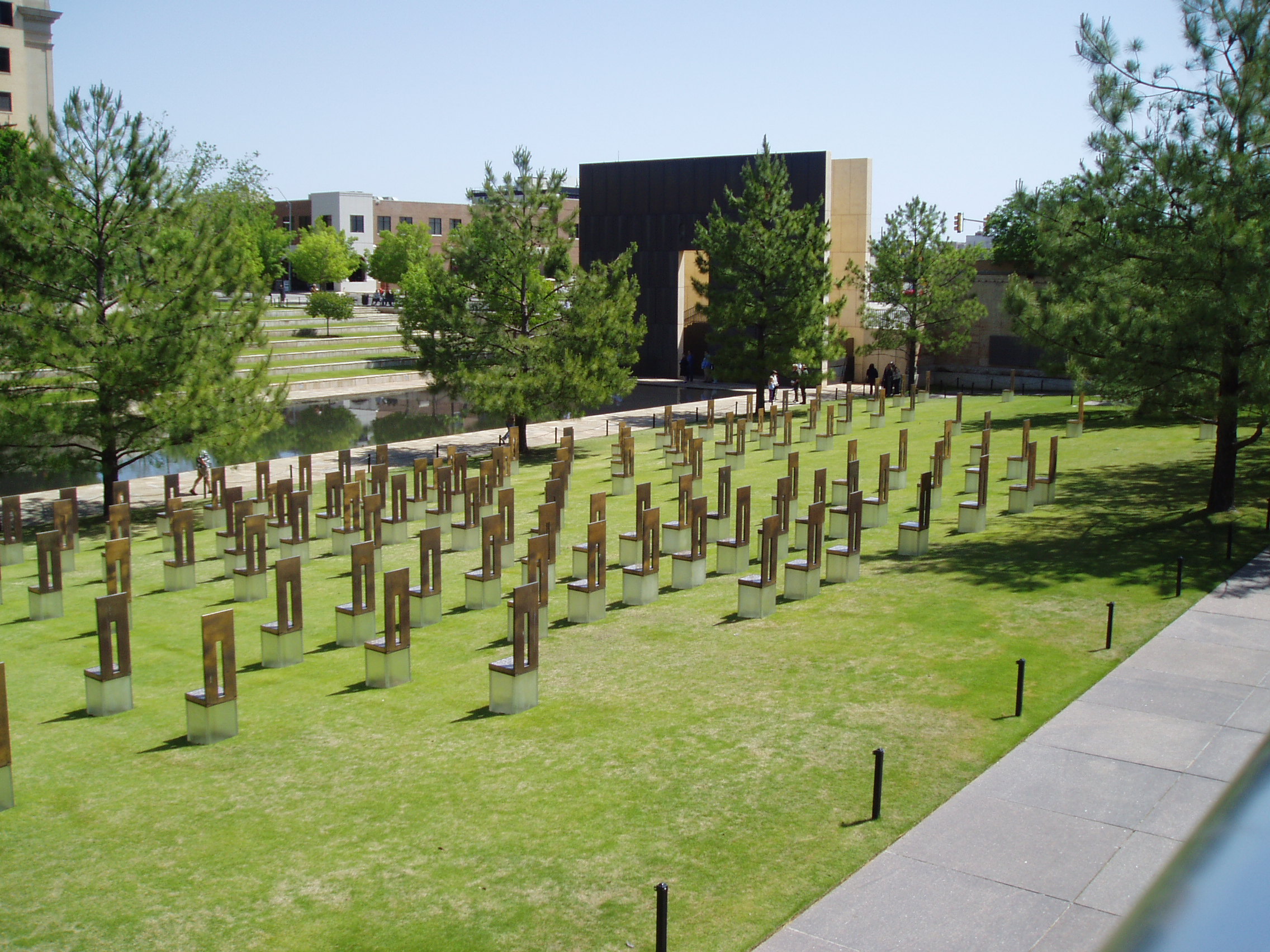
OLYMPUS DIGITAL CAMERAThe Field of Empty Chairs, a reminder of each life lost. In the background, The Reflecting Pool to the right; Gate of Time to the left.


It was a normal Wednesday morning under a clear blue Oklahoma City sky on April 19, 1995. Workers made their way to offices, dropped off children at the building’s day-care center, perhaps poured themselves a cup of coffee to get a jump-start on their
day. Then, at 9:02, America’s innocence changed forever when the Alfred P. Murrah Federal Building was bombed, killing 168 people and injuring more than 500.

How could such a horrific thing happen on American soil? Timothy McVeigh, a former decorated United States Army soldier, claimed that the bombing was revenge for “what the U.S. government did at Waco and Ruby Ridge.” McVeigh and accomplice Terry Nichols, used readily available toxic industrial chemicals, ammonium nitrate, an agricultural fertilizer, and nitromethane, a highly volatile motor-racing fuel, to accomplish their despicable deed.

The attackers parked a rented Ryder truck in a loading area with a timer set to explode about 5,000 pounds of the highly combustible material. The explosion resulted in the worst terrorist attack on United States soil prior to the September 11, 2001 attacks. McVeigh was executed and accomplice Terry Nichols was sentenced to life in prison. A third party, Michael Fortier received a 12-year prison sentence plus a $200,000 fine for failure to warn authorities about the attack.

The blast tore away more than a third of the Murrah Building, but destroyed the entire building. In addition, fourteen buildings in the vicinity had to be torn down due to extensive destruction and another 312 buildings within a sixteen-block radius were damaged.

More than 12,000 people participated in relief and rescue work, including twenty-four canine units. Prompt investigation gave vital clues to the complexity of the crime and early leads on a suspect and accomplices led to extraordinarily quick arrests. Visitors watch news clips and special bulletins televised from around the world.

From April 20 to May 4, 1995 rescue and recovery operations poured into the area. Professional rescue workers, volunteers and canine units from all over the country clawed through the rubble to help dig out survivors and recover the dead. In the children’s day-care center directly above the mobile bomb, devastation was horrific. Upper floors collapsed onto those beneath them, crushing everyone and everything below.

Although the bombing of the Alfred P. Murrah Federal Building was born of hatred and violence, visiting the Oklahoma City National Memorial & Museum is an uplifting experience. Poignant sights and artifacts of the bombing are in plain view, but also evident is what this sacred ground has become: a monument of hope and faith, of remembrance of loved ones lost, of human spirits rising above this inhumane act.

Three distinct components comprise the memorial: the Outdoor Symbolic Memorial, dedicated on April 19, 2000, the fifth anniversary of the attack; the Memorial Museum, dedicated one year later, April 19, 2001; the Memorial Institute for the Prevention of Terrorism, a concept founded by families and survivors during the writing of the Mission Statement in 1995.

Wandering the grounds where the building once stood, visitors soon see that every exhibit is a vital symbol of this experience. One of the most poignant, the Field of Empty Chairs is a reminder of each life lost. The chairs, including nineteen smaller chairs representing the children who died, placed in nine rows, represent the nine floors of the building. Made of bronze, stone and glass, the chairs are placed in the row according to what floor the person was working or visiting when killed.

For more information, visit www.oklahomacitynationalmemorial.org or call 1-888-542-HOPE (4673).

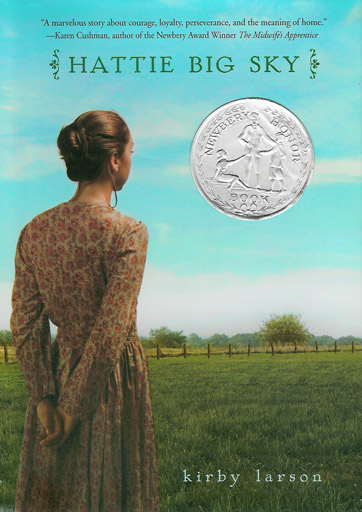
Book Review: Hattie Big Sky

hattie-big-sky

When sixteen year-old Hattie Brooks receives the message that she has inherited her uncle’s homestead claim in Vida, Montana, it solves some of her immediate problems. She now has a place of her own, away from Arlington, Iowa and her spiteful aunt, one of the many relatives she’s lived with since her parents died.

As it happens, she simply trades one set of problems for another, except this time, she invests more than hard labor. She invests herself in becoming a neighbor, a friend, and a responsible member of her community. The scrubby parcel of land boasts nothing but a nine- by twelve-foot claim shack to live in and a barn to house a range horse and a cranky milk cow.

Her tasks are daunting. In order to prove the claim, she has to cultivate one-eighth of the claim, forty acres, and set four hundred eighty rods of fence–all within the remaining ten months of the claim. One of Hattie’s challenges is just to get through the Montana winter. Nothing productive toward working her claim can even be started until the ground thaws.

Hattie Big Sky by Kirby Larson is a delightful book written in first-person. Throughout the book she corresponds with a school chum, Charlie, who is fighting WW1 in France, and to her uncle, husband of the spiteful aunt. Through her uncle’s efforts, she becomes published in the Arlington paper and receives a small monthly income that sees her through an otherwise bleak existence. Hattie’s struggle for survival is shown in vivid detail and readers learn to admire this young woman’s grit, determination and humor. Hattie is capable of grinding hard work and raw courage, but is also the frequent recipient of the kindness of neighbors. She repays these kindnesses in her own way, endearing and binding her to the kind of friendships she has never known before.

Although this book is considered a Young Adult genre, it is delightful for any age. Hattie Big Sky is fashioned after the author’s own family history and its authenticity is obvious from the very first page.


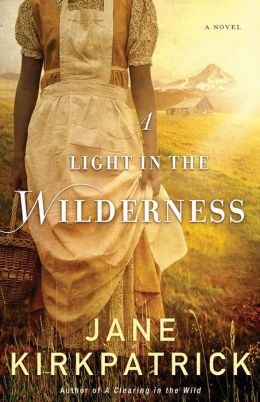
Book Review: A Light in the Wilderness

A Light in the WildernessA Light in the Wilderness By Jane Kirkpatrick

For an African American woman, being free in 1844 Missouri doesn’t mean the same as it does for her employer. But Letitia IS free and, although she can’t read it herself, she has the paper to prove it. She even owns her own cow, Charity.

Letitia finds herself at odds with her employer and her plans to go to Oregon with them are abruptly changed. She seeks help from Davey Carlson, an Irish-born former mountain-man, who helps her retrieve her cow. Letitia and Davey form an understanding, and together they join a wagon train bound for Oregon.

Along the way Letitia forms a strong friendship with a fellow traveler, but many of the immigrant women treat Letitia as an inferior. Still, Letitia holds her head high, shares her supplies, acts as midwife when needed and keeps the campfires going for Davey. She’s free, and even owns a cow that gives precious, life-saving milk. The journey is long and treacherous, but Letitia sets her sights on living in a place where she’ll be truly free.

Threaded into the story is an Oregon Kalapuya woman and her grandson. The Woman teaches her grandson the Kalapuya way and watches as he becomes knowledgeable in their traditions. Soon she’ll have another to teach, a woman whose color is like burned seeds.

Once the grueling journey west is complete, Letitia and Davey find that Oregon isn’t as open-minded as they expected. There are still people who would take advantage of her status and not recognize her entitlements. Her friend from the Oregon Trail lives a short ride away, and she cherishes that friendship. Letitia and Davey work hard making a real home for themselves, but will that security endure the scrutiny of those who still see her color as inferior?

I found A Light in the Wilderness a wonderful addition to Jane Kirkpatrick’s many historical novels. The book is based on a true story. Kirkpatrick captures the strong bond between women, the stark fear of a person striped of her basic rights, and the land which holds so much promise. It’s a story of love and betrayal, of strength of character, and of courage dredged up of necessity.

Jane Kirkpatrick is a New York Times and CBA (Christian Booksellers Association) bestselling author who has won several awards for her many books. To learn more about the author, visit www.jkbooks.com


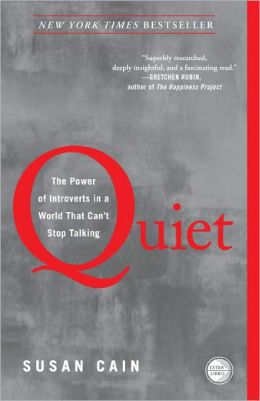
Book Review: Quiet: The Power of Introverts in a World That Can’t Stop Talking

QuietSusan Cain’s Quiet is a fresh breeze in a noisy, stereotyped world. Cain, formerly a Wall Street lawyer, thought being an introvert a disadvantage, something to overcome. The problem was, she liked being quiet, reading, thinking or studying in tranquil, quiet surroundings.

In her well-researched study of introverts, Cain introduces well-known personalities, such as Eleanor Roosevelt and Ghandi, who became powerful leaders and who are recognized by their deep-thinking contributions to the world.

The world needs a balance of introverts and extroverts, of Bill Gates and Bill Clintons. I think most people would be surprised to find that their hero is at heart an introvert who has managed to rise above his comfort zone in order to make a presentation, speak up in a debate, or otherwise call attention to himself.

Cain points out that it’s a mistake to force people into situations which may inhibit quiet contemplation. Offices with wide-open work space may be the best atmosphere for some, but many people do their best work when left alone to think or solve problems without distractions. Cain praises schools that recognize the quiet, shy child who would rather read than be in a noisy crowd at recess. Whether the work place or in school, introverts should be given a chance to share their knowledge in their own way. It takes a skilled leader or teacher to bring this about, but the world would be a richer place if we heard more than loud voices.

To rise above introversion, to entertain huge audiences (Barbara Streisand), to display extraordinary courage (Rosa Parks), or to stick with a problem beyond what many would consider common sense (Albert Einstein), takes persistence and belief in oneself, and dedication to a worthy cause. Cain provides many examples of well-known personalities, introverts who have given the world valuable knowledge, good deeds, or perceptions.

The world needs different personality types in order to survive. Susan Cain emphasizes the importance of recognizing the differences and concentrating on how each contributes to the richness of life. There is no right or wrong in being either an introvert or an extrovert. Each can be celebrated and recognized for their own talents. Quiet is an extraordinary study of personality types and traits.

In the midst of reading this, I watched a video featuring Susan Cain on “TED” talks and was even more impressed that a self-proclaimed introvert could make such an impressive presentation. If you’re interested in seeing this, go to http://www.ted.com/talks/susan_cain_the_power_of_introverts?language=en
To learn more about the author, visit http://www.thepowerofintroverts.com/about-the-author/

No matter your personality type, Quiet is a worthy read. I learned so much about myself and about human nature in this extraordinary book.

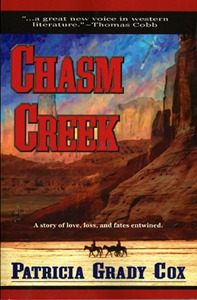
Book Review: Chasm Creek

Chasm CreekIn her recently released novel, Patricia Grady Cox captures the old Southwest with skill and aplomb. The realism of Chasm Creek brings the reader into the lives of Morgan Braddock, Civil War hero but now a wanted killer, Morgan’s partner, Reuben Santiago, a Navaho raised in a Spanish Roman Catholic family, and Esther Corbin, a mother of four children.

Esther’s husband has been gone for months; he’s apparently abandoned his family and their meager farm. She jumps at the chance to rent out the farm to two men, Morgan and Reuben, who want to set up a business selling horses to the Army. Esther and her children move to the nearby dusty mining town of Chasm Creek, to stay with her brother, the town marshal.

Although Morgan longs to be with his wife and children, he can’t go back. Esther doesn’t miss her abusive husband, but he’s left her in a bad position, still married but without an income. Even though it’s morally forbidden, Esther and Morgan can’t deny the deep longings they feel toward one another.

Chasm Creek, a story of love, loss and fate entwined, brings to life a keen sense of place. Patricia Grady Cox’s descriptions are so vivid and richly detailed, I often wanted to linger, to savor the moment. On the other hand, the book is a captivating, fast-paced read. Cox is highly skilled in bringing the Southwest, its landscape, authentic characters and language, to life..

For more information about the author, visit www.PatriciaGradyCox.com

Book Review: Before You Know Kindness

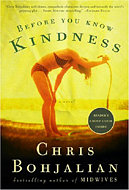
Before You Know KindnessBefore You Know Kindness (Vintage Books) by bestselling author Chris Bohjalian is a gripping, captivating in-depth novel with layers of intriguing drama, insights and family dynamics.

The Prologue captures the essence of the story: What happens when a bullet from a hunting rifle shatters Spencer McCullough’s shoulder. EMT’s do what they can, and he’s bundled off to the hospital. What lies ahead, how this tragic accident affects the whole family, follows.

The story then goes back in time to Nan Seton’s New Hampshire summer home and her two guests, granddaughters Charlotte, twelve, and her cousin, Willow, ten. Soon the girls’ families arrive and they all fall into organized activities, working in the vegetable garden and taking in various activities offered by the country club. The family jokingly calls the annual visit “boot camp,” as Nan keeps everyone on a tight, event-filled schedule.

Spencer, Charlotte’s father and Nan’s son-in-law, is a well-known animal activist. Although tolerated by the family, Spencer is generally considered overbearing in his defense of animal rights. He’s not only an outspoken vegetarian, he’s a vegan, which introduces even more challenges when feeding a crowd of people over a period of days, or even when selecting a restaurant that all would enjoy. Spencer is well-known in his field and is the spokesman for a high-intensity animal rights group.

Through a series of unfortunate events, Spencer is accidentally shot by his daughter Charlotte. The subsequent shock, horror, guilt, anger, and raw, relentless pain follow and deeply affect every member of the family. Spencer’s life is profoundly altered. He’s in constant pain, his right arm is not only useless, it gets in the way. Formerly right-handed, taking care of his personal needs is overwhelmingly difficult and in some instances, impossible.

The girls, Charlotte and Willow, share a secret directly related to the accident, a secret that festers and finally comes to a boil.

Chris Bohjalian writes from the skin of men, women and children with complexity, skill and gentle humor. The story deals with social issues that loom in our society. With keen observations, Bohjalian delves into intimate family dynamics until you feel a part of the family. Before You Know Kindness is a multi-leveled novel that kept me spellbound from the beginning to the end. It’s a masterpiece.

The Treasure of the Steamboat Arabia

Dishes and other goods at "old store."

Dishes and other goods at “old store.”

While attending a Women Writing the West conference, our group visited the amazing Arabia Steamboat Museum, a historic Kansas City, MO attraction.

In 1856, the 171-foot-long, side-wheeler steamboat Arabia sank to the bottom of the Missouri River when her hull was pierced by a submerged tree, taking with it 200 tons of brand new store merchandise. The snag ripped open the hull which quickly filled with water. By the next morning, only the smokestacks and pilot house remained visible. Within the next few days, all remaining traces of the boat disappeared from sight. Numerous attempts to salvage the boat and her contents were attempted but, it appeared, all was lost. Although there were no human casualties, a mule that was tied to sawmill equipment went down with the ship.

Over time, the Missouri River changed course, leaving the Arabia buried deep in the mud of a farmer’s field. In 1987, Bob Hawley and his sons Greg and David set out to find the boat. Using old maps and a proton magnetometer to determine the location, they finally discovered the Arabia half a mile from the current river, under 45 feet of silt and topsoil.

The owners of the farm gave permission for excavation with the provision that the project be completed before spring planting. In November 1988, the Hawleys, along with family friends Jerry Mackery and David Luttrell, began the recovery task while the water table was at its lowest point. Heavy equipment was brought in including a 100-ton crane and 20 irrigation pumps to keep the site from flooding, Within days, goods were recovered, all in remarkably good shape. A wooden crate filled with elegant china was so well preserved even its yellow straw packing material was still intact. Pickles sealed in a wooden barrel were still edible. (Can’t you just hear that conversation: “You try it.” “No, you try it.”)

In February 1989, work ceased at the site and the pumps were turned off. The hole filled with water overnight.

Although the site of the sinking is near present-day Kansas City, Kansas, the cargo and remnants of the ship are now housed in The Arabia Steamboat Museum in Kansas City, Missouri. The museum houses one of the most remarkable collections of pre-Civil War artifacts in the world. Each piece has been carefully cleaned, categorized and attractively displayed. The collection is still a work in progress as preservationists continue to clean remaining artifacts.

The Arabia Steamboat Museum is a fascinating collection of goods including European dishware, jewelry, guns, tools, clothing and food products,. The attractive displays are works of art with items exhibited on furniture replicas, effectively creating a time-capsule of frontier life in the 1800’s.

The Arabia Steamboat Museum is a perfect destination if you’re in the Kansas City, MO area. For more information, visit http://1856.com/

Book Review: Flight to Destiny

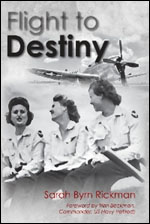
flight to destinySarah Byrn Rickman has again demonstrated her knowledge and expertise in young women aviators who flew military aircraft in support of World War II. In Flight to Destiny, Rickman has fictionalized the story of the patriotic talented pilots, closely following the original WAFS (Woman Airforce Ferry Pilots), later renamed WASP (Woman Airforce Service Pilots).

On December 7, 1941, Anne Gwynn and her student pilot are on their way back to John Rogers Airport, next to Pearl Harbor Naval Base, when they spot hundreds of Japanese aircraft attacking Pearl Harbor. Landing her small Cub among flying bullets, Anne is aware that the Naval Base for the U.S. Pacific Fleet has suffered mortal damage. What she hasn’t yet realized is that her destiny has changed forever.

Flight to Destiny closely follows the actual careers of several women aviators, among the 1,102 women who served their country by ferrying airplanes from the factories to modification centers and to Newark, New Jersey, freeing male pilots for flying in battle.

The fictionalized story is well told with believable characters and situations. Two characters, Nancy Love, head of WAFS, and Jacqueline Cochran, head of WASP are real-life characters in the fictional story.

History buffs interested in military aviation history will find this book a wealth of information. The author, herself a pilot, has described in some detail the various aspects of flying numerous types of aircraft under sometimes dicey situations.

Sarah Byrn Rickman has been researching the WASP for 23 years, interviewing many retired WASP and researching the aircraft they ferried. Flight to Destiny is her fifth book on the subject, joining three works of non-fiction and another novel.

I loved this book and was again impressed with Rickman’s rich knowledge of early women aviators and the important role they fulfilled in World War II.

For more information about the author, visit www.sarahbyrnrickman.com/