
A New Discovery: Fort Townsend

On a recent camping trip to the Olympic Peninsula, we found a delightful new park. Well, not really new—Fort Townsend was originally build in 1856—but new to us. The fort operated as a U.S. Army site on and off until 1895. We enjoyed walking the grassy parade ground and reading the interpretive plaques lining the former Officers’ Row.

The park, located just six miles south of Port Townsend along Highway 20, occupies more than a third of the original Fort Townsend built by the U.S. Army for the protection of settlers. Timbers were hewn and laths cut from local forests. After an inspection by an army headquarters commander and deemed unfit, the fort was closed in 1859. Reopened in 1874, the fort thrived until1895 when fire destroyed the barracks. During World War II, the property was used as an enemy-munitions defusing station. Washington State Parks took custody of the premises in 1953.
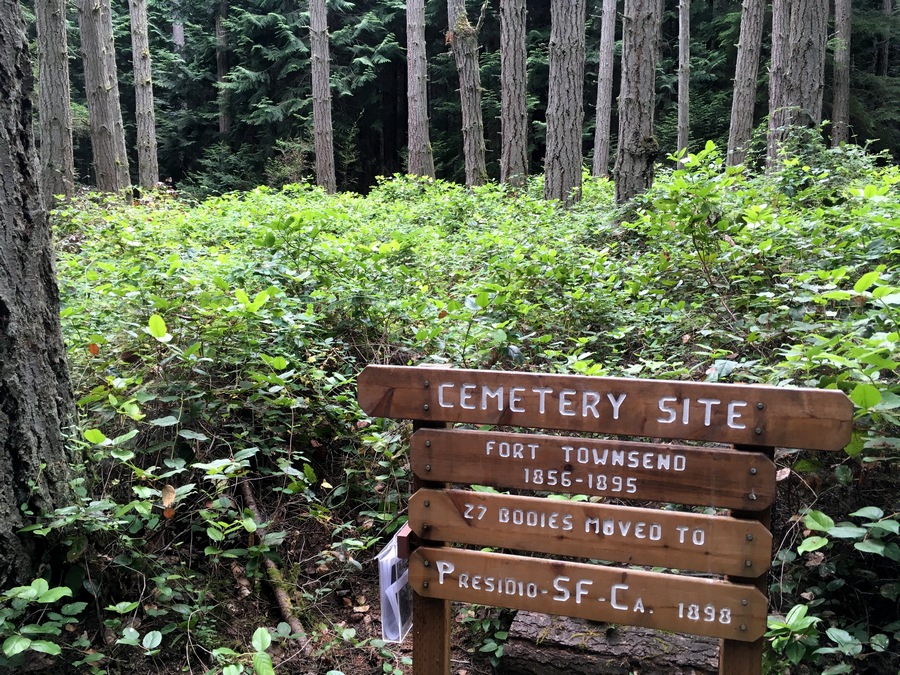
Several hiking trails meander through thick forests with soaring Douglas-firs, western hemlock, cedar trees and a rich understory of ferns. One of the trails passes an old cemetery site for soldiers who died while in service at the fort. In the late 1890s, the soldiers were reburied at the Presidio in San Francisco, California.

One of the park’s special features is 3,960 feet of saltwater shoreline on Port Townsend Bay.

Compared to many state parks, Fort Townsend is small with only 40 reservable standard campsites and four hiker/biker campsites. Although we didn’t have reservations, we were able to camp in a tranquil, private site.

Another attractive feature of the park, the Friends Barn, a replica of the Fort’s historic stable, is available for rent for weddings, reunions or other group activities. The charming hall has a fireplace and is located between the forest and the beach.

It’s always fun to find new places to camp right here in our own State of Washington, and we found Fort Townsend a lovely new destination.

Book Review: The Checklist Manifestso

Atul Gawande’s The Checklist Manifesto: How To Get Things Right is much more interesting that the title suggests. The scope of this eloquently written work goes beyond medicine–the principles apply to everyday life.

The author is a physician and goes into some detail about how and why checklists are important in treating the complications of modern medicine. In many medical procedures, it takes a team to adequately care for a patient. To have a checklist makes sense, especially when there are cross-over issues between specialists. The importance of checklists within each specialty and as they apply to others can make a difference between life or death.

Dr. Gawande worked with the World Health Organization to develop effective surgical checklists, and today more than twenty countries use these as a standard for care.

Among the first professions to create checklists was the aeronautic industry. With the complexity of airplanes, the necessity of a checklist was recognized. Even the most experienced pilot might overlook a small detail that could result in a fatal crash.

Almost any profession benefits by making checklists. Gawande goes into some detail about building a skyscraper that could withstand an earthquake. The author spent time with a well-known builder and was shown the sixteen intricate trades that go into building a structure. Huge checklists are formed to track and communicate between trades such as basic construction, electrical, plumbing, mechanics, etc.

In the complexity of our everyday lives, checklists can make life more meaningful and organized. Rather than relying on memory to accomplish tasks, making a checklist frees the mind and allows more creativity with less stress.

I immensely enjoyed The Checklist Manifesto. Atul Gawande is a brilliant writer who tells fascinating stories to make his argument for the importance of checklists. The premise of the book may not sound exciting, but it is one of the most compelling books I have read this year.

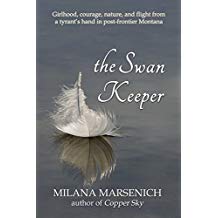
Book Review: The Swan Keeper

The Swan Keeper by Milana Marsenich, a novel placed in the 1920’s, is set in the rugged Montana Mission Mountains.

On her eleventh birthday, Lilly’s fondest desire comes true when her family picnics at her favorite place, the Cattail Marsh, to see the newly hatched cygnets. Lilly and her father love the trumpeter swans and faithfully watch their habits. But someone is killing the magnificent birds and great numbers of them are either dying of gunshot wounds or are poisoned by eating lead shot. Their celebration turns to tragedy when Lilly’s father is fatally shot and her mother critically injured. But the shooter, rather than escaping, attempts to revive her mother. Although Lilly sees it all and knows the truth, that it was intentional, no one believes her.

As Lilly struggles to cope with their terrible loss, she is determined to prove who the killer is, that there was a reason for her father’s hate and distrust of the man. She turns to Charlie West, the sheriff, who also runs a shelter for injured swans. Jerome, his son and her best friend, reluctantly helps Lilly in her attempt to bring the killer to justice.

Author Marsenich does a magnificent job showing the extremes of an eleven-year old’s anguish and frustration. The family lived a meager, but loving life. Now the father is dead and their mother gravely ill. Although neighbors help, the greatest burden to keep the family going is carried by Lilly’s fifteen year-old sister, Anna. Lilly is obsessed with proving the killer’s guilt and spends most of her time in the hills and forests tracking down evidence.

The young girl fantasizes a beloved swan protects her, giving her courage to carry on with her mission to fight for justice. Reality abruptly ends the fantasy when Lilly is face to face with the killer. Marsenich deftly takes the reader into the craggy Mission Mountains with its threats of extreme terrain, bears, and quickly changing weather.

The Swan Keeper is listed as a coming-of-age novel, but this gripping story would be of interest to anyone who loves nature and who strives for justice.


Olympic National Park’s Wild Coastline

The expansive, diverse 73-mile shoreline of Olympic National Park offers constant delights with crashing waves, tidal cycles and spectacular views. Most of the beaches along this stretch are wide and sandy with superb hiking and beach combing.

Ozette, at the northwest tip of the park, can be reached along a three-mile boardwalk trail to either Sand Point or Cape Alava. A popular day hike is a nine-mile loop, which includes a three-mile beach walk.


One of our favorites, Rialto Beach, a two-mile stretch along Olympic National Park’s wild coast, offers smooth-pebbled black rocks, giant drift logs, pounding waves and magnificent views of offshore islands known as “seastacks.” It is also the start of the shoreline trail that leads to Hole-in-the-Wall, famous for the park’s best locations for tide pools. Rialto also has wide sandy beaches for easy walking.

Three beaches south of Rialto Beach are named First, Second and Third Beaches, and are worthy of exploration.

Kalaloch’s beach, at the south end of the park’s ocean coastline, was named by Seattle Magazine as one of the best ten beaches to winter storm watch. Visitors can spend hours here on wide sandy beaches, exploring tide pools, rocky cliffs and a myriad of driftwood ranging in age from new to ancient.

One of our favorite places to camp just three miles from Rialto Beach is Mora Campground, open year-round. With 94 campsites, we’re almost always assured of finding a site for a night or two. Mora has amenities such as fire rings with grates, accessible restrooms, water and bear-proof food storage. Mora also has a boat ramp and picnic area.

We think of summer as a time to camp, but with the right equipment, camping can be a year-round activity. If you’re not into camping, you’ll find lodging in nearby towns of Forks and Port Angeles. Winter storms along the Pacific Coast offer exciting views. Bundle up and try it.

On any of Olympic National Park’s coastline, you’re guaranteed an exciting outing any time of year.

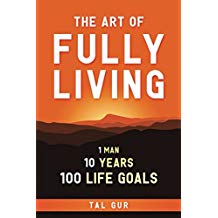
Book Review: The Art of Fully Living

The Art of Fully Living: 1 Man. 10 Years. 100 Life Goals Around the World is an amazing book about a man who did just what the book’s title implies. Author Tal Gur is a bucket list maker extraordinaire.

Gur, an Israeli, yearns to learn English and knows the best way to go about this goal is total immersion. He travels to Australia, learns the language and while there immerses himself in the culture, becoming totally involved with his surroundings. He goes on to complete an Ironman triathlon event in New Zealand. Gur pushes himself to achieve these successes—many times to the point of discomfort and exhaustion. He realizes his own strength and determination, and goes on to face his next life’s goal. He continues to travel the world and become involved in what each country offers. His journey isn’t without hardship and sometimes despair, but he learns to listen to his body and heart. He learns to view a negative situation from a positive angle, to reflect on what is important. Through flexibility and adaptability, he realizes that life is a balancing act.

Gur’s accomplishments through his world travels, his impressive achievements and the choices he made aren’t for everyone. But what is of value to everybody is learning how to achieve what is important to that individual. We each must have some type of goal in order to grow. Gur offers wisdom that applies to everyone:

– Stop accumulating “stuff.” The less stuff, the more freedom you have
– Declutter your life, curb excess buying
– Stay out of debt
– Embrace uncertainty. Let go of the need to control.
– Remember that the journey is more important than the destination

In this review I have attempted to cover the highlights, but in so doing realize there is so much more than reducing this book to these few points. I highly recommend The Art of Fully Living. It has something for everyone.

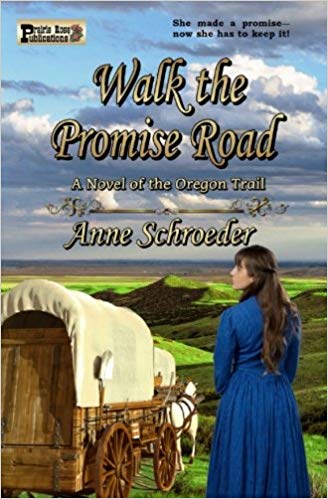
Book Review: Walk the Promise Road

I could feel the dust and grime of the trail when I read Anne Schroeder’s Walk the Promise Road: A Novel of the Oregon Trail.

When Mary Rodgers’mother, father and little brother die from an influenza epidemic, she’s not only heartbroken, she’s alone in the world. She does have her cousin Philip, but he’s soon to leave Illinois to join his fiancé in Oregon. Mary, not quite eighteen, is determined to have a life, not be married off to someone she doen’t even love. She convinces her cousin that she could join him, that they could travel as a married couple. After all, they have the same last name. There would be no way a wagon train would take a young woman without a husband–it would be unseemly, and could cause trouble among the single men. Philip, not much older than Mary, could not be considered a proper escort. Philip resists, but Mary convinces him that it would not only work, but that she would be an asset on the trip, a helpmate.

It’s April, 1848 when they meet their travel companions in Independence, Missouri. The wagonmaster and Lucas Sayer, his half-Indian trail scout, assemble the 117 people and their 61 wagons and set out for the 2,000-mile journey. Mary and Philip’s secret seems to work, and they are known as “the Rodgers” and assumed to be husband and wife.

When Lucas begins spending time at the Rogers’ fireside, Mary struggles to keep their secret. Lucas is the most desirable man she’s ever known, and it’s obvious that he feels the same about her. Other travelers notice and tongues begin to wag.

I particularly appreciated Anne Schroeder’s realistic description of the hard journey west. I’ve always loved stories about the Oregon Trail and this novel is exceptional in its authenticity. It’s amazing that the west was ever settled. Emigrants constantly struggled to move forward, bone-tired and thirsty. Wagons broke down, stock died from exhaustion, people died of disease or lack of desire to struggle on. There were always those who prepared, like Philip, and those who did not and ultimately had to depended on others. For women and many of the older children, the journey was made mostly on foot, doing everything they could to lighten the load for the mules, horses or oxen that pulled the heavy wagons. There was either not enough water, or too much water. Heartbroken women left their treasures along the trail in order to lighten the load so the beasts wouldn’t die in their traces. Travelers bickered, some went their own way, often with disastrous results. It was a long, grueling journey and the lucky ones arrived in Oregon six long months later.

Walk the Promise Road is a journey to remember.

Book Review: Girl Warrior

Carmen Peone’s novel Girl Warrior shows what determination and grit can do in the face of bullies and hard decisions.

Charnaye Toulou lives on the Colville Reservation in eastern Washington. She’s a high school senior now and has much to look forward to. Her family has had a hard time since her father was in a car accident which left him paraplegic. Charnaye’s mother, a teacher, is the only wage-earner in the family and they’ve had a hard time managing their ranch and household expenses.

Although Charnaye is a good student, her time at school is riddled with anxiety. Hagen, a bully, is relentless in his jibes about her dream of competing in the Omak Stampede’s Suicide Race. True, girls usually don’t participate in this rugged competition. The races, held over a four-day period, are tough on horses and riders, to say nothing of the grueling training required. Many of the participants, including Charnaye, are Natives and the race traditionally has been a male-only event, although there have been women competitors, including her grandmother.

Charnaye also competes in archery. If she wins the competition in that, she might earn enough money to help pay household and medical expenses. But if she could win the big event, the Suicide Race, she could earn a big cash prize.

Charnaye is nearly overwhelmed as tension builds with her school work, end-of-year senior activities, cruel bullying tactics, and her looming competitions. And to top it off, her dream of competing in the Suicide Race is dependent on somehow acquiring a horse that is up to the task. Her own horse, though reliable, is not sturdy enough to participate in that grueling race.

Girl Warrior is highly suspenseful and loaded with Native folklore and interesting facts about the Suicide Race. The novel aptly describes the angst many teens experience as they are about to enter the adult world.

Book Review: Me Before You

I loved Me Before You written by JoJo Moyes, an English journalist and romance novelist. I’m not usually a romance reader, yet I found Me Before You a fascinating love story, funny, surprising, sometimes tearful, and certainly thought provoking.

The story takes place in a small English village known for Stortford Castle, a well-known tourist attraction. Louisa Clark is, by most standards, eccentric. At 26, she has held the most menial jobs, the latest working in a café. But she loves serving customers. Her dress style is…flamboyant, not with any particular style. Let’s say she dresses with a style of her own. Although she comes from a loving, close-knit family, she is often the brunt of their jokes. Her younger sister has the “brains of the family” and is a university student. Her father’s employment situation is precarious and the family relies on Louise’s income.

Will Traynor comes from great wealth; in fact, his family owns Stortford Castle. He has much to show for his own achievements. Will loved life, had a successful business and was known for his dare-devil lifestyle. When, as a pedestrian, he is struck by a motorcycle, his injuries are severe and permanent. He is instantly a quadriplegic and must rely on others for his existence. His life is broken beyond repair and he is not compliant.

When the café where Louise works goes out of business, she is left without a job, a frightening possibility for her and her family. She goes to the employment office and interviews for a job caring for Will Traynor. Louisa and Will couldn’t have been more different. But as their lives intertwine, something unexpected happens.

When Louise learns that Will has shocking plans for his own life, she sets out to show him that life is worth living.

From Me Before You I learned a few things, too, about the world of a quadriplegic and all that it takes to sustain life. The novel is rich with English tradition and lifestyle, which I enjoy.

Book Review: Ordinary Magic

Ordinary Magic: Promises I Kept My Mother Through Life, Illness, and a Very Long Walk by Cameron Powell is an inspiring memoir about the sometimes rocky love between a mother and her son. On the day Cameron’s marriage ends, he learns from his German-born mother, Inge, that her cancer has returned. Incredibly, Inge wants her son to join her on the 500-mile walk of Camino de Santiago, a pilgrimage known in English as the Way of Saint James, located in northwestern Spain.

The two, mother and son, are joined by Cameron’s young cousin, Carrie, fifteen, and friends who act as guides in the first part of the walk, Julio and later, Ann Marie. They begin their journey in Saint-Jean-Pied-de-Port in France, near the border with Spain.

The memoir, written mostly through Cameron’s journal and also includes thoughts from Inge’s journal, shows grit and determination along the often grueling journey. Inge suffers from not only from the effects of cancer, but also from infected feet. Cameron, too, has leg problems. At times one or the other rides a distance, but mostly they stick to walking up steep hills, as difficult to climb as to descend, and across barren or rocky land. They also trek through breath-taking lush landscapes. Accommodations are often uncomfortable with several people, and their assortment of snores, sleeping in a single room. Food is sometimes questionable, but they usually find nourishment along the way.

The 35-day trek ends at Camino de Santiago with visits to the magnificent Santiago de Compostela Cathedral in Galacia, Spain.

Cameron and his mother’s journey continues after they return home and Inge goes into her final agonizing journey with cancer. Cameron serves as her loving caregiver.

Ordinary Magic is often humorous with wry comments about life in general, and this walk in particular. It also contains many words of wisdom about living life to the fullest, embracing new experiences, and accepting sadness as a natural part of life.


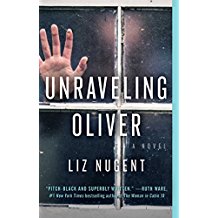
Book Review: Unraveling Oliver

A psychological suspense, Unraveling Oliver by Liz Nugent, is a well-crafted novel told from several narrative points of view.

The story begins in Oliver Ryan’s voice. It’s 2011 in Dublin, Ireland. Oliver is a successful writer of award-winning children’s fantasy; his wife Alice illustrates his enormously popular books. The novel opens with Oliver contemplating his unconscious wife.

Subsequent chapters include other voices, people who make up the fabric of Oliver’s life. His childhood was a horror of neglect, anguish and envy. As various people come into his life, Oliver’s quiet rage and hate grow, providing a unique look at how a person might become a psychopath. Oliver is never likeable—the reader is always aware of his self-serving attitude—yet people are drawn to him, especially when he turns on his charm.

This suspense novel is not a whodunnit, but rather a whydunnit. Unraveling Oliver is a highly suspenseful, intricately woven story of a man who apparently has everything; that is, until his shocking secrets are unveiled.