Book Review: Becoming


Michelle Obama’s Becoming is an extraordinary autobiography of a woman who accomplished impressive feats from modest beginnings.

Growing up in a working-class neighborhood in Chicago’s South Side, Michelle lived with her mother, father, and older brother in a cramped upstairs apartment in her aunt’s house. Although their living quarters were small, her parents saw to it that their lives were rich with experiences that would see the children through to hard-won success.

Although the college counselor at high school told Michelle she “wasn’t Princeton material,” she persisted and, with the encouragement of another teacher, was accepted and graduated from Princeton and later from Harvard Law School.

After Harvard, Michelle worked as an attorney at a large Chicago law firm. While there she met an optimistic, cheerful young black man with a peculiar name: Barack Hussein Obama. Barack was born in Hawaii, the son of a Kenyan father and a white 19-year-old mother.

In the “Becoming Us” section of the book, Michelle discusses marriage with Barack, how he seemed destined for public life and eventually become an Illinois State Senator. While Michelle strove for a stable home life, Barack commuted from Chicago to his senatorial work in Springfield, often spending three days at home and four in Springfield. Later, he became a U.S. Senator and commuted from Chicago to Washington, D.C.

In the meantime, Michelle had changed jobs and was now a university administrator. They had two daughters, Malia and Sasha, and Michelle struggled to balance family, work, and Barack’s fast-moving political career. In the book she speaks of the grueling work of campaigning, and the discomfort of close scrutiny while on public display.

In “Becoming More,” we experience life in the White House with the 44th President of the United States, and the first black person to hold that position. Michelle describes, with good humor and candor, what it’s like to live “above the shop” in a 132-room house, with armed guards present at all times. She talks about traveling with the President in a 20-vehicle armed caravan. As first lady, Michelle strives to make her mark, to make a difference. The author tells her story of eight years in the White House with honesty and good humor.

Becoming is an intriguing autobiography. It’s a worthwhile story, told in exquisite, interesting detail. Michelle Obama isn’t hesitant about naming names, nor does she shirk from sharing her views on political shortcomings, and backs up her statements with provable facts.

Note: Becoming in hardcover format is a hefty volume of 428 pages, and that with small print. This would be a good candidate for an e-reader with adjustable font.

Book Review: The Girl Who Wouldn’t Die

The Girl Who Wouldn’t Die by Randall Platt is a gritty, unforgettable novel of triumph over tyranny during the bleak years of World War II and the German occupation of Poland.

Her street name is Arab and she is wise beyond her sixteen years. Abra Goldstein is the oldest daughter of Jewish parents. Arab is estranged from her father, but longs to see her little sister, Ruth. Blond and fair-skinned, Arab passes for German and can speak four languages, though she fears her German has a Polish accent.

Conditions are desperate in Poland. Jews are being rounded up and forced to leave their homes and stay in walled-up ghettos. Desperately needed items are scarce but Arab is expert at stealing and trading black market goods. She knows all the best routes to avoid the goose-stepping Nazis, even though some of those escape routes include going underground. Yes, the sewer. She’s beyond caring how she looks, or smells. Her goal is to get her little sister to safety, out of Poland.

Masquerading as a boy, Arab teams up with carefully selected Polish friends, and even a turncoat German, to plan an escape that has little chance of success. The fact that it’s in the dead of winter doesn’t help, nor does being on a “wanted” list make it easy to maneuver in bombed out Warsaw. And the escapees now include more than just her little sister, they involve numerous children, some of them sick.

The Girl Who Wouldn’t Die takes place from the summer of 1939 to the fall of 1941. It’s an engaging story to remember, to learn what resistance means, and to appreciate the price of freedom.

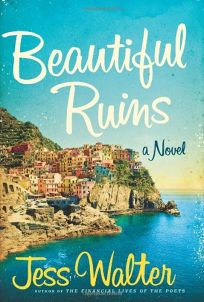
Book Review: Beautiful Ruins

In 1962, a local fisherman brings Dee Moray, a beautiful American actress, to Italy’s remote, rocky Porto Vergogna, a little village on the coast of the Mediterranean Sea. Kind, but naive Pasquale is flattered that while the actress waits for her boyfriend, she intends to stay at his Adequate View Hotel, an ancient building carved out of a stone hillside. Her unplanned visit changes the lives of the many characters in Beautiful Ruins, a novel by Jess Walter.

Beautiful Ruins interweaves incidents ranging from 1846, 1943, 1962, 2008, to present day, across continents from Italy to America to London. The novel doesn’t follow linear order, but loops back and forth as the story unfolds. You have to pay attention, not only to the time period, but for the various characters’ stories and how they relate to the whole.

Surprisingly, the 1962 period of the book includes famous actor Richard Burton, who is in Rome filming “Cleopatra.” Although the words mimic the real character, it is, after all, a novel.

As Beautiful Ruins toggles between time periods, the plot moves forward. The innovative story ranges from tragic moments to hilarious scenes. I thought the book smart and savvy. Being of linear nature, I kept trying to straighten out the time-line, but soon gave up and just sat back and enjoyed the story.

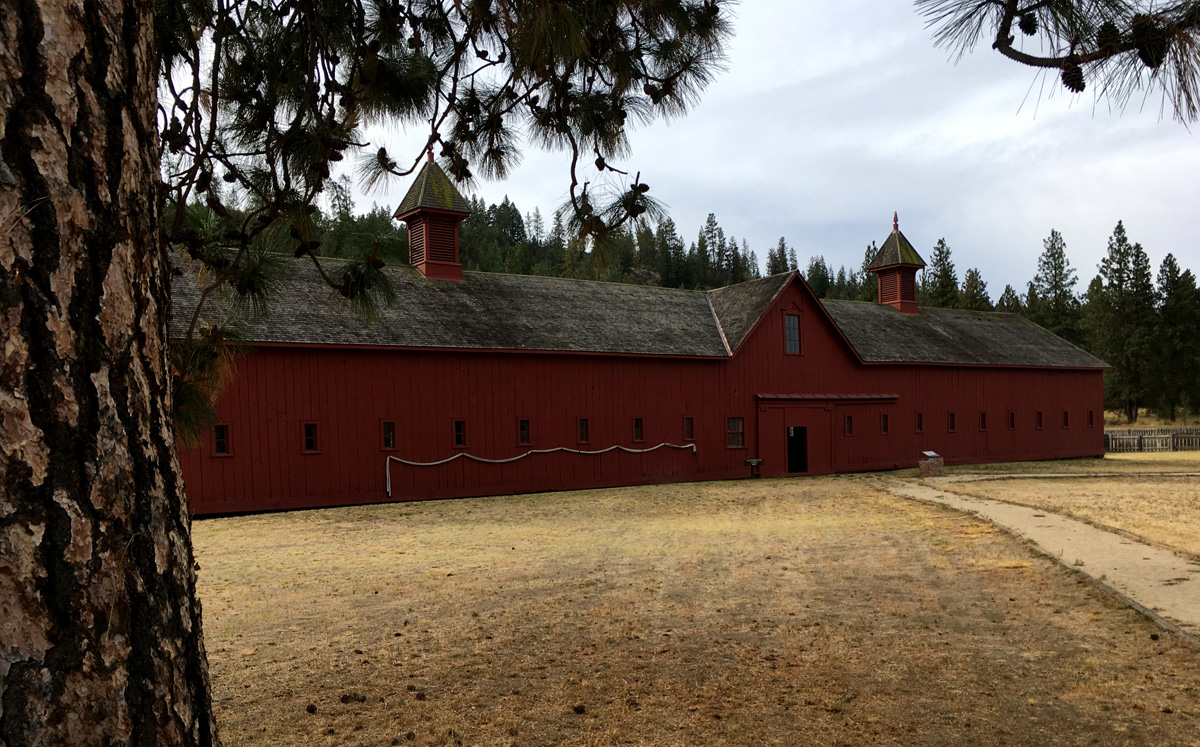
Fort Spokane: Stepping into the Past

To walk the grounds of Fort Spokane is to walk in the footsteps of change. Fort Spokane has a changing story, from serving as a frontier military post, to an Indian boarding school, a tuberculosis hospital and sanitarium, and now as a National Park. Fort Spokane is part of the Lake Roosevelt National Recreation Area and located above the confluence of the Spokane and Columbia Rivers in eastern Washington.

Built in1880, Fort Spokane first served as a frontier military post. Many soldiers joined the Army hoping to see fighting on the frontier, but the fight against boredom was the only battle the soldiers at Fort Spokane waged. Their monotonous life consisted of waking to the bugle call, eating breakfast, marching the Parade Ground, working in the bakery or standing guard at the Guardhouse, march and drill the manual of arms in the afternoon, play baseball in the evening if weather permitted, eat dinner and go to bed. The tedious days became more than many soldiers could bear. Some turned to drink; some ran away. The guardhouse, originally built to house prisoners of war, ironically housed errant soldiers. The fort closed in 1898 when the soldiers were transferred to Cuba to fight in the Spanish-American War.

Fort Spokane was decommissioned and transferred to the Bureau of Indian Affairs. The fort opened as an Indian boarding school in 1900. Children ages five to sixteen from the Spokane and Colville tribes were removed from their families and sent miles away to the Indian Boarding School at Fort Spokane. At first they did not understand the language of the teachers and staff, yet were not allowed to speak their own language–not even to each other. They were not allowed to wear their native clothing or practice their spiritual traditions. Strict discipline and harsh punishments were the norm. The boys were trained to learn a trade such as gardening and tending chickens and cows. The girls were taught how to keep house and other domestic chores. It was a time of suffering both for the children and for their parents. The school operated from 1900 to 1907.

The last people to occupy the fort were the doctors, nurses and patients of the tuberculosis sanitarium and Indian hospital until Fort Spokane’s final closure in 1929.

Fort Spokane became a part of the National Park Service in 1960. Major restoration involved four of the remaining buildings: the Quartermaster Stable built in 1884, the Powder Magazine built in 1888, the Reservoir built in 1889, and the Guardhouse built in 1892. These structures can be seen today and visitors are encouraged to tour the grounds and buildings. The National Park Service maintains the grounds at Fort Spokane to preserve these stories for future generations.

Book Review: Lies That Bind Us

Andrew Hart’s novel, Lies That Bind Us, is a blend of mystery, diverse personalities and Greek mythology. A group of friends, some of whom met on the Greek island of Crete five years earlier, decide to reunite, but this time stay at an old castle-like mansion.

The group is an interesting blend of people, dissimilar in interests and financial status. The story is told in first person by Jan, a single woman. When she first met the group on Crete, she had been with Marcus, but this time he was with another woman and Jan is the only single person in the group of seven.

The story begins with Jan shackled in a dungeon-like dark room. She’s confused, not knowing how she got there, where she is, or why she is being held prisoner.

The story toggles between Jan in the dungeon and her trip to meet her friends on Crete. Early on, we learn that Jan is a pathological liar. She often lies about small, inconsequential things, issues that often don’t matter, but when exposed make people leery of her.

As the group again explores the region, we learn more about the individuals. One of the mysteries is why they’re even there, together–they apparently have little in common. Greek mythology plays an important part in both Jan and Marcus’ interest in the area, but means little to anyone else. Two of the couples are quite wealthy. In fact, the couple that invited the others have paid for the mansion they’re staying in for the week.

The gripping story takes us around Crete with its wild natural beauty and thousands of years of culture. But as the group explores, we begin to see flaws in their personalities. Tempers flare and questions arise that have no apparent answer.

As the plot moves forward with Jan in the dungeon recalling the group exploring Crete, the mystery thickens until both factors come to a head.

I enjoyed Lies That Bind Us and the unraveling insight to human behavior, and also the vicarious trip to Greece.

Book Review: Miss Royal’s Mules

Miss Royal’s Mules by Irene Bennett Brown is a delightful novel that takes place in early 1900’s Kansas.

Without either family or funds, Jocelyn Royal also has no job prospects. Well, at least not a respectable job. She decides to sleep in the livery stable hayloft and in the morning ask the liveryman about a job mucking out stables. Almost asleep, she overhears a stranger ask the liveryman if he knows of a cowhand who could help drive a large herd of mules to Skiddy, Kansas. Jocelyn rushes down the ladder and steps into the lantern’s light to volunteer for the job. It takes a little fast-talking, but she finally convinces the man that she’s qualified for the job.

Jocelyn drives the two-mule-team wagon and cooks for the owner, Whit Hanley, and his other hired hand, Sam Birdwhistle. Besides being capable with stock, she’s a good cook and not afraid of hard work. Her dream to purchase her repossessed small farm is worth every hardship and discomfort.

One early morning she awakes to find her boss gone. The other hired hand claims the boss hopes to be back in a few days and that they are to continue the drive to Skiddy. Together the two manage the herd, but not without misadventures and misgivings.

Finally, they arrive at the boss’s run-down ranch, a place, the neighbors say, he inherited from his father but has never lived. The two manage to get the mules settled and fix up the place so it is barely habitable and …. wait. Where could the boss be? Did he have an accident or maybe even get killed? A lot is at stake here. The money due Jocelyn is critical not only to her survival, but also to bring her closer to getting her farm back.

Miss Royal’s Mules is a fun, engaging, warm-hearted story. I loved the true-life characters and the early-Kansas setting. The author’s research of mules, their temperament and loyalty, is evident. Highly recommended.

Book Review: The Unlikely Pilgrimage of Harold Fry


Rachel Joyce’s debut novel, The Unlikely Pilgrimage of Harold Fry, is spell-binding in its simplicity, yet profoundly moving.

Harold Fry receives a message from a former co-worker, Queenie Hennessy, that she is dying. He promptly sends a reply, but rather than posting the letter, at the last minute decides to walk the distance to say farewell in person. And distance it is—627 miles from the little English village of Kingsbridge north to a hospice in Berwick-upon-Tweed.

Harold isn’t equipped for such a strenuous walk. He’s wearing around-the-house yachting shoes and a light coat, shirt and tie. He soon regrets not having his cell phone, but after walking several miles, calls his wife, Maureen, collect. She’s irritated, but that’s nothing new. Almost everything Harold does irritates her, and has for many years.

As Harold’s journey progresses, he reminisces about his life, recalling sad and regrettable times. Along the way he meets people, many encouraging him on his journey.

The story occasionally switches to Maureen as she, too, looks back on their marriage of many years, acknowledging the joys, but mostly the sorrows and regrets.

I loved this endearing story of ordinary people. As Harold’s journey unfolds, I took my time to savor the descriptions of English countryside, and the genteel charm of a man who is so careful not to offend the people he encounters. The Unlikely Pilgrimage of Harold Fry is a lovely novel of profound insight.

Fort Walla Walla Museum: A Journey into the Past

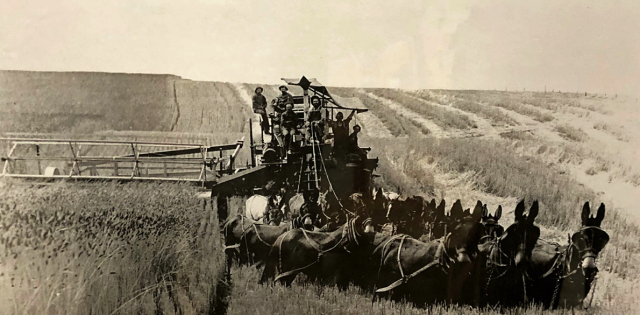
Mule team harvesting wheat on the Francis Stubblefield ranch, c. 1914. Photo of display by Roni McFadden

When in Eastern Washington recently, we visited the 17-acre Fort Walla Walla Museum, an impressive collection of fascinating relics of the area’s history.

Beginning our tour in the main building, the spacious  Entrance Hall, bronzes by Walla Walla native, David Manual are on prominent display. Then, an actual stagecoach stirs the imagination as we compare the difference with today’s cushy transportation. The Entrance Hall features rotating exhibits including fur trade and gold rush artifacts. I especially enjoyed an exhibit of antique toys, and was fascinated by the model train set.. Also featured in the Entrance Hall were scheduled enactments of local historical people. The Museum Store features books on regional history and culture, beautiful arts and crafts, and an assortment of locally produced gourmet foods.

We continued our tour to explore four more exhibits. Exhibit Hall 2 houses one of the nation’s largest collections of horse-era agricultural equipment, including pre-combine stationary threshing equipment used in the early 1900s. This hall also features a cook-house where cooks prepared 5,000- to 6,000-calorie meals per day for the hardworking farmhands.

Exhibit Hall 3 displays the combine, the next technological development in horse-era agriculture. I was amazed at the 1920s life-size 33-mule team model hitched to a wooden combine. It’s hard to imagine getting 33 mules all pointed in the right direction, harnessed and hitched, and then driven by just one man.

Exhibit Hall 4 features wagons and other vehicles used in the early 1900s, including a doctor’s buggy, and even a “sports” buggy. This hall contains a branding iron collection, including many of the oldest cattle brands in Washington.

Exhibit Hall 5’s entrance doors were once a part of the 1908 Walla Walla fire station. Among other displays is a horse-drawn steam pumper, used until the Walla Walla fire station acquired its motorized fire engines.

We walked down a path surrounded by grassy hills to the Pioneer Village with 17 more buildings to explore. We wandered from the blockhouse to tiny cabins that sometimes housed families with many as 10 children, to school rooms, to various shops vital to the needs of a pioneer settlement.

Fort Walla Walla Museum brings history to life. It’s one of the most complete museums I have ever seen. It occupies part of the 640-acre military reservation that traces its origins to an early pioneer society that formed in 1886. If you’re in the Walla Walla area, I highly recommend visiting this museum.

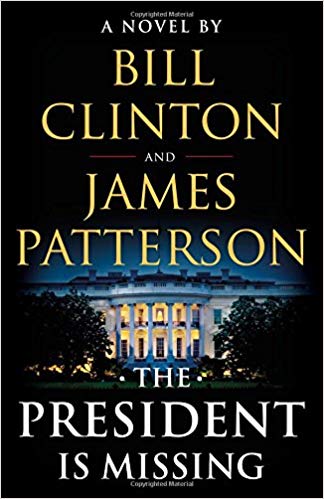
The President is Missing


Former President Bill Clinton and James Patterson collaborated on The President is Missing, a suspenseful novel about a threatened attack on the cyberspace infrastructure of the United States.

President Duncan is approached with the threat that America will soon be brought to its knees. A massive plot is in motion to disable the entire country by systematically deleting all electronic files, sending the United States into the “Dark Ages,” the name used for the crippling possibility of the attack.

Sure enough, a virus is discovered that threatens to delete all electronic files in record time. The President is taken to a predesignated safe place, but even there attack is imminent. It becomes obvious that among the President’s inner-circle of seven trusted people, one is a traitor. But who? Who can he confide in at the nations crucial hour? The saying, “Keep your friends close and your enemies closer” seems apropos.

Almost every facet of our lives now depends on computer technology. Such a massive shut-down would throw the military back to the 19th Century, while Russia, China, and North Korea remained in the 21st Century.

President Duncan enlists the help of some of the best brains in the country to find the code word to stop the virus. Unless they can find it, the country will plunge into the Dark Ages, making the 1930s Depression pale by comparison.

The President is Missing is a large volume (528 pages), but I found myself riveted from beginning to end. The novel is a fascinating read, and scary. The threat is believable, the writing impeccable, and the resolution plausible. Highly recommended.

Book Review: Finding True Home

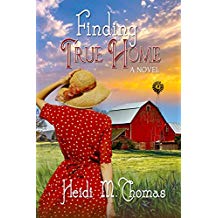
Heidi M. Thomas’ Finding True Home, a novel that continues a fictionalized story of her mother’s life, is an intriguing sequel to Seeking the American Dream.

Anna Moser immigrated to Montana from Germany as a war bride. Although Anna and her husband Neil are very much in love, life has not been easy. Through harsh winters and searing summers, she’s content to work on their ranch alongside her husband, plus take care of their children and keep up the housework. It’s not the work that Anna finds a burden, it’s the lack of acceptance by her neighbors. She perceives she is still thought of as “that foreign woman,” and that her neighbors can’t forget, nor forgive, someone from Germany, a country America fought in World War II.

The Mosers have two children, Monica and Kevin. Family is everything and it’s tough for Anna to allow her children to find their own way. When their third child, Lizzie, is born, Anna finds her more challenging than the first two. As a baby Lizzie constantly cries, as a little girl she is unpredictable, and as a teen she’s constantly in trouble. Anna struggles to understand her children, especially Lizzie.

When tragedy strikes, Anna and Neil are devastated, but Anna blames herself, the old self-doubt haunts her. Later, when serious illness strikes, Anna is forced to look honestly at her life and the blessings she has been given.

Finding True Home is a heart-warming story, a story parents will recognize in their own lives and in their own struggles raising a family. As this novel so aptly describes, love endures, love is triumphant.