Book Review: By Nightfall

For a close-up view of man’s frailties, the novel By Nightfall may be just what you’re looking for. Michael Cunningham tells a good story, digging deep into man’s inner thoughts, family dynamics, and the whims of the business of art.

Peter Harris, 43, owns an art gallery in present-day Manhattan. His wife Rebecca is editor of an arts and culture magazine. From all appearances they live well, are happily married, work hard, and are reasonably content. Their only child, Beatrice, now living on her own, plays a minor role, but recollections of her bring regret.

Their world changes forever when Rebecca’s much younger brother Ethan, nicknamed Mizzy, short for Mistake, comes to stay for an unspecified time. For years, Rebecca and her sisters have come to Ethan’s rescue in his various efforts to grow up. Although Ethan is now an adult, he seems to constantly need support from family and friends. Handsome and charming, he brings anxiety and unrest into Peter and Rebecca’s lives.

Author Michael Cunningham delves deep into Peter and Rebecca’s family backgrounds. These back-flashes bring texture to who the characters are in the present. When Ethan arrives, their routines are interrupted as they both try to cater to his needs. Rebecca takes on the role of big sister, but tries desperately to “let go.” Peter attempts to be a big brother, a friend, but surprising emotions spring to the surface.

Throughout the novel, readers learn about the inner workings of the business of contempory art. Most of the book is written from Peter’s viewpoint and his ever-present pangs of growing older, of how he appears to others, and how his work affects his bevy of artists and customers. By Nightful is an in-depth and memorable study of human nature, particularly in privileged society.

Although many readers may not relate to Peter Harris, his journey makes for an interesting glimpse into his world.

Book Review: Hauchuca Woman

Arletta Dawdy manages to pass on an amazing amount of southwest history in Hauchuca Woman. The story ranges from 1886, toggling to 1952, and ends with a satisfying 1961 epilog. The historical fiction is the first of the Huachuca (pronounced Wha-chew-ca) Trilogy, followed by novels By Grace and Rose of Sharon.

Josephine, the story teller, born in 1877, was about nine years old when she first met the famed Chiricahua Apache, Geronimo. Josephine’s family befriended the small starving band and in turn were considered the infamous chief’s friends.

Although the episode with Geronimo is a short scene, it sets the pace of a historical novel about the life of a white woman who lived through the taming of the Southwest, particularly in Arizona, in the late 1800’s. Josephine, 75, tells her story to her two young-adult grandchildren who are cousins, and offspring of Josephine’s twin sons. The young people are eager to tape record their grandmother’s fascinating history, bits and pieces of which they’ve heard all their lives. Toggling from 1952 and the telling of the story back to the events of 1880’s, makes for an interesting contrast. The three travel to the nearer story settings, allowing the reader to “see” through more modern eyes various historical events.

Through Josephine, the grandchildren are able to piece together their grandmother’s complex and enlightening story. Josephine’s Lazy L ranch, is her family’s homestead and a place the grandchildren cherish. They hope to encourage their families to help make it a place where family, friends and guests could gather and relish in an atmosphere of history carved from decades of dedicated labor.

Josephine’s colorful life takes surprising and often unconventional turns and twists. Her story demonstrates the highs and lows of a life well lived.

I found the segment about Fort Huachuca particularly fascinating. The Fort, still in active use, headquartered the famed 10th Calvary, the “Buffalo Soldiers,” one of the Army’s elite black cavalry corps.

Arletta Dawdy does a good job captivating the spirit of yesteryear. The details of time and setting, dialect, clothing and transportation, add immeasurably to the work.

Huachuca Woman is available in print and e-book formats. To learn more about the author, visit www.ArlettaDawdy.com

Book Review: Coins in the Fountain

Judith Works gives readers a fascinating Italian experience in Coins in the Fountain: The Story of an Italian Intermezzo. The book is a memoir of the author’s ten-plus years in Italy.

Equipped with her newly acquired law degree, Judith Works accepted a position with the United Nations Food and Agricultural Organization (FAO) headquartered in Rome. Together with her husband Glenn, they set up housekeeping, a task fraught with obstacles and lack of conveniences.

Rome, is called the Eternal City–even the ancient people thought it would go on forever. The author claims it would take an eternity to see it all. When time permits they explore it, piece by piece, street by street. Once settled at work and in what eventually would be “home,” Judith and Glenn were able to travel on weekends, holidays and vacations. The author and her husband know how to travel, to observe, and to experience a way to life. Often putting up with nightmare traffic, they attend concerts, visit churches, museums, galleries, flea markets, quaint shops, countrysides, big cities, small villages. Sometimes they travel with friends, other expatriates, sometimes on their own. The author is obviously knowledgeable in art and readers have the wonderful advantage of seeing church frescos, sculptures, paintings, ceramic tiles, fountains, etc. though her experienced and critical eye.

Food is an obsession in Italy and takes a prominent role in this memoir, as does wine. The book describes in detail cuisine in Rome and in other parts of Italy. Glenn became adept in Italian cooking, which further enriched (pun intended) their food experience.

The Works returned to the States after finishing her four-year contract with FAO, but were delighted to return to Rome a short time later, this time to work with United Nations World Food Program (WFP) on a six-year contract. Works’ job necessitated travel to other countries as well and she briefly describes these ventures.

The name of the book, Coins in the Fountain refers to the Trevi Fountain, the most famous and beautiful fountain in Rome. It is thought that if visitors throw three coins in the fountain, they will return to Rome. At least it worked for the author, to the delight of all who read this book.

Coins in the Fountain: The Story of an Italian Intermezzo could be a guidebook for tourists visiting Italy, as well as for armchair travelers who may never step on Roman soil, but have the advantage of traveling vicariously through this exceptionally well-written book. Coins in the Fountain is available in ebook format. For more information about the book and author, visit www.coinsinthefountain.com

Book Review: Where Danger Danced

Irene Bennett Brown again captures her readers with Where Danger Danced, the second of the Celia Landrey Mystery series. This second cozy mystery is as delightful as the first.

As Celia Landrey guides her last tour group of the season through town, they are distracted by screaming and confusion at a service station where an old fuel tank is in the process of being removed to make way for a new one. To the horror of onlookers, human bones are discovered buried near the old tank.

Celia works hard to preserve her town’s reputation. Pass Creek is not only where her home and livelihood, Landrey’s Inn, is located, it is where she and her late husband of twenty years lived. Active in the small community, Celia is devoted to keeping the town a safe haven, a place where people want to live and visit.

The grim discovery of the skeleton sets the town to humming speculation. The Police Chief, knowing Celia’s penchant for fiercely protecting her town and her determined drive to get to the bottom of a mystery, warns her to let the police do their job. In others words, stay out of it.

Even her fiance, Jake Flagg, discourages her from getting involved. It’s time they set a wedding date and he strongly prefers her to concentrate on that.

But, how did those bones get into that deep hole? She couldn’t let it rest. Cold cases are apt to be less important to the police than current problems. She inquires around town but the townspeople, especially the old-timers, clam up when she asks questions about whose remains have been unearthed. In many different ways, she’s told to mind her own business. Many of her friends are clearly exasperated with her. What’s going on?

Where Danger Danced is an entertaining, captivating read. It’s a perfect sequel to Where Gable Slept. I can’t wait for the next one. The novel is available in both e-book and print formats. For more information about the author, visit www.IreneBennettBrown.com
.

The Dividing Season

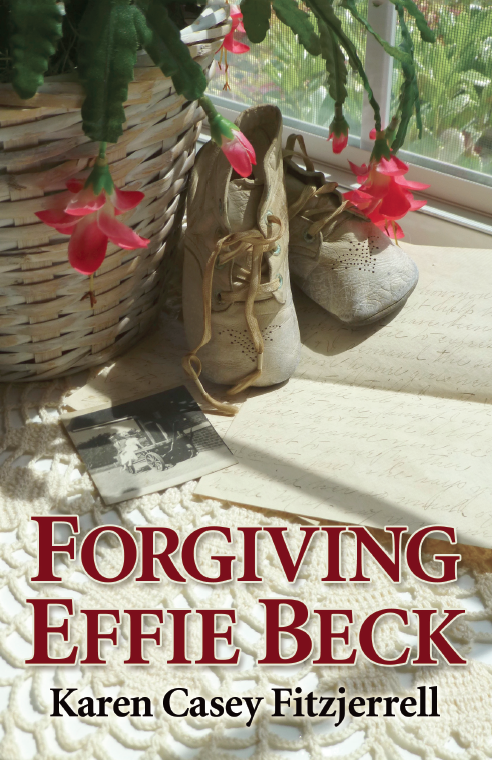
Rarely do I find a book as captivating as The Dividing Season by Karen Casey Fitzjerrell.

Nell Miggins is at a crossroads of her life. It’s 1910 and time to move on, to let go of Carrageen, the Texas cattle ranch she inherited from her father. Nell is no longer a young woman and life is passing her by. She’s done well, managing the ranch. She handles just about anything the ranch hands can and she’s tough. But there must be more to life and she’s determined to find it. Just what “it” is, she’s unsure.

Fitzjerrell spins a wonderful tale, a story that includes a dusty Texas ranch, the humid jungle of Mexico and a near-death experience at sea. Diverse personalities help spin this tale. Nell’s ranch hosts, in addition to the ranch hands already there, a windmiller, college professors, and a smelly cowhand with a bent for making wrong decisions. All the characters have a purpose, all add depth to the story.

The author, a life-long Texan, exhibits great passion for her state and her descriptions put me right there. I felt the dust creep under my collar, I gasped at the brilliant orange sunset, I shivered in the cold rain, I felt the weariness at the end of an exhaustive day. Fitzjerrell knows people and writes with compassion, heart and quiet humor. I loved this book. It has the earmarks of a classic and yet was only published in 2012. She speaks with authority on ranching and, surprisingly, on Mayan archaeology in Mexico’s steaming jungle.

The Dividing Season is a page-turner, but the reader doesn’t feel rushed. Fitzjerrell’s timing and pace are impeccable. We know her characters, we feel their pain, their joy, and, for some, their strength and determination borne of love for those who have become family.

I highly recommend The Dividing Season. The novel is available in trade paperback and e-book formats. To learn more about the author, visit www.karencaseyfitzjerrell.com
A Logger’s Daughter: Growing up in Washington’s Woods

Joan Rawlins Husby’s delightful memoir, A Logger’s Daughter: Growing up in Washington’s Woods gives readers a poignant view of the life and times of growing up in Washington’s wilderness in the ‘40s and ‘50s.

Joan Rawlins was born just months before her parents, Delbert and Marie Rawlins’, moved from North Dakota to Washington’s Robe Valley, at the foot of Mt. Pilchuck. The Rawlins lived in a tiny cabin until Joan’s father could build a larger cabin of scrounged material. Eventually, the Rawlins had five children who played in the great outdoors with other loggers’ children.

Husby shares with readers a life of growing up in Washington’s forests, the daughter of a logger. Although her parents didn’t have a lot of ready cash and worked hard for every advantage they had, there was always food on the table and love to spare. The family was years in getting electricity and running water. Their “bathroom” was a two-holer a distance from the house. Heating fuel was wood, hand-cut and split. They raised chickens for eggs and meat, and rabbits for meat and skins to sell to Sears, Roebuck and Company.

If logging was shut down by fire, strike or snow, Husby’s father earned money by making roofing shakes, or taking on any job that would put food on the table.

Equally interesting is Husby’s writing of the area’s history. When they arrived in Robe Valley, most of the timber was virgin. Many of the cedar trees were as wide in diameter as her father was tall. In the early days, timber was cut by hand-saw. Raging rivers changed the lay of the land. The purpose of railroads evolved from mining to tourism.

Husby creates vivid pictures of family and landscape, giving the reader a taste of yesteryear and a glimpse of a childhood in a pre-tech age.

I highly recommend this memoir of a simple life in a simpler time. Many will relate to at least parts of this book, while others will marvel at the grit it took to simply survive deep into Washington’s woods.

To purchase a copy of A Logger’s Daughter, visit www.rainsongpress.com or contact the author, Joan Husby <hjhusby@frontier.com>.


Book Review: Close Calls: The True Tales of Cougar Bob

Close Calls: The True Tales of Cougar Bob (Gray Dog Press) by B. J. Campbell is the perfect read for outdoor and wilderness enthusiasts.

Robert L. Campbell, aka Cougar Bob comes to vivid life as his wife, B. J. Campbell relates colorful stories beginning from his childhood on through his senior years. Written in first person, the book is chock-full of colorful descriptions of outdoor adventures, hunting, trapping, sometimes for sustenance, sometimes to save farm stock, often for hire when wildlife stalks too close to civilization.

As a boy, Bob loved to run–he could run for miles. He ran for the love of running. He ran nine miles to catch the school bus in rural Idaho. He ran for survival. He ran for play. While in the Navy, he contracted polio and, for most people, that would have been the end of running. But not for Bob. As soon as he could he was up and struggling to walk. He graduated to walking with leg braces and eventually managed without the braces. Although continuing to be an active outdoorsman, he still suffers from the pain of post-polio syndrome.

Interspersed with the chapters, each of which tells a story, are excerpts from The Cougar Bob Review, an annual newsletter that “captures the hunter, trapper and straight shooter’s endless supply of stories that happens because he is himself.” Also included throughout the book are clips of newspaper articles. One such article tells of the state Fish and Game Department hiring Cougar Bob to hunt down a cougar, known as the Bayview cat, who was blamed for killing 6 horses, 8 goats, 3 sheep, 7 farm dogs and stalking children at the school bus stop.

All of the stories in the book are true and are told in Cougar Bob’s voice, with attitude. It’s a book full of humor, yet awe inspiring in the courage of one man who conquers threats, dangers, and his own health issues to solve problems at hand.

Animal activists might have issues with some of the stories A fair amount of the hunting is done for the meat, or simply for the sport. On the other hand, authorities hire Cougar Bob to trap wildlife that threaten the safety of people or their property. When practical, the trapper will displace the animal, but when necessary, he will kill it. That might seem harsh to some, but it’s reality to many.

I enjoyed Close Calls: The True Tales of Cougar Bob. I love a good story and this book captures the essence of rugged wilderness and its sometimes eccentric occupant, outdoorsman extraordinaire Cougar Bob Campbell. For more about author B.J. Campbell and her husband, Bob Campbell, visit www.cougarbob.com


Book Review: The Dry Diggin’s Club

The Dry Diggin’s Club by Bob Weldin is an ideal novel for readers interested in geology, particularly in mineral discovery and mining in the 1960’s. More than that, the novel delves into the personal aspects of the miner persona, particularly into the life of a young woman, Sara, who braves the masculine world of mining.

Sara Mullins and her twin brother Steve are the children of a Montana rancher/miner and a mother who is head of the Mathematics Department at the University of Montana. Sara works along side her dad and brother at the ranch tending cattle and logging on their own land, and also at the family gold mine situated on their ranch property. Because of the huge distances involved, both Sara and Steve get pilot licenses at the age of sixteen. The children benefit from the hard work of ranch life, but also from the intellectual influence of their academic mother.

After graduating from college in the 1960’s, the twins are eager for their next step. Steve plans to attend law school and get a degree that will equip him to practice law in the field of geology. Sara is eager to have practical field experience and gets a job working for a mining company. She is met with scepticism–a female mining professional is highly unusual. She is offered and accepts other positions, each time gaining in responsibilities and stature. She finds she must repeatedly prove herself in a segment of the industry primarily reserved for college educated, macho men. Sara has neither the support of management nor the protection of a union. As a field geologist, she proves herself capable, but meets with challenges–and dangers–along the way.

Sara and her brother become involved in the Dry Diggin’s Club, a clandestine group whose membership network for pleasurable, economic and intellectual advantage. Inevitably, Sara becomes romantically involved with a fellow geologist which bring unexpected complexities and consequences into her life.

The Dry Diggin’s Club offers an in-depth examination of northwest mineral mining as it was in the ‘60’s. Readers learn how mineral discovery and the resultant mining was conducted. It was a tough field, not only because of unforgiving terrain, but also because of the secrecy shrouding findings. Although mining and minerals have never been high on my list of interests, I found this book not only educational, but a fun, worthwhile read. Author Bob Weldin speaks with authority having made a career in the mining industry. Now retired, he is a sought after speaker on the subjects of mining history, mineral deposits, wilderness areas and humor.

The Dry Diggin’s Club is available in both trade paperback and e-book formats.


Book Review: The Orchardist

Rarely is a novel so poignant as to arouse the reader’s every sense: taste, smell, visual images, sounds, love, compassion, hate, fear–it’s all there in The Orchardist (Harper Collins) by first-time novelist Amanda Coplin. The story takes place at the turn-of-the-century in rural Pacific Northwest.

Talmadge is a quiet man, a man whose life and passion exist in an orchard. His father died when he was just a boy and the three of them–his mother, sister and Talmadge–walked a great distance to the Wenatchee Valley where they settled. Eventually his mother died, leaving the two children, now in their teens, to carry on. Talmadge was devoted to his sister, and when she mysteriously disappeared he was heart-broken. He lives alone, steadily increasing the size of his orchard. He never married, but he does have a close relationship with Caroline Middey, a wise woman who lives in town.

On market day, two teenage but very pregnant sisters, steal fruit from him. A kind man, Talmadge realizes that the girls stole the fruit because they were desperate. Later, they appear at his orchard, but are shy as feral animals. Talmadge sets meals out for them and they take them away when he isn’t watching. Finally, he gains their trust and they manage a strained relationship. When it is time for the girls to give birth, he sends for his friend, Caroline Middey who is commonly called upon as midwife. Talmadge helps bring into the world Angelene from one sister and stillborn twins from the other.

Through a tragic chain of events, Talmadge becomes the sole caretaker of Angeline, Although they never speak of love, the devotion shown is apparent. Talmadge isn’t always sure of himself, but his kindness toward his foster daughter never wavers. Caroline Middey plays an important role in supplying a listening ear, advice, and companionship to the growing girl.

Although it may seem that I have “given away” the story, I have only touched on the highlights. The Orchardist is an in-depth story covering many years, situations and people.

The Orchardist is a stunning, unique novel. Coplin’s crisp style involves the reader in the life and times of the early Northwest, its place and people. She conveys a sense of love without ever using the word but by showing what happens when a simple man opens his heart and home, even when it means his peaceful lifestyle is disrupted.

Book Review: The Birth of Venus

The Birth of Venus (Random House) by Sarah Dunant is an engaging novel set in Florence, Italy during the Renaissance period in the late 1400s. Written in first person, the craft of writing is at its best, taking us into the depths of the subject’s soul.

Precocious Alessandra Cecchi, fifteen, is fascinated by art. Tutored with her older brothers and sister, she has many cultural advantages as the result of her father’s business acumen and high stature in the community. When her father brings home a painter from Northern Europe to decorate their private chapel, Alessandra is thrilled by the young man’s artistic abilities. She attempts to venture into his world, but when rebuffed by his apparent disinterest, she is even more attracted to both the man and his art.

Alessandra’s dreaded “coming of womanhood” presents the inevitable marriage to a person of her parents’ choosing. Cristoforo Langella, an older, wealthy man, and Alessandra marry when she is barely sixteen. But Cristoforo has an evil secret that clouds their marriage.

In the meanwhile, the luxury, love of learning and fine art in the region is being threatened by a fundamentalist facet of the church. Florence is plunged into violence, fear and political change. A plague further weakens and frighten the bewildered citizens.

The Birth of Venus recreates a past world with vivid descriptions of art and attitudes. Dunant writes with exquisite detail, allowing the reader to dwell in the heart and mind of Alessandra over a period of her lifetime. The Birth of Venus is an unforgettable novel.