
Book Review: The First Witch of Boston

The First Witch of Boston, a gripping novel by Andrea Catalano, is based on the true story of Margaret Jones, the first woman to be found guilty of witchcraft in seventeenth-century Massachusetts.

The story begins in 1648 when Thomas Jones, grieving over the hanging of his wife, boards a ship, leaving Charlestown, a Puritan community whom he feels wrongly accused his wife of witchcraft.

Thomas and Margaret Jones have been married for seventeen years when they are blessed with a precious baby girl. Thomas is expert in working with wood and is an accomplished cabinet maker. Margaret is a skilled healer and adept in working with herbs. She is also a much sought-after midwife. While Thomas is quiet and soft-spoken, Margaret speaks her mind, not a good quality in a Puritan community.

In dealing with her healing practice, Margaret’s comments are often met with suspicion by some who feel she has evil powers. Rumors spread and what Margaret has said is blown out of proportion, eventually leading to trial and a death sentence.

I found this novel harrowing, but well written. We know from the start what will happen to Margaret, and the rest of the novel deals with events that lead up to her execution. Religious hysteria and wariness of the unknown create fear, and people fear what they cannot understand. Margaret Jones’ unguarded nature often offended stern, austere people, creating suspicion and false accusations. It’s hard to believe that this happened in America, but it is, sadly, a part of our history.

Book Review: A Family of Good Women

A Family of Good Women, an intriguing novel by Teddy Jones, takes place in the 1920s oil boomtown of Borger, Texas.

Imogene Good, 23, still grieves her mother’s death. Imogene works hard at the boarding house she inherited from her mother. She cooks three meals a day and furnishes a sack lunch for the night-shift workers. It’s a rough town filled with mostly tough, hard-working men. Although Imogene graduated from teaching college and longs to teach, she feels obligated to continue with the boarding house.

Imogene takes in a runaway cousin, Sue Ellen, from the Good family farm in East Texas, a young woman who has a bad reputation. The two women come to an understanding and both toil endlessly at the never-ending work of a boarding house filled with tough, hungry oil workers. Most men appreciate the women’s efforts, but there’s one mean boarder who threatens violence.

When Imogene finds a journal in her mother’s trunk, she learns the history of her family of women and children, an extended family that strangely lacks men. As a child, she took their existence for granted, but in reading her family history, many questions of her childhood are answered. Imogene and Sue Ellen are able to piece together family issues and lingering mysteries.

When violence strikes home, the two women learn who their friends really are. Almost too late, Imogene learns what one man’s relationship, a Texas Ranger, means to her.

A Family of Good Women is an excellent novel, packed with realistic scenes of rough oil boom towns of the 1920s. The existence of Good women is based on fact, and this novel brings their story to life.

Book Review: The Letter Home

Version 1.0.0

The Letter Home, a novel by Rachael English takes place in the mid-1800s, toggling to 2019 Ireland and Massachusetts.

Bridget Markham has suffered many losses. Her father, a fisherman, died at sea. Years earlier, her brother sailed to America, but no one has heard from him nor know if he is still alive. Her mother dies during the potato famine, and her husband dies of a disease resulting from the famine. Shortly before her husband dies, Bridget gives birth to Norah, a precious daughter, whom she fiercely loves.

It’s hard to imagine the poverty and suffering of those days. Potato crops, an Irish staple, rotted in the fields along with other garden products. Herring fishing failed, pigs and hens were quickly consumed. People were starving, but received no help from England, Ireland’s “mother country.” Most people rented their tiny homes, often one-room shanties and, because they couldn’t pay rent, were evicted. Often, landlords burned down or dismantled the homes so the people couldn’t return.

Bridget, seeing no way to provide for her little daughter, realizes she must leave Ireland, but she couldn’t risk the health of the little girl who had become frail from lack of proper food. Seeing no other way, Bridget leaves her daughter with her sister and brother-in-law, who have faired reasonably well during the famine. The two sisters had never been close, so it is heart-breaking for Bridget.

The voyage from Ireland to America is miserable and many people die. Bridget becomes friends with another young woman, a widow and mother of a baby girl. Nearing Boston, the ship crashes into rocks and many people drown, including the baby’s mother. Concerned that the baby will be sent to an institution, Bridget assumes the care of the little girl, and also the identity of the baby’s mother. For them both to live, she must find work in this new, strange environment.

Switching to 2019 in Dublin, Jessie Daly helps an old friend research the events surrounding Ireland’s 1840s famine. They are drawn into the story of Bridget and her daughter Norah.

On the other side of the Atlantic, in Massachusetts, Kaitlin Wilson is researching her family tree. She knows some of the history of her Irish ancestors, that they left Ireland for Boston in the 19th century, but everything else is a mystery.

The Letter Home is a fascinating story of struggle and survival. The author, Rachael English, was born in England of Irish decent. I admire the author’s impeccable research, and found the story compelling, and the tragic facts surrounding the famine intriguing.

Book Review: Homeplace

Homeplace, a contemporary novel by Anne Rivers Siddons, takes place in the fictional town of Lytton, Georgia.

Micah (Mike) Winship, a well-known journalist, lives in New York. She is recently divorced and has a teenage daughter who has chosen to spend the summer with her father. In Georgia, Mike’s father is dying and has sent for her. Mike’s ready for a change—she is nearing forty and she’s at odds with what to do with the rest of her life.

Mike and her father have never been close. Her mother died giving birth to her, and she’s always felt her father blamed her for his loss. Not only that, but he was expecting a son, thus the masculine name Micah/Mike. Mike has always felt she took second-place to beautiful, bubbly, popular Dee Dee, her older sister.

Mike hasn’t been back to Georgia since 1963, when her father threw her out twenty-two years ago after she marched in the Civil Rights Movement. Her father is a racist, and even though he was kind to his Black housekeeper and her son, he considered them inferior. But now he’s dying, and not only that, his homeplace, the place where he grew up, is threatened to be taken over by the Department of Transportation.

The author paints a vivid picture of the old South and its worn veneer of graciousness. She describes the people and their way of clinging to old, familiar habits. Homeplace stresses the importance of family and forgiveness, and the need for a place to call home.

Book Review—Depth of Winter: A Longmire Mystery

Depth of Winter, book 14 of the 21 “Longmire Mysteries” series by Craig Johnson, is a contemporary thriller that takes place in Mexico.

Walter Longmire, the 6’5″ Absaroka County, Wyoming Sheriff, is on a mission to free his daughter, Cady, from her kidnapper, Tomas Bidarte, head of one of the most vicious drug cartels in Mexico. Walt sets out alone, but manages to get valuable help along the way, including a legless, hunchback, blind seer, and Isidro, a silent (but not by choice) Indian.

Walt and Isidro’s destination is one of the remotest parts of the northern Mexican desert, Estante del Diablo, a raw, lawless land where no horse or car can travel. It’s a dangerous place where strangers are not welcomed. Walt and his companion walk in the 110-degree desert heat and eventually arrive at a village of desperate desperadoes. Even if he is able to find his daughter, the odds are slim of them getting out alive. It is Walt Longmire’s worst nightmare.

This was a fun book to read. I loved the Longmire television series and held that TV image of Walt Longmire while reading the book. Craig Johnson is an expert in creating wild, desperate situations while keeping his main character’s sense of humor intact with droll, often self-deprecating comments. The novel is often violent—I wouldn’t recommend it to the faint of heart. It was a nice change-of-pace for me and I admire the author’s vision of modern-day outlaws.

Book Review: Women in War

Women in War: A Gripping Collection of the Untold True Stories of History’s Bravest Women Warriors by David Yuzuk is an engrossing compilation of twenty-plus women warriors who served their countries during war time.

Many of the brave women featured were nurses. A couple of examples cited were women who served as far back as the Civil War. In the first and second World Wars, some women worked for the effort as spies or ambulance drivers. In that time period, women nurses often worked in trenches or ditches, patching up soldiers before they could be transferred to hospitals. In Korea roughly 7,000 women were healthcare professionals. Some Army nurses served in Mobile Army Surgical Hospital or M.A.S.H. units. In Vietnam, 11,000 nurses served the wounded. They worked 16-hour shifts, six days a week. They had to learn to separate professionalism from emotions, and act quickly, despite their own fears of survival. Many returned home with PTSD from the horrors they dealt with.

In addition to those cited above, women have played and continue to engage in significant roles in wars and conflicts: Grenada, Iraq, and Afghanistan. In more recent years, women have served as pilots, particularly Navy pilots. Numerous women soldiers have served in the field alongside men counterparts, many receiving medals for their bravery.

Author David Yuzuk, a retired police officer, has done a remarkable job documenting various women warriors who served their countries in many different capacities. In some instances, sections are written by the warriors themselves. In other cases extensive research has revealed extreme bravery shown in the face of danger or even death. Many of the accounts are harrowing. Women in War is a truly gripping collection of stories about some of history’s bravest women warriors.

Book Review: On Hummingbird Wings

On Hummingbird Wings, a novel by Lauraine Snelling, is a charming story about the power of love in relationships and in nature.

When Gillian Ormsby’s younger sister calls saying their mother is dying and that she must come home, Gillian is skeptical. “But Mother is always dying,” is her sarcastic reply. Still, Gillian, 46, feels she must at least take a bit of time off from her high-powered job in New York and fly to California to at least try to help. She and her mother have never been close, nor as a matter of fact, has she and her sister had a close sisterly relationship.

She finds her widowed mother in bed, claiming she is dying. She just wants to be left alone and die in peace. Gillian is appalled to see her mother’s beloved garden dried out, the hummingbird feeders empty, the grass dead beyond salvation. In checking with her mother’s doctor, Gillian learns that her mother is not ill, that she has simply lost the will to live. She needs to eat nourishing food, get out of bed, exercise, and hopefully choose to live.

Gillian attempts to feed her mother nourishing food. She tries to restore order in the yard, formerly a thing of beauty. She cleans and fills the hummingbird feeders and hangs them in front of her mother’s bedroom window. She selects a few plants with the help of Adam, a handsome neighbor who owns a family gardening business. There’s definitely a spark of interest between Gillian and Adam, but there are more important things to attend. Another neighbor, Enzio, a widowed family friend, is more than willing to visit her grumbling mother, even read to her.

In the meantime, Gilliam’s high-powered job in New York has vanished–the company suffered a hostile takeover. So now what is she to do? Should she return to New York to apply for another job, or should she stay in California to be close to her mother? And then there’s Adam, and perhaps hope for a relationship there.

I’ve read several series written by this fine author, but this is the first stand-alone novel. I enjoyed On Hummingbird Wings. The novel emphasizes the power of the mind and the close relationship between physical and mental health. The budding romance between Gillian and Adam has promise, but it’s a natural relationship that doesn’t need graphic scenes to entice the reader. I highly recommend this novel for those who enjoy reading about everyday people who meet and deal with challenges common in our present-day society.

Book Review: The Lindbergh Nanny

The Lindbergh Nanny, a gripping novel by Mariah Fredericks, delves into America’s most notorious kidnapping.

Charles Lindbergh was a national hero after setting a record in 1927 by flying 33 hours straight from New York to Paris, alone aboard his plane,The Spirit of Saint Louis. The custom-built, single-engine, single-seat, high-wing monoplane carried nothing aboard but the pilot, sandwiches and a compass. Now, in 1931, Charles and his lovely wife, wealthy Anne Morrow Lindbergh, sought care for their infant son, Charlie, so that they could occasionally travel.

Betty Gow, a Scottish immigrant, was hired as Charlie’s nanny. Betty loved the little boy’s sweet nature, and admired how quickly he learned new skills. She found Charlie’s father eccentric. He had many rules concerning his son. The little boy was not to be coddled. No one was to rush to him when he cried, that it was best to let him “work it out.” When put to bed at 7:00 he was to be left alone, only to be checked on at 10:00 p.m. Mrs. Lindbergh was friendly and kind, but nervous. But the Lindberghs had confidence in Betty and seemed pleased with her care of Charlie.

On the evening of March 1, 1932, at 10:00, Betty went to check on Charlie, now 20 months old. He’d had a cold and she wanted to make sure he was properly covered. But his bed was empty. He was gone! Betty was shocked and heartbroken. But as the investigation dragged on, she was questioned at length and felt herself under suspicion in the eyes of the media and the public. Betty fought to clear her own name and to find justice for the child she loved.

The Lindbergh Nanny is an elegant novel. I’d heard of the kidnapping, but had never known the details. Although the novel is based on both fact and fiction, it is quite accurate as to the main details of the grisly event. I found it interesting, too, to learn how the very wealthy lived during that time. It was a world of nannies, parlormaids, footmen, gardeners, private secretaries, laundresses, drivers, cooks, and kitchen maids. I found the author’s comments at the end of the novel interesting and admire her ability to combine fact and fiction to create this intriguing story.

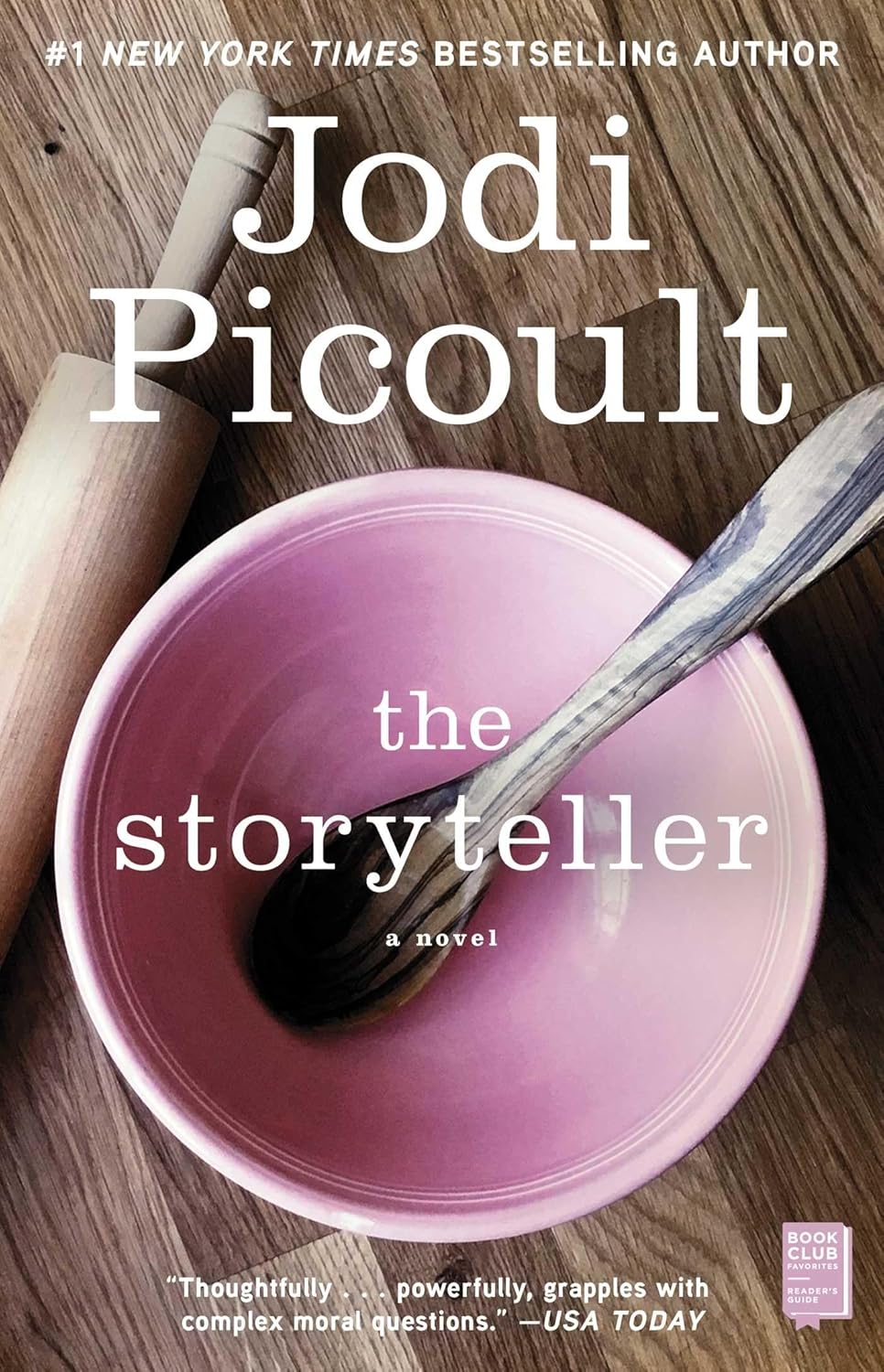
Book Review: A Spark of Light

A Spark of Light, a contemporary novel by Jodi Picoult, takes place in Mississippi.

Wren McElroy, fifteen, has a boyfriend. Although she is a virgin, you never know what might happen on a date. She asks her Aunt Bix to go with her to The Center for Women and Reproductive Health for birth control pills.

It’s tough getting through the line of anti-abortion people, but they manage to get inside. There are a few women waiting. Most of them are probably there for abortion information or for the procedure.

Suddenly a distraught gunman bursts in and opens fire, instantly killing the woman at the reception counter, and wounding others, including the doctor.

Detective Lieutenant Hugh McElroy, a police hostage negotiator, and Wren’s single dad, is called to the scene. He sets up a perimeter and begins his strategy to communicate with the shooter. His phone vibrates with incoming messages, and Hugh notices that one of the calls is from his daughter. To his horror, he learns that Wren and his sister, Bix, are in the clinic.

As the story progresses, we learn about some of those who have been taken hostage, and what it was that brought them to the clinic. Even the distraught shooter has his tragic reason for being there. No matter what brought the various people to the clinic, it appears they are all in grave danger.

Jodi Picoult is a master in bringing to life this very disturbing scenario. She explains the difference between an embryo (the initial stage of development) and a fetus (the term used from the ninth week of pregnancy until birth). Through story, she discusses the various attitudes about decisions to perform abortion. She talks about women and their rights concerning reproduction. How do we balance the rights of pregnant women with the rights of the unborn they carry? While pro-life protesters are protecting the rights of the fetus, who is protecting the rights of women, or in some cases, young girls? No matter how we feel about abortion, this novel brings to light the various complex issues involved.

Book Review: The Language of Hoofbeats

The Language of Hoofbeats, a contemporary novel by Catherine Ryan Hyde, takes place in the fictitious small town of Easley in central California.

Paula, a large animal vet, and her wife, Jackie arrive at their rental house with their adopted son Quinn, eight, and two foster kids, Armando, thirteen, and Star, fifteen, a difficult, troubled girl. Paula is taking over the practice of a retiring veterinarian.

Almost immediately after they move into their new home, Star spots a horse in a small paddock across the street. Uninvited, she wanders over to the neighbor’s to visit the horse. The owner, Clementine, goes into a rage with this “intruder.” Clementine, known for her hostile attitude, lets her disapproval of the neighbors’ lifestyle be known. She has always been a difficult woman, but is more so after her daughter’s death. The horse had been her daughter’s and since her death, the horse has been confined in this small space, is fed but not exercised nor given routine care. Even though she doesn’t do justice to the spirited horse, Clementine resents Star bonding with it.

When Star disappears with the horse, everyone is alarmed. Paula and Jackie, concerned about their foster daughter’s safety, are also concerned about the legal consequences of Star’s actions. Clementine, outraged, calls the sheriff, and the search is on. In their joint concern, the neighbors are thrust together, a situation difficult for all.

The Language of Hoofbeats explores intricate relationships of family and how they relate to others. Everyone has a story, and the blend of these stories is how relationships are formed. But not all relationships are ideal, and overcoming differences can be difficult.

I loved this novel. I’m always impressed with Catherine Ryan Hyde’s knowledge of the subjects she writes about, and how she can show emotions such as joy, bitterness, fear, love, and hatred, so believably. The Language of Hoofbeats is yet another excellent novel. It’s hard to say, but maybe my favorite one.