Book Review: Miss Royal’s Mules

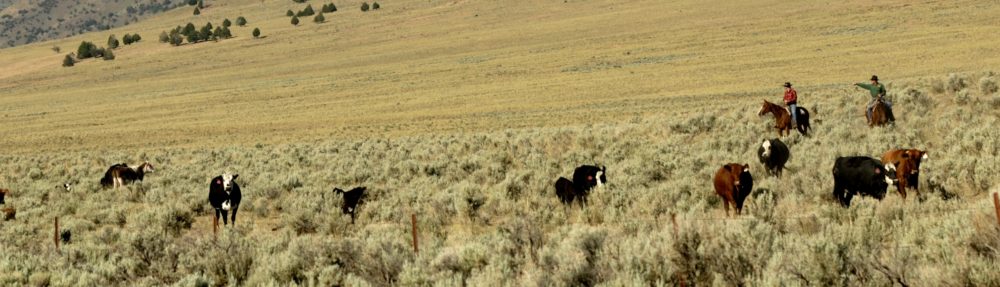
Miss Royal’s Mules by Irene Bennett Brown is a delightful novel that takes place in early 1900’s Kansas.

Without either family or funds, Jocelyn Royal also has no job prospects. Well, at least not a respectable job. She decides to sleep in the livery stable hayloft and in the morning ask the liveryman about a job mucking out stables. Almost asleep, she overhears a stranger ask the liveryman if he knows of a cowhand who could help drive a large herd of mules to Skiddy, Kansas. Jocelyn rushes down the ladder and steps into the lantern’s light to volunteer for the job. It takes a little fast-talking, but she finally convinces the man that she’s qualified for the job.

Jocelyn drives the two-mule-team wagon and cooks for the owner, Whit Hanley, and his other hired hand, Sam Birdwhistle. Besides being capable with stock, she’s a good cook and not afraid of hard work. Her dream to purchase her repossessed small farm is worth every hardship and discomfort.

One early morning she awakes to find her boss gone. The other hired hand claims the boss hopes to be back in a few days and that they are to continue the drive to Skiddy. Together the two manage the herd, but not without misadventures and misgivings.

Finally, they arrive at the boss’s run-down ranch, a place, the neighbors say, he inherited from his father but has never lived. The two manage to get the mules settled and fix up the place so it is barely habitable and …. wait. Where could the boss be? Did he have an accident or maybe even get killed? A lot is at stake here. The money due Jocelyn is critical not only to her survival, but also to bring her closer to getting her farm back.

Miss Royal’s Mules is a fun, engaging, warm-hearted story. I loved the true-life characters and the early-Kansas setting. The author’s research of mules, their temperament and loyalty, is evident. Highly recommended.

Book Review: The Unlikely Pilgrimage of Harold Fry


Rachel Joyce’s debut novel, The Unlikely Pilgrimage of Harold Fry, is spell-binding in its simplicity, yet profoundly moving.

Harold Fry receives a message from a former co-worker, Queenie Hennessy, that she is dying. He promptly sends a reply, but rather than posting the letter, at the last minute decides to walk the distance to say farewell in person. And distance it is—627 miles from the little English village of Kingsbridge north to a hospice in Berwick-upon-Tweed.

Harold isn’t equipped for such a strenuous walk. He’s wearing around-the-house yachting shoes and a light coat, shirt and tie. He soon regrets not having his cell phone, but after walking several miles, calls his wife, Maureen, collect. She’s irritated, but that’s nothing new. Almost everything Harold does irritates her, and has for many years.

As Harold’s journey progresses, he reminisces about his life, recalling sad and regrettable times. Along the way he meets people, many encouraging him on his journey.

The story occasionally switches to Maureen as she, too, looks back on their marriage of many years, acknowledging the joys, but mostly the sorrows and regrets.

I loved this endearing story of ordinary people. As Harold’s journey unfolds, I took my time to savor the descriptions of English countryside, and the genteel charm of a man who is so careful not to offend the people he encounters. The Unlikely Pilgrimage of Harold Fry is a lovely novel of profound insight.

The President is Missing


Former President Bill Clinton and James Patterson collaborated on The President is Missing, a suspenseful novel about a threatened attack on the cyberspace infrastructure of the United States.

President Duncan is approached with the threat that America will soon be brought to its knees. A massive plot is in motion to disable the entire country by systematically deleting all electronic files, sending the United States into the “Dark Ages,” the name used for the crippling possibility of the attack.

Sure enough, a virus is discovered that threatens to delete all electronic files in record time. The President is taken to a predesignated safe place, but even there attack is imminent. It becomes obvious that among the President’s inner-circle of seven trusted people, one is a traitor. But who? Who can he confide in at the nations crucial hour? The saying, “Keep your friends close and your enemies closer” seems apropos.

Almost every facet of our lives now depends on computer technology. Such a massive shut-down would throw the military back to the 19th Century, while Russia, China, and North Korea remained in the 21st Century.

President Duncan enlists the help of some of the best brains in the country to find the code word to stop the virus. Unless they can find it, the country will plunge into the Dark Ages, making the 1930s Depression pale by comparison.

The President is Missing is a large volume (528 pages), but I found myself riveted from beginning to end. The novel is a fascinating read, and scary. The threat is believable, the writing impeccable, and the resolution plausible. Highly recommended.

Book Review: Finding True Home

Heidi M. Thomas’ Finding True Home, a novel that continues a fictionalized story of her mother’s life, is an intriguing sequel to Seeking the American Dream.

Anna Moser immigrated to Montana from Germany as a war bride. Although Anna and her husband Neil are very much in love, life has not been easy. Through harsh winters and searing summers, she’s content to work on their ranch alongside her husband, plus take care of their children and keep up the housework. It’s not the work that Anna finds a burden, it’s the lack of acceptance by her neighbors. She perceives she is still thought of as “that foreign woman,” and that her neighbors can’t forget, nor forgive, someone from Germany, a country America fought in World War II.

The Mosers have two children, Monica and Kevin. Family is everything and it’s tough for Anna to allow her children to find their own way. When their third child, Lizzie, is born, Anna finds her more challenging than the first two. As a baby Lizzie constantly cries, as a little girl she is unpredictable, and as a teen she’s constantly in trouble. Anna struggles to understand her children, especially Lizzie.

When tragedy strikes, Anna and Neil are devastated, but Anna blames herself, the old self-doubt haunts her. Later, when serious illness strikes, Anna is forced to look honestly at her life and the blessings she has been given.

Finding True Home is a heart-warming story, a story parents will recognize in their own lives and in their own struggles raising a family. As this novel so aptly describes, love endures, love is triumphant.

Book Review: Lily and the Octopus

Ted, the narrator, has a special friend, Lily, who is both very short and very long. Lily is a dachshund.

Ted is distraught when he discovers a growth on Lily’s head, a growth he likens to an octopus. As the story develops, we learn a lot about forty-two year-old Ted and why his relationship with Lily is so important to him. As a dog-lover, I enjoyed many of the interactions between Ted and Lily. I talk to my dog all the time. In Lily and the Octopus, Lily answers, which for me strained the believability. Even the evil octopus talks.

Although possibility or probability for me was dampened, I thought the book delightful in many respects. I put aside my dislike of fantasy and simply enjoyed the touching and whimsical story. Anyone who loves dogs would find kinship with Ted and his dog.

Lily and the Octopus is an emotional tribute to the love between a pet and its human. People usually outlive their dogs and author Steven Rowley does a good job of describing the wrenching experience of losing a beloved pet.

I found this quote from the book memorable: “A heart is judged not by how much you love, but by how much you are loved by others.” Despite the fantasy, there is much to be admired about this novel. It’s more than charming; it is a profound message about love and acceptance.

Book Review: The Kitchen House

In her debut novel, The Kitchen House, author Kathleen Grissom has given us a glimpse of life on a Virginia tobacco plantation in the late 1700s.

When a little red-haired white girl is brought to Tall Oaks, she doesn’t know her own name, nor can she remember anything of her past. Captain Pyke “gives” the child to Belle, a slave, as help in the kitchen house, a building quite removed from the main house. The girl is sickly and constantly in the state of tears. Before Captain Pyke, the master of Tall Oaks and also a ship’s captain, goes back to sea, he casually mentions that the girl’s parents and brother died at sea while on their way to America from Ireland. The traumatized girl learns her name is Lavinia McCarten and that she is seven years old. The Captain explains that he didn’t know what else to do with the girl; he couldn’t just leave her on the dock. By default, she is his property and he keeps her as an indentured servant.

As years pass, Lavinia becomes a part of the household, learns to cook, clean and to serve food. She’s loved by her black family, plays with other slave children and, although she recognizes that she looks different, is content.

The Captain’s wife, Miss Martha, mostly stays in her room in the large, grand mansion, especially when the Captain is at sea. Although she has two living children, she has had several miscarriages, leaving her depressed and dependent upon strong doses of laudanum. When Miss Martha sees Lavinia, she mistakes her for her long deceased little sister, and insists that the girl spend time with her in the “big house.”

As this remarkable story develops, I found myself in a different world, a world of exacting class distinctions and values. The majority of people had no rights, no say in where or how they lived, down to the tiniest detail. Yet, those in bondage showed love and fierce loyalty toward family.

The Kitchen House is a heartbreaking yet hopeful story of class, race, and dignity. I highly recommend it.

Book Review: West

West, a novel by Carys Davies, is a stark reminder of how difficult American life was in the early 1800s, even in relatively settled places like Pennsylvania. To venture beyond, following the footsteps of the Lewis and Clark Expedition, was an invitation to potential disaster.

When mule breeder Cy Bellman, a widower with a young daughter, reads in the newspaper about huge ancient bones being found in Kentucky, his curiosity is stirred. He must see these beasts for himself. He convinces his taciturn sister to live on his farm and oversee his mule operation and take care of his daughter, Bess. He assures her that their neighbor, Elmer Jackson, will help when needed. Cy leaves his Pennsylvania home, promising to return in two years, and rides toward unknown western wilderness.

Bess, approaching womanhood, misses her father terribly and anxiously awaits his promised letters. She’s a lonely girl with few possessions or joys in her life.

Along the way, Cy hires a young Shawnee boy to accompany him. Their only communication is hand signals as neither speaks the other’s language. The two travel into harsh unknown land.

Davies’ West offers stark yet vivid descriptions, bringing life to the more settled east and to the wildness of the west.

Book Review: Everything She Didn’t Say

Author Jane Kirkpatrick’s new historical novel, Everything She Didn’t Say, reveals the plight of many women, even today.

The novel is based on a true story, and knowing Kirkpatrick’s skillful extensive research, there is probably more truth than fiction to this story.

The novel takes place in the late 1800s and early 1900s. Carrie, the daughter of a prominent physician, married Robert Strahorn who worked for the Union Pacific railroad. His job was to develop new towns that the railroad would follow on its way west. Robert also wrote books and pamphlets designed to entice people west.

Carrie and Robert’s years were filled with adventure, riding for miles by stagecoach or horseback. Although these adventures sound exciting, what they really amounted to were unending days in gritty, jolting stagecoaches, days not necessarily ending with hot meals and a decent place to sleep. Carrie yearned for a normal home and children, yet she knew Robert’s dream and dedication to his job when she married him. She just thought it would some day end.

In 1911, Carrie wrote a memoir sharing some of the exciting events of the past twenty-five years of shaping the American West with her husband. That book, Fifteen Thousand Miles by Stage, is still available today. Throughout Everything She Didn’t Say, excerpts from that memoir are highlighted. But also highlighted are Carrie’s private thoughts, revealing and stark, about her struggles to accept her own worth, not to become lost in her husband’s ambition, and the pain and disappointments of a pioneering life.

Everything She Didn’t Say is a remarkable novel, a work of deep thought and emotion. I highly recommend this heartfelt historical novel.


Book Review: Stone Song: A Novel of the Life of Crazy Horse

Author Win Blevins’ extensive and passionate research is obvious in Stone Song: A Novel of the Life of Crazy Horse. Reading this novel carried me back to the early days of our country when native cultures clashed with land and gold seekers coming to the Northern Great Plains.

Crazy Horse, an Oglala Lakota Sioux, is one of history’s great warriors, perhaps best known for his role in defeating Custer at Little Big Horn.

The story covers most of Crazy Horse’s life, beginning in his youth when he was known as Light Curly Hair. He was often referred to as Strange Man, the result of a vision he had as a youth when he took certain vows that made him different than other young warriors. Crazy Horse considered himself a loner who wished to avoid politics. He rarely gave his opinion, but tried to stay true to his path.

The expansive novel offers views of Native People as a culture, giving the reader more understanding of the heart of a warrior. Time and again Crazy Horse’s people were betrayed and deceived by the white man. The Lakota and other Native Peoples watched their way of life dwindle to patches of barren land unsuitable for sustaining themselves. But it wasn’t only the white man who betrayed Crazy Horse; his fellow tribesmen also plotted against him.

Although the author claims the novel as a work of imagination, his in-depth research has created a vivid account of a prominent historical figure. At the end of the book, in the Afterword, Blevins claims that an author must “… see his subject not analytically but holistically, as in a dream. Then he must sing boldly the song of his dream….” Win Blevins has accomplished that goal in this novel. It is a masterpiece.

Book Review: The Past

In her novel The Past, Tessa Hadley gives us an interesting insight of a contemporary British family. The novel takes place during a reunion of four grown siblings at their deceased grandparents’ rural home.

The reunion involves Harriet, a sensible human rights lawyer, Roland who is there with his third wife, Pilar, and his 16 year-old daughter Molly, their scatter-brained sometimes-actress sister, Alice, and Fran with her two children, a spiteful little girl and her gullible younger brother. Also in the mix is Kasim, the son of Alice’s one-time lover.

The story begins as the family members and their guests arrive. The author does a good job of capturing the essence of their personalities and priorities. One of the purposes of the 3-week visit is to decide what is to be done with the deteriorating home, whether or not it should be put on the market for sale.

The book has three sections: The Present, The Past, and then again The Present. The Past involves Jill, the children’s mother, when she returns to her parents’ home with her three children after she has left her husband. She has a brief affair with a realtor, then agrees to return to her husband, the children’s father.

When the book returns to The Present there are four grown children. The fourth child’s appearance is never directly referred to, but it made my mind whirl. I kept waiting for an explanation. You have to pay attention, but it’s there.

The Past offers an interesting study of family dynamics and how the past shapes and influences our future. I also enjoyed the descriptions of English country-side and customs.