

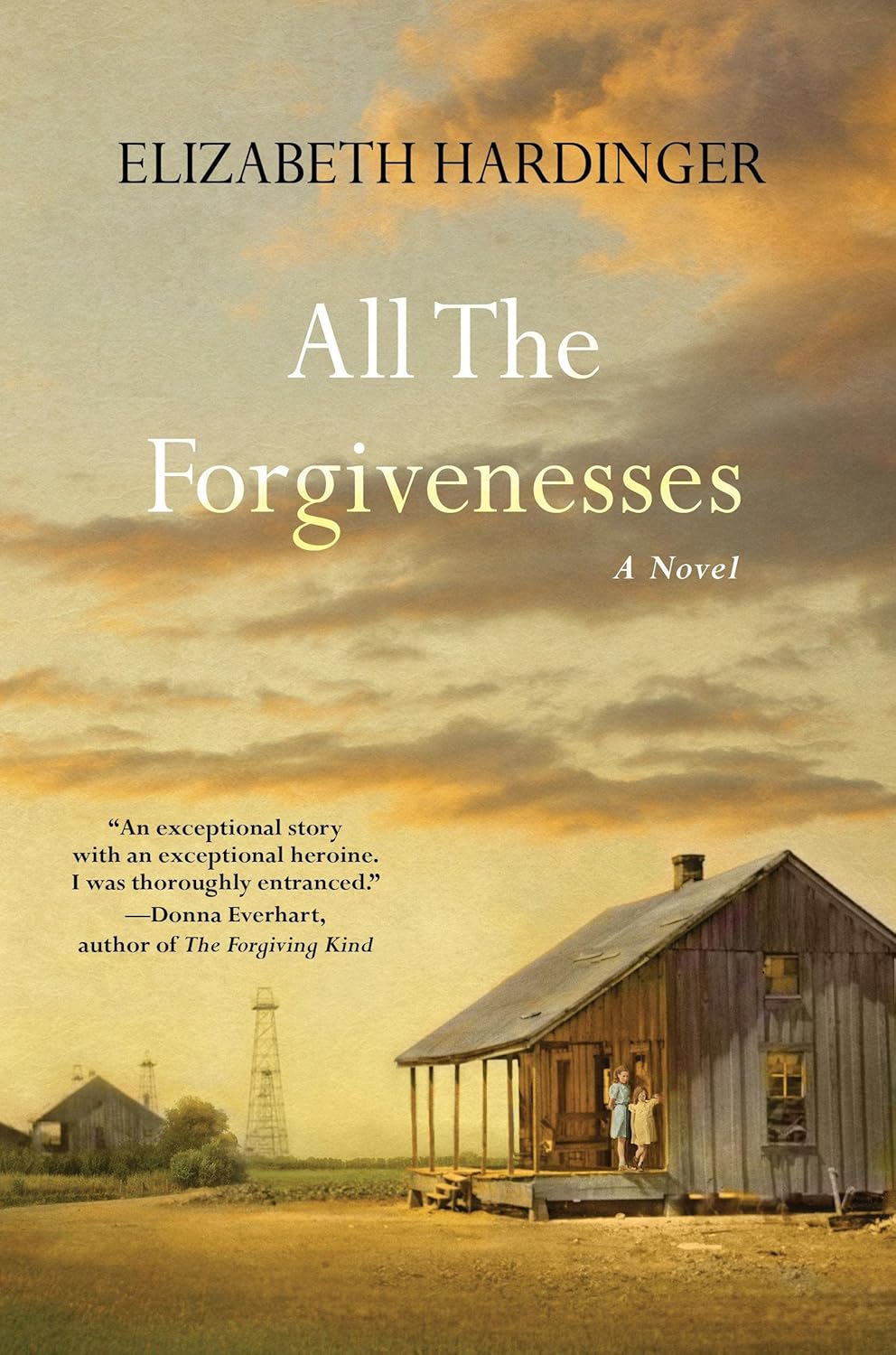
All the Forgivenesses, a novel by Elizabeth Hardinger, begins in the Appalachian hills in southeast Kentucky, 1906. It’s a story of strength in the face of deep poverty, and inspired by the author’s own family history.
Albertina “Bertie” Winslow, fifteen, is the third child and the oldest daughter in the family. She has two older brothers, a younger brother, two younger sisters, and twin baby brothers. Bertie works alongside her mother, cooking, cleaning and taking care of the younger children. Her unreliable father, a so-called horse trader, is often drunk and mean. The older boys leave home to make their own way, but obviously to get away from their father.
The family moves to a run-down farm in Missouri. Bertie’s mother is chronically ill and when she dies, Bertie takes on the responsibility of the housework, her four younger siblings and their unreliable father. Although she attended school in her early years, it’s only a faint memory. She’s needed at home. To make money, Bertie kills and dresses chickens, takes in ironing, does whatever she can to put food on the table. Bertie’s a capable girl and knows how to run a household, but she’s soon overwhelmed. The oldest of her younger sisters, Dacia, is resentful and stubborn, making Bertie’s life even more difficult. To add to her burden, Bertie harbors grief and guilt over past family tragedies.
Bertie has one friend, Alta Bea, a little older than Bertie, who is from a comparatively rich family. Alta Bea’s story is threaded throughout Bertie’s life, and although their backgrounds are entirely different, they remain friends.
When Bertie is sixteen, she marries Sam Frownfelter, a hard-working young man in the draying business. Sam owns a springboard wagon pulled by two mules and hauls goods for pay. He loves music and plays the fiddle. Sam willingly provides for Bertie’s younger siblings, and is a steadying force when dealing with family conflicts.
Bertie, Sam and the children eventually move to the Kansas oil fields. They rent an old run-down house that hasn’t been lived in for years. Sam works in the oil fields, hauling machinery, spare parts and pipe, using 10- or 12-horse teams. Although money isn’t as scarce as before, Bertie is plagued by her sister Dacia’s hateful attitude. Sam remains a constant, steady influence despite the upheaval so often present in their lives.
I found All the Forgivenesses an engrossing story of courage in the face of deep poverty and emotional upheavals. Though easy to read, the story, written in first person, is told in Appalachian dialect, and was inspired by the author’s own family lore. I found the story to be a good reminder of what stark poverty looks like and how deep it runs. This is a captivating novel of family loyalty, redemption, and resilience.