Book Review: The Man in the Window

The Man in the Window 2

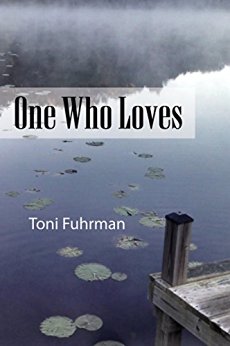
Nancy Pearl, my favorite literary critic, said after reading The Man in the Window, “Here was a novel to love.” And indeed it is. Author Jon Cohen has captured the essence of life in this poignant, funny and often caustic novel.

Louis Malone, now 32, badly disfigured in a fire when he was 16, became a recluse, hidden away in the family home. His world was what he could see from his upstairs bedroom window.

Iris Shuda, an extremely capable nurse, was resigned to never finding love. As Cohen describes her, Iris had been an unappealing baby, and as it turned out, that was her physical highpoint.

Gracie Malone, Louis’ loving mother and a recent widow, is not yet used to living without her husband, and now her son is her whole world.

Widower Arnie Shuda, Iris’ father, is a rough and tumble sort of guy, full of earthy humor. His right hand is a hook and he openly jokes about it.

The Man in the Window develops these four characters with such living force, I felt I knew them, that they were my neighbors. The hospital scenes with Iris are so realistic I wondered how the author knew so much about medicine. But then I learned that Jon Cohen was at one time a critical care nurse.

When Louis falls out of his second-story bedroom window, he and Iris are brought together. And then, along the way, their parents meet.

The Man in the Window is a marvelous, well developed, heart-rending love story. I loved it so much I dreaded reaching the end.

The Blooming Fields of Skagit Valley

Tulips


It’s like viewing the perfect mural—row upon row of dazzling color—brilliant red, sparkling yellow, vivid pink, rakish purple. Though picture-perfect, they’re real, these delightful tulip fields of the Skagit Valley. Not only tulips, but daffodils and iris grace these lovely fields. Although Mother Nature dictates the bloom dates, daffodils bloom first, followed by tulips and finally, iris.

Now extended to cover the entire month of April, this year’s 33rd annual Skagit ValleyTulip Festival also features, in addition to viewing the blooming fields, a packed schedule of events including art shows, wood crafting events, barbecues, quilt walks, and walking tours.

Since the mid-1930s, spring-time visitors to the Skagit Valley have marveled at the striking beauty of tulip, daffodil and iris fields. Northwest Washington, particularly in the Skagit Valley, has become world- famous for its seasonal showcase and for its commercial bulb production. Washington Bulb Company, the nation’s largest tulip, daffodil and iris producer, makes its headquarters in Skagit Valley.

As it happens, the Northwest has perfect bulb-growing climate with cool moist winters, which encourages root growth. Also, relatively cool spring and summer weather helps control diseases common in hotter places. Another factor is well-balanced, level and well-drained soil.

A favorite local story tells about the local gardener who thought he would buy his bulbs that year from the source, Holland. You guessed it. When he received his bulbs from Holland, the package label said the bulbs were grown in the Skagit Valley!

Those who are returning to enjoy the springtime hues will notice that those fields seen last year frequently will not have the same crop this year. That is because flower bulbs, like many other crops, must be rotated to preserve the soil and reduce pest contamination. The flowers rotate to their original field about every five years.

Tulip Festival maps are available at many Skagit Valley stores, but it isn’t necessary to have a map to enjoy the blossoms. Signs indicate the “Tulip Route,” or you may simply drive along until you see a field. If there is a pull-off, park and enjoy the view, or even walk along designated paths. Remember, for some traffic on the road, it’s business as usual and drivers aren’t expecting sudden stops. Also, this is a busy time of year for farmers and heavy equipment will be moving about, so please be patient.

The Skagit Valley growers ask for your cooperation in touring the fields. Be aware that only certain fields are open to visitors. Always observe private property; please don’t trespass to get a picture. Enter only those fields with signs posted that visitors are welcome. NEVER pick a flower—cut flowers are available for sale at various stands.
Two local growers encourage visitors to stop: Roozengaarde and Tulip Town.

Roozengaarde has a three acre display garden with an authentic Dutch windmill. Bulbs and cut flowers are available for purchase—stroll the gardens to find your favorites. At Tulip Town, in addition to the tulips fields and purchasing opportunities, visitors will enjoy more than 100 exquisite tulip arrangements, live music, food, and horse-drawn wagon rides through the tulip fields

Splendid opportunities await eager photographers. Early morning or late afternoon give the best light for picture taking. For really spectacular pictures, include landscape attractions, such as barns or snow-capped Mt. Baker. Tulip fields provide a colorful carpet against the backdrop of the majestic Cascade Mountains.

To get there: The blooming fields are 60 miles north of Seattle, directly off I-5 using exists 221 through 236. All of these exits have tulip brochures at the nearest businesses. The fields are spread out over a 15-mile radius and events are scattered around the entire county. Festival site guide maps are available.

For more information, visit tulipfestival.org or call (360) 428-5959.

Book Review: Flying South

Flying South 2

Already a woman of many accomplishments, Barbara Cushman Rowell embarked on the greatest adventure of her life. Together with her husband, world renowned adventurer/photographer Galen Rowell and her younger brother, Barbara Rowell set out on an epic aviation adventure.

Leaving Oakland, California in November,1990 Barbara Rowell flew south in her single-engined Cessna 206 to Central America, then on to Patagonia at the southern end of South America. Along the way, she dropped off first her husband so that he could fulfill a climbing and photography assignment for National Geographic magazine, then her brother so that he could return to his business in the United States. Along the way she picked up two or three other passengers, some who fulfilled the role as co-pilots, some just along for the ride. She completed the flight in February,1991.

Barbara Cushman Rowell had previously logged 700 flying hours as a pilot, but was also licensed for instrument flying. I loved the “pilot speak” with explanation enough to understand the gist and complications of a pilots life. The book also contains a helpful glossary. Photographs taken by Barbara and Galen add immeasurably to the book’s 302 glossy pages.

The memoir has vivid descriptions of aqua-blue bodies of water, impenetrable jungles, sparkling Mayan ruins, vast deserts, colorful markets, and cities sometimes not so friendly. She also shared the difficulty in some countries of getting through customs, airline paperwork and dramatically increased fees, and landing in a country in the midst of a coup.

Along the way, we see Rowell grow in confidence as an individual, not as someone’s wife, especially someone as famous as Galen Rowell. She realizes that most of her life she acquiesced to men’s will or desires. For example, a male friend scheduled a rafting trip for them on the Bio Bio River in Chile. Although she didn’t want to go, she consented, with disastrous results.

Barbara had her share of fears: fear that her plane would have mechanical problems (it did), fear of having to fly in bad weather (she did), fear of having to land under adverse conditions (that happened, too), but she learned to recognize her fear as a biological warning to pay attention.

Flying South is an extraordinary memoir, one that held me captive. I recommend this book not only to anyone interested in flying, but to anyone who longs to test herself, to stretch her limits. Barbara Rowell’s candid writing rings with honesty and character.

Note: Flying South had just been published when, on their return trip from Alaska, the charter plane in which Barbara and Galen Rowell were passengers crashed. There were no survivors

The Elegance of the Hedgehog

The Elegance of the Hidgehog

As a member of our local library book club, I have had the pleasure of reading many excellent books that I otherwise wouldn’t have selected. I won’t write a bad review—if I don’t like a book, I simply stop reading it. When I started reading The Elegance of the Hedgehog, my first reaction was that it really wasn’t my kind of reading. I’ll just try another chapter, I thought. And then I was hooked.

The Elegance of the Hedgehog by Muriel Barbery is an incredible novel. Translated from French, the book’s two main protagonists couldn’t be more different. Paloma, a privileged precocious twelve-year-old is disgusted with life and intends to end hers on her thirteenth birthday. Paloma has only one friend, but has a mind far advanced of her age. She is a deep thinker who can see through facades, including those of her own family. Although an excellent student, she hides her extraordinary intelligence.

Renee Michel, a concierge at an elegant Paris hotel, describes herself as a short, ugly, plump widow. The hotel, which consists of five posh apartments, is what we might call a condominium with Madam Michel the building manager. She is treated as she expects to be treated, as someone to take care of mundane chores, freeing up the rich and important people to go about their busy lives. What the tenants don’t know is that their concierge is a connoisseur of fine art, philosophy, music, and Japanese culture.

When a new tenant arrives, a wealthy Japanese man named Kakuro Ozo, amazing things begin to happen to Madame Michel and Paloma’s worlds, each in different ways.

The Elegance of the Hedgehog is an unusual book, an ingenious work of fiction. The story line is intriguing, and shows not only the author’s masterful writing skills, but her intelligence in a wide variety of subjects.

To learn more about this French novelist and professor of philosophy, visit http://murielbarbery.com/

LIFE: 100 People Who Changed the World

LIFE 100 People

I found this treasure with the magazines by the check-out stand at my local grocery store. The publication makes it clear that those represented are not the 100 people who changed the world, but rather features a collection of individuals who contributed to the world in memorable ways, people who shaped history.

LIFE’s special edition is organized into four realms: philosophy (which includes religion), politics (including the politics of war or dominion), invention, and culture. Within each category, the people are listed in chronological order. Typical of LIFE, the pictures are splendid, some replications are very old and many in brilliant color.

The Religious Figures & Philosopher Kings section includes 13 notable figures dating from 2100 B.C. to 2011, ranging from Abraham, to Jesus, to Mohandas Gandhi, to Mother Teresa. (This was my favorite section.)

Leaders: Elected and Not dates from 2551 B.C. to present day. The 23 listed include Alexander the Great, George Washington, Nelson Mandela and Barack Obama.

Scientists, Inventors & Innovators dates from around 1300 to 2011 and the 25 listed include Leonardo da Vinci, Alexander Graham Bell and Steve Jobs.

Cultural Icons list 39 people dating from 1000 B.C. to present day, including Homer, Helen Keller, The Beatles and Muhammad Ali.

I think everyone would find persons of interest in this book. I read every entry, but some might enjoy simply browsing the glossy pages. This is a well thought-out, attractive and interesting publication.

Barcelona Calling by Jane Kirkpatrick

Barcelona Calling

When writer Annie Shaw attempts to attract Oprah’s attention to her book, her efforts become a charade of misadventures. Annie recently had a romantic experience while visiting Spain, and her book is roughly based on that experience. The problem is, real life gets in the way of fiction.

Barcelona Calling: A Novel is a departure from other works of Jane Kirkpatrick who is known for her award-winning historical fiction. It took a little adjustment on my part to settle in with this “different” Jane Kirkpatrick, but once adjusted, I found the story an enjoyable read.

In addition to the main character’s quirks and passion for her work, the novel holds many of life’s truths applicable to more than authors. For instance, “…fame is a door best opened without pushing.” As a writer myself, I could relate to Annie Shaw’s efforts to promote her work, trying to find that elusive “bestseller” status. I sympathized with Annie’s efforts and drew comfort knowing that success isn’t always what it seems.

Barcelona Calling is a fun, enlightening novel. To learn more about the author, visit http://jkbooks.com/

Boat Trouble in Mexico

Ancient Marquesas Tikis

Ancient Marquesas Tikis

Excerpt from Sailing with Impunity: Adventure in the South Pacific

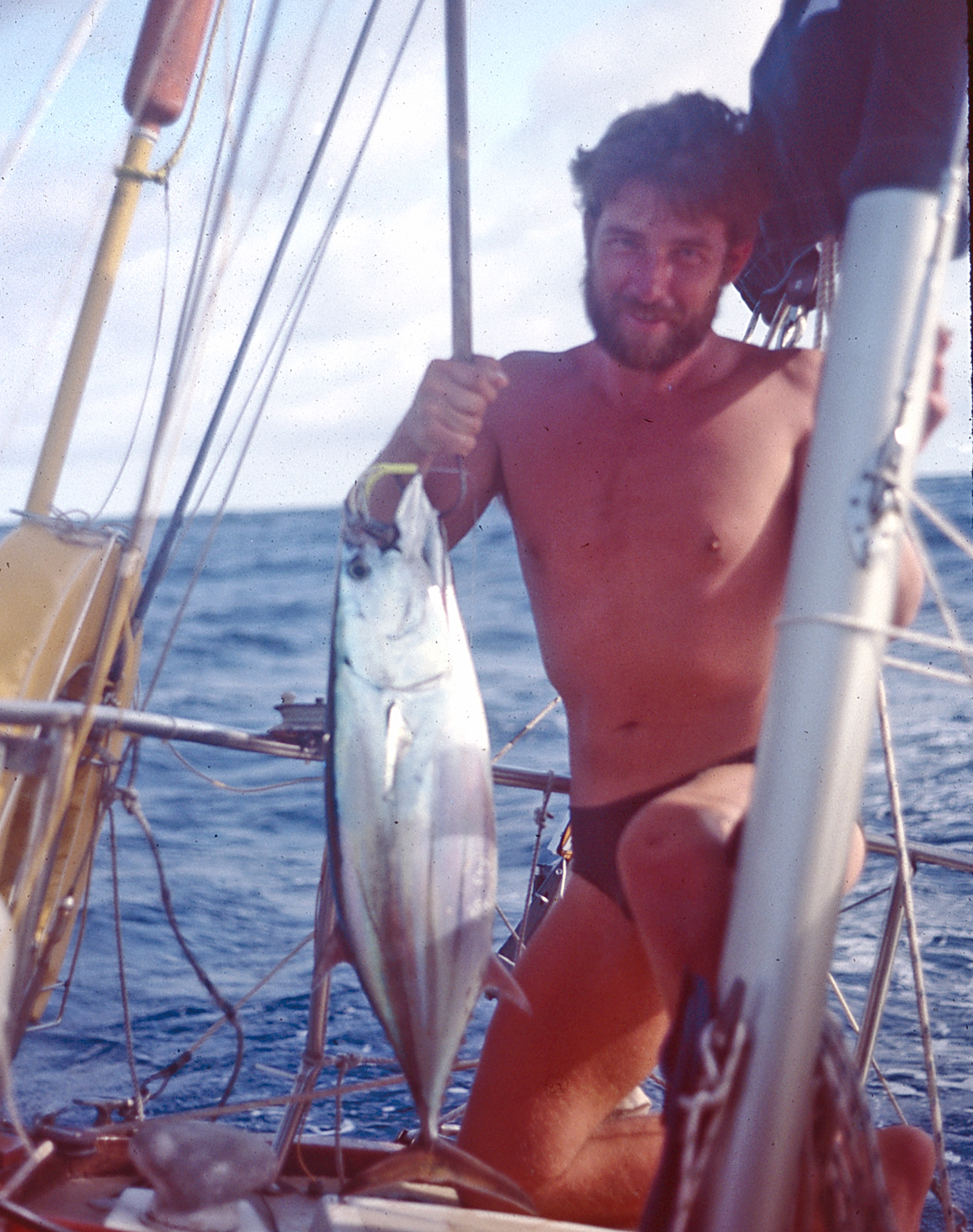
While in The Marquesas in French Polynesia, we had dinner with a couple one evening who told us a hair-raising incident that happened to them in Mexico.
.
They had spent an evening visiting on a neighboring sailboat. Just going from their boat to the other boat in their dinghy, they hadn’t taken their shoes, purse or his wallet since they wouldn’t need those items unless they went ashore. They’d had a nice evening playing cards and then, much later, they climbed into their dinghy to return to their own boat. It was dark, but they soon realized their sailboat was gone!

Panicked, they went back to their friend’s boat and spent the rest of the night there. First thing in the morning, they went ashore and reported the missing boat. They didn’t know if it had been stolen, became untied, or dragged anchor, so it was unknown if a crime had been committed.

With no money, no identification, not even shoes, they were in a terrible situation. To their surprise and relief, an American, a man they didn’t know, gave them $500 so they could buy shoes and stay in a hotel until they could receive money from home. No strings attached, he simply wanted to help stranded strangers. (They got his name and address and were able to pay him back.)

Mexican officials put out notices and the couple talked to fishermen and anyone going to sea. Finally, about two weeks after it “went missing” the boat was spotted. The fishermen who saw it said it was merely bobbing along, laundry still hanging in the transom, anchor hanging on its chain in the deep water. It didn’t appear to be damaged.

After observing the boat for some time, the fishermen motored over to it and one climbed aboard, started the engine, weighed anchor, and brought it back to port. Everything was intact, even her purse and their wallets were still there.

The couple continued their journey in their sailboat to The Marquesas, so thankful for the kindness of others.

Book Review: Home by Toni Morrison


Home2

Frank Money couldn’t wait to leave his drab, little hometown of Lotus, Georgia. The Korean War gives him the opportunity to escape, along with his two best friends. His one regret is that he must leave his cherished little sister, Cee, whom he has always protected. His friends are killed in action and Frank returns to the States with PTSD.

Frank’s life no longer has purpose. He carries a secret guilt that no amount of drink will ease. An affair in which he barely participates ends badly. Nothing satisfies the emptiness he feels. But when he hears that Cee is critically ill and likely dying, he begins his long journey home.

The book’s chapters rotate with the various characters, but I never doubted whose voice I was reading, but rather found myself in the mindset and plight of the African American.

A novella, Home is packed with insights of the black man’s difficult situation in the segregated south. It talks of an era “that rich people called the Depression and they called life.” It also shows that even beaten and deprived, people can muster strength to help one another. Toni Morrison’s prose is flawless, without a wasted word. This is a deeply-felt story, one that I’ll carry with me for a long time.

Toni Morrison won the Nobel Prize in Literature in 1993, and previously received the National Book Critics Circle Award, and the Pulitzer Prize.

Book Review: The Boys in the Boat

Boys in the Boat

Life was tough during the 1930s Depression, especially for Joe Rantz, abandoned by his family as a teen. But he was a boy determined to make something of himself. Joe and his University of Washington rowing teammates, mostly sons of loggers, shipyard workers and farmers, showed the world what dedication, hard work, and teamwork can do.

The Boys in the Boat is based on the true story of the University of Washington rowing team in the 1930s, culminating in 1936 at the World Olympics in Berlin. Along the way, we meet British-born Joe Pocock, the boat designer with a magic touch. Pocock is quoted as saying, “Just as a skilled rider is said to become part of his horse, the skilled oarsman must become part of the boat.” Coaches like Al Ubrickson inspire the boys along the way, but it is really the teammates themselves who endure the physical and psychological demands of rowing, and show the world what sheer determination can do.

Throughout the book, we learn what’s involved in shaping up an eight-oar rowing team, what it means to become one under the guidance of the coxswain. In later years, I grew up in Seattle and occasionally saw teams practice on Lake Union, gliding along in those long wooden boats, but I didn’t imagine the grueling effort it took. I wish I’d known then what I know now after reading this book.

Author Daniel James Brown brings readers into the lives of these dedicated rowers. As the team travels around the country in national competition, we learn about “harmony, balance and rhythm” of the sport. Finally, in Berlin, under the haughty eye of Adolf Hitler and under unbelievable pressure, we feel the heartbeat of a fiercely dedicated team.

The Boys in the Boat is an extraordinary, satisfying read. Brown’s research is impeccable. He sets the stage locally, in Seattle’s Depression years, nationally as the team competes, and internationally in the sinister atmosphere of Europe pre World War II.

To learn more about the author and his work, visit http://www.danieljamesbrown.com/

Book Review: High Hunt by Susie Drougas

High HuntAttorney Dusty Rose takes a break from his law practice to work as a hunting guide for his Uncle Bob, leading pack-horse trips into the Pasayten Wilderness at the crest of the Cascade Mountains. Dusty looks forward to his backcoutry vacation, but what should be an ideal get-away turns into a dangerous, deadly ordeal.

Cassie Martin, also a lawyer, is on Dusty’s mind as he manages his chores hosting hunters and tending stock. His worst fears become reality, and it looks likely that this could be his last wilderness adventure, and that what he had hoped to have with Cassie will never be.

Author Susie Drougas brings the reader into a wintery wilderness in this captivating novel. We view the rugged Pasayten country from the saddle. A guide’s job not only entails expert riding skills, but also tending to clients’ safety and comfort. Life slows down on the trail. Preparing a meal includes collecting wood for a campfire, patiently waiting for water to boil before making camp coffee, meanwhile fashioning an oven in the coals. We learn from experts the special care trail horses and pack animals need.

High Hunt is the third in the Dusty Rose Series. The first two, Pack Saddles & Gunpowder and Mountain Cowboys, also include wilderness pack trips.

Susie Drougas is a long-time active member of Back Country Horsemen of Washington and shares the work and struggles of that group to keep the wilderness available to everyone. To learn more about the author and her love of riding and writing, visit http://www.susiedrougas.com/