A Writer’s Memory of the Eruption of Mount Saint Helens

On May 18, 1980 while my husband and I were in The Gambia, West Africa, where we served in the Peace Corps, we were shocked when we heard on the BBC of Washington’s Mount Saint Helens’ eruption. When we returned home 15 months later, one of the first things we did was to go to the mountain to see the devastation for ourselves.

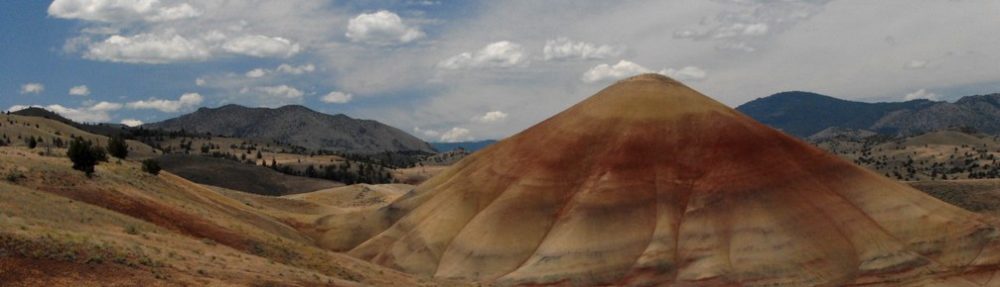
It was surreal. Even after all that time, 234 square miles of beautiful forests were reduced to scorched trees lying flat on the ground. Depending on their position to the mountain, some lay in one direction, some another. Vegetation was non-existent, or burnt to a crisp. There were no signs of animal life. Spirit Lake, once a lovely resort with a reputation of good fishing, was jammed with logs, and dead as a puddle.

Fifty-seven people lost their lives as a result of the catastrophic eruption. The blast and subsequent floods ruined or severely damaged more than three hundred homes, along with farm buildings and equipment.

Later, as I researched cattle ranching for my first novel, Rosemount, I interviewed Jake Harder, an eastern Washington cattle rancher near Ritzville. I learned a lot about cattle ranching from Jake, but also learned how much his ranch was affected by the eruption of Mount Saint Helens. Cattle were already grazing in pasture, but after the eruption the ground was covered in ash and the stock had to be hand fed. The tractor’s engine got clogged with ash, and Jake had to rig a fix for that. People in Ritzville took in traveling strangers because the roads were unpassable and visibility near zero with ash.

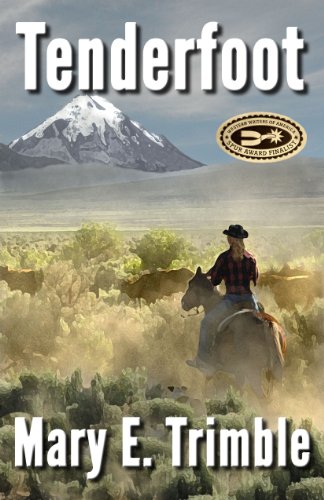
On researching for my novel, Tenderfoot, I stayed at a bed and breakfast in Randle, a small town near Mount St. Helens. The owner invited a local woman forest ranger to join us for breakfast, and she regaled us with her fascinating experience with the eruption. That Sunday, May 18, 1980, had been her day off and she went fishing to a small lake with friends. Mount St. Helens erupted while they were there and their harrowing experience coming down the mountain left me chilled. I used some of her experience in my novel, Tenderfoot, assured that I wasn’t exaggerating.

On the 45th anniversary of the eruption of Mount Saint Helens, all these thoughts come to mind. Tenderfoot has been my best-selling novel and holds a special place in my heart.
Book Review: I Made Them for Hope

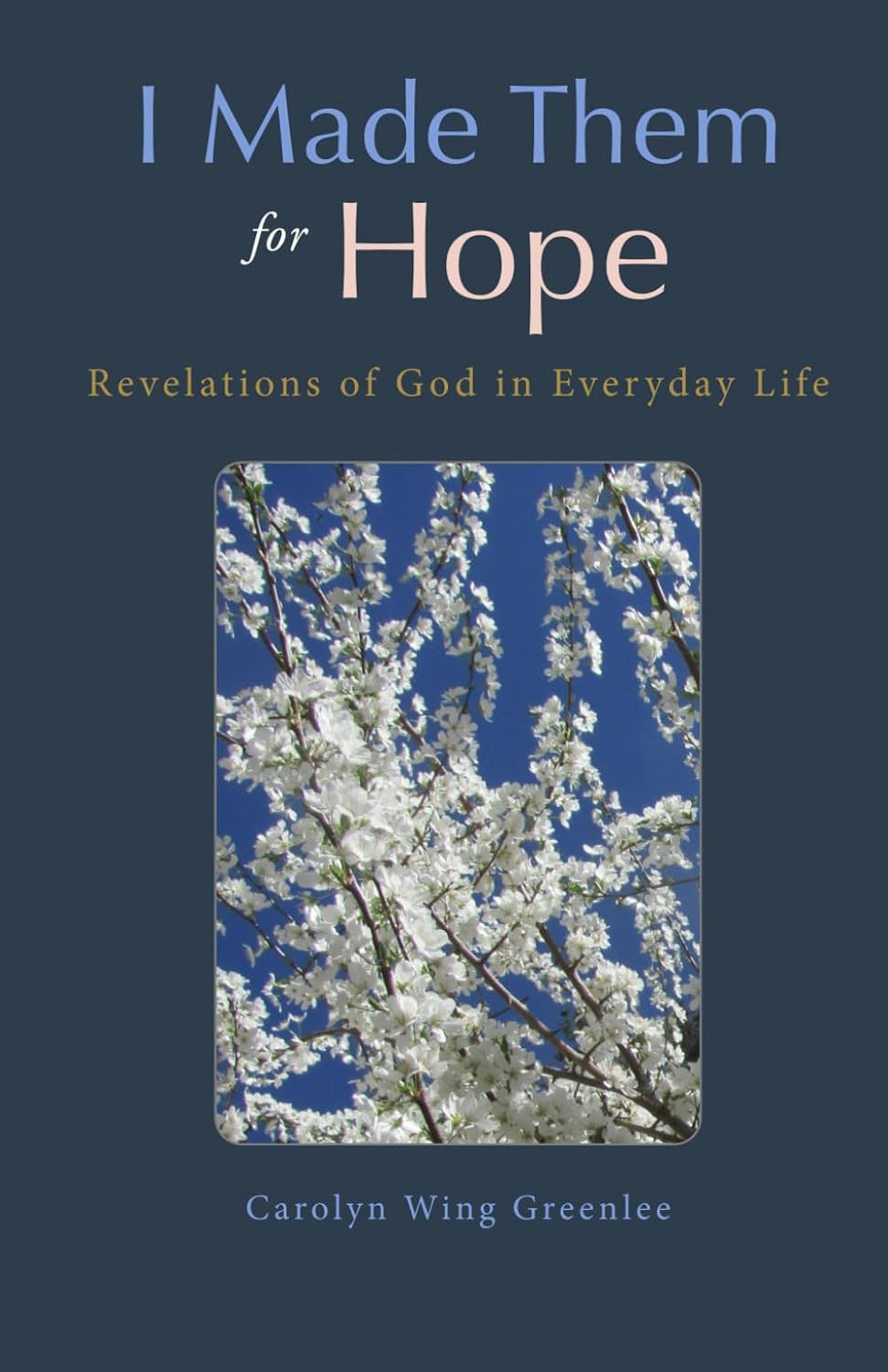
I Made Them for Hope: Revelations of God in Everyday Life, inspirational stories by Carolyn Wing Greenlee, is a small book packed with short stories about everyday people with everyday problems. But the answers to these problems are often unexpected, and often seemingly miraculous. This little gem of a book shares minuscule miracles—small accounts of God’s interventions—that have been granted to the author, her friends and loved ones.

Each chapter in the book shares an account of a problem, perhaps small in the scope of the big picture, but nevertheless a problem that is worrisome, even damaging, to someone. How a solution comes about is often surprising. We sometimes look at these solutions as magical, but, as the author points out, it’s more likely God has furnished the perfect solution, one that will be beneficial in the long run.

Sometimes it seems our prayers aren’t answered. The author points out that God answers in three different ways: “Yes,” “Not yet,” or “I have something better for you.” It’s good to keep this in mind, especially those times when we think we can see the perfect solution, but later acknowledge that another solution was far better.

Carolyn Wing Greenlee has written several books, many of which I have read and reviewed. I was especially impressed with Steady Hedy: A Journey through Blindness & Guide Dog School, a story of the author’s transformative journey through blindness, independence, and self-discovery. She went to the school full of doubt. After twenty-eight days, she came home with Hedy, a Labrador puppy. Hedy was a handful, but through many prayers the guide dog became a great companion, bringing joy and boundless opportunities.

I Made Them for Hope is a lovely little book. Although only seventy-six pages, the book is packed with wisdom and hope. It would be an ideal book for group discussions, or as a gift to someone who is discouraged or desperate. It is a book of joy, compassion, and healing.

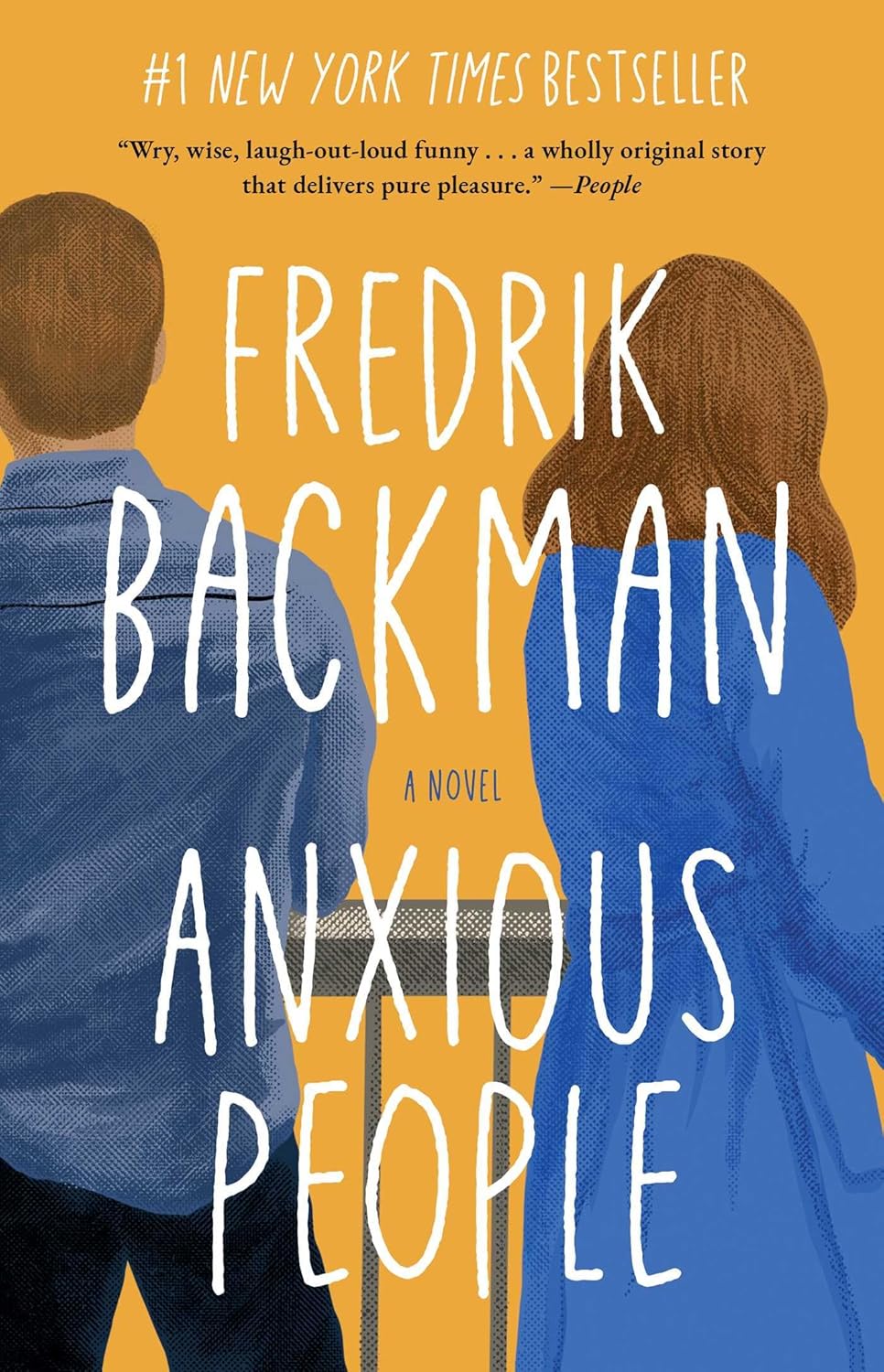
Book Review: Anxious People

Anxious People, a novel by Fredrik Backman, is an insightful look at a diverse group of people who become hostages during an apartment open house. The contemporary story takes place in a small unnamed town in Sweden, a country that is almost cashless.

Several people gather at the open house. It’s a diverse group of people including a retired couple, a wealthy bank manager, a gay couple expecting their first child, an older woman grieving over the death of her husband, a mysterious man who has locked himself in the bathroom, and the real estate agent. They all have grievances, secrets, hurts, and regrets, conditions that threaten to surface.

Suddenly a desperate armed bank robber bursts into the apartment and takes the group hostage. Actually, the bank robber has failed the crime—the bank was a cashless institution. What the robber encounters is a puzzling group of hostages who are too wrapped up in their own lives to worry about their dire situation.

Called to the scene of the crime are two policemen who happen to be father and son. They, too, have their story. It’s not an uncommon story between father and son, but their situation becomes even more complicated working such a bizarre case together.

As the story unfolds, we realize that all of them–the hostages, the would-be bank robber, even the policemen, have buried personal secrets and truths that, once recognized, surprise even themselves.

This story is not only about anxious people, as the title implies, it’s about compassion and forgiveness of others and of oneself. Fredrik Backman, a Swedish author, also wrote A Man Called Ove, which I previously read and reviewed. His views of people in general are unique. People are often not what they seem on the surface; a good reason not to judge hastily. I enjoyed Anxious People. It gave me a different perspective of diverse people in what could be drastic, desperate situations. Humor surfaces in this story, along with kindness and mercy.

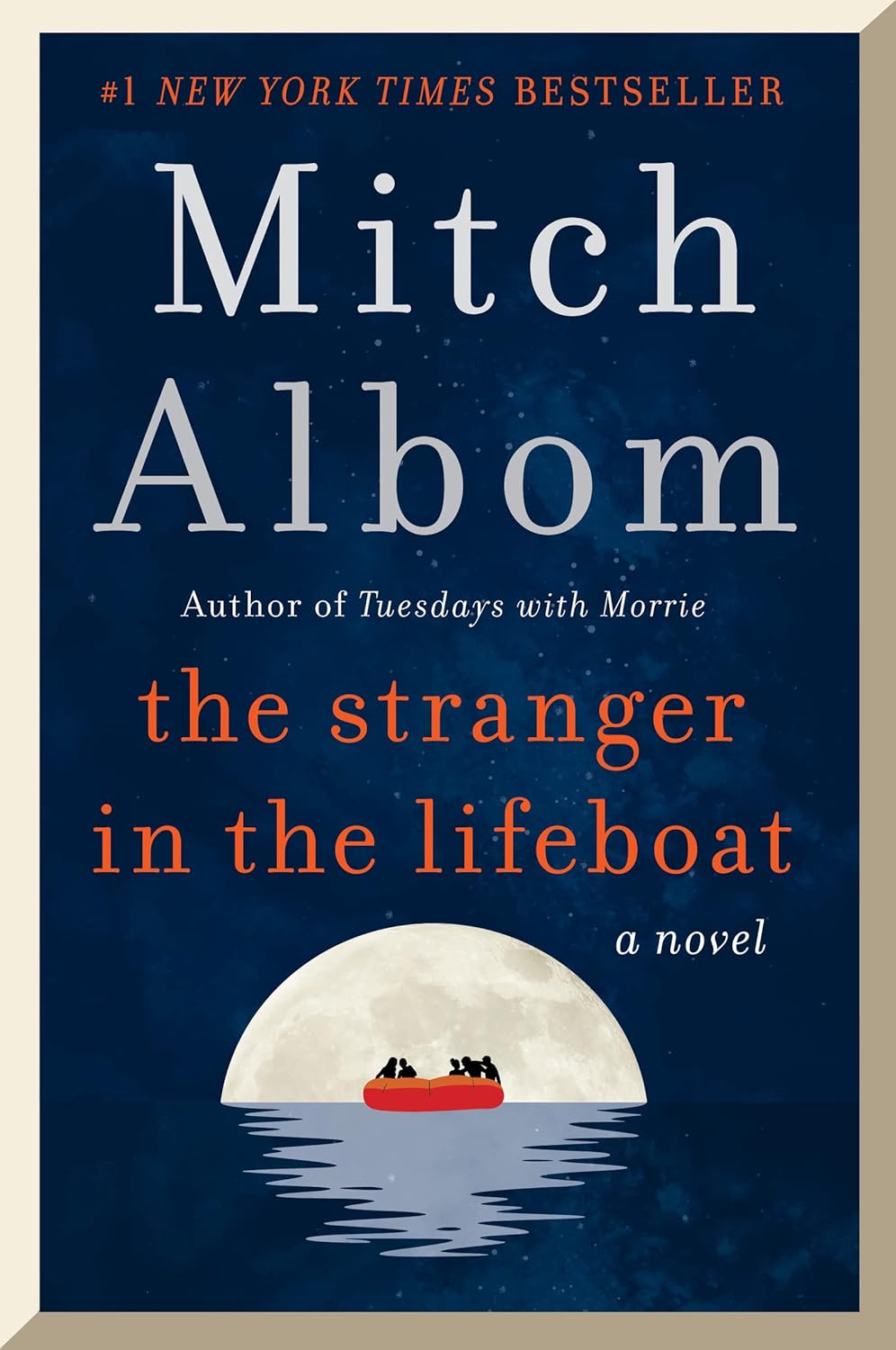
Book Review: The Stranger in the Lifeboat

The Stranger in the Lifeboat, a spiritual novel by Mitch Albom, is narrated by Benji, a crewman aboard a luxury yacht that sank after a mysterious deadly explosion. Forty-four people had been on board the Galaxy, including world leaders in politics, business, the arts, and technology.

After the explosion, nine people make it to the yacht’s lifeboat. The survivors are a mix of people; some were guests who come from great wealth, some were crewmen. For three days the lifeboat is adrift, short on water, food, and hope. When they see a man floundering in the water, they pull him aboard, and one of the survivors says, “Thank the Lord we found you.”

“I am the Lord,” the man whispers.

Days pass slowly as the survivors suffer from exposure. The lifeboat has some shelter, but they must alternate seeking relief from the blazing sun under the small canopy. They take turns stretching their legs in the cramped lifeboat. They suffer from thirst, sharing what meager water they have or are able to catch. They divvy up a small packet of crackers, then must resort to eating raw fish when they can catch one, or even a raw bird that lands on the raft.

The man who calls himself Lord isn’t particularly useful, but insists he can only save them if they all believe in him.

Benji, in his written narration, which is in the form of a letter to his wife, records all that is happening, but each day his despair grows as the weary days pass with no relief in sight.

The story switches to a year later when the empty raft appears on the shore of Montserrat, an island located in the Caribbean Sea, part of the Leeward Islands in the Lesser Antilles. The incident is reported to the island’s chief inspector who finds Benji’s written narration, and attempts to solve the mystery of what caused the yacht’s explosion, and what happened to those on board.

I especially enjoyed this sea story. My husband and I sailed from Seattle to the South Pacific on our 40-foot sailboat, Impunity. Although we had a life raft aboard, we never had to use it, thankfully. It often crossed my mind what would happen if our survival depended on our life raft. We rehearsed a scenario of the possibility of having to abandon ship. The Pacific Ocean is huge. It took thirty-five days to sail from San Diego, California to our first landfall, the Marquesas Islands in the South Pacific. In all that time we never saw another boat.

The Stranger in the Lifeboat is another well-written novel by Mitch Albom, an author of several inspirational books, many of which I’ve read and reviewed. This is yet another memorable read.

Book Review: Educated

Educated, a memoir by Tara Westover, kept me spellbound from beginning to end. The story begins at Buck’s Peak in Idaho’s hill country in 1979 when Tara is seven years old.

Tara’s family is Mormon, but perhaps more fundamentalist than what is more commonly recognized. Her father is the absolute ruler of the family and distrusts government, schools, hospitals, and traditional doctors. Her mother is a midwife and an herbalist. Four of Tara’s six siblings have no birth certificates, no medical records, nor have ever seen a doctor or nurse. The children are home schooled, though not in any organized or supervised way.

Tara’s father runs a scrapyard and as the children are physically capable, they work with him. It can be dangerous work and many times serious injuries occur to Tara and her brothers.

One of Tara’s older brothers, a brother with whom she has a good relationship, becomes violent, even sadistic. When she tries to tell her family they don’t believe her and refuse to intervene. Another older brother loves music and dreams of a real education. He applies for and manages to get into college, and encourages Tara to do the same, though their father claims it is a sin to “whore after man’s knowledge.”

Tara is 16 when she takes her college entrance exam, the first examination she has ever taken. As a freshman in college, she sits in her first classroom at the age of 17. It’s a new and strange experience, sitting in a room full of people. She lives in a dorm and feels like a misfit with her two sophisticated roommates.

Tara continues her education by winning scholarships and awards, eventually studying abroad. The chasm widens between Tara and her family, a situation that saddens her, but that grows more distant with each passing year.

Educated is a deeply moving memoir, a story that opened my eyes to people who live and believe very differently than what is familiar to me. I am impressed with Tara’s determination for acquiring an education, and with her remarkable scholastic accomplishments.

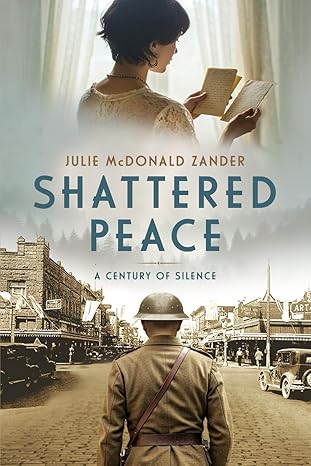
Book Review: Shattered Peace

Shattered Peace: A Century of Silence, by Julie McDonald Zander, is a riveting novel inspired by true events. The story mostly takes place in Centralia, Washington and toggles in time between 1919 and 2019.

In 2019 Colleen Holmes is still suffering from her tour of duty in Iraq as a Navy Seabee, and her exposure to violent death, carnage and destruction. She refuses to get professional help and, in fact, broke up with her fiancé because he kept nagging her to do so. Colleen is in the process of moving into a house she inherited from her grandmother, an older home that at one time belonged to Colleen’s great-great-grandfather. While in the process of remodeling, she finds letters and diaries dating back to 1919.

Michael Dillion, 22, is a WWI veteran fighting in France, 1918. The story describes much of the horrors of war Michael experiences. He dreams of Bridget, the love of his life, and returning to his hometown, Centralia, Washington. However, when he returns home, Bridget finds him distant, not the warm friendly man she once knew and loved.

In 1919, Centralia is divided by labor disputes. On November 11, 1919, during a parade celebrating the first anniversary of Armistice Day, a conflict between the American Legion and Industrial Workers of the World, known as Wobblies, erupted resulting in six deaths, including a lynching. Michael finds himself involved in the injustice he sees, and, unfortunately, Bridget witnesses and is horrified by his involvement in the bitter dispute.

Shattered Peace is a well-written novel based on actual history. The author does a good job alternating between modern day and historical events, describing striking similarities in attitudes of a century ago and modern times. In the beginning of the novel, the author lists both fictional and actual historic characters, a page to which I often referred. The author vividly describes the events of The Centralia Tragedy, also known as the Centralia Conspiracy and the Armistice Day Riot. Historians will find this novel of interest, and also those interested in the results of conflict, whether it be domestic or foreign. I’ve lived in Washington most of my life, and although I had heard of the labor dispute in Centralia, I’d never known the details. I’m thankful to have an opportunity to learn more about this conflict.

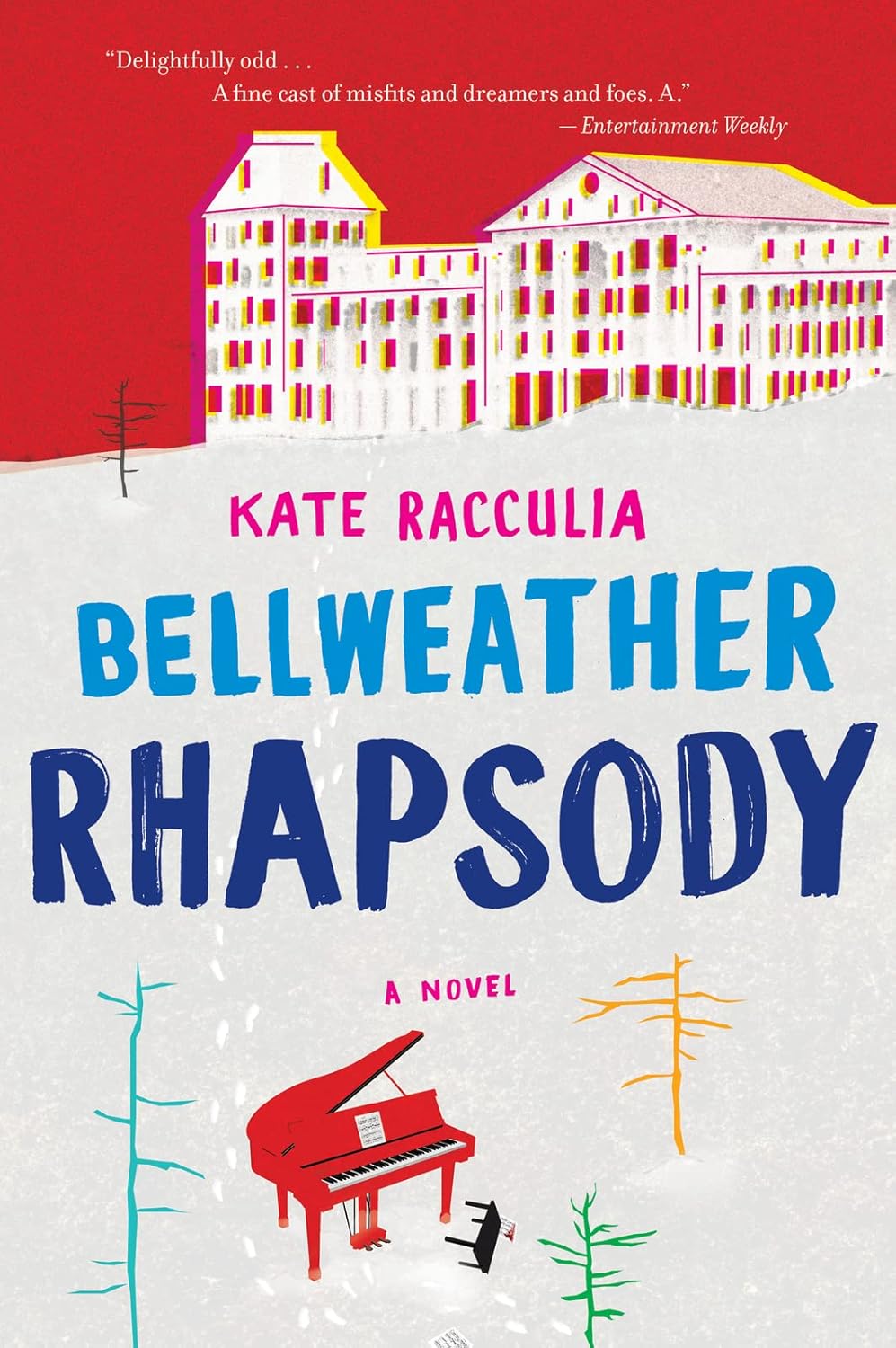
Book Review: Bellweather Rhapsody

Bellweather Rhapsody, a fun mystery novel by Kate Racculia, takes us to an annual weekend statewide high school music competition held in an old, but famous crumbling New York hotel.

Twins Alice and Bertrand (Rabbit) Hatmaker are among the hundreds of high school students gathering for an annual competition. Alice, the flamboyant twin, is an exceptional singer and dancer–just ask her. Her sensitive twin brother excels in bassoon. The two are very close, can read each other’s thoughts, and Rabbit is fine with Alice always taking the lead.

In 1982, the Bellweather Hotel was the scene of a gruesome murder/suicide of a newly married couple on their honeymoon. Now, in 1997, the decrepit hotel is again the scene of competition of high school musicians and dancers.

Alice Hatmaker happens to be assigned to the room where the notorious murder/suicide took place. When her roommate disappears, everyone is wondering: could that horror of bygone days be happening again, or is this a dumb prank some high school kid dreamed up?

Aside from the intriguing mystery, the adults are experiencing their own crises. Old romances, bitterness and resentments surface. In the meantime, a fierce snowstorm keeps everyone confined to the hotel. But the competitions must go on, and the students dutifully perform their various forms of art.

This was a fun novel for me to read. I loved the sections of music competition. From fourth grade through high school and beyond I played the clarinet in bands and orchestras, and in high school also played in the Seattle Youth Symphony. So many of the performing scenes were familiar to me as I relived my own musical background.

The author does a good job of capturing young students’ angst and rivalries. The adults, too, have their histories, many of which are better forgotten. The well-told story is fast moving with vivid descriptions of an old moldy hotel that harbors dark secrets.

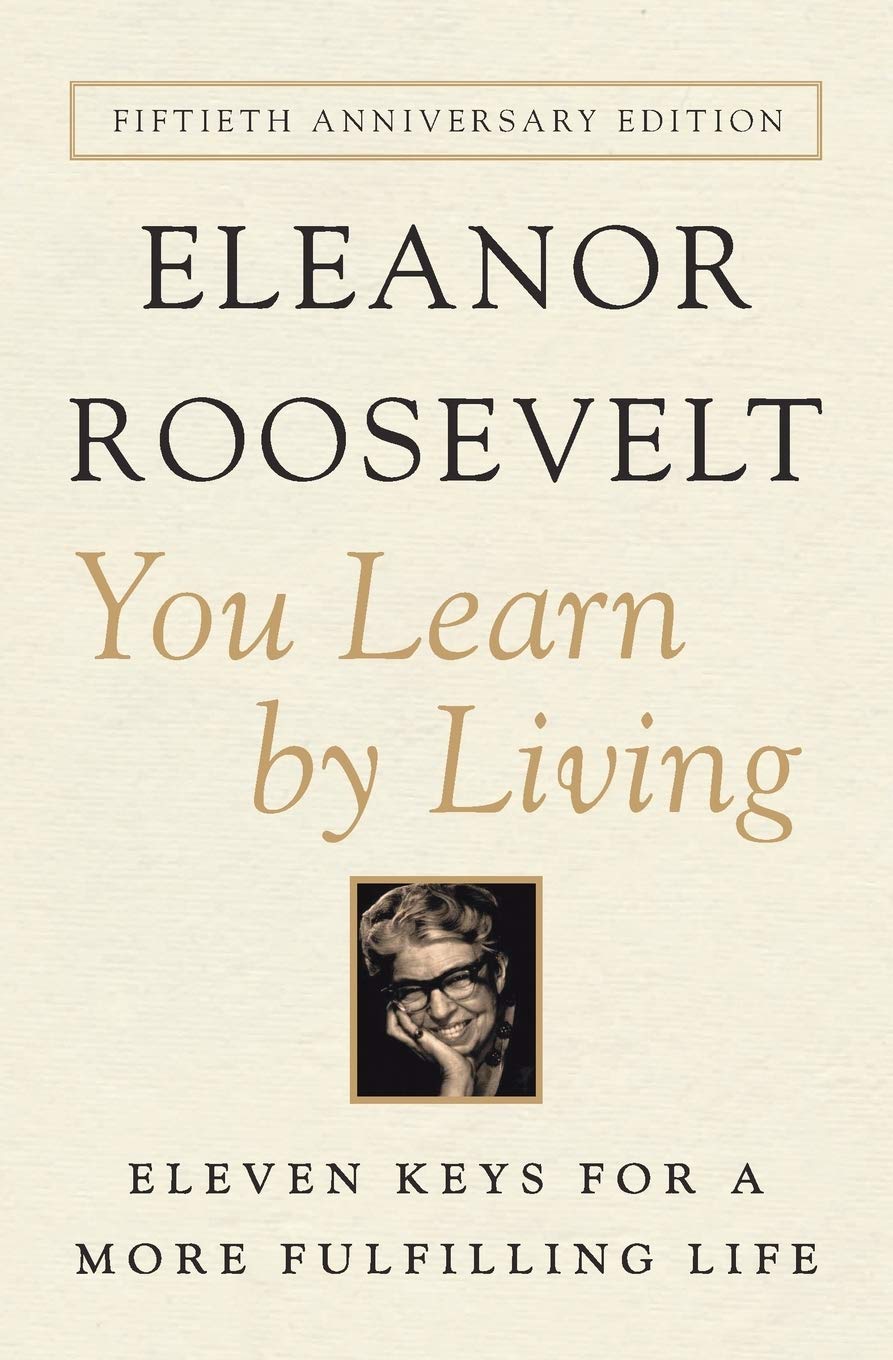
Book Review: You Learn by Living

“We are the sum total of all the choices we have made.”
—Eleanor Roosevelt

You Learn by Living: Eleven Keys for a More Fulfilling Life by Eleanor Roosevelt (1884 – 1962), former first lady and civil rights activist, impressed me by its relevance today, sixty-five years after it was published in 1960.

Eleanor Roosevelt was the niece of one U.S. president, Theodore Roosevelt, and married a man who would become another, Franklin D. Roosevelt. She redefined the role of first lady, and was outspoken for human and women’s rights. She held press conferences and penned her own newspaper column, “My Day,” published nationwide six days a week. After she left the White House in 1945, she became chair of the United Nation’s Human Rights Commission. In her day, she was one of the world’s most widely admired and powerful women.

Within each chapter are words of wisdom on topics mentioned in the book’s subtitle: “Learning to Learn, Fear—the Great Enemy, The Uses of Time, The Difficult Art of Maturity, Readjustment is Endless, Learning to Be Useful, The Right to Be an Individual, How to Get the Best Out of People, Facing Responsibility, How Everyone Can Take Part in Politics, Learning to Be a Public Servant.” Each chapter reflects Roosevelt’s views with suggestions on how to apply the concepts to our own lives, wisdom that resonates in any era.

Eleanor Roosevelt lived a life of affluence with boarding schools, education abroad, housekeepers, cooks and nannies. Yet she devoted her life to helping people become the best they can be by sharing her wise philosophy on living a fulfilled life.

You Learn by Living is a treasure of wise concepts still applicable in today’s world. Reading this memoir, I discovered the depth of Eleanor Roosevelt’s passion for life, her confidence, maturity, and civic stewardship. I was impressed with this stellar woman’s devotion to mankind.

Book Review: Tubby Meets Katrina

Tubby Meets Katrina by Anthony Dunbar, is book seven of the suspenseful series, “A Tubby Dubonnet Mystery.” I especially enjoyed this novel that takes place in New Orleans, 2005.

New Orleans lawyer Tubby Dubonnet arrives home after an extended stay in Bolivia. He arrives at Louis Armstrong International Airport to the news that a massive hurricane is making its way to New Orleans. Oh, well. Just another inconvenience. But the storm becomes more than an inconvenience, it becomes Hurricane Katrina, a Category 5 Atlantic hurricane that causes over 1,800 fatalities and $125 billion in damage, especially in the city of New Orleans and the surrounding areas.

Following record-breaking winds, New Orleans has massive flooding when the levee system that held back the waters of Lake Pontchartrain and Lake Borgne becomes overwhelmed, flooding southeastern Louisiana.

As the flood waters overtake a New Orleans detention center, escaped psychopath Bonner Rivette breaks out of jail when a guard unlocks the cell door to save the inmates from drowning. Bonner makes his way to an office building that happens to be Tubby’s office. He devises a way to lure Tubby’s college-age daughter into the office under the guise of helping her injured father. She falls for the ruse and is held hostage. Tubby asks a private detective friend for his help in freeing his daughter.

Author Anthony Dunbar, a New Orleans-based attorney and writer, writes what he knows, and does so with aplomb. I’ve spent some time in New Orleans when I visited The Big Easy with my husband on a business trip, then again when I worked with the American Red Cross after Katrina. I’ve seen the good and the bad, and found that the author describes both with accuracy. I again enjoyed vicariously visiting the great landmarks of the city, the French Quarter, fine restaurants, and some of the elite neighborhoods. With the Red Cross I also witnessed unbelievable devastation—miles and miles of ruined homes, curbs lined with moldy refrigerators and furniture, destroyed businesses, the city’s infrastructure turned upside down. Dunbar describes it all. Tubby Meets Katrina is an enjoyable read about the dangerous days just after Katrina, and of the frustrating weeks that followed. The story line is intriguing with a mix of suspense and low-key humor.

Book Review: Outlive

The time to repair the roof
Is when the sun is shining
—John F. Kennedy

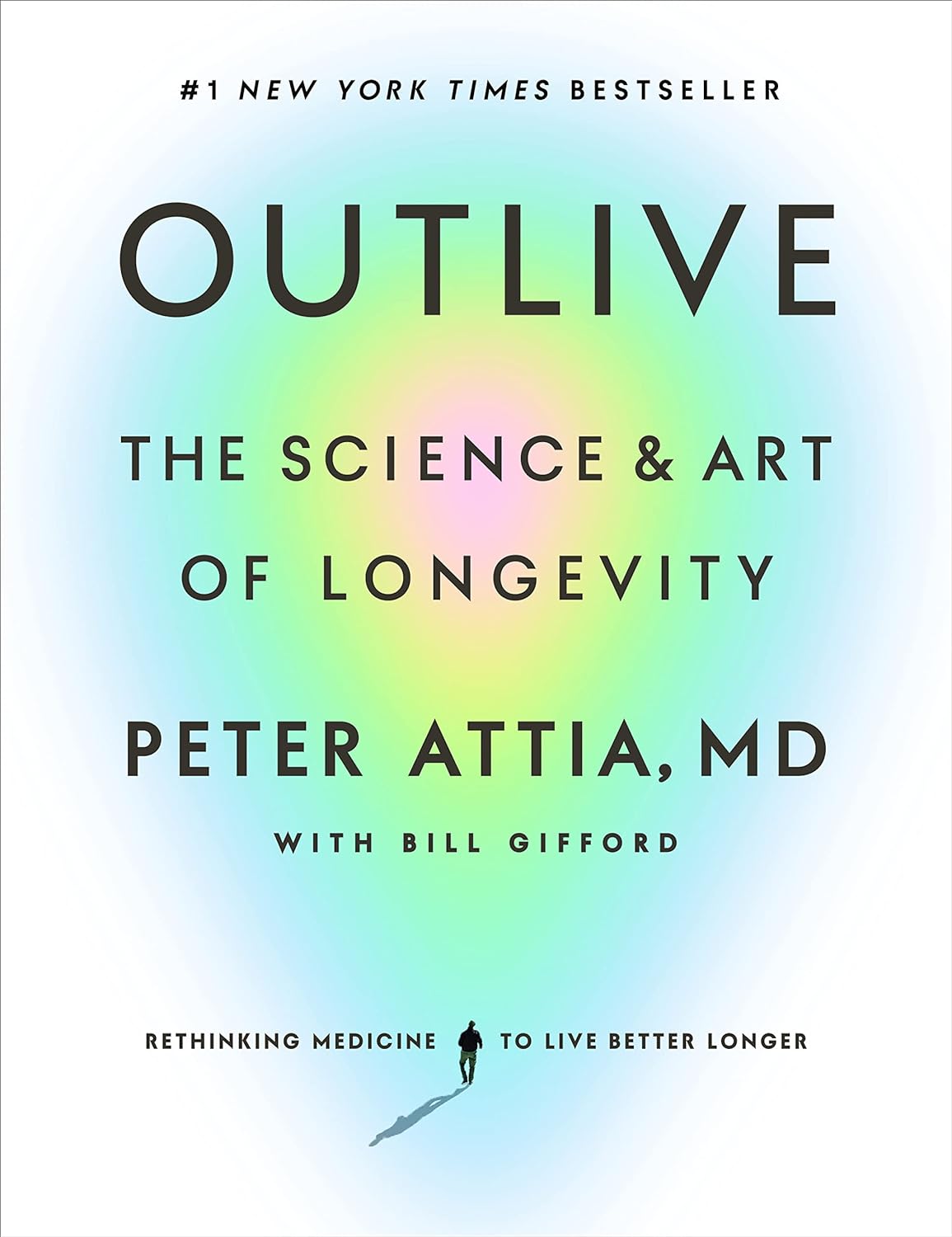
Outlive: The Science and Art of Longevity by Peter Attia, MD with Bill Gifford is an in-depth study of how to live a longer, healthier, and happier life.

Although modern medicine has made impressive progress, it has failed to make adequate headway in the diseases of aging that kill most people: heart disease, cancer, Alzheimer’s disease, and type-2 diabetes. Attia explains why these diseases exist and how in many cases we can alter the outcome. He claims that today’s medicine should have greater emphasis on prevention than treatment.

The book has three sections: The Long Game From Fast Death to Slow Death, Centenarians: The Older You Get, the Healthier You Have Been, and Thinking Tactically

Each section is packed with examples of existing unwanted conditions and ways to make changes that will extend long-term health, both mentally and physically. The book details how we can lengthen our lifespan while simultaneously extending our healthspan.

One section I found especially interesting showed that exercise has the greatest power to determine how you will live out the rest of your life. I think we have all seen examples of people who refuse to exercise, people who have slowly but surely reduced their activity to result in a life that is barely existing, solely dependent on others to get though the day.

The chapter on mental health is engaging. Attia discusses attitudes and the importance of believing that you can change, that you deserve better, and so do others around you. He stresses that we should pay as much attention to mental health as we do to physical health.

I found Outlive fascinating. The author cites in-depth examples of both good and bad behavior that has produced expected, or possibly unexpected, results. He often refers to his own physical and mental health issues as examples of the need for proactive strategy for longevity and mental well-being, both attainable goals. This book is a valuable guide to a richer, more satisfying life.