
Book Review: The Alchemist

“Everyone seems to have a clear idea of how other people should lead their lives, but none about his or her own.”
The Alchemist

The Alchemist by Paulo Coelho provided hours of magical reading. It isn’t a plot-driven book, but rather a novel that provides a quiet sense of purpose and a deeper understanding of the universe. The period the story takes place isn’t clear, but it begins in Spain.

Santiago, a young man, perhaps in his teens, studied to be a priest, but realized what he really wanted to do was to be a shepherd, to move around, see new places. With the blessings of his family, he sets out with his flock of sheep and discovers not only the world, but himself. It soon becomes clear that what he searches for is an alchemist, a person who transforms things for the better.

Santiago meets people along the way who teach him many truths, some good, some evil, but each experience leads him closer to life’s true meaning.

This novel has an interesting history. “The Foreword” written by the author in 2014 speaks about the interesting path the novel has taken. The book was first published in 1989 in his native Brazil. Only one person bought a copy the first week of its release, then six months later another copy sold to the same person! His publisher cancelled the contract. Another publisher agreed to take the book and gradually had great success. An American read the book and wanted to translate the book from Spanish to English and find a publisher in the United States. It didn’t happen overnight, but the book became a phenomenon, has been translated into more than eighty different languages, and has sold thousands of copies.

Paulo Coelho never wavered in his faith in the book because it speaks of his own beliefs: A man sets out on a journey seeking a beautiful or magical place and then realizes the treasure lies within himself.

Reading The Alchemist was an enlightening experience for me. I highly recommend it for those who appreciate life’s purpose and who seek wisdom of the universe.


Book Review: The Girl Behind the Gates

The measure of our greatness is in how we stand up after we fall.
—From The Girl Behind the Gates

The Girl Behind the Gates, a novel by Brenda Davies, is based on a true but fictionalized story that spans from 1939 to 1991. The story takes place in England.

It’s 1939 and Nora Jennings, a typical seventeen-year-old, has a bright, happy future. However, she has a terrible, nagging fear: she might be pregnant. How can that be? After only one night of passion, could it happen? Apparently so. She tries to end the pregnancy with pills someone gave her. That didn’t work, so she clumsily tries to take her own life. When her parents learn of the pregnancy, they call the authorities. According to the Mental Deficiency Act of 1913, what Nora has done is illegal: getting pregnant out of wedlock, attempting to take the life of the baby, then attempting to take her own life.

Nora is admitted to Hillinghurst Hospital, a place of fear and shame. Although there are some good people among the staff, many are hardened against the needs of patients; some are actually cruel. Nora, labeled a moral defective, is forced to endure years of unspeakable cruelty by the very people who are supposed to care for her.

It’s 1981 and Dr. Janet Humphreys, a psychiatrist, reviews the records of Hillinghurst Hospital patients. As she studies Nora’s file, she realizes the woman has been there forty years, longer than Janet has been alive. The 1913 Mental Deficiency Act was abolished in 1959, but by this time Nora suffers from being in an institution too long. Although many institutions, including Hillinghurst, are being shut down, the thought of leaving is frightening to Nora—she knows no other life. All those years of no hope, no responsibility, no choices for themselves has taken its toll for many, if not most, of those institutionalized.

As Dr. Humphreys and Nora work toward her freedom, it becomes clear how much of Nora’s life has been denied her, and how difficult the path ahead will be.

The Girl Behind the Gates is a heart-wrenching story written by a consulting psychiatrist who has worked with patients with tragic stories like Nora’s. The story goes into some detail of the horrors that many patients endured. It’s not always easy reading, but it is informative and full of heart when people of influence step up to attempt to right what is obviously so wrong. I can’t say I enjoyed this book, but I’m glad I read it. The Girl Behind the Gates opened my eyes to the harm correctional institutions can do, but also how kindness among the staff can make lasting changes to those lives entrusted to their care. It is a story of perseverance, and strength of the human spirit.

Book Review—Oregon Trail: One Family’s Story

Oregon Trail: One Family’s Story by Cyndi Rivers is a fascinating true account of an extended family’s journey across the Oregon Trail in 1853.

Lewis Ray and Nancy Kimes and their two little daughters ages 3 and 2, plus Nancy’s widowed mother Elizabeth and her three children, left their Missouri homes for the Willamette Valley in Oregon. Their ambitious goal was to live close to Nancy’s older brother and his family.

Preparing for such a journey was challenging. They would travel in two wagons that were about 10 feet long and 4 feet wide. They had 6 oxen for each wagon: 4 to pull at one time and 2 to rest by just walking rather than pulling the heavy loads. The wagons were full of essentials with not much sleeping space, so they had to provide for outside sleeping. Food and water had to be carefully planned and doled out, plus adequate clothing to last for the long, arduous trip.

They could only take essentials which meant leaving behind family treasures. Later, they would see discarded items along the trail—furniture, heavy tools, even a piano— items that families had brought but later had to abandon to lighten the loads.

They traveled for several days from western Missouri to join a wagon train in St. Joseph. The trip with the wagon train had barely begun when Lewis Ray died crossing the Missouri River, leaving his pregnant wife and their two little daughters. It was a crushing blow to the two families, and left them in a bad situation since he had been the only adult male in the group. In addition, they were a liability to the wagon train since now their group consisted of only an elderly woman, a pregnant woman, and 5 children. Luckily, there were two adult brothers on the wagon train who could drive the wagons, allowing the party to resume their journey. After traveling six months, they arrived at their destination, the Willamette Valley.

Oregon Trail is a captivating story of determination and struggle. People often died along the way from drinking contaminated water, often the cause of cholera, drowning, wagon accidents, children crushed by wagon wheels, cattle stampedes, etc. The author has included pictures, maps and documentation of the period. This account of her family’s history—the Kimes were her great-great-grandparents—is a story of determination and grit.

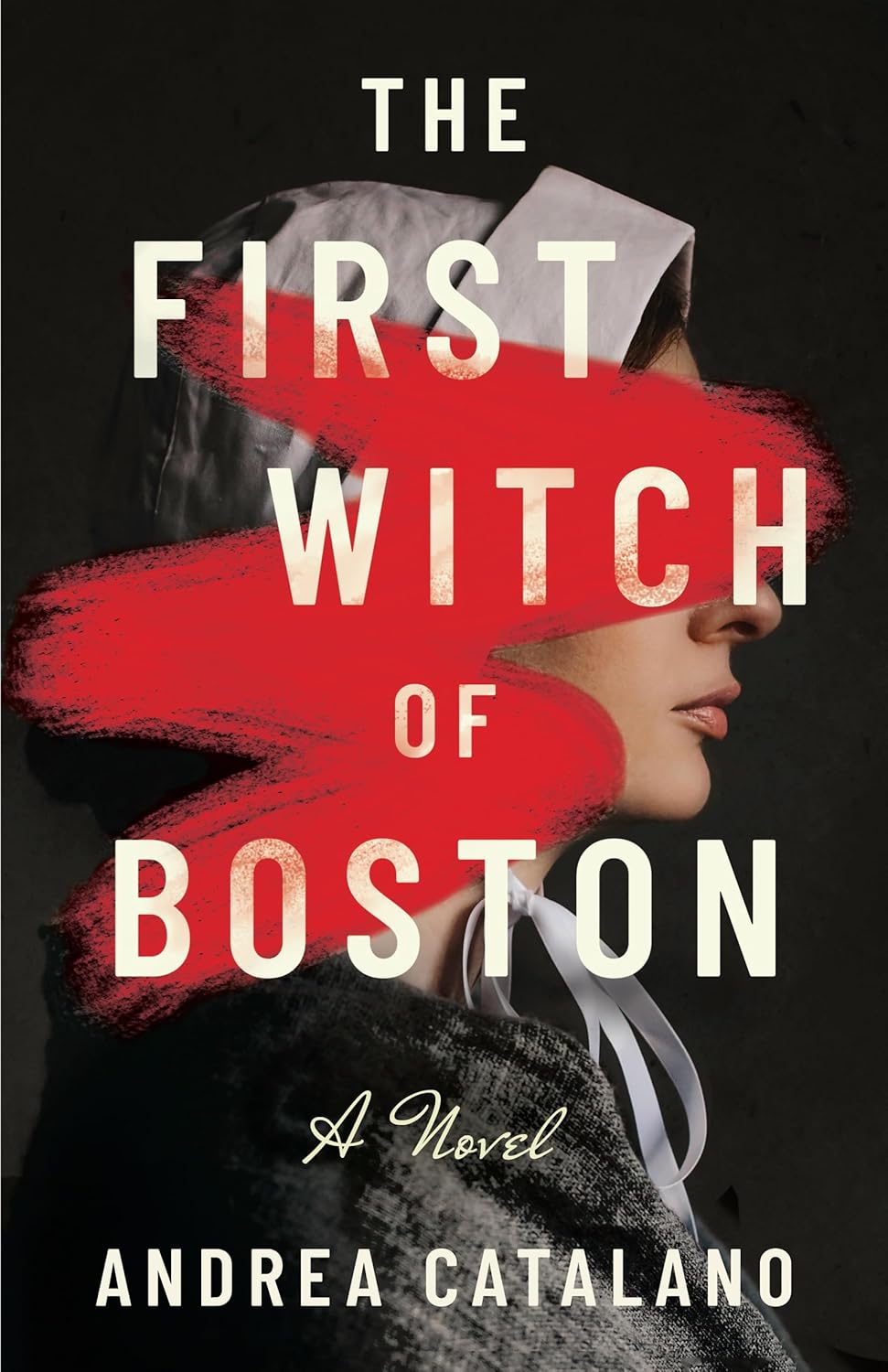
Book Review: The First Witch of Boston

The First Witch of Boston, a gripping novel by Andrea Catalano, is based on the true story of Margaret Jones, the first woman to be found guilty of witchcraft in seventeenth-century Massachusetts.

The story begins in 1648 when Thomas Jones, grieving over the hanging of his wife, boards a ship, leaving Charlestown, a Puritan community whom he feels wrongly accused his wife of witchcraft.

Thomas and Margaret Jones have been married for seventeen years when they are blessed with a precious baby girl. Thomas is expert in working with wood and is an accomplished cabinet maker. Margaret is a skilled healer and adept in working with herbs. She is also a much sought-after midwife. While Thomas is quiet and soft-spoken, Margaret speaks her mind, not a good quality in a Puritan community.

In dealing with her healing practice, Margaret’s comments are often met with suspicion by some who feel she has evil powers. Rumors spread and what Margaret has said is blown out of proportion, eventually leading to trial and a death sentence.

I found this novel harrowing, but well written. We know from the start what will happen to Margaret, and the rest of the novel deals with events that lead up to her execution. Religious hysteria and wariness of the unknown create fear, and people fear what they cannot understand. Margaret Jones’ unguarded nature often offended stern, austere people, creating suspicion and false accusations. It’s hard to believe that this happened in America, but it is, sadly, a part of our history.

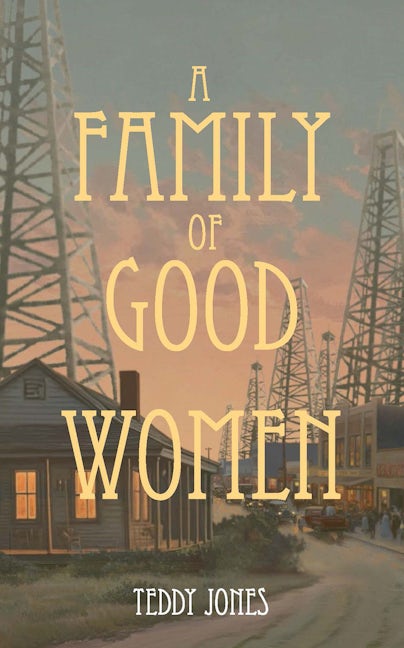
Book Review: A Family of Good Women

A Family of Good Women, an intriguing novel by Teddy Jones, takes place in the 1920s oil boomtown of Borger, Texas.

Imogene Good, 23, still grieves her mother’s death. Imogene works hard at the boarding house she inherited from her mother. She cooks three meals a day and furnishes a sack lunch for the night-shift workers. It’s a rough town filled with mostly tough, hard-working men. Although Imogene graduated from teaching college and longs to teach, she feels obligated to continue with the boarding house.

Imogene takes in a runaway cousin, Sue Ellen, from the Good family farm in East Texas, a young woman who has a bad reputation. The two women come to an understanding and both toil endlessly at the never-ending work of a boarding house filled with tough, hungry oil workers. Most men appreciate the women’s efforts, but there’s one mean boarder who threatens violence.

When Imogene finds a journal in her mother’s trunk, she learns the history of her family of women and children, an extended family that strangely lacks men. As a child, she took their existence for granted, but in reading her family history, many questions of her childhood are answered. Imogene and Sue Ellen are able to piece together family issues and lingering mysteries.

When violence strikes home, the two women learn who their friends really are. Almost too late, Imogene learns what one man’s relationship, a Texas Ranger, means to her.

A Family of Good Women is an excellent novel, packed with realistic scenes of rough oil boom towns of the 1920s. The existence of Good women is based on fact, and this novel brings their story to life.

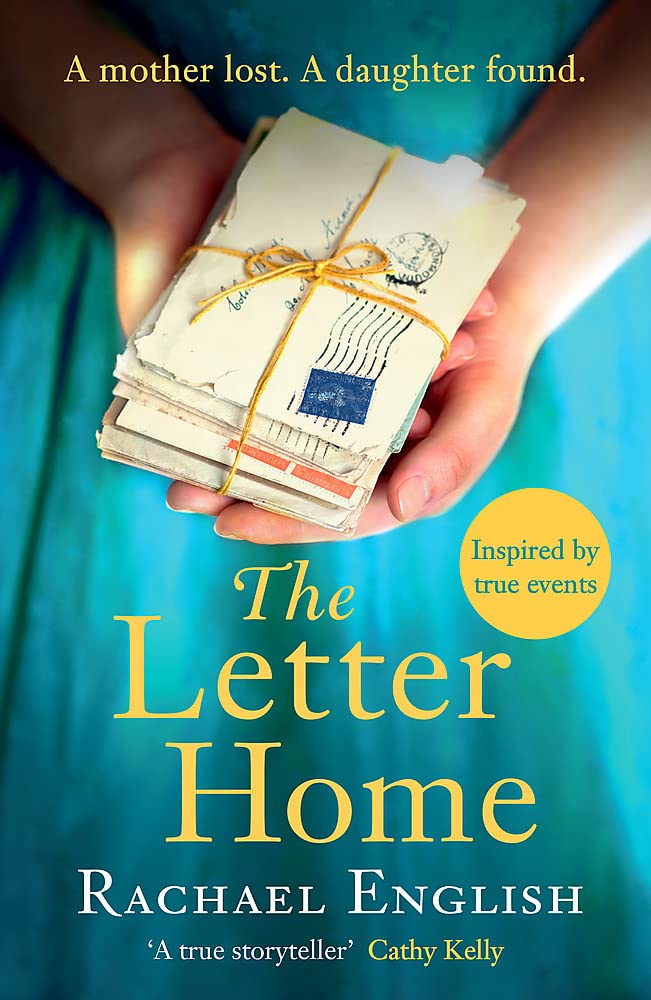
Book Review: The Letter Home

Version 1.0.0

The Letter Home, a novel by Rachael English takes place in the mid-1800s, toggling to 2019 Ireland and Massachusetts.

Bridget Markham has suffered many losses. Her father, a fisherman, died at sea. Years earlier, her brother sailed to America, but no one has heard from him nor know if he is still alive. Her mother dies during the potato famine, and her husband dies of a disease resulting from the famine. Shortly before her husband dies, Bridget gives birth to Norah, a precious daughter, whom she fiercely loves.

It’s hard to imagine the poverty and suffering of those days. Potato crops, an Irish staple, rotted in the fields along with other garden products. Herring fishing failed, pigs and hens were quickly consumed. People were starving, but received no help from England, Ireland’s “mother country.” Most people rented their tiny homes, often one-room shanties and, because they couldn’t pay rent, were evicted. Often, landlords burned down or dismantled the homes so the people couldn’t return.

Bridget, seeing no way to provide for her little daughter, realizes she must leave Ireland, but she couldn’t risk the health of the little girl who had become frail from lack of proper food. Seeing no other way, Bridget leaves her daughter with her sister and brother-in-law, who have faired reasonably well during the famine. The two sisters had never been close, so it is heart-breaking for Bridget.

The voyage from Ireland to America is miserable and many people die. Bridget becomes friends with another young woman, a widow and mother of a baby girl. Nearing Boston, the ship crashes into rocks and many people drown, including the baby’s mother. Concerned that the baby will be sent to an institution, Bridget assumes the care of the little girl, and also the identity of the baby’s mother. For them both to live, she must find work in this new, strange environment.

Switching to 2019 in Dublin, Jessie Daly helps an old friend research the events surrounding Ireland’s 1840s famine. They are drawn into the story of Bridget and her daughter Norah.

On the other side of the Atlantic, in Massachusetts, Kaitlin Wilson is researching her family tree. She knows some of the history of her Irish ancestors, that they left Ireland for Boston in the 19th century, but everything else is a mystery.

The Letter Home is a fascinating story of struggle and survival. The author, Rachael English, was born in England of Irish decent. I admire the author’s impeccable research, and found the story compelling, and the tragic facts surrounding the famine intriguing.

Book Review: Homeplace

Homeplace, a contemporary novel by Anne Rivers Siddons, takes place in the fictional town of Lytton, Georgia.

Micah (Mike) Winship, a well-known journalist, lives in New York. She is recently divorced and has a teenage daughter who has chosen to spend the summer with her father. In Georgia, Mike’s father is dying and has sent for her. Mike’s ready for a change—she is nearing forty and she’s at odds with what to do with the rest of her life.

Mike and her father have never been close. Her mother died giving birth to her, and she’s always felt her father blamed her for his loss. Not only that, but he was expecting a son, thus the masculine name Micah/Mike. Mike has always felt she took second-place to beautiful, bubbly, popular Dee Dee, her older sister.

Mike hasn’t been back to Georgia since 1963, when her father threw her out twenty-two years ago after she marched in the Civil Rights Movement. Her father is a racist, and even though he was kind to his Black housekeeper and her son, he considered them inferior. But now he’s dying, and not only that, his homeplace, the place where he grew up, is threatened to be taken over by the Department of Transportation.

The author paints a vivid picture of the old South and its worn veneer of graciousness. She describes the people and their way of clinging to old, familiar habits. Homeplace stresses the importance of family and forgiveness, and the need for a place to call home.

Book Review—Depth of Winter: A Longmire Mystery

Depth of Winter, book 14 of the 21 “Longmire Mysteries” series by Craig Johnson, is a contemporary thriller that takes place in Mexico.

Walter Longmire, the 6’5″ Absaroka County, Wyoming Sheriff, is on a mission to free his daughter, Cady, from her kidnapper, Tomas Bidarte, head of one of the most vicious drug cartels in Mexico. Walt sets out alone, but manages to get valuable help along the way, including a legless, hunchback, blind seer, and Isidro, a silent (but not by choice) Indian.

Walt and Isidro’s destination is one of the remotest parts of the northern Mexican desert, Estante del Diablo, a raw, lawless land where no horse or car can travel. It’s a dangerous place where strangers are not welcomed. Walt and his companion walk in the 110-degree desert heat and eventually arrive at a village of desperate desperadoes. Even if he is able to find his daughter, the odds are slim of them getting out alive. It is Walt Longmire’s worst nightmare.

This was a fun book to read. I loved the Longmire television series and held that TV image of Walt Longmire while reading the book. Craig Johnson is an expert in creating wild, desperate situations while keeping his main character’s sense of humor intact with droll, often self-deprecating comments. The novel is often violent—I wouldn’t recommend it to the faint of heart. It was a nice change-of-pace for me and I admire the author’s vision of modern-day outlaws.

Book Review: Women in War

Women in War: A Gripping Collection of the Untold True Stories of History’s Bravest Women Warriors by David Yuzuk is an engrossing compilation of twenty-plus women warriors who served their countries during war time.

Many of the brave women featured were nurses. A couple of examples cited were women who served as far back as the Civil War. In the first and second World Wars, some women worked for the effort as spies or ambulance drivers. In that time period, women nurses often worked in trenches or ditches, patching up soldiers before they could be transferred to hospitals. In Korea roughly 7,000 women were healthcare professionals. Some Army nurses served in Mobile Army Surgical Hospital or M.A.S.H. units. In Vietnam, 11,000 nurses served the wounded. They worked 16-hour shifts, six days a week. They had to learn to separate professionalism from emotions, and act quickly, despite their own fears of survival. Many returned home with PTSD from the horrors they dealt with.

In addition to those cited above, women have played and continue to engage in significant roles in wars and conflicts: Grenada, Iraq, and Afghanistan. In more recent years, women have served as pilots, particularly Navy pilots. Numerous women soldiers have served in the field alongside men counterparts, many receiving medals for their bravery.

Author David Yuzuk, a retired police officer, has done a remarkable job documenting various women warriors who served their countries in many different capacities. In some instances, sections are written by the warriors themselves. In other cases extensive research has revealed extreme bravery shown in the face of danger or even death. Many of the accounts are harrowing. Women in War is a truly gripping collection of stories about some of history’s bravest women warriors.

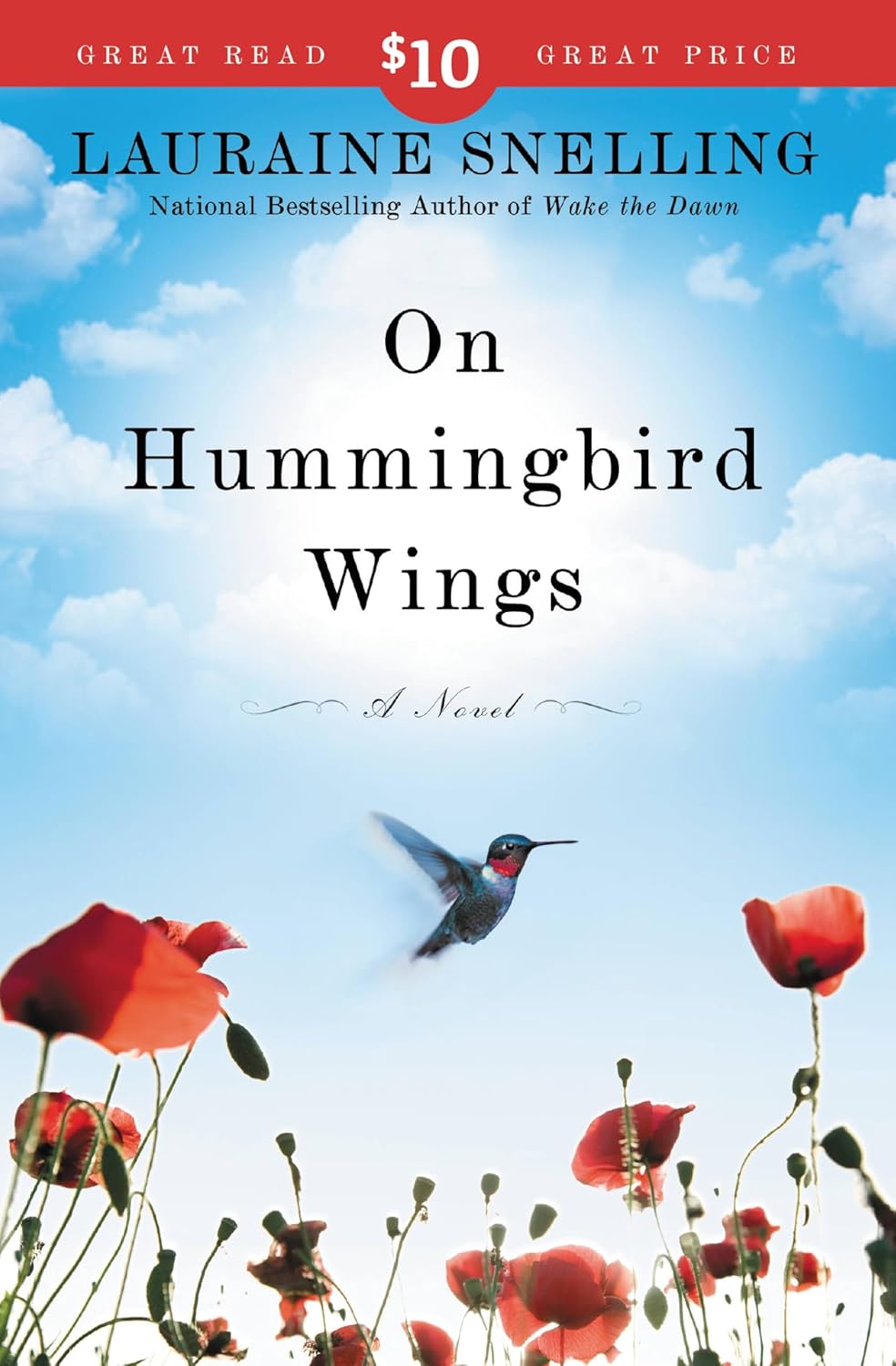
Book Review: On Hummingbird Wings

On Hummingbird Wings, a novel by Lauraine Snelling, is a charming story about the power of love in relationships and in nature.

When Gillian Ormsby’s younger sister calls saying their mother is dying and that she must come home, Gillian is skeptical. “But Mother is always dying,” is her sarcastic reply. Still, Gillian, 46, feels she must at least take a bit of time off from her high-powered job in New York and fly to California to at least try to help. She and her mother have never been close, nor as a matter of fact, has she and her sister had a close sisterly relationship.

She finds her widowed mother in bed, claiming she is dying. She just wants to be left alone and die in peace. Gillian is appalled to see her mother’s beloved garden dried out, the hummingbird feeders empty, the grass dead beyond salvation. In checking with her mother’s doctor, Gillian learns that her mother is not ill, that she has simply lost the will to live. She needs to eat nourishing food, get out of bed, exercise, and hopefully choose to live.

Gillian attempts to feed her mother nourishing food. She tries to restore order in the yard, formerly a thing of beauty. She cleans and fills the hummingbird feeders and hangs them in front of her mother’s bedroom window. She selects a few plants with the help of Adam, a handsome neighbor who owns a family gardening business. There’s definitely a spark of interest between Gillian and Adam, but there are more important things to attend. Another neighbor, Enzio, a widowed family friend, is more than willing to visit her grumbling mother, even read to her.

In the meantime, Gilliam’s high-powered job in New York has vanished–the company suffered a hostile takeover. So now what is she to do? Should she return to New York to apply for another job, or should she stay in California to be close to her mother? And then there’s Adam, and perhaps hope for a relationship there.

I’ve read several series written by this fine author, but this is the first stand-alone novel. I enjoyed On Hummingbird Wings. The novel emphasizes the power of the mind and the close relationship between physical and mental health. The budding romance between Gillian and Adam has promise, but it’s a natural relationship that doesn’t need graphic scenes to entice the reader. I highly recommend this novel for those who enjoy reading about everyday people who meet and deal with challenges common in our present-day society.