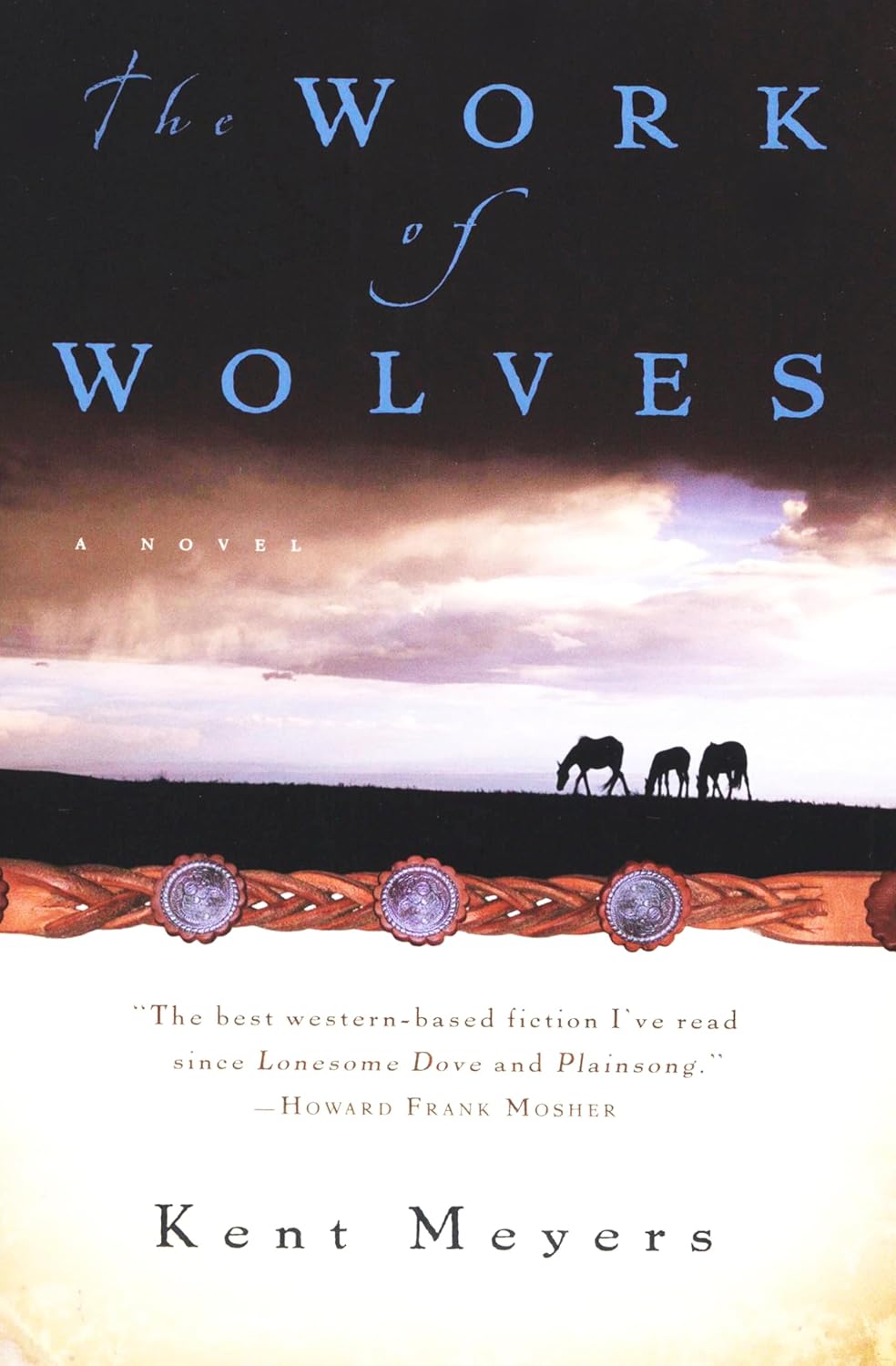
The Work of Wolves, a richly woven contemporary novel by Kent Meyers, takes place in South Dakota’s ranch country.
Carson Fielding, 14, buys his first horse from a neighboring rancher, Magnus Yarborough. Carson grew up around horses, but this is the first one he’s purchased on his own. Eight years later he is known as a skilled and respected horse trainer. Magnus Yarborough hires Carson to train three horses, and in addition requests that Carson teach Yarborough’s young wife to ride.
While on Yarborough’s property Carson observes that the rancher is not only power-hungry, but is actually cruel to animals. The horse training goes well, and eventually the horses can be used to give riding lessons to Yarbarrow’s wife, Rebecca. As they become more acquainted, they form an attraction to one another. Carson learns she is disenchanted with her controlling husband and, in fact, is afraid of him.
Some time later, while at an outdoor gathering with some of the local fellows, Carson and a couple of friends discover the three horses Carson trained in a small fenced-in pen, without fresh water and apparently starving. Is this some kind of retribution toward Carson, possibly a preconceived notion of attraction betweenYarborough’s wife and the young man? Whatever the reason, Carson cannot tolerate cruelty toward these fine horses. The three young men take action setting off a chain of events that profoundly affects them all.
Included in this group of concerned young men are Earl Walks Alone, a Lakota Indian, an exceptionally bright young man who is studying to get into college, and Willi, originally from Germany who came to the area as an exchange student. Willi’s German family has a dark history that troubles the young man. Later, Earl Walks Alone’s Uncle Ted joins the group of concerned young men. Ted is a colorful, wise man who apparently has no concerns about material things but has a big heart toward animals.
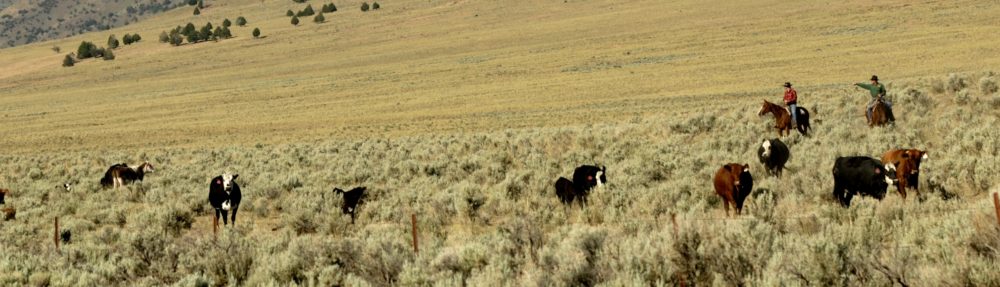
I loved this novel. The characters are finely drawn, with each unique characteristic shown through action and crisp dialog. South Dakota’s vast land is well described, both in its beauty and its bleakness. The plot keeps up a tense pace. I recommend this novel to those who enjoy reading about ranch life, and who appreciate an engaging, vividly described story.