
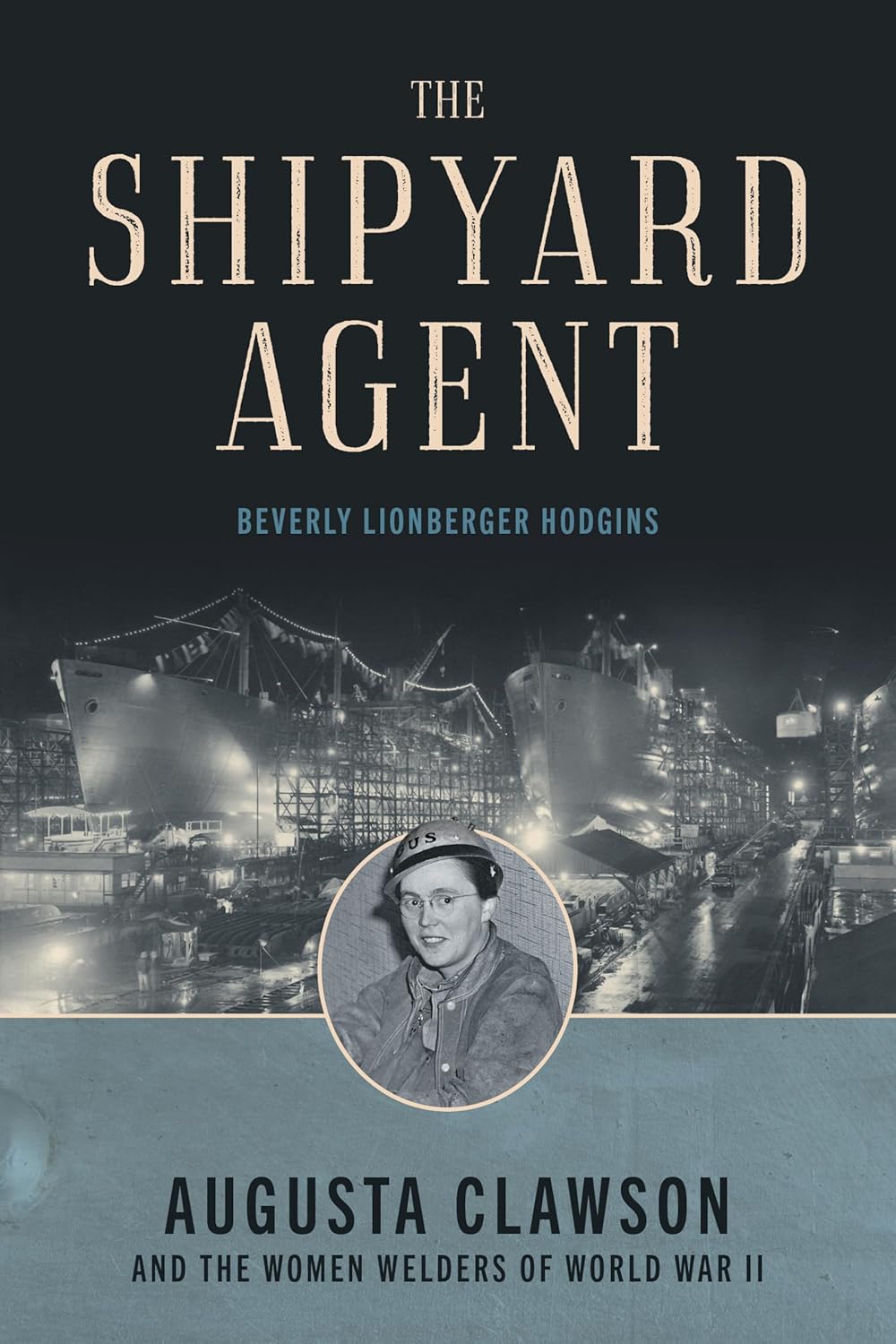
The Shipyard Agent: Augusta Clawson and the Women Welders of World War II by Beverly Lionberger Hodgins is an enlightening and engaging account of women who stepped into the workforce during World War II to fill America’s pressing need for warships.
Much of the country’s male workforce left their jobs to fight World War II, both on land and at sea, creating a serious gap in production of war materials needed, primarily warships. From the Pacific Northwest to the Gulf Coast and up the Eastern seaboard, women filled the gap, working in shipyards as welders, an exhausting, noisy, and exacting occupation. And, surprising to some, the women excelled, creating a movement for women to participate in what was previously considered “a man’s world.”
But, although their work was satisfying, though demanding and difficult, women were leaving their jobs too soon. Why was that? In 1943, Special Agent Augusta Clawson of the U.S. Office of Education stepped into the work place to answer that question. She received the necessary training to become a welder and worked “undercover” at Swan Island Shipyard in Portland, Oregon. In her reports, she made observations and suggestions that changed and improved working conditions for all employees. The result of her research and follow-up reports provided valuable information and energy to the movement of women in the workforce, and the legal and social opportunities for following generations. Her frank and honest reports were published in 1944 under the title Shipyard Diary of a Woman Welder.
Also interesting in this fascinating book is information about John Henry Kaiser, an American industrialist who became known for his shipbuilding and construction projects.
Kaiser was an expert at discovering a need and finding a solution. Augusta Clawson worked at Kaiser’s Swan Island Shipyard in Oregon. Permanente Health Plan, also instigated by Henry Kaiser, was the first of its kind to provide health care for Kaiser Company shipyard employees.
I found The Shipyard Agent a fascinating read. Although I was aware of some of the story, and familiar with the movement, I hadn’t known the details of women’s involvement with such arduous jobs as welding, and how they were received on the workforce. Several pictures and illustrations add depth and interest to this story. This is a true story of courage and grit, of an investigation that affected the workplace for women not only in the war years but for generations that followed.