Book Review: Child of Steens Mountain

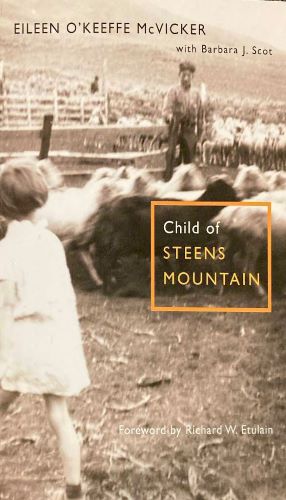
Child of Steens Mountain, an autobiography by Eileen O’Keeffe McVicker with Barbara J. Scot, is an enlightening account of living on a sheep ranch in the late 1920s through the 1940s. A detailed forward written by historian Richard W. Etulain provides information about the geological history and early human habitants of the Steens Mountain region in southeastern Oregon.

Eileen O’Keeffe, the oldest of three children, was born in 1927 to an Irish immigrant sheep rancher and a school teacher. Eileen’s childhood was a fantasy, a life few children today could even dream about. The natural grandeur of mountain and valleys was her playground. Eileen delighted in picking buckets of wildflowers for her mother. The children had responsibilities, primarily tending sheep, but for them romping after the sheep in fields of sagebrush and juniper was pure joy. Of course, they had to learn how to avoid rattlesnakes and stay clear of rabid coyotes. But Eileen, together with highly trained dogs, trailed sheep, knowing the importance and value of her watchful care.

The children attended elementary school in the small hamlet of Fields, five miles from their ranch. Later, they attended high school in Burns, 130 miles from home. Since her parents were still running the ranch, Eileen and her brother John stayed in Burns by themselves in a little rented house with no running water. On most weekends, her parents would come to visit them and leave food for the coming week.

When Eileen meets Gene, a hired hand at a neighboring ranch, their relationship becomes serious, and her parents’ trust and faith in their daughter’s good judgement falters. Although Eileen was raised to be independent and responsible, her relationship with Gene threatens to break up the loving family.

In an afterword, writer Barbara J. Scot, McVicker’s friend and neighbor, describes how the two collaborated in writing Child of Steens Mountain. Scot effectively helped organize the kaleidoscope of Eileen’s memories into a readable and entertaining story.

My husband and I have camped at Steens Mountain, watched sheep herders and their amazing dogs, driven through Fields, and have spent time in Burns, so visiting these places again through the eyes of the author was a delight.

I highly recommend Child of Steens Mountain to those who love the outdoors, enjoy learning about old-time ranch life, and who appreciate a good story.
Book Review: The Son

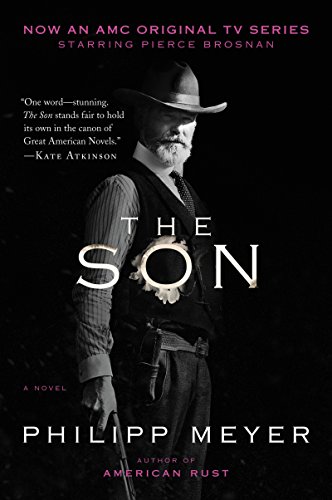
The Son, an epic novel by Philipp Meyer, covers more than 150 years of the McCullough family, from a humble Texas homestead to the oil booms of the 20th century.

In 1849 Eli McCullough, 13-year-old son of Texas homesteaders, is captured by Comanches after they raid the farm and brutally kill his mother and sister. At first, Eli is treated like a slave, doing women’s chores, until he stands up like a man and defies the women. He learns tribal skills of riding, hunting, and warfare. He learns their language, takes an Indian name, and becomes the band chief’s adopted son. He fights in their wars against other Indians and against white men. Illness, starvation, and the infringement of settlers plague the tribe, and Eli finds himself alone in a world in which he belongs nowhere, neither white nor Indian, civilized or wild. He must decide which path to take.

The story toggles between memories of three main characters: Eli, known as “the Colonel” from his Texas Ranger days, Eli’s son Peter, and Eli’s great-granddaughter Jeanne Anne. Each has a part in the tumultuous rise through the acquisition of land, and the industries of cattle and oil. The individual stories are sometimes brutal, the people scheming, the reality of gaining property often criminal.

The Son, 580 pages of vivid Texas history, speaks of people caught up in the pursuit of power, wealth, and privilege beyond what most of us will ever know. While reading this epic novel, I was often reminded of two of my favorites— Edna Ferbers’ Giant, and Larry McMurtry’s Lonesome Dove.

I very much enjoyed The Son, especially the sections about Eli’s early life with the Comanche. The historic details are fascinating and the story believable. Brutality, power and greed are realistically portrayed. I highly recommend this gripping novel.

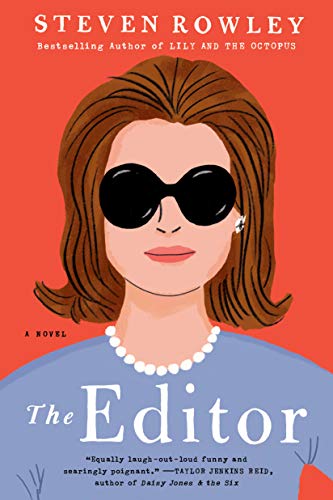
Book Review: The Editor

A highly entertaining novel, The Editor by Steven Rowley, takes place in 1990s Manhattan.

Writer James Smale finally sells his novel to a major publishing house. When he has his first appointment to discuss the book, he is astonished to learn his editor is Jacqueline Kennedy Onassis, or Mrs. Onassis as she is known in the office.

Mrs. Onassis is highly impressed with James’ autobiographical novel, but makes it clear the story’s end lacks believability. And no wonder. The story exposes James’ own dysfunctional family and his relationship with his partner, Daniel. It’s obvious to Jackie that James has unresolved issues, particularly with his mother, which is affecting his fictional story’s ending. Jackie urges him to confront and resolve his fragile family relationships. By doing so, she believes, James will find the way to give his novel an authentic ending.

Jackie and James become friends and she even invites him to stay for a weekend in her guest house at Martha’s Vineyard. In their informal chats, James learns the depth of Jackie’s dedication to truth and whatever it exposes. Her encouragement helps pave the way for James to face and reveal a long-held family secret.

The author does a wonderful job of portraying Jacqueline Kennedy Onassis as the intelligent, private, quietly charming person that she was. Not only is the story itself engaging, the portrayal of Jackie reinforces what I have always believed about this very private person who was continually thrust into the limelight.

Book Review: Water Mask

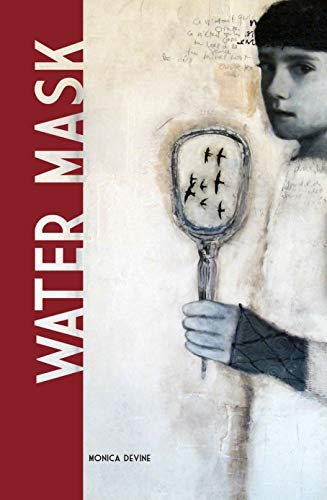
Water Mask by Monica Devine is an impressive collection of fifteen powerful essays about creating a life in the far north. But more than that, it’s a book about being an active participant in your own life, savoring all its parts, and engaging with all that’s around you.

Originally from Michigan, Monica Devine graduated from college with a master’s degree in speech and language pathology. For the next 25 years she worked with Indian and Eskimo children in villages throughout Alaska. During that time, she immersed herself into the land and its people, learning how to not only survive, but to embrace all of life. Living in harsh conditions takes courage and patience. Waiting for weather to clear enough to fly to a distant village may take days, but it’s vital to put faith in a bush pilot’s expertise. Riding a sled over ice can be dangerous, but native whalers know the sound and feel of their frigid world and it’s wise to trust their instincts.

Water Mask primarily centers around rugged Alaska and its challenges of physical and emotional survival, with brief forays to New Mexico, Wyoming and Michigan. The author met and married her husband in Alaska and together they’ve raised a family in the spirit of listening to the land, following its dictates, and embracing all that life has to offer.

Water Mask is a spiritual book in the sense of being one with nature, valuing traditions, recognizing the strength and challenges of nature, and appreciating the wisdom of its native peoples. Don’t rush through this collection of dynamic essays. Each has a message, a theme. Savor the poetry of the author’s words, take seriously the wisdom of cherishing the moment, and learn what it means to adapt to life’s changing conditions.